Crimson Desert Enhanced
GameBy Pearl Abyss
Documents about Crimson Desert Enhanced
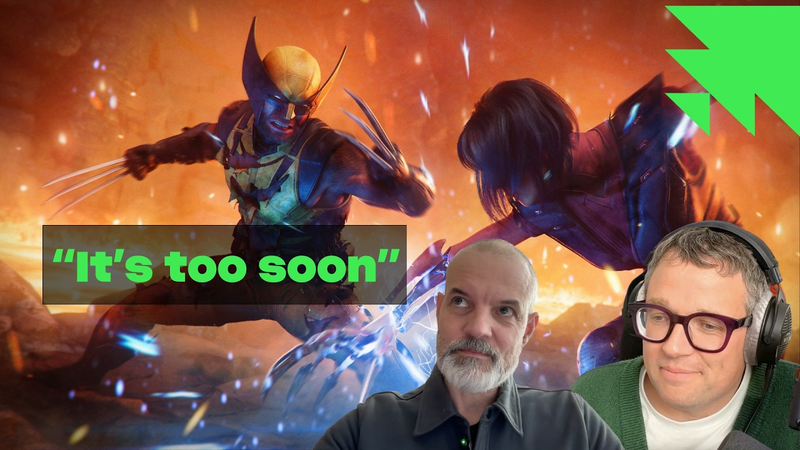
35% of Marvel's Wolverine sales were physical, as Zelda reveal boosts Switch 2
The global gaming industry is currently navigating a complex transition characterized by market consolidation, shifting distribution models, and an evolving demographic landscape.
- The top ten gaming companies are projected to control two-thirds of all publishing revenue by 2030, reflecting a trend of significant market consolidation.
- Physical media remains resilient despite digital-first trends, with 35% of Marvel's Wolverine sales occurring through physical channels, driven by collector demand for major intellectual property.
- Platform holders such as Apple and Steam maintain dominant control over discovery and monetization, creating substantial barriers for independent and mid-market developers.

Assassin’s Creed creator Patrice Désilets: “I have two or three games left”
The independent development landscape is currently undergoing a significant shift as veteran creators move away from the constraints of large-scale publishing toward self-determined, iterative production models.
- Patrice Désilets, creator of Assassin’s Creed, is shifting toward a self-determined production model at his 70-person studio, Panache, to maintain creative autonomy over projects like 1666: Amsterdam.
- Désilets estimates he has only two or three major titles left in his career, signaling a move toward high-impact, iterative development rather than large-scale corporate output.
- Independent developers are increasingly rejecting the volatile live-service model in favor of sustainable, player-focused projects that prioritize long-term viability over aggressive monetization.

Why EVE Online’s studio bought itself back for $120m - and partnered with Google DeepMind
CCP Games has entered a strategic period of independence following a $120 million management-led buyback from Pearl Abyss.
- CCP Games (now rebranded as Fenris) completed a $120 million buyback from Pearl Abyss to regain independence and pursue a distinct, tech-focused portfolio strategy.
- The studio is collaborating with Google DeepMind to use EVE Online’s complex, player-driven economic and social environment as a training ground for AI agents.
- Fenris is open-sourcing its proprietary 'Carbon' engine and technology platform to encourage third-party development and long-term ecosystem sustainability.
Can PlayStation’s Housemarque repeat the FromSoftware story?
Housemarque is currently navigating a strategic evolution as a first-party PlayStation studio, aiming to elevate its historically niche, arcade-inspired design philosophy into the realm of major, top-tier gaming franchises.
- Housemarque is transitioning from a niche arcade developer to a major first-party PlayStation studio by scaling its high-intensity, flow-state gameplay for a broader, mainstream audience.
- The studio currently employs approximately 120 people and is leveraging Sony’s internal resources, user testing, and collaborative infrastructure to support this growth.
- Housemarque aims to replicate the success trajectories of established studios like Naughty Dog and Insomniac Games by treating new intellectual properties as long-term foundations for player engagement.

S07, E16: AI and video games (with Julian Togelius)
Video games function as critical model organisms for artificial intelligence research, serving as sophisticated pedagogical environments that force agents to learn, adapt, and navigate complex, non-stationary action spaces.
- Generative AI tools will fundamentally shift game development by enabling shorter production cycles and lower costs, potentially making billion-dollar projects like GTA 6 the last of the pre-AI era.
- Video games serve as essential sandboxes for AI research because they provide structured environments for testing reinforcement learning and algorithmic theories, moving beyond simple win-loss mechanics to understanding player style and content generation.
- Consumer backlash against AI-generated assets, such as the reaction to placeholder textures in Crimson Desert, is often a proxy for broader societal anxiety regarding AI's impact on creative professions rather than a critique of the technical utility of the assets.

🚨📢 BREAKING NEWS: Applovin Record Revenue, More Layoffs, EvE online sold back
The gaming industry is currently experiencing a period of significant corporate restructuring, marked by record financial performances for some entities and aggressive downsizing for others.
- AppLovin reported record Q1 revenue of $1.84 billion, a 25% year-over-year increase, while Unity posted a $347 million loss despite a 17% revenue increase to $508 million.
- CCP Games is being sold back to its CEO by Pearl Abyss for $120 million, a significant drop from its $425 million valuation in 2018.
- Supercell acquired Metacore, resulting in a 30% workforce reduction at the studio as part of a strategic shift in the merge-game genre.
Companies behind it
 Pearl Abyssdeveloper, owner, publisher18
 Sony Groupdeveloper800
 Overwolfdeveloper25
- Fenris Creationsowner10
As the documents state it.