
Caves of Qud
GameBy Freehold Games · Released Dec 5, 2024
Caves of Qud is a science fantasy roguelike epic steeped in retro-futurism, deep simulation, and swathes of sentient plants. The game weaves a handwritten narrative through rich physical, social, and historical simulations.
Connections
Each row is a game or company named alongside Caves of Qud, each column a document, oldest first. A mark means that document names it. Select a row to see those documents.
About the game
- Released
- Dec 5, 2024
- Developer
- Freehold Games
- Publisher
- Kitfox Games
- Genres
- Role-playing (RPG), Simulator, Strategy, Turn-based strategy (TBS), Adventure, Indie
- Platforms
- Linux, Nintendo Switch 2, PC (Microsoft Windows), Mac, Nintendo Switch
- Links
- Wikipedia
Game data from IGDB.com
Documents about Caves of Qud

What Other Devices Do PC Game Fans Play On?
The analysis challenges the perception of the monolithic PC gamer by examining the multi-platform habits of core Steam users.
- Among dedicated Steam users, 42.4% play exclusively on PC, while 57.6% engage in a multi-platform mix of PC, console, and mobile gaming.
- Approximately 15.6% of surveyed Steam players are 'platform agnostic,' playing on PC, console, and mobile devices at least one hour per month.
- PC and mobile is the most common cross-platform combination, representing 22% of the surveyed Steam player base.

Reaching the Next Level with Mike Cook
The second episode of the AI and Games podcast features a discussion between host Dr. Tommy Thompson and guest Dr. Michael Cook, a senior lecturer at King’s College London.
- Dr. Michael Cook, a senior lecturer at King's College London with over a decade of experience in procedural content generation (PCG) and generative design for video games, recently published 'Next Level'.
- 'Next Level' is an introductory book on PCG in games, designed to be accessible to a general audience without a computer science background.
- The book discusses the challenges of introducing complex subjects to a broad audience and the selection of topics to cover.
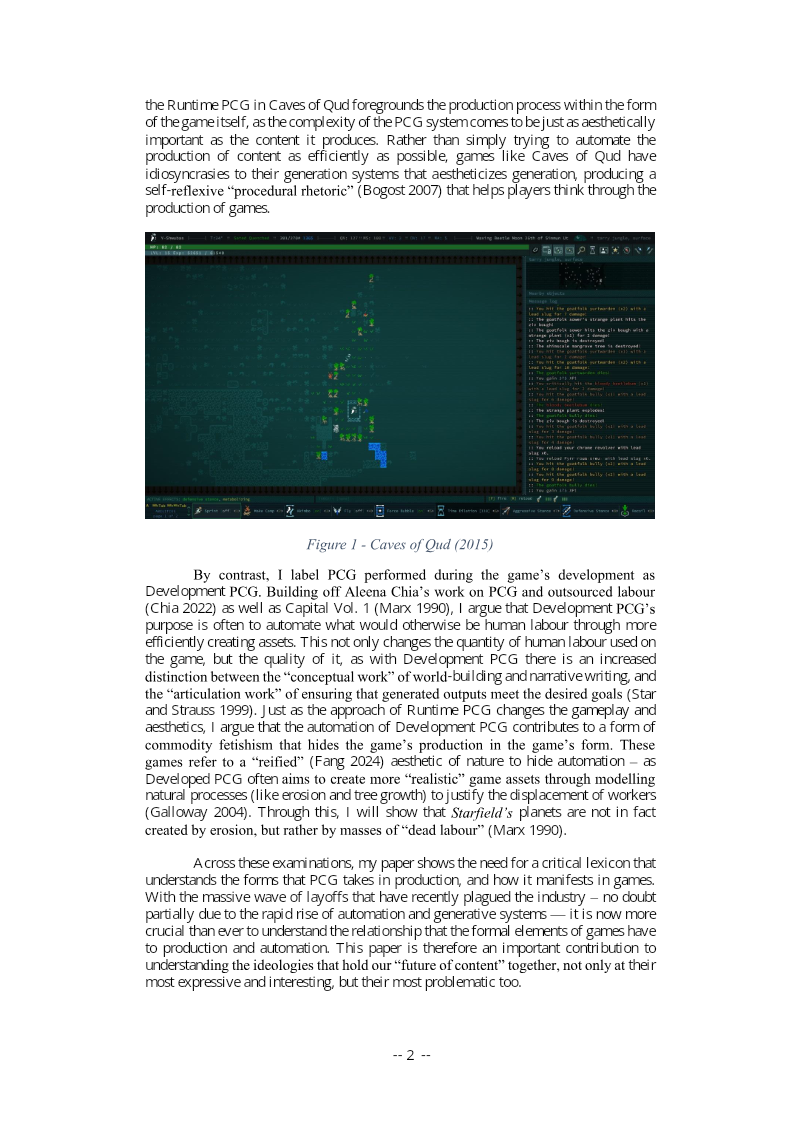
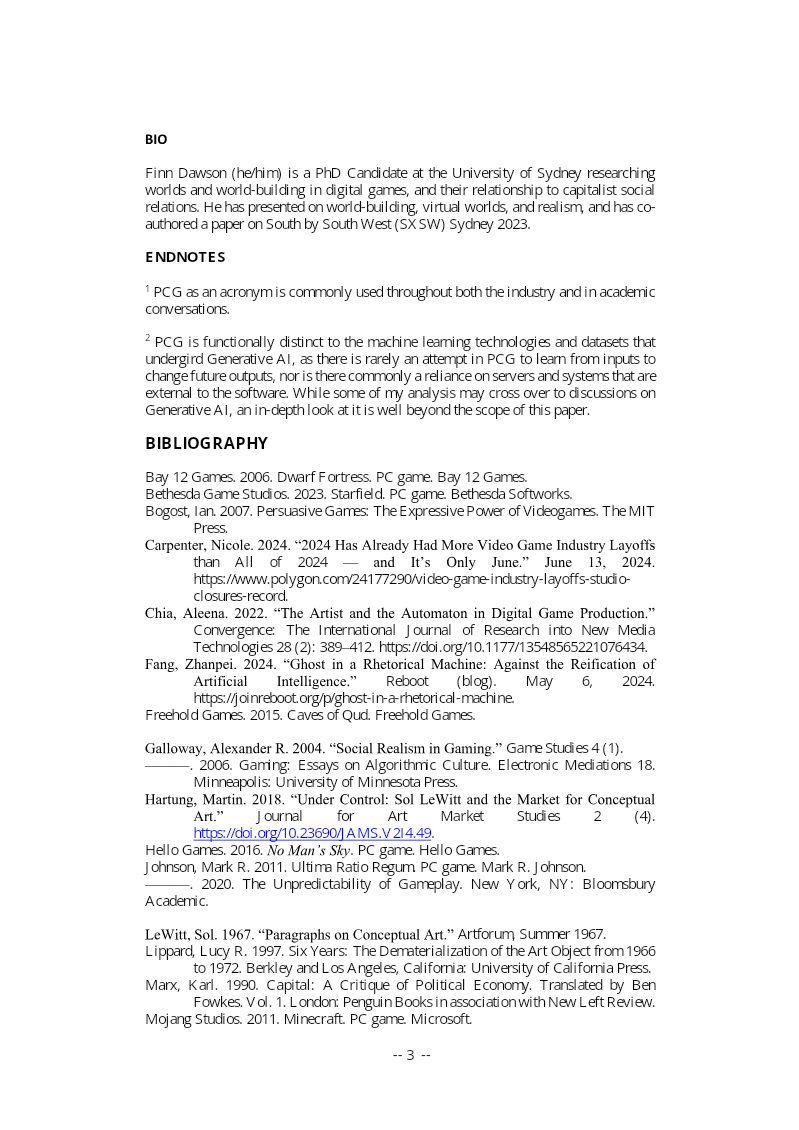
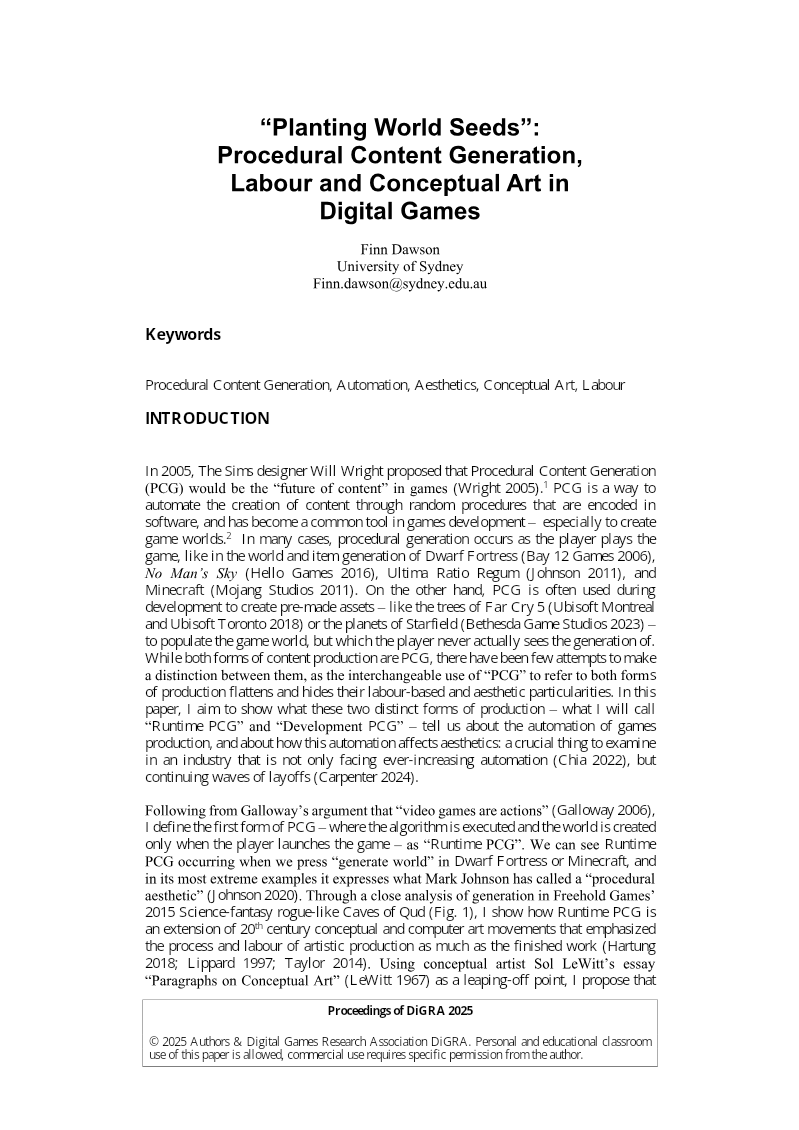
Planting World Seeds: Procedural Content Generation, Labour and Conceptual Art in Digital Games
This paper by Finn Dawson examines procedural content generation (PCG) in digital games, arguing that the term conflates two distinct production forms with different labour arrangements and aesthetic consequences.
- The paper argues that 'procedural content generation' conflates two distinct forms: Runtime PCG, where worlds are generated during play and foreground the production process, and Development PCG, where assets are generated during production and never directly seen by players.
- The central claim is that Development PCG primarily automates human labour, separating conceptual world-building from the articulation work needed to make generated outputs meet production goals.
- Drawing on Marx and scholarship on automation and outsourced labour, the author contends that Development PCG often adopts a 'reified' aesthetic of nature, modelling erosion and tree growth so generated assets appear realistic and thereby concealing the labour involved.
Tile-Based Map Generation using Wave Function Collapse in 'Caves of Qud'
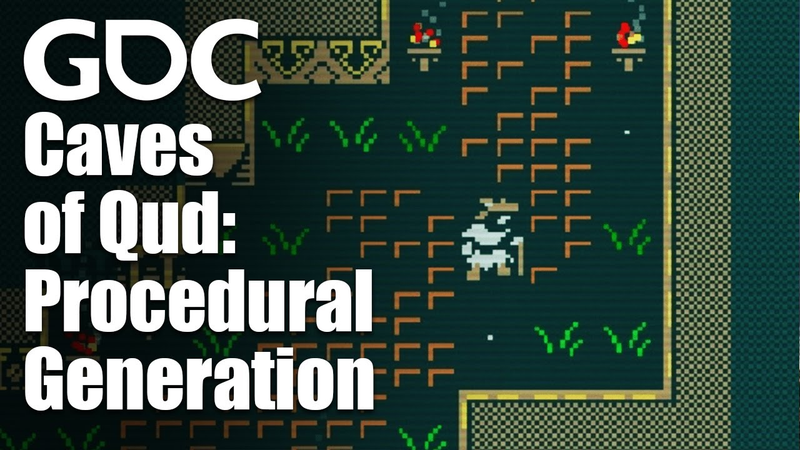
The procedural generation of game environments in the title Caves of Qud utilizes Wave Function Collapse (WFC), a texture synthesis algorithm that generates complex, tile-based maps from simple, user-defined training inputs.
- Wave Function Collapse (WFC) in 'Caves of Qud' uses a 'texture mode' approach, where small training inputs (typically 8x8 or 16x16 pixels) are used to generate arbitrarily large, structurally coherent game maps.
- The algorithm operates by decomposing input images into N x N tiles (usually 3x3), which serve as the basic atoms for calculating valid adjacencies and propagating patterns across the output.
- Adding extra colors to the training input can create essential spatial coherence, such as distinguishing between the 'inside' and 'outside' of structures, which allows for the placement of furniture and plants within generated rooms.
End-to-End Procedural Generation in Caves of Qud
The procedural generation architecture of Caves of Qud functions as a multi-tiered pipeline designed to bridge the gap between abstract historical simulation and concrete environmental manifestation.
- Caves of Qud utilizes a multi-tiered procedural pipeline that translates abstract historical data—such as factional history and religious practices—into concrete game objects like NPCs and architecture.
- The generation process follows a five-step pipeline that converts abstract key-value pairs into specific game states only upon player entry into a map, ensuring memory efficiency and narrative coherence.
- The system integrates advanced algorithms, including Dijkstra maps for pathfinding and Wave Function Collapse for context-aware layout generation, to bridge the gap between cultural blueprints and physical environments.
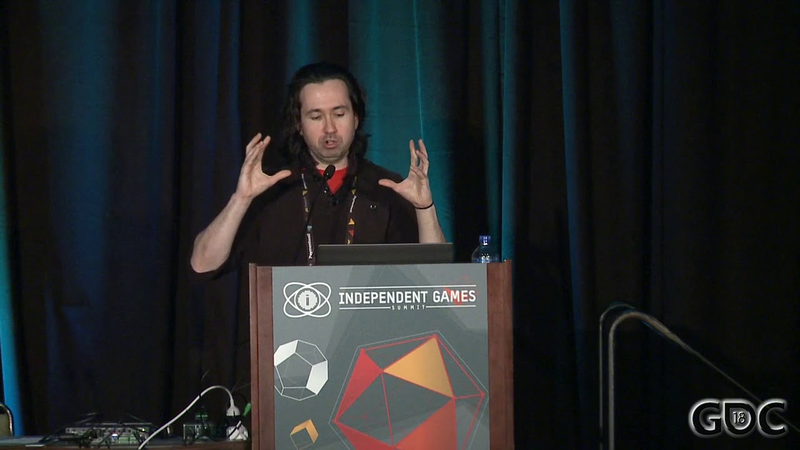
Procedurally Generating History in Caves of Qud
The procedural history system in Caves of Qud prioritizes the creation of evocative, mythic narratives over the implementation of a computationally expensive, bottom-up historical simulation.
- Caves of Qud prioritizes evocative, mythic narrative generation over computationally expensive, bottom-up historical simulations.
- The system focuses on the lives of five ancient Sultans, using their biographies as the foundation for world-building artifacts like shrines and paintings.
- Historical complexity is managed through a constrained set of exactly twelve specific triggers that govern life events and faction relationships.