Traditional Roguelike
7 documents·2 publishers
Documents
Video88 min
Roguelike Genre Exploration, Run 2!
- The primary distinction between 'roguelikes' and 'roguelites' is meta-progression: roguelites feature persistent character upgrades or starting-state power increases across runs, whereas roguelikes require players to improve solely through increased game knowledge and skill.
- Core elements of the roguelike genre include short run durations (typically 30 minutes to two hours) and an expectation of frequent, repeated loss conditions that force the player to restart.
- Roguelike mechanics are increasingly viewed as a 'tag' or feature set—similar to RPG progression—rather than a rigid genre, as they are now applied across diverse formats including brawlers, shooters, and card games.
- Player agency in power progression is a defining characteristic, where successful players make deliberate choices to influence their build rather than relying exclusively on random gear tables.
- The 'Berlin Interpretation' of 2008 remains a historical reference point for defining the genre, though modern discussions often focus on practical classification rather than strict adherence to these early definitions.
Extra CreditsOct 2025
Video108 min
Roguelike Genre Exploration | Design Club
- The roguelike label functions more as a set of design tags than a rigid genre, encompassing diverse titles ranging from deck-builders like Slay the Spire to action games like Hades.
- A core defining element of the roguelike experience is procedural alteration, ensuring that every individual run is unique through randomized seeds and encounters.
- Player loadouts—the tools, decks, or characters available at the start of a run—are essential to the roguelike structure, often allowing for strategic variety without necessarily increasing raw character power.
- Meta-progression in roguelikes should be distinguished between character power increases and simple versatility unlocks, where the latter provides new options without breaking the game's core balance.
- Ascension systems, also known as covenants or New Game Plus, serve as the primary mechanism for scaling game difficulty after a player completes a successful run.
Extra CreditsSept 2025
Video23 min
Tile-Based Map Generation using Wave Function Collapse in 'Caves of Qud'
- Wave Function Collapse (WFC) in 'Caves of Qud' uses a 'texture mode' approach, where small training inputs (typically 8x8 or 16x16 pixels) are used to generate arbitrarily large, structurally coherent game maps.
- The algorithm operates by decomposing input images into N x N tiles (usually 3x3), which serve as the basic atoms for calculating valid adjacencies and propagating patterns across the output.
- Adding extra colors to the training input can create essential spatial coherence, such as distinguishing between the 'inside' and 'outside' of structures, which allows for the placement of furniture and plants within generated rooms.
- To avoid the problem of infinite, homogeneous outputs, Freehold Games uses a multi-pass approach that segments the map into specific zones (like a central circle) before applying WFC templates to fill those areas.
- After generating disjoint rooms via WFC, the developers use A pathfinding to connect isolated segments and automatically place doors wherever a path intersects a wall.
Game Developers ConferenceApr 2022
Video2 min
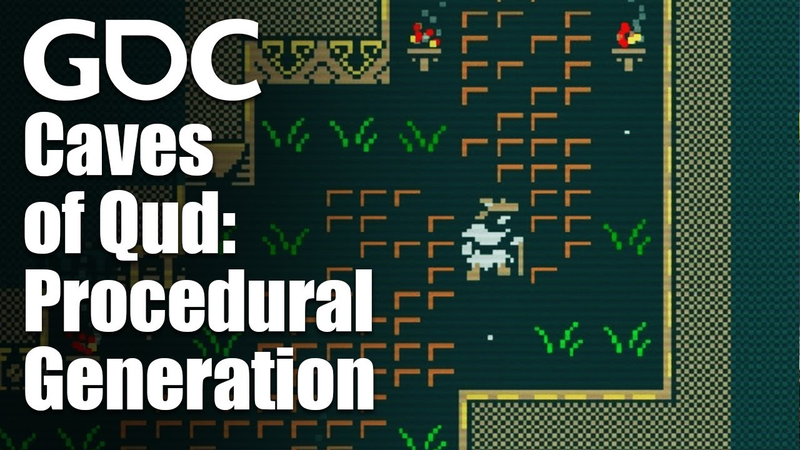
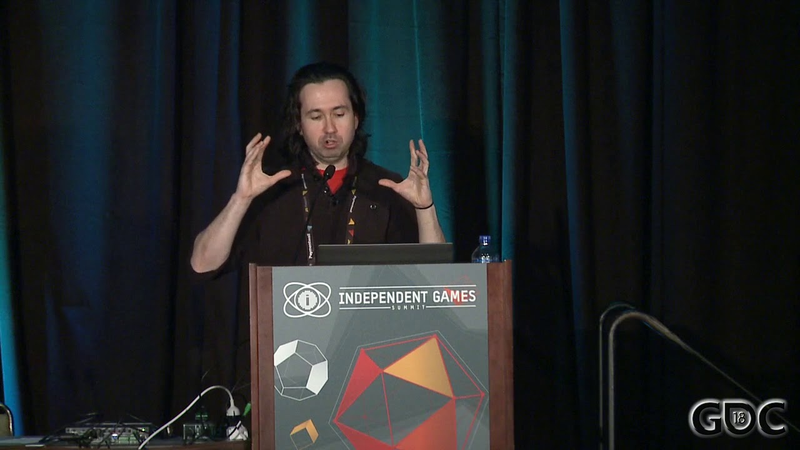
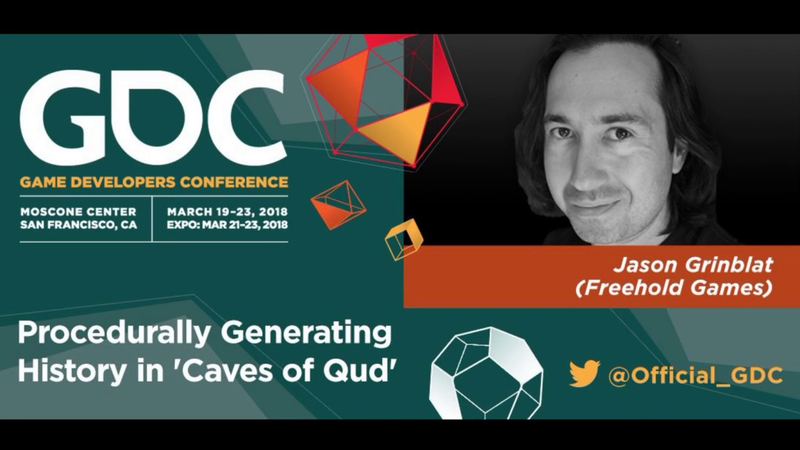
GDC 2018 Flash Forward: Procedurally Generating History in 'Caves of Qud'
Game Developers ConferenceMar 2018
Video66 min
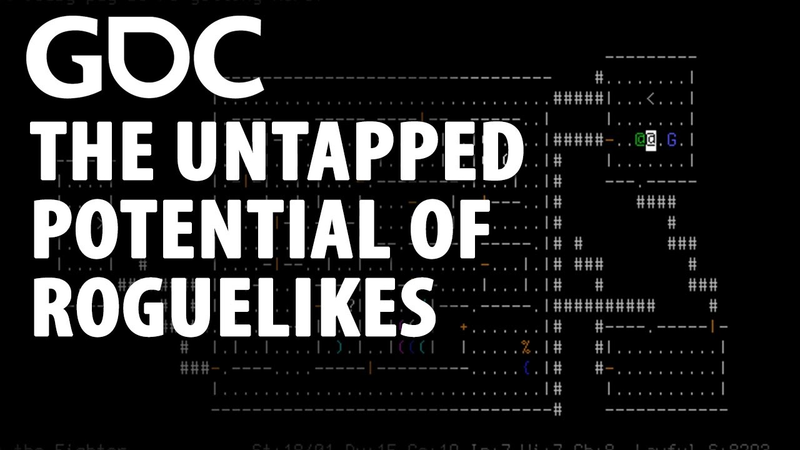
Level Up Your Game: The Untapped Potential of Roguelikes
- Roguelike design patterns, such as high-consequence permadeath and sharp in-session progression, can be adapted to other genres to create more memorable and rewarding player experiences.
- The 'Hero or Zero' pattern leverages high-stakes failure to encourage players to focus on learning and incremental progress, turning the expectation of death into a positive engagement loop.
- Designers should force players to 'make do' with diverse, imperfect tools, which encourages creative problem-solving and ensures players engage with a wider variety of game content.
- Strategic depth is best achieved by creating competing objectives that force players to make difficult trade-offs, such as sacrificing permanent health for immediate power-ups.
- Variety is superior to pure randomness; randomness should be treated as a delivery vehicle for diverse experiences rather than a goal in itself.
Game Developers ConferenceJan 2017