Procedurally Generating History in Caves of Qud
12 Jun 201831 min video
Transcript
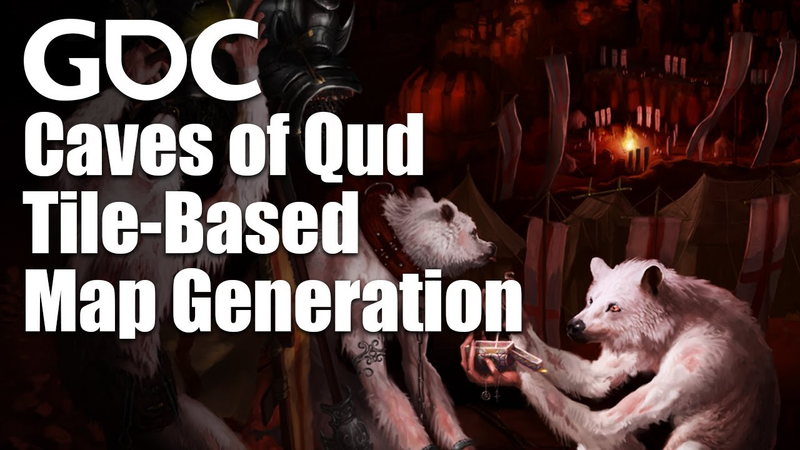
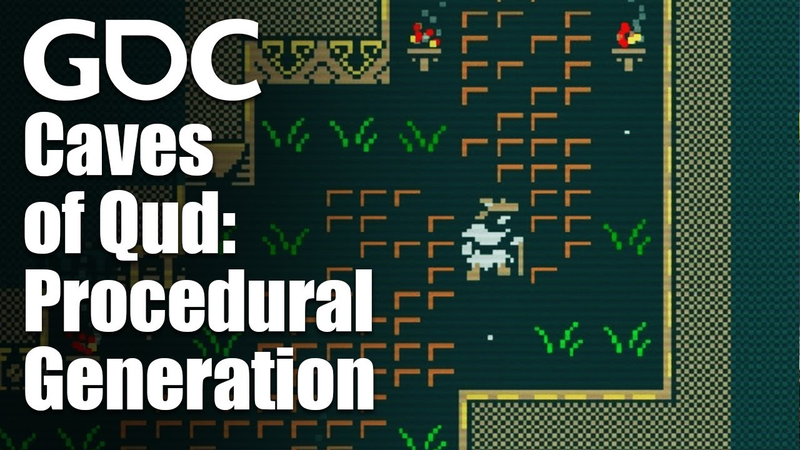
[Music] all right hello my name is Jason crimp lot I'm the co-founder of a small indie studio called freehold games and we make a game called caves of kud which is a hybrid open-world RPG science fantasy roguelike and we do a lot of experimentation with procedural generation so today I'm going to tell you about a recent system we designed for procedurally generating history for our game world so if you could first imagine with me if you will that you are a lore seeker and a wild and fractured world you've just come to a strange land called cut where poison jungles strangle rusted archways and chrome steeples to the earth your first stop is this Oasis village called Joe pub and as you walk arrived in Joppa you notice that in the northeast corner there's this vine swath stone shrine so you move up to approach it and as you examine it you see that
it's actually depicting a historical event from the region so with the shrine to amass the second mirror born while leading a small army in the forum province a l'p who messed the second assassinated the Sultan of cutover an ordinance prohibiting the practice of staining glass she won and ascended to the crown she was 6 years old so this is an example the procedural history that was generated for one game so I'm gonna tell you about how we got here and here's the path we're gonna take to do it I'm going to just talk about procedural izing history and genu general and give you some examples I'll set the context by giving you a little more information about caves of cod and some of our constraints and aesthetics that we followed to arrive at the design we did I'll show you some more examples of our generated histories and talk about our model I'll give you a quick crash course on replacement grammars and that'll segue into a discussion of how we do our text generation I'll talk about the causality and narrative
coherence for histories and then finally I'll just give you some resources and takeaways for generating histories on your own your own systems okay so it's kind of corny to start with the dictionary definition in a talk but when you're when we're talking about something as abstract as history I think it's useful to get on the same page so the definition that I best liked was from dictionary calm a continuous systematic narrative of past events relating to a particular people country period person etc so when we started to think about how to procedural i's history when we started to really like study history and think about it deeply we came upon this model that i'm going to talk about now so this is a subfield of procedural generation that i think is in its infancy there's no real canonical formulation for for procedural history system so this is what we came up with and the patterns I've sort of seen repeated in some of the other games that are generating history a couple of including the examples I'll talk about so these type of systems they tend to
model historical entities these are things like people places items sometimes like artifacts they model historical events which which change the property of these entities these events that sort of act on these entities the the events are related together V or some sort of underlying logic and then they're the events are exposed to players often via text generation so probably the like canonical example of procedural history generation is Turin and Zach Adams or settlement management game or fortress so it's it's really like the most granular simulation it's simulation happening at the levels like individual dwarves and like deep physical simulations and they're sort of combining to give this emergent history so there's door for trans legends mode where you can just read like you could generate a world and just read the the annals of the world this is just kind of record of the history there system is
interesting because events are chosen from a larger pool of basically the events are these newsworthy events that are chosen from a larger pool of events so you know a dwarf is going about his life the simulations running and when the system Flags something is newsworthy it gets like logged in the history Chronicle and that's what you end up seeing in the the door fortress legends mode when you're reading through the annals interestingly this is kind of how real life works right like we have some you know we're going about our everyday lives and some what is marking some subset of the events that happened to us as newsworthy and recording those and that's what becomes history and the events are related via the underlying logic of the simulation so if a dwarf goes like the first event in this list here is that this dwarf becomes queen of the unseen line so if this dwarf becomes queen of the unseen minds and then you know attracts some other dwarves to her
location and one of them betrays her and goes and founds another city and that city attacks the unseen minds and that attack that battle is flagged as a newsworthy event and gets logged into history the way that those two events are related the founding of the unseen minds and then that battle is through those interstitial events that are not recorded as history but are still part of the simulation so this is a very granular low level simulation so on the other end of the spectrum I want to talk a little bit of epitaph epitaph is an idol game where you're sort of directing the course of history for a civilization it was developed by max Kaminsky who's a game researcher at the expressive intelligence studio at UC Santa Cruz and where's or fortress is this very granular low level simulation epitaph is a very coarse-grained simulation not simulating on the level of individual people it's simulating civilizations and historic events an epitaph for civilization wives events like your civilization requires a new technology or has a famine that kills a
lot of people epitaph is interesting because the player actually is in the driver seat they're directing the course of history what you're doing is you're choosing basically like the tech tree of the civilization you're choosing to give the civilization a certain technology and that influences the course of history and the way the events are related in epitaph is that they when an event happens it influences the likelihood of future events so there's sort of a weeded table of events that can happen that gets updated every time an event occurs okay so before I jump into caves of code I just want to talk a little bit about the challenges of procedurally generating history that we came up with you know came came upon as we started to do this so probably first and foremost is just history's immense complexity so history is this dense tangled network of people places and things the relational mechanics are
often quite obscure it's hard to draw clear causality between one event and another often and so that's something we needed to reckon with as we started to try to systemize history history systematize history there's also this idea that history has a rhetorical function so I think unfortunately in games we tend to treat history fairly reductively we think of it as this sort of objective monolith of you know this model of the objective events that are just recorded and that we can rely on and are trustworthy when really all historical accounts are written by a person you know at a period in time that has some biased perspective there's always a sort of filtering through a particular lens and so capturing that inherit bias to the to the enterprise of history at all is something that we wanted to think about and then there was this idea that you know we were integrating this procedural history system with a game that already was had a lot of content and it was well fleshed down so we needed to think about how we wanted to integrate it with our other
systems how it would contribute to the overall vision of the game okay so caves of cod so caves of cut is an open world science fantasy roguelike and RPG it's it since heavily inspired by an old pen-and-paper RPG called gamma world which was a derivative of Dungeons and Dragons where nuclear apocalypse had sort of destroyed the world and and nuclear radiation had mutated and uplifted animals and plants the human level sentience human level intelligence there is a handcrafted narrative like the type you might see in a Bethesda open-world RPG but we've weaved it around these simulative systems so there are physical systems every wall has a melting point you could dig a tunnel anywhere in the world there are social systems there are these 60 factions that you can gain favor with and navigate their relationships and then most recently is this historical simulation and the tagline is chisel through a layer cake of thousand-year-old civilizations so I
don't I think it's not particularly meaningful to talk about our design without talking about the constraints and aesthetic principles that led us to where we ended up with the design so I want to do that a bit so on the left-hand side here I just have some constraints or aesthetics and then the right-hand side is the approach that we took as a result of that constraint so one we were interested in this idea of history as an artifact and what I mean by that is that we were interested in the NPCs and players who were kind of working in the game worlds present we were interested in how they engaged with that game worlds past so specifically through the lens of the present so how they encountered like historical texts how they how they engaged with artifacts that were from a particular point in history but you know were being engaged within the in the present and so to that end we decided that what we really wanted to do was simulate historical accounts simulate these cultural artifacts that had some historical
resonance or meaning to them simulate historical text and if that meant that we could cheat a little bit on the actual historical logic that got us there that was ok as long as the historical accounts were all authentic we were also constrained by resources and the game's voice so again like I mentioned kids of cut is a game that was already quite fleshed out when we decided to add procedural history procedural history is really just kind of like a tertiary system for the game and so we knew we didn't have the resources to fully develop a generative history system that we might if we were building a whole game around it there's also this idea that we've done a bunch of like handcrafted world building for the game and so we needed procedural histories to jive with the void the game's voice that we had already established so to that end what we decided to do is we decided to condense the the huge enterprise of procedural izing history and just Center the history around the mythic lives of these five ancient rulers who are called Sultan's and in particular the Sultan at
the period where the Sultan's lived would take place before a lot of the handwritten lore in the game was set okay so we we really value novelty in our output this is like an aesthetic principle of ours we like to let our generators run wild and see what they tell us about our systems so to that end we really wanted to avoid prescribing any sort of narrative arc for the Sultan's lives so we didn't want to say that you know the Sultan has some formative experience in their early early age and then some trial or tribulation in their 20s or something like that we wanted that life arc to sort of emerge organically from the system so we didn't want to prescribe it we also knew we could rely on rich narrative context and apophenia I think I'm pronouncing that wrong epifanio's how to pronounce I think so that's this phenomenon we're human as humans were kind of primed to see patterns and things that are not necessarily there so we knew that these histories would be generated in a game world that has led has been like very lovingly handcrafted
and and there's a real rich narrative context there so whenever you engage with the history when the player was going to engage with the history they would have that context and we knew we could rely on that we could lean on that and then finally we we really wanted the histories to have like these characteristic one of the sultan's in particular to have this characteristic personality and this mythic quality to them we wanted to blur the line between history and myth and so we decided to assign each salt in a this archetypical unit of culture that we call it do and a domain can be sort of like a thematic resonant phenomenon like fire or ice or it could be something a little more abstract like might or scholarship if you are familiar with like epic poetry the epithets in epic poetry like you know wily Odysseus they're sort of meant to communicate the same thing like associate the Sultan with with a particular trade okay so here's how we actually generate history so every time you start a new game of caves with Cod we generate a new history the history is
segmented into five distinct periods each period is centered around one of these Sultan's the periods themselves are comprised of these historical events and each historical event generates a descriptive text snippet that describes the event and this is what the players actually engage with we call these Gospels so Gospels are the basic units of historical record and Cod so how do players engage with the Gospels they're either shared by NPCs and dialogue or they're in the descriptions of cultural artifacts things like shrines like we see the shrine here that I read the description from at the beginning of this Hawk painted objects engraved objects here's another example this is a painted pitcher so this item is painted with this scene from the life of the ancient Sultan art Arum a twilight under a strange and onyx sky the people of the hermitage of the unfamiliar saw an image on the horizon that looked like an atomic clock bathed in onyx it was at
arum and after he came and left the hermitage of the unfamiliar the people built a monument to him and then two folks called him clock and onyx so as you encounter or more npcs as you're reading more of the the descriptions of these cultural artifacts these Gospels get inscribed into a player journal in chronological order and as you as you encounter more objects as you get more of these Gospels inscribe a narrative starts to cohere around the lives of the sultan's the final thing we do is that we take any of the historic sites or relics that came out of history generation again this is all happening at the start of the game before you're actually placed in the world we take any of those interesting historic sites or relics and we actually instantiate the in the world we make them real places that you can visit we populate them with cults that worshipped these ancient ancient Sultan's so there are there's like there inhabited within in the games present you can go interact with these cult and talk about the Sultan's so the
like I said that the model we use our history is really this interplay between historical entities and events historical entities are in our case or places items and the Sultan's themselves and they're represented as data structures they're essentially these buckets of properties and then the events the historical events actually modify the properties of those entities and their things some examples of historical events are sieges a city builds an important building building gets captured by bandits so really these are event templates that get their details populated when we're actually running the history so we wrote a bunch of event templates and you can see here we're going for like an ancient world aesthetic right you can think of each of these is like if you were reading the biography of an ancient king or queen these might each correspond to a chapter in that biography but of course if you were writing a different type of history if you are saying generating the history of a high school your event templates would look much different right you might have character fails a test or two
characters going on a first date this special thing about the system is that the way the events actually resolve an event is deciding how to resolve it does so partially through randomness but also partially through looking at the state of the the properties of the entities that it's modifying and choosing an outcome based on those so I'll explain how that works let me let me walk you through the process of actually generating one of these Sultan's so the first thing we do is that we generate a sultan we initialize their properties so we give them a name we give them a birth region we assign one of these culturally resonant phenomenon these domains to them and then we choose from our bag of event templates that we have things like sieges a city or builds an important building we choose one of those completely at random and we then move up we go on to resolve the details of that event and again the
resolution the way that's done it's based on looking at the state of the Sultan looking at the Sultan's property isn't deciding how to resolve and then we generate a gospel via grammar and we update the state so again remember the point of these events is to actually change the state of the historical entities at play so we repeat the process about twelve times each Sultan has about twelve significant life events in their life give or take a few and then finally if the Sultan's still alive we we have this generic death event where they die they may have they may be dead already because sometime during the course of their 12 life events sometimes they can dies as the outcome of one of those events so you might have picked up on the fact that the interesting property of this system is that there's actually no logic behind the choice of the events so when we're choosing an event like say in a a sultan just built an important building if we choose the next event to besiege as a city there is no reason why that was chosen it's
completely random so cause and effect aren't intrinsic to the system but the interesting thing is that these Gospels these text snippets that actually describe what's happening in the event they profess causes if there's a siege as a city event it will often say why the Sultan has sieges the siege of the city so how does that happen well the causes are actually these rationalizations they're decided after the fact and they're mediated by the Sultan state I'm gonna give you some examples to talk about you know what that means but first I'm gonna give you a very quick crash course on grammars so the simplest way to say it is just that grammars are a way of defining things in terms of smaller things and a replacement grammar I'm going to talk about replacement grammar specifically a replacement grammar is just a string of symbols and rules for replacing those symbols in our case with either text or with other symbols that themselv has themselves have rules that can be replaced with text so grammars are you know used to model
language so we could think about like the English sentence structure a sentences made up of a noun phrase and a verb phrase a noun phrase can be something as simple as just the now John and then a verb phrase is made up of a verb and a noun phrase the object of the verbs acting on the verb could be the the verb hit a noun phrase is made up of a determiner in this case the just the definite article duh and a noun ball so we get a sentence like John hit the ball out of this you know sentence structure that was modeled via grammars so the way that works in in our system how text generation works in our system we can look at a text template like this so this is the this is one of the text templates for the siege of the city event acting against injustice Sultan named led an army to the gates of location and so if we were to expand this this is what actual text looks like that comes out of our system this is what an actual gospel looks like I think against the persecution of frogs oh
three deities led an army to the gates of upir so with that in mind let's let's look at this same text snippet through the lens of how the causality is generated so again we have acting against injustice Sultan name led an army to the gates of location so the injustice in this case is the reason the cause the reason why the Sultan decided to seize the city so how do we actually choose a reason well again we look at the properties that the Sultan has so here you see the Sultan has a couple properties they have a list of allied factions so these are just some factions that throughout the course of their life the Sultan had you know gained an affinity for for a particular faction in this case it was frogs we also see here that the Sultan was at a profession they were a geologist at some point in their life and so for this particular event for the siege as a city event there happens to be a grammar rule that says
hey if you have an allied faction if you're if you're friendly with one of these factions replace injustice with the persecution of faction name and then intern faction name gets replaced with whatever faction you're the Sultan is friendly with so in this case we have the Sultan is friendly with frogs and so the injustice that the Sultan is fighting against gets place with the persecution of frogs so I want to talk a little bit about how a little narratives can cohere out of these disparate historical events and to do that I'm going to read this example these are two Gospels from the same history they appear right after each other so after treating with cats and tick super convinced them to help her found a dig site in the Philosopher's quarter of Shane ruk for the purpose of excavating ancient blocks of ice they named it the freezing dig site at the Battle of old to gush antics occur fought to liberate cats she wielded a frosty hammer with such prowess that it
became forever known as frost kiss cat's friend so we can see here that a little narrative has kind of cohere right so you know and and the reason we can interpret that that narrative is because we're bringing some narrative context to to this to reading these two Gospels so we see that antic zipper had some sort of secret meeting with cats where she convinced them to help her found a dig site the very next event she fights to liberate cats so because we know how like tit for tat works how deals work we can kind of surmise that one might have happened is the Sultan met with cats said hey if you help me found this dicks dig site I'll fight for you I'll try to liberate you but really that's not what happened at all right because we know when we pick the event sieges the city that was done totally randomly and this cause was just sort of rationalized so how was it done so again there here's the cause she fought to liberate cats
and when we needed to decide to actually expand into that cause how we generated this text we looked at the sultan state so this previous event actually set the sultan state so when an event when an event is resolving and it looks at a sultan state if there isn't anything satisfactory to actually produce good text it'll set the state itself so this event this top event here actually set antics of her in six opposed relationship with cats to friendly it was it said like hey and take Spurs now friendly with cats she treated with cats in this event and then when we got to to the actual cause of why of the next event when she sees the city the system looked and said hey the Sultan has a relationship with cats maybe they seeded the city in order to liberate cats we also you see here that the name of the hammer she was wielding as frost like its cat's friend the reason we picked cat's friend as the suffix of that name is because again she was do it this is
an event where cats were liberated I also want to point out you might have noticed all this ice imagery right she founds this dig site for the purpose of excavating ancient blocks of ice she they named it the freezing dig site she's wielding a frosty hammer the hammer is called Frost his cast friend the reason there's all this ice imagery is that all of this text is generated as a result of this Sultan having at the domain of ice so when this domain was initial or when the Sultan was initialized she was given a random domain it happened to be ice and so ice sort of permeates the events of her life so these the Sultan's state like her affiliation with a faction and escaped cats her domain is acting as this sort of narrative glue that's holding these disparate events together and the fact that the events the resolution and the text generation is parameterised by the sultan state it really promotes these player interpreted causalities right so
we're bringing a lot of narrative context to that to our reading of those Gospels but it sort of makes sense you know we if we get the idea that if this Sultan made some sort of deal with cats if they helped her found a dig site it makes sense that she might have fought to liberate them and then domains in particular they act as these sort of recurring narrative threads and assault of life so they really they kind of just tie the Sultan's life together give them this nice association with this kind of resonant phenomenon in this case ice okay so some quick resources I want to tell you about for designing your own generative history system so if you're interested in the details of our system we wrote a paper about it it's on our web site so this is you know and this slide deck is going to be up on the vault or whatever you could take a picture of this and search for it but yeah generation of mythic biographies in case of Cod it's a it's like a very detailed paper about our system epitaph the game I told you
about by max from it's key the source codes available I highly recommend it it's really readable it's really succinct and you can just get your eyes on a system that just very like in a very succinct way has this coded relationship between events and these entities it's good microscope is this tabletop role-playing game where you're creating epic histories it's a good tool to think about the procedural ization of history this anchor party game opera omnia which is so fantastic which takes this idea of like this the subjectivity subjectivity of history that I was talking about that's like so often lacking in games and makes it the whole conceit of the game and it's a really great game if you were here last year you may have heard Kate Compton's talk on practical procedural generation she also it's an amazing talk she also wrote a blog post where she goes through she sort of enumerates a bunch of generative techniques and talks about them one of them are its grammars so I highly recommend that and then Bruno Diaz is a
developer who made this game called Voyager this sort of space travel game where he procedurally generates history and uses grammars to do it does a lot of the same stuff we do and he wrote a design article in game of Sutra about it so I'd recommend that as well so for takeaways if you're going to generate your own histories I would recommend that you think carefully about your narrative context so really think about how you're gonna be using your histories who is telling the histories what are their biases how can you encode that into your system break your histories up into entities and events so you can like sit down with some index cards and think what are the you know who are the actors that are acting in this system who are the the people that the that are you know the people are the places that are actually the elements of by history you can also think like what are my event templates what type of history I mean am i writing your event templates are where a lot of like the essence of your history is encoded create a logic to relate your event so again you could do something
like what epitaph does which is to say hey if an event hat we changed the the likelihood that future events happen you could also say that an event only happens if certain requirements are met so if certain preconditions about the state of the salt of the historical entities are met then an event has a chance to happen or you could do something like what we did which is kind of cheat and say we don't were actually don't have a logic to our to our event selection but we're going to rationalize it anyway and then use replacement grammars to generate text they're wonderful tools for generating text in particulars are really good for taking some sort of state machine or like a simulation and describing it via text because you can use variables that get replaced with the actual text when you're like resolving that generation with that where the details actually become like alive and get in and coded into your text and that's it I'm Jason
grim glad this is you follow me on Twitter and thank you for coming we probably have time for one question if someone has a question if not I do all right I'm doing it so how did you balance the amount of state that you gave to the Sullivans because if you had too much you know different factions that they could be friends with then there wouldn't be that thread of you know they're they're dealing with cats a lot but if you don't have enough and it doesn't seem like this variety yeah so the way we did that was that state is only really set during historic events aside from the initial state that we said when the sultan's initialize so when we initialize the Sultan we only set a few pieces of state we say this is your name this is where you were born this is your domain we only give them one domain and then as the events unfold that state can be set but because there's only 12 events there's only so
many like meaningful things that happen in the Sultan's light so it's very rare that a sultan becomes friendly with more than one or two factions when it does happen when you get one of the outlier Sultan lives and they're friends with six factions and they like have three husbands because they married robots and baboons all this can happen then then it's a real interesting outlier and that's kind of nice and delightful all right I think that wraps it up so please make sure that you fill out your evaluation emails to let Jason know what you thought and let's give one final round of applause [Applause]
Auto-generated captions from YouTube — names and numbers may be misheard.
Key insights
Distilling the key insights…
Ask AI about this video
Cite this video
Citation
Generating citation…



















Comments