Key insights
6 slides
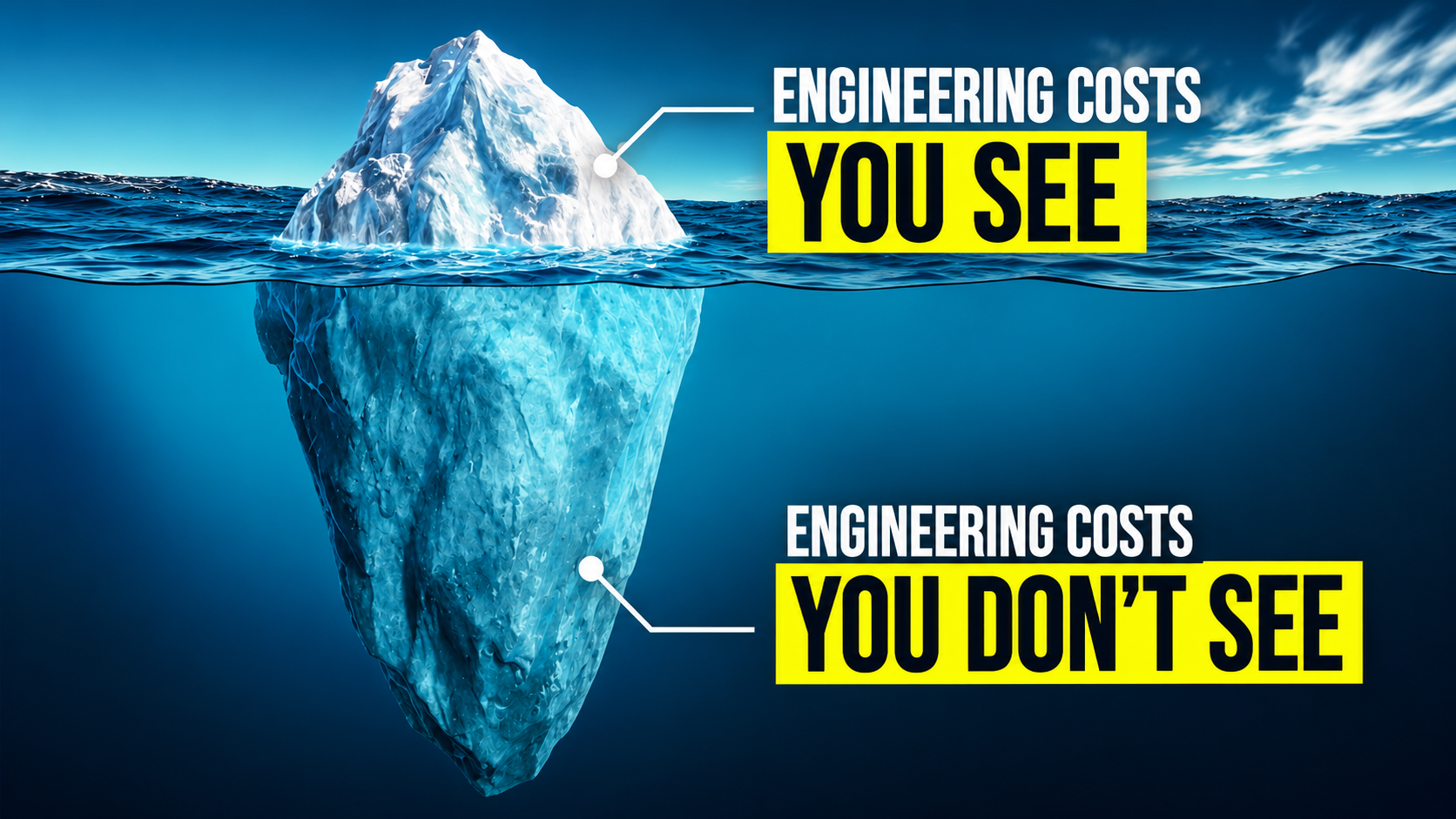
The hidden bill
Internal engineering costs are absorbed into payroll and sprints.
Studios frequently miscalculate the financial implications of internal versus external software development. This creates a systemic bias toward building proprietary tools.
The true cost
A full TCO analysis requires five critical components.
A comprehensive total cost of ownership analysis must account for initial build costs, ongoing maintenance, system evolution, knowledge retention, and opportunity cost.
Key number
Maintenance consumes 60 to 80 percent of a system's lifecycle cost.
Industry data suggests that maintenance alone typically consumes 60 to 80 percent of a system’s total lifecycle cost. Annual upkeep requires 15 to 25 percent of the initial investment.
The talent drain
Diverting top talent to generic infrastructure is the most significant expense.
The opportunity cost of diverting top engineering talent from game-differentiating features to generic infrastructure represents the most significant, yet frequently ignored, expense.
The framework
Studios should reserve internal capacity for proprietary problems only.
Studios should reserve internal engineering capacity exclusively for proprietary problems that cannot be solved by commercially available, battle-tested tools. Failing to evaluate full lifecycle costs risks project delays and increased technical debt.
The path forward
A disciplined build-versus-buy framework optimizes capital allocation.
Adopting a disciplined build-versus-buy framework is essential for studios to optimize capital allocation. This ensures engineering talent remains focused on delivering unique experiences that drive player engagement.
1 / 6
Ask AI about this report