Updated Jun 1, 2026 by Unity
Financial · February 10, 2026
Published by Unity
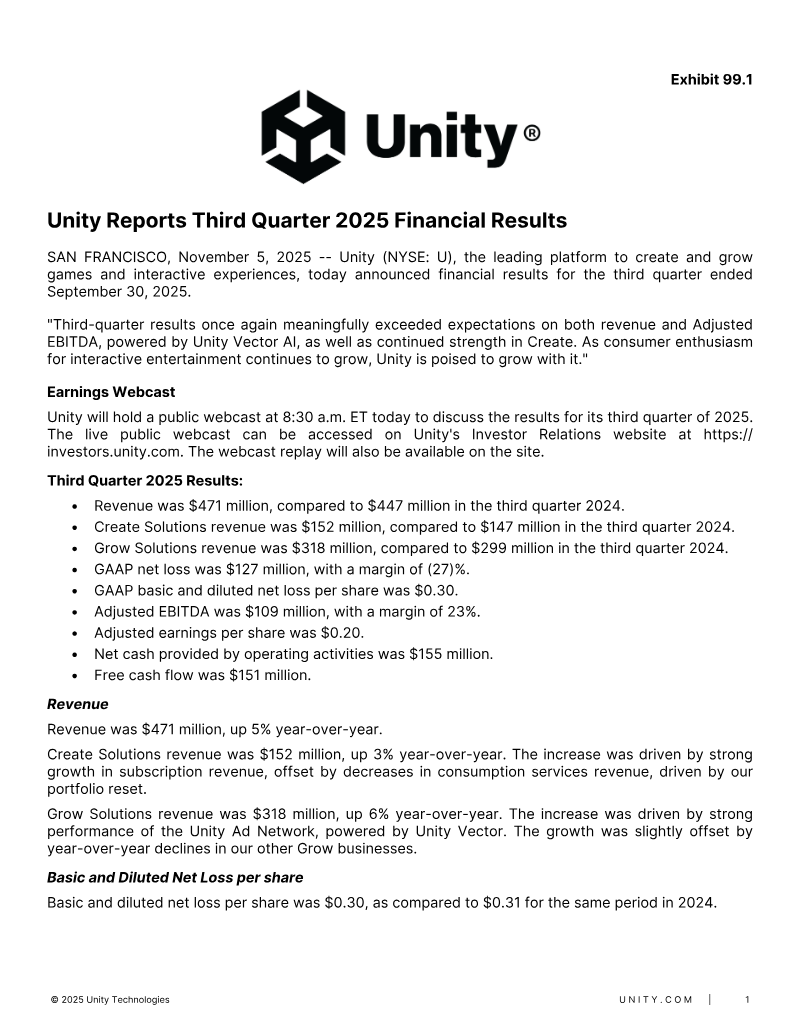
Unity Reports Fourth Quarter and Fiscal Year 2025 Financial Results SAN FRANCISCO, February 11, 2026 -- Unity (NYSE: U), the world’s leading game engine, today announced financial results for the fourth quarter and fiscal year ended December 31, 2025.
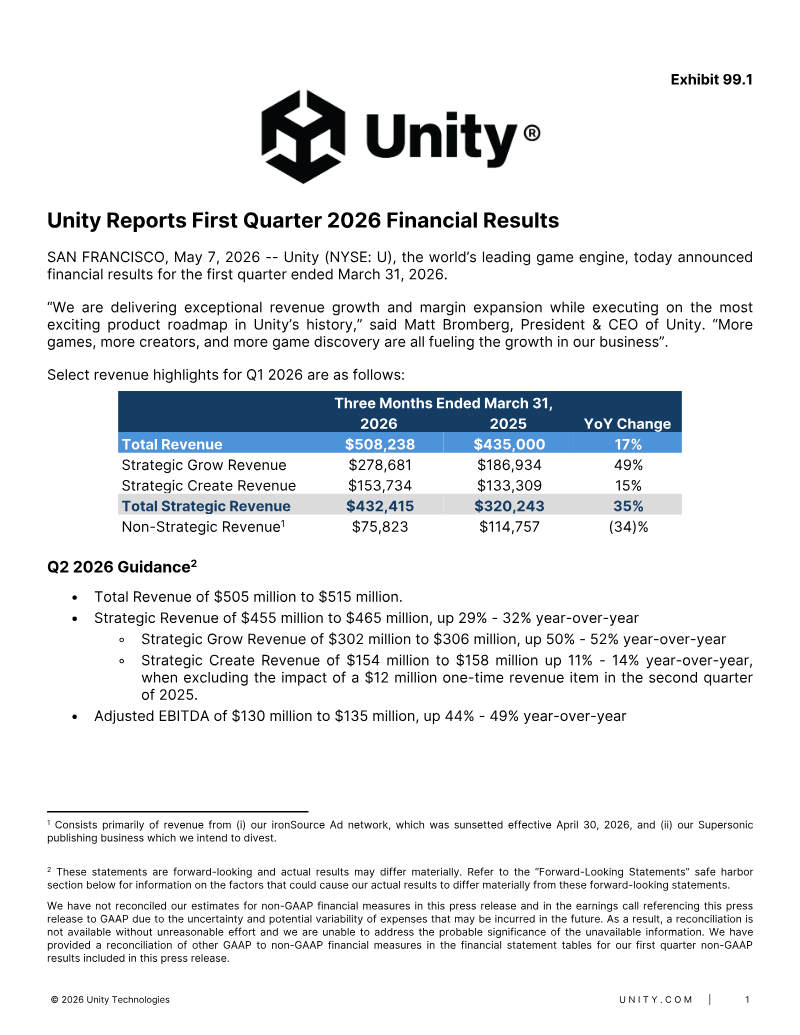
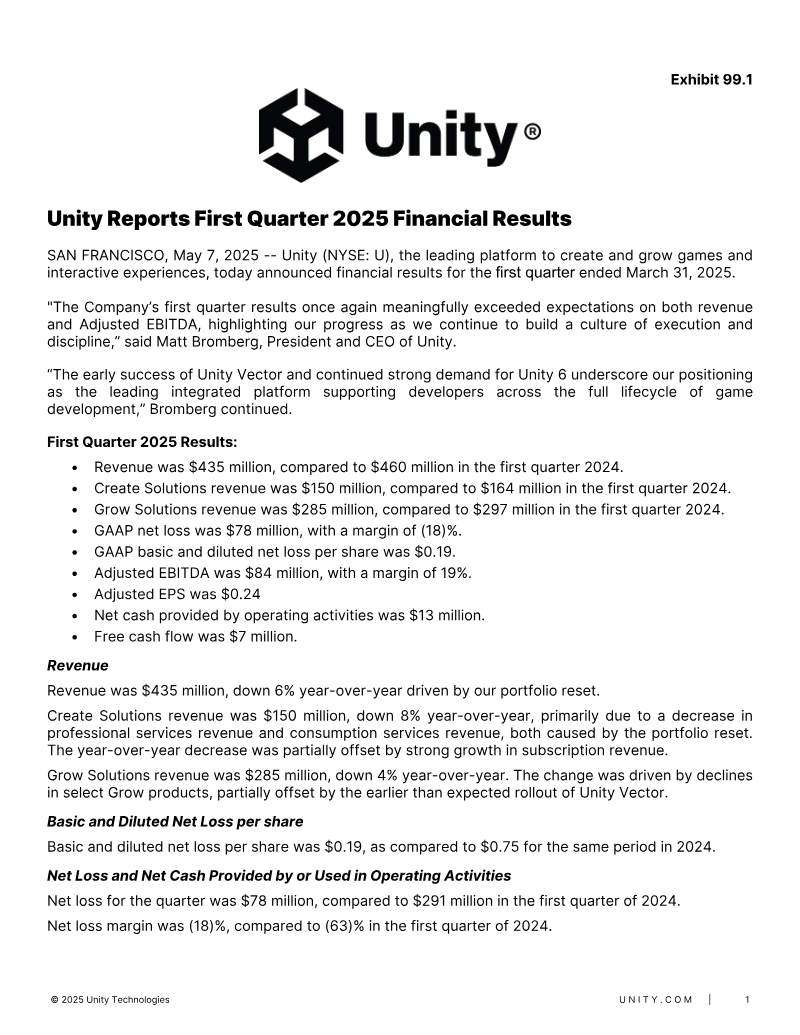
Exhibit 99.1 Unity R Unity Reports Fourth Quarter and Fiscal Year 2025 Financial Results SAN FRANCISCO, February 11, 2026 -- Unity (NYSE: U), the world’s leading game engine, today announced financial results for the fourth quarter and fiscal year ended December 31, 2025. “Fourth quarter results once again comfortably exceeded the high-end of our guidance, led by exceptional performance from Vector, which experienced its third consecutive quarter of mid-teen sequential revenue growth, and the best growth we’ve seen in Create in over two years,” said Matt Bromberg, President and CEO of Unity. “With Vector demonstrating rapid growth and Unity 6 adoption at the fastest rate we’ve ever experienced, our goal of becoming the essential infrastructure for the next generation of interactive entertainment is coming into clear focus.” Earnings Webcast Unity will hold a public webcast at 8:30 a.m. ET today to discuss the results for its fourth quarter and fiscal year 2025. The live public webcast can be accessed on Unity’s Investor Relations website at https://investors.unity.com.
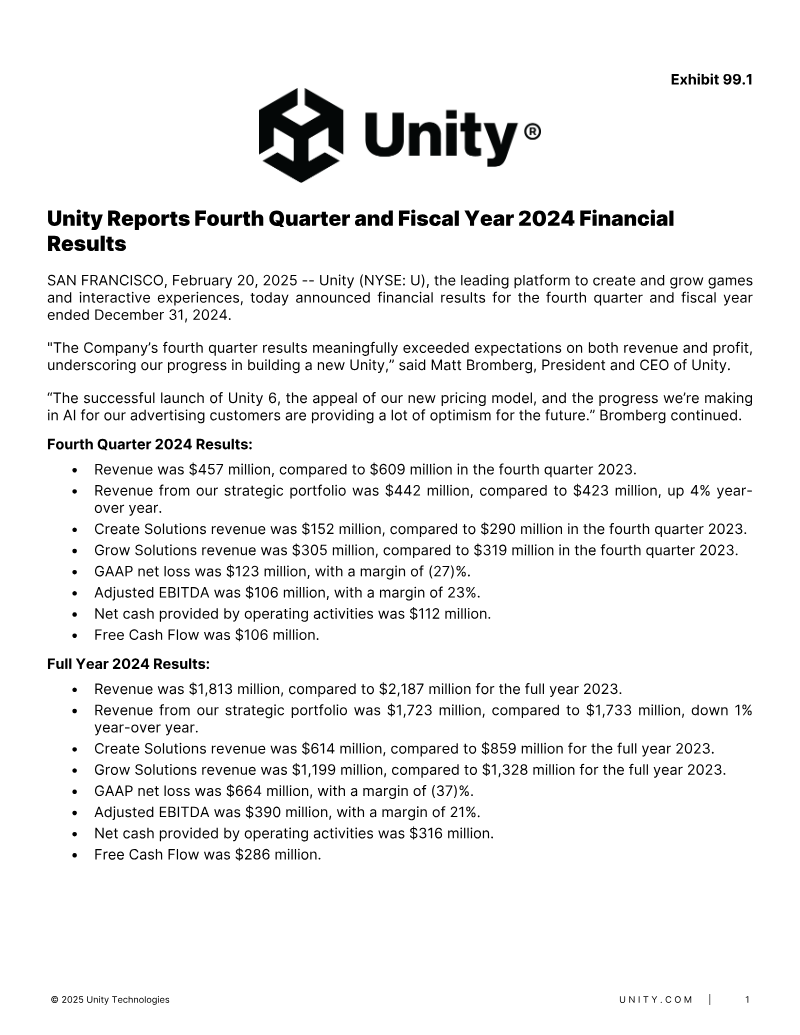
active entertainment is coming into clear focus.” Earnings Webcast Unity will hold a public webcast at 8:30 a.m. ET today to discuss the results for its fourth quarter and fiscal year 2025. The live public webcast can be accessed on Unity’s Investor Relations website at https://investors.unity.com. The webcast replay will also be available on the site. Fourth Quarter 2025 Results: • Revenue was 503 million, compared to 457 million in the fourth quarter 2024. • Create Solutions revenue was 165 million, compared to 152 million in the fourth quarter 2024. • Grow Solutions revenue was 338 million, compared to 305 million in the fourth quarter 2024. • GAAP net loss was $89 million, with a margin of (18)%. • GAAP basic and diluted net loss per share was $0.21. • Adjusted EBITDA was $125 million, with a margin of 25%. • Adjusted earnings per share was $0.24. • Net cash provided by operating activities was $121 million. • Free cash flow was $119 million. Revenue Revenue was $503 million, up 10% year-over-year. Create Solutions revenue was $165 million, up 8% year-over-year. The increase was driven by strong growth in subscription revenue. Grow Solutions revenue was $338 million, up 11% year-over-year. The change was driven by mid-teen sequential quarterly revenue growth from Unity Vector, which represented 56% of total Grow Solutions revenue in the fourth quarter.
ar. The increase was driven by strong growth in subscription revenue. Grow Solutions revenue was $338 million, up 11% year-over-year. The change was driven by mid-teen sequential quarterly revenue growth from Unity Vector, which represented 56% of total Grow Solutions revenue in the fourth quarter. The growth was partially offset by declines in the IronSource Ad Network, which represented 11% of total Grow Solutions revenue in the fourth quarter.
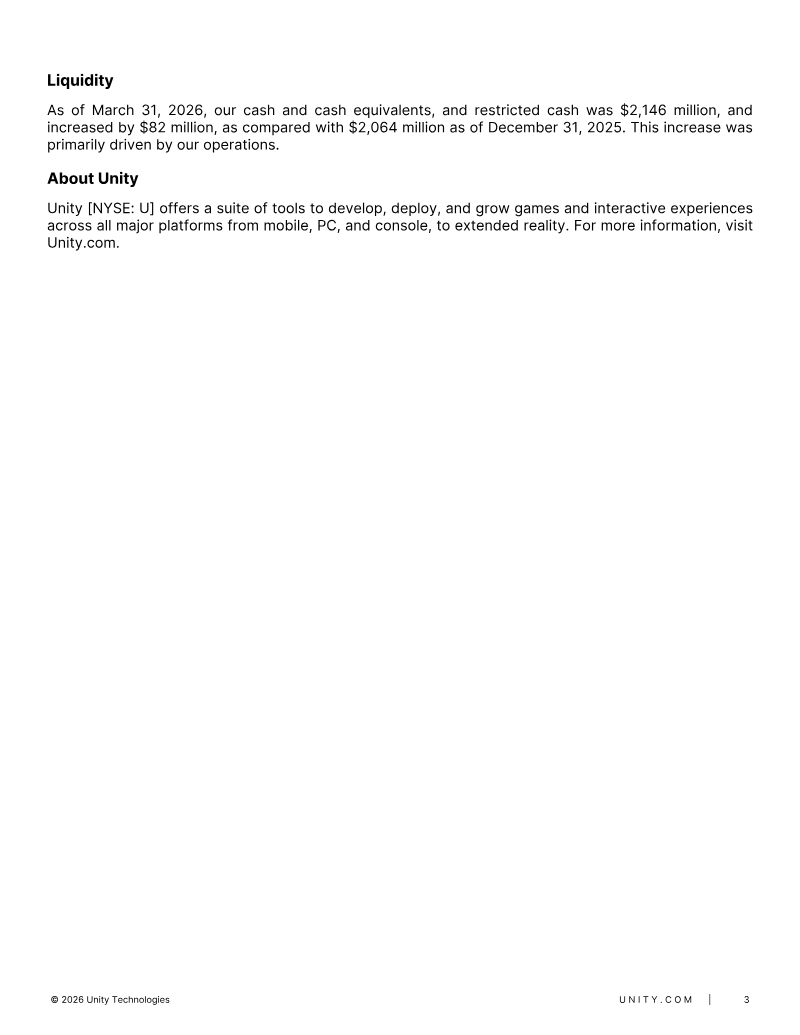
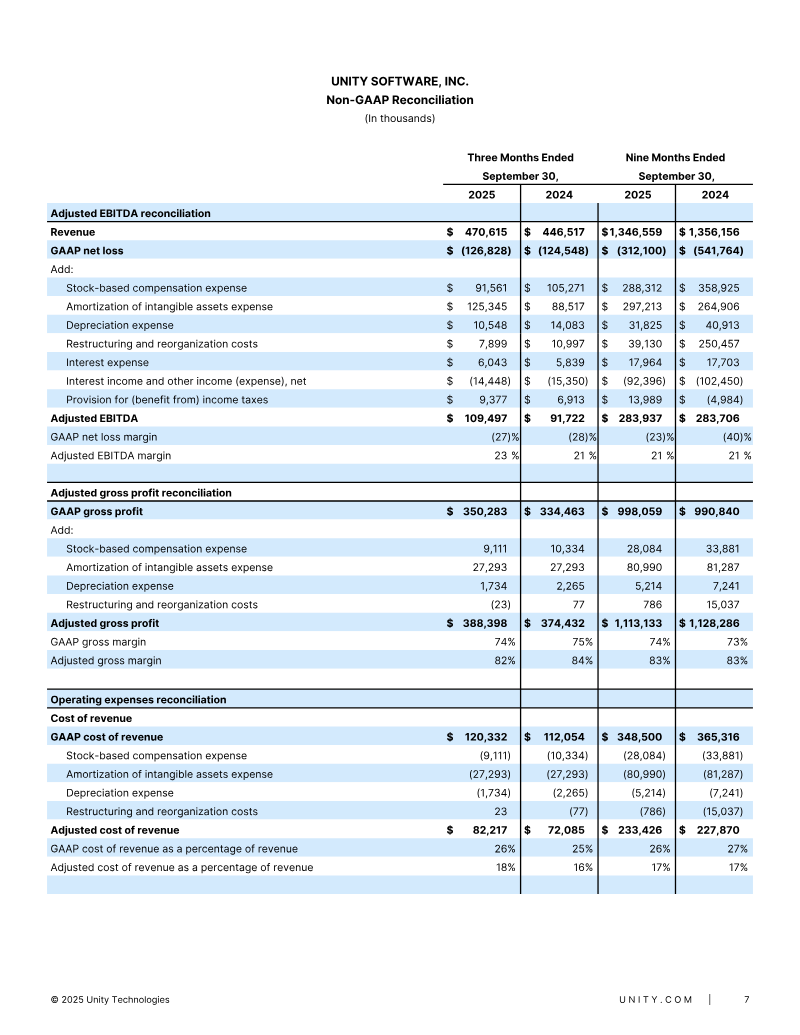
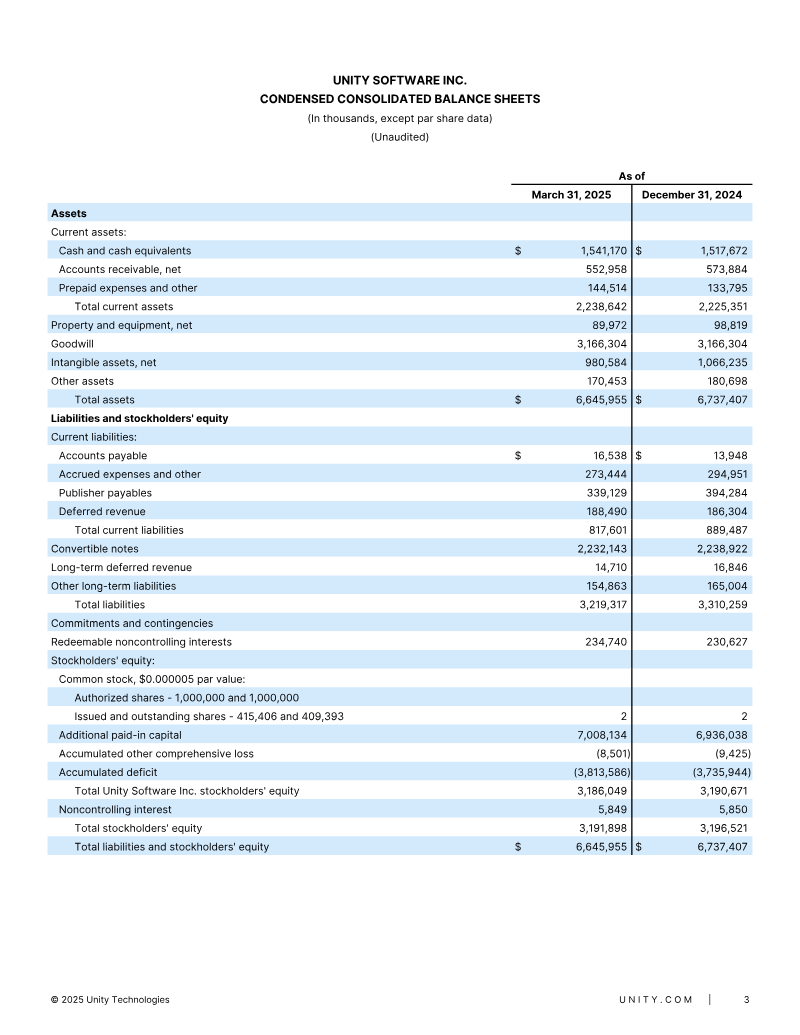
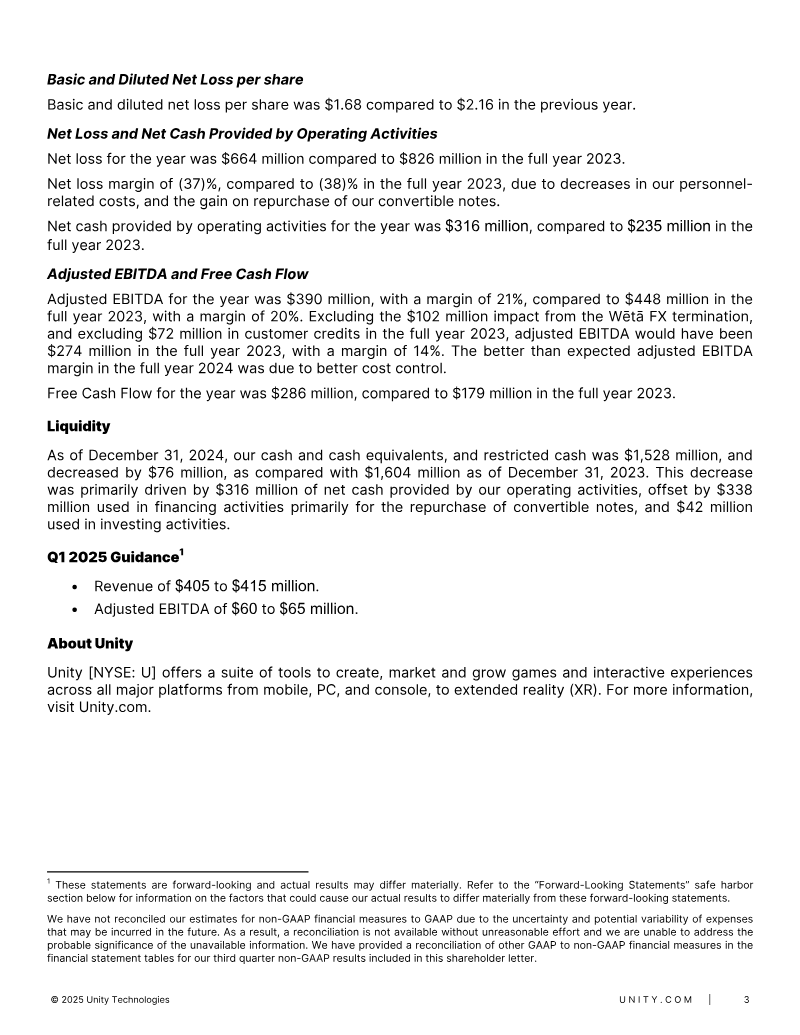
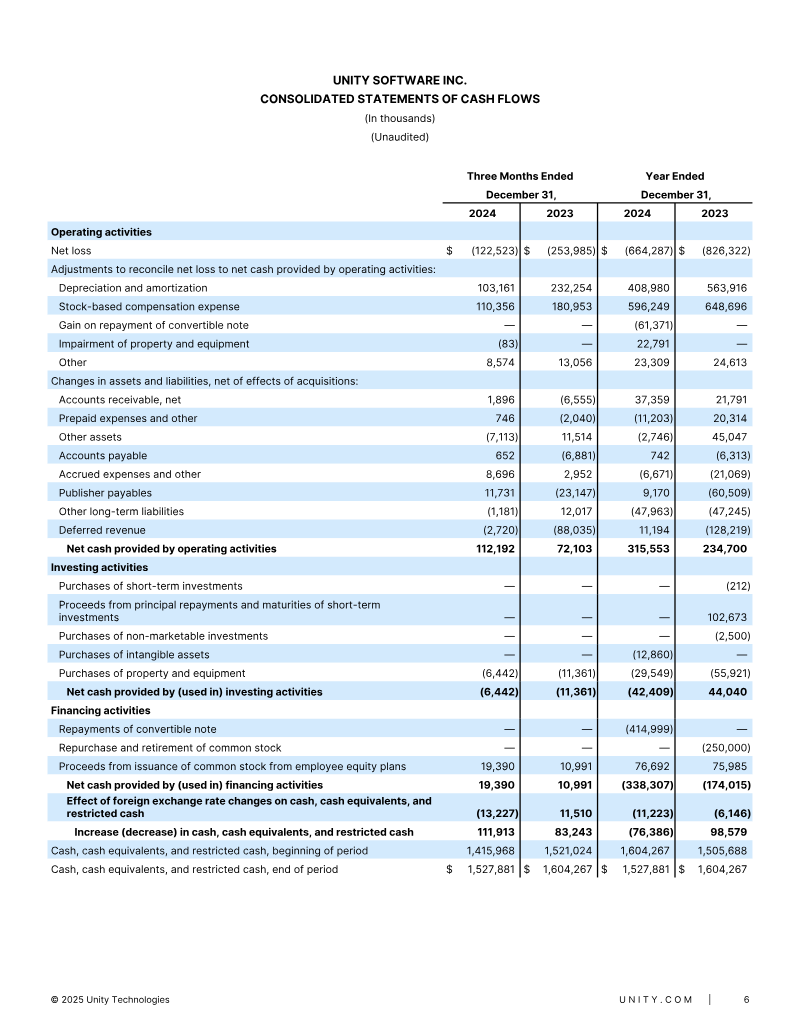
Basic and Diluted Net Loss per share Basic and diluted net loss per share was 0.21, as compared to 0.30 for the same period in 2024. Net Loss and Net Cash Provided by Operating Activities Net loss for the quarter was 89 million, compared to 123 million in the fourth quarter of 2024. Net loss margin was (18)%, compared to (27)% in the fourth quarter of 2024. Net cash provided by operating activities for the quarter was 121 million, compared to 112 million in the fourth quarter of 2024. Adjusted EBITDA, Free Cash Flow, and Adjusted EPS Adjusted EBITDA for the quarter was 125 million, with a margin of 25%, compared to 106 million in the fourth quarter of 2024, with a margin of 23%. The year-over-year improvement was driven by better cost control and higher revenue. Free cash flow for the quarter was 119 million, compared to 106 million in the fourth quarter of 2024. Adjusted EPS for the quarter was 0.24, compared to 0.20 in the fourth quarter of 2024. Liquidity As of December 31, 2025, our cash and cash equivalents, and restricted cash was 2,064 million, and increased by 536 million, as compared with $1,528 million as of December 31, 2024.
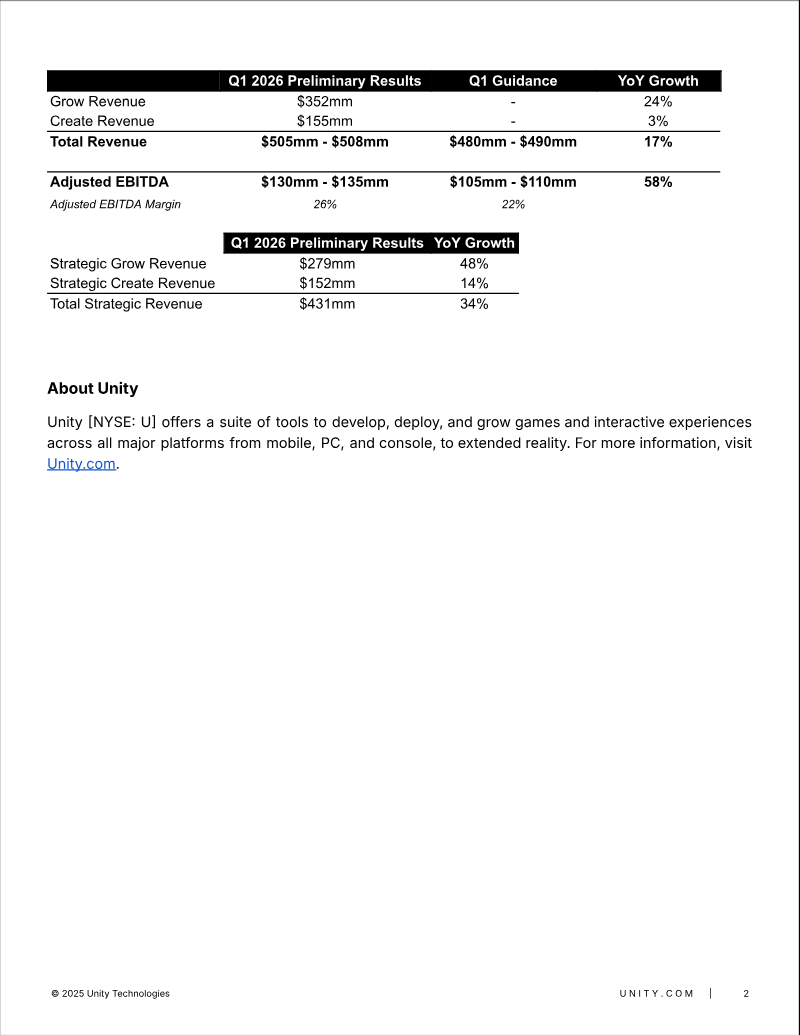
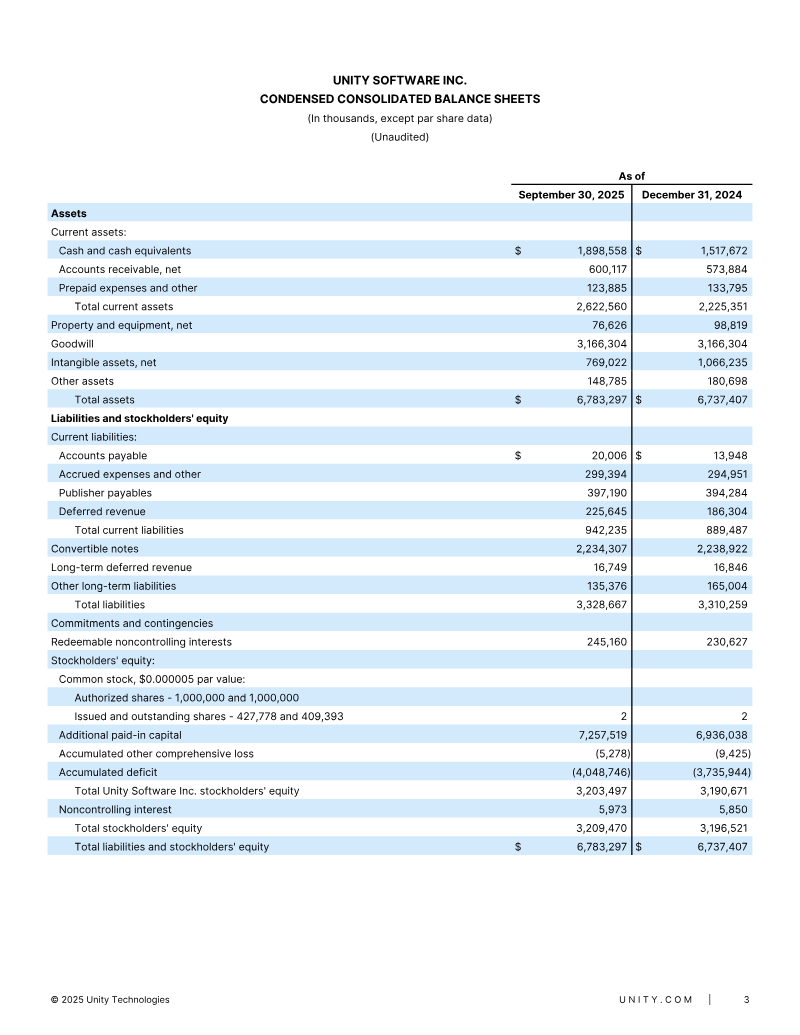
rth quarter of 2024. Adjusted EPS for the quarter was 0.24, compared to 0.20 in the fourth quarter of 2024. Liquidity As of December 31, 2025, our cash and cash equivalents, and restricted cash was 2,064 million, and increased by 536 million, as compared with $1,528 million as of December 31, 2024. This increase was primarily driven by our operations, and proceeds from issuance of common stock upon exercise of stock options and purchase of ESPP shares, offset by the net cash outflows from our debt refinancing. Q1 2026 Guidance¹ We expect First Quarter Revenue of 480 million to 490 million. • In Grow, we expect revenue to be flat on a sequential basis. • In Create, we expect double digit year-over-year revenue growth (excluding the impact of nonstrategic revenue). We expect First Quarter Adjusted EBITDA of 105 million to 110 million. About Unity Unity [NYSE: U] offers a suite of tools to develop, deploy, and grow games and interactive experiences across all major platforms from mobile, PC, and console, to extended reality. For more information, visit Unity.com.
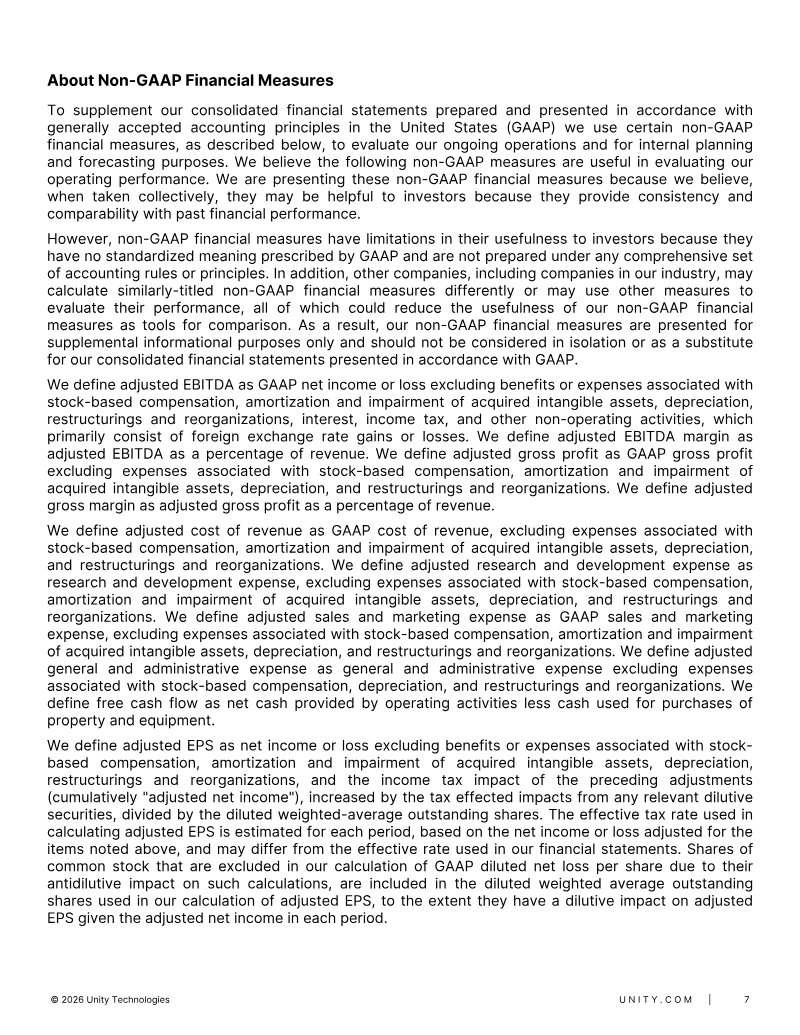
xpect First Quarter Adjusted EBITDA of 105 million to 110 million. About Unity Unity [NYSE: U] offers a suite of tools to develop, deploy, and grow games and interactive experiences across all major platforms from mobile, PC, and console, to extended reality. For more information, visit Unity.com. 1 These statements are forward-looking and actual results may differ materially. Refer to the “Forward-Looking Statements” safe harbor section below for information on the factors that could cause our actual results to differ materially from these forward-looking statements. We have not reconciled our estimates for non-GAAP financial measures in this press release and in the earnings call referencing this press release to GAAP due to the uncertainty and potential variability of expenses that may be incurred in the future. As a result, a reconciliation is not available without unreasonable effort and we are unable to address the probable significance of the unavailable information. We have provided a reconciliation of other GAAP to non-GAAP financial measures in the financial statement tables for our fourth quarter and fiscal year 2025 non-GAAP results included in this press release.
The game engine landscape is undergoing a significant structural shift, characterized by the decline of proprietary in-house technology in favor of established third-party platforms. While custom engines historically dominated the industry, their market share has eroded substantially over the last decade, falling to approximately 13 percent of new releases by 2024. This transition is driven by the increasing complexity of modern development, which makes the maintenance of internal engines cost-prohibitive and less efficient compared to the immediate, high-fidelity capabilities offered by public alternatives. Unreal Engine has emerged as the primary beneficiary of this trend, particularly within the AAA segment. Following the release of Unreal Engine 5, the platform has successfully reclaimed market share lost during the pandemic, becoming the preferred choice for large-scale, high-budget productions. Conversely, Unity maintains a dominant position in terms of total volume of games released, particularly among indie and smaller developers, though it faces increasing competition from smaller engines like Godot, which has seen notable growth since 2020. Despite Unity’s high release volume, Unreal Engine and custom AAA engines continue to command a larger portion of total units sold, underscoring their prevalence in high-performing commercial titles. The analysis relies on data from over 13,000 games released on Steam, utilizing proprietary estimation algorithms and tagging methodologies to categorize engine usage by game size, genre, and unit sales. The findings indicate that while the choice of engine is often dictated by project scale—with smaller titles favoring Unity and larger, graphics-intensive projects gravitating toward Unreal Engine—the industry is moving toward a standardized ecosystem. As studios weigh the benefits of third-party support, talent accessibility, and advanced graphical features against the loss of proprietary control, the reliance on external engines is expected to continue its upward trajectory through 2030.
The game engine landscape is undergoing a significant transition as developers increasingly move away from proprietary, in-house solutions in favor of established third-party platforms. This shift is driven by the need for immediate development readiness, access to advanced graphical features like Nanite and Lumen, and the ability to leverage a broader, pre-trained talent pool. While custom engines historically dominated the industry, their market share has declined sharply over the last decade, falling to approximately 13% of new releases by 2024. Unreal Engine has emerged as the primary beneficiary of this trend, particularly among large-scale AAA studios. By 2024, Unreal Engine and custom engines collectively accounted for the majority of unit sales on Steam, with Unreal Engine 5 becoming the industry standard for high-fidelity projects. Conversely, Unity maintains a dominant position in terms of the sheer volume of games released, particularly within the indie and smaller-scale development sectors. However, Unity faces intensifying competition from smaller, specialized engines like Godot and GameMaker, which have captured a growing segment of the indie market. The analysis, which covers over 13,000 games released on Steam, utilizes proprietary tagging and estimation methodologies to track engine adoption trends. Data indicates that engine preference is heavily influenced by game scale and genre; high-graphics, large-budget titles skew heavily toward Unreal Engine, while strategy and simulation games remain strongholds for Unity. Looking toward 2030, the industry is expected to see continued consolidation as more studios abandon legacy in-house tools to mitigate the high costs of engine maintenance, further cementing the market dominance of third-party public engines.
The 2025 Game Developer Survey captures the technology preferences and strategic shifts of game studios worldwide, focusing on platform targets, engine adoption, 3D creation tools, backend services, analytics, user‑acquisition solutions, and generative‑AI usage. By segmenting respondents across six studio‑size categories—from solo developers to enterprises with over 100 employees—the survey reveals how development priorities evolve as companies scale and as pricing models change. Unity remains the most widely used engine, yet studios of all sizes report a notable decline in planned future use, driven by Unity’s revised pricing that introduced a 25 % increase for enterprise licenses and an $2,200 per‑seat fee for pro users. Open‑source alternatives such as Godot and Defold are gaining traction, while Unity’s ProBuilder and SideFX’s Houdini emerge as the fastest‑growing 3D modeling and level‑design tools, especially among studios under 100 employees focused on PC and web titles. Conversely, Adobe’s suite and Autodesk products experience the steepest drop‑offs, with declines ranging from 4 % to 10 % in anticipated usage. Backend infrastructure shows a shift away from Photon, whose hybrid‑plus offering has sparked a modest decline, toward Edgegap, which leverages bare‑metal and cloud resources to deliver cost‑effective matchmaking. Xsolla’s recent rollout of loyalty programs, regional tiering, and cloud‑gaming integration underscores a broader move toward web‑based delivery and progressive‑web‑app capabilities, particularly in the MENA region. Analytics remain dominated by Google, but Mixpanel records a 120 % surge in interest, buoyed by a new startup‑focused pricing tier that promises over $150 k in value for qualifying studios. User‑acquisition trends indicate a universal retreat from Apple Search Ads after its shift to a cost‑per‑tap model, while privacy‑centric platforms such as Tenjin and Branch experience rapid adoption, leveraging OpenAI‑enabled features and enhanced compliance tools. Generative AI is employed across a spectrum of development stages—from storyboarding to performance optimization—but studios report a consistent decline in its use for content creation, with smaller teams showing a 7 % drop and larger teams a 5 % reduction. Overall, the survey highlights a diversification of technology stacks, a cautious response to pricing reforms, and an accelerating embrace of open‑source, cloud‑native, and AI‑augmented solutions as the industry navigates
The global game technology landscape has reached a critical inflection point in 2024, characterized by the widespread expansion of game engines into non-gaming sectors such as automotive, healthcare, and media. Approximately 50% of developers now utilize these engines for cross-industry applications, with Unreal Engine maintaining a dominant 63% market share, particularly within media and entertainment. Despite this growth, the industry contends with significant structural challenges, including acute funding shortages, personnel deficits, and the technical complexities of managing massive data sets across distributed teams. To mitigate these hurdles, organizations are prioritizing toolset consolidation and robust version control systems, with Perforce Helix Core and Git-based platforms serving as the primary infrastructure for modern development pipelines. The technical ecosystem remains highly fragmented but is increasingly defined by a shift toward automation and cloud integration. Microsoft Visual Studio and Jenkins continue to lead in the AAA space, though modern alternatives like JetBrains Rider and GitHub Actions are gaining substantial traction. Cloud-based development has become a standard practice for nearly half of the industry, with Amazon Web Services emerging as the preferred provider. Furthermore, generative AI has seen rapid institutional integration, with 65% of organizations adopting the technology to streamline workflows. This technological evolution coincides with a shift in labor dynamics; following widespread industry layoffs, employers now prioritize cross-functional adaptability over narrow specialization, while the workforce increasingly values direct access to leadership and mental health support. Geographically and industrially broad, these findings reflect a transition toward more agile, cloud-native development environments that must balance aggressive timelines against resource constraints. The move toward indie development and the diversification of game engine utility suggest that the boundaries between traditional gaming and broader digital creation are permanently blurring. Success in this environment depends on the ability to manage increasingly large file sizes and complex collaboration requirements through integrated CI/CD and version control strategies.