1 free read left. Create a free account for unlimited reading + AI research.
Create free accountArticle Game Studio Unlocked
1 free read left. Create a free account for unlimited reading + AI research.
Create free accountArticleGame Studio Unlocked
Founders should treat team composition as a strategic risk factor.
Effective staffing strategy for independent game studios requires aligning team composition with specific development phases to manage burn rate and maintain creative agility. The primary thesis is that studios often fail by over-hiring full-time staff too early, which creates rigid fixed costs that stifle experimentation and pivot capability. Instead, founders should maintain a small, permanent core team while utilizing elastic, external talent to handle fluctuating production demands.
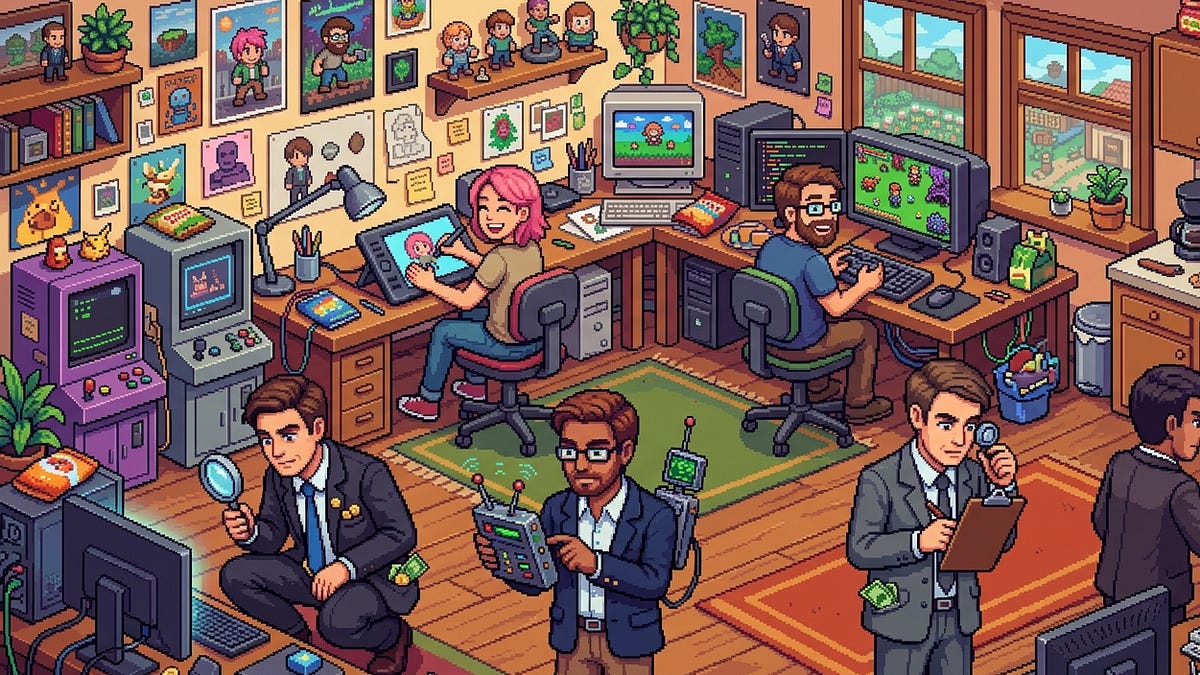
The analysis categorizes studio roles into three distinct groups: a core leadership team responsible for vision and architecture, an elastic production group for scalable content creation, and specialized consultants for high-risk or narrow technical tasks. By mapping these roles against a project’s lifecycle—from concept and validation to full production—studios can optimize their runway. The author emphasizes that hiring should be staggered to avoid onboarding bottlenecks and that fully loaded costs, rather than base salaries, must be used for accurate financial planning.
Geographic considerations also play a vital role in modern studio operations. Leveraging a global talent market allows studios to access high-quality expertise while extending their financial runway. However, the author warns against treating contractors as mere commodities, noting that poor integration and lack of clear communication often lead to project failure. Ultimately, success depends on treating staffing as a dynamic, living plan that evolves alongside project milestones, ensuring that headcount growth remains tied to actual production needs rather than a desire for organizational permanence.

Game Studio Unlocked · 2026
Game Studio Unlocked · 2026
Game Studio Unlocked · 2026
Game Studio Unlocked · 2026
Game Studio Unlocked · 2026
Game Studio Unlocked · 2026
Game Studio Unlocked · 2026
Game Studio Unlocked · 2026
Game Studio Unlocked · 2026
Game Studio Unlocked · 2026
Game Studio Unlocked · 2026
Game Studio Unlocked · 2026
Jason Schreier · 2026