Transcript
This week, Ubisoft continues to slash staff. Steam faces a lawsuit over its fees. Capcom delivers more impressive numbers. And our big piece today, we speak to GDC about its [music] latest industry report and whether this is a make or break year for the conference. [music] Hello and welcome to the Game Business Show. Today I'm in Manchester at the Game Trends and Opportunities Conference. It's one of the few few events I've been attending and speaking at over the last uh few weeks. cuz it's been a bit of a minor little bit of a small tour of the game business where I've been talking about some of the things that we've learned or I've learned over the last 85 odd episodes of the show, sort of sharing them with folks, putting in some video clips. I'm I'm really looking forward to this. Um, I should be seeing some familiar faces today as well, which is quite exciting. Um, I'll let you know how it goes. But we still have a great show for you today. I'm still going to put out a a big episode of the game business show, including a couple of interviews with GDC and the AIAS. But before we get to all that, we need to dive into some
news. And let's begin with more miserable news at Ubisoft. This is probably going to be a recurring segment of the show really. Following last week's announcement of a major company reset, which you know involves them uh laying off more staff, cutting more things and moving everyone into creative houses. They canceled a load of projects. They delayed a load more. Ubisoft has now proposed the elimination of up to 200 jobs at its HQ in Paris. Um that's about 18% of staff at that office. the role of its uh France HQ will now be focused on purely on governance, strategic prioritization and capital allocation. Those are the words of Ubisoft. Now what it's done is it's enter negotiations for what's called uh a rupture conventional collective. This is a voluntary mutual termination agreement that allows French companies to reduce their workforce by negotiating that with unions of which there are a bunch of um Ubisoft staff that are unionized in that country. Um, the proposal applies exclusively to Ubisoft employees with French contracts and could result in up to 200 positions being cut. As you said at the start, um, no decision on the final number can be
until a collective agreement is reached with the unions. I'll be honest, I had maybe I'm I'm a bit too naive and optimistic. I'd hoped that by moving the company into creative houses, there might have been an opportunity for Ubisoft to sell some of its uh, divisions and move some things around. So that saving that it wants to make€200 million euro saving it's looking to make over the next couple of years it could make by selling divisions you know I look at some of these creative houses one of them is purely focus on casual and party games and we can see you know there's companies that are specializing in that sort of stuff at the moment Netflix is doing that Amazon's doing that next playground as well maybe they would like just dance and titles like that and maybe that could be sold and that could result in those savings there's some niche IP there's an entire division dedicated to things like Prince of Persia and ano ano is very popular but it's very niche and there will be tons of organizations like a focus home into sorry pull-up entertainment nearly use is their old name there and would be very interested in in a division like that I'm sure but um no they've already moving ahead with these cuts and of course they are um uh I've spoken to a
few people at Ubisoft um passed on my best wishes to them it's certainly a very stressful time they're really um there's a lot of negativity a lot of depression sort of in that company at the moment but they'll come out the other side I actually think the plan's good what Ubisoft put together, not the layoffs obviously, but the the idea of splitting the business into these little areas. It also shows that Ubisoft isn't just AAA games and live service games. I know Eve Gilamo talks about those on the investor calls quite a lot. Um, which he has to, right? That's what investors are interested in. They want to know about Assassin's Creed. They want to know about Rainbow 6. They want to know how they're going to capitalize on those sort of things. But Ubisoft have a lot of niche stuff as well. I think we think forget about Prince of Persia and ANO and Just Dance and all these um spin to sell. All these cool little projects that have the potential to be decent hits and Ubisoft are investing in them. Um so I actually quite like the plan. I think it allows them to focus. It potentially allows them to um divest easily as well and and potentially protect some IP and jobs and I think that's really important. So best of luck to the team at Ubisoft there. The next story that I've got here in front of me
is around Steam. So PC games giant Valve has been told it has to face a 656 million pound lawsuit in the UK. This is uh because of a case that was put against Valve by Vicki Shotbolt in June 2024. She's the CEO of Parent Zone and believes the company takes excessive commission charges. This is all around that 30% revenue share that Valve stipulates if you want to get their game on Steam. It has now been said that the London Competition Appeals Tribunal says the case can continue despite Valve trying to get it shut down. The lawyers for ShopBot claim that should consumers want to purchase add-on content for a game, they have to go through Steam, something they describe as locking in users to the platform, the case has been brought on behalf of 14 million Steam users in the UK. Look, at the moment, the focus is on mobile and their dominance and the the share there. And Steam's a very effective and popular platform, and you'll never get many developers being openly critical of Steam. They're also a games company at heart, right? They care about the games industry. They're not necessarily in it for like, you know, they're not not Google or they're not they're not not in
it for other reasons. So, you know, I'm not being too critical of Steam here, but I think it's worth noting that it's a big cut and they're becoming an increasingly dominant player in the market. We're seeing a decline in the console space. We're seeing Xbox potentially move into having a basically a PC open platform as their console, which means people will just go, "Hey, we can get our games on Xbox just by publishing on Steam. We don't need to publish through Xbox in order to do that." We're already seeing that in China, right? You know, the Steam International Store, it's openly available in China. Um, that's how you get your games released in China. If you want to going through on any other channels, almost impossible or not impossible, but certainly difficult. Steam has become the the way to get your games into China as well. And this one dominant player, we've been talking about whether Steam is a monopoly or not since I remember talking about that at the London Games Conference when I was at MCV. So, that's like 12, 13 years ago. Still a conversation now, but I think it's going to become an even more prominent one. This is very specifically a consumer case, but I think there's going to be more deeper conversations around Steam and it and its dominance in the market. It's obviously a great platform. The consumers love it and I'm
not quite sure what the solution is, but um it's going to be an ongoing conversation. AB that is absolutely for sure. And before I move on to our big topic though, I want to talk about Capcom's financials. I just love Capcom at the moment. They're such a cool company. The publisher saw a significant jump in its operating and net income. It rose by 75% and 69% respectively. And the big driver for this was Resident Evil. The excitement for Resident Evil Reququum. And the excitement Resqu is really high. It's topping every single metric at the moment in terms of, you know, if it was except for Grand Theft Auto, it would be number one for everything in terms of trailers, terms of viewers, terms of press articles, in terms of engagement. It's so high. We'll talk about that a bit more next week. But because of the excitement for Resident Evil Recreum, that's driving high sales for recent Resident Evil games, particularly Resident Evil 4, the remake of that game, and Resident Evil Village. Capcom did actually release a Resident Evil game last year. Resident Evil Survival Unit and that's a mobile game. It's surpassed 3 million downloads released in November. The title actually um hit 1 million after 24 hours. So, it's doing really well. Resident Evil is really driving the success there. Street
Fighter is doing well as well. Street Fighter 6 has just surpassed 6 million copies. Um it launched on Nintendo Switch 2 last year, but also Devil May Cry and Monster Hunter. Interestingly, Monster Hunter Rise is the big thing that's continuing to drive sales. Monster Hunter Wilds has just surpassed 11 million units following its February 2025 launch, but it did most of those units within a couple of weeks. Um, it has slowed down quite a bit there. So, there's work to do for Capcom and Monster Hunter Wilds, but it's this back catalog. They're astonishing with back catalog. I mean, I know the whole industry is doing very well with back catalog at the moment, but Capcom are the kings of this. I really would love to have them on the show. I've been pestering them to come on. I'd like to hear how they do it, but I'm very excited for Capcom and I'm very excited for Resident Evil Recreum as well. That's a little positive one to end end the news segment on after a few more tougher stories. But our main topic, the Game Developers Conference. So, in a moment, I'm about to welcome Mark Delora and Beth Elderin onto the show to talk about uh some of these stats they're revealing and more talk about GDC. But first, I want to share some of the stats with you. And I know stats in a podcast aren't necessary fun to listen to. There
will be more of these stats and details in them in the game business newsletter if you just want to read them. But according to their service, this is their games industry. So they do this survey every year of all sorts of different people in the games industry. They've done it differently this year. So therefore like for-like comparisons aren't quite right. They've changed some of the questions. There's quite a lot of difference in the way they they've done it this year. So there's going to be less comparison to previous years, but there's still some really fascinating data. So first section they talk about was layoffs. It was a big part of their their survey and they revealed that 17% of game industry professionals reported being laid off in the past 12 months while 11% said they were laid off during the 12 months prior. Now that mean that which by the way lines up with their 2025 data and that means over 1/4 of respondents have experienced a layoff in the past two years that increases though to onethird for those in the United States which backs up obviously all the data that we've got around job losses in the United States being more severe than in other markets. Half of the respondents said their current or most recent companies have conducted layoffs in the past 12 months. 42% said they
haven't. There's a little bit more optimism going forward. I say that there's little is probably the word. About half of currently employed respondents, that's 47% said they don't anticipate layoff for the next year. But 1/4 of 23% said they do and 30% were unsure. Interestingly, people who have been laid off already or previously and since found another job were more likely to feel unsure about layoffs than than those who haven't been to say 40%. That number jumps to respondents of AAA studios said they were more likely to say they anticipated future layoffs than those at smaller studios as well. It isn't just game developers that this survey does. They also surveyed educators and students as well. 100 educators of 50 students. Uh 74% of the students said they were concerned about their future jobs prospects in the industry as a result of the situation going on in games at the moment. But 87% of educators said they either expect to see a negative impact on student placement postgraduation or it's already happening or they're already seeing that negative impact. Some of these numbers aren't surprising, but it's obviously stark there. to see them. Uh so after
they they talk about layoffs and there'll be some more layoff stats as say in the newsletter, but they also talked about generative AI and this is interesting. So over onethird of game industry professionals use generative AI, 36% said they did that. But there's some differences in who's adopting those tools. So men, 41% reported using it more than women, 35%. Older workers, 46% more than younger ones, 34%. That actually surprises me a little bit. um respondents at game studios reported using AI tools uh less than those at publishing companies support teams and marketing and PR firms. So 30% of game studios reported using AI tools while 58% of publishing companies and marketing and PR firms said they use AI tools. Business professionals usage 50 um far outweighs more than any other job discipline. So 58% of business professionals say they use generative AI, upper management 47%. Whereas 29% of lower man lower decks as they call it [clears throat] in the survey say they use AI tools. Studio director source it between the two. 36% of studio directors
say they use AI tools. I mean the AI data is actually really fascinating. Um the GDC asked the respondents what they use AI tools for. And this is a little more reassuring. I think the most common use was researching or brainstorming. 81% said they use generative AI tools for that followed by daily tasks and code assistance 47% then prototyping 35%. Generative AI tools, you know, aren't used that often for creative tasks like asset generation. Only 19% said they use it for asset generation. Procedural generation 10% and playerfacing features only 5% said they use generative AI for player facing features. Again, I would have expected this, but it's it's nice to see it written down. Overall, about 52% said generative AI tools are being used at their companies. So over half, and that includes one third of people who say they don't use AI tools themselves. AI tools are still being used at their companies even if they're not using it. According to the survey, 78% of respondents work at companies with some form of internal policy on AI. 15% said there's no policy, and 7% said they weren't sure. They probably ignore the
emails. Um, this year's survey shows that over 52% of game industry professionals think generative AI is having a negative impact on the industry. That's a big jump from 30% last year and 18% the year prior. workers in visual and technical arts, game design and narrative and game programming hold the most unfavorable views. You know, over 60% are over there. About 7% of respondents said generative AI is having a positive impact on the game industry, which is down from 13% in 2025. So, a lot more concern around it than there ever has been as it becomes more and more prominent. I think after generative AI, uh GDC also did a survey around the engines. Some of this stuff, I don't know how useful this stuff is, but I thought it was interesting. 42% of developers are using Unreal Engine. 30% are on Unity. This is the first time GDC has seen a discrepancy between the two as the previous two state of the game industry surveys had Unreal Engine and Unity basically neck andneck. So um we're seeing a big gap now opening up between Unreal Engine and Unity. Most of the people surveyed they're not using
things like Roblox and userenerated tools. Um as of now 3% of free-to-play game developers use UGC tools to make games and two two individual premium developers in the survey said they're doing the same. So, it's not a huge number. When it comes to platforms, there's some interesting things here. This is about platforms that people are using and what they're making games for. PC is number one. That's not surprised. 83% of say surveyed continue to make games for PC. And 80% plan to keep making games for PC. More developers are working on PlayStation 5 hardware, 47% than Xbox series. That's understandable considering Xbox is sort of slow backing away from consoles. PlayStation also outranked Xbox and developer interest with twice as many respondents wanting to make games for the PS5 40%. Now, here's an interesting thing. They've added Steam Deck into the data this year, and that's already become the fourth most used platform on the market. Now, you could say the Steam Deck is of course uh a PC, but apparently uh GDC often have um people often put Steam Deck in as a separate platform. So, 28% of developers are making or optimizing game for that handheld. In addition, 40%
of developers said they're interested in making games for Steam Deck. That's a higher number than the number of developers said they're interested in making games for Nintendo Switch 2. Again, there's one thing to move your game from PC platform to a PC handheld than developing for Switch 2, but it's interesting to see those numbers. They're basically the same, but it's interesting to see Steam Deep do well. Other PC handhelds don't rank quite so highly. The ROG, Xbox, Ally, and similar handhelds are sit at seven and 6% respectively in terms of interest. And last thing I'm going to talk about platforms is VR, mainly because we spoke about VR the other week. Just 8%. That's less than 100 of the participants in the survey said they're working on XRVR projects. 82% of them are working on MetaQuest or the Horizon Store as the top platform for alternative reality experiences. Um, this is a bit concerning considering what's happening with Meta and how they're sort of scaling back there. Um, particularly um going forward and I think the need to diversify onto other VR platforms is going to be a priority for that part of the industry. A few more stats. I've got more stats. Oh, I could be here all day, couldn't I, with stats. So GDC asked 200
industry executives, investors and business and financial professionals to share whether tariffs are taking a toll on their business and 38% of respondents said US-based tariffs are impacting their expenses or revenue or financial decisions generally. 39% said there's been no impact and 23% while unsure and it's that number is the same for both inside and outside of the US. That's interesting. Um some people aren't being affected by it which is good. They also do the bit about working conditions and there's some interesting stats here. This survey shows that 59% of game industry professionals um who don't identify as solo developers work at least 40 hours per week on average and about onetenth or 11% actually typically work 50 hours or more per week. The big thing you guess in this segment is unionization. 82% of US US-based respondents, it's not a global thing, support the unionization of game industry workers. Only 5% are opposed and 13% are unsure. Um, they had to update the question for 2026, so it doesn't really compare to 2025 very well, but it's a big jump on 2025. Uh, although that may be because they had a
maybe in the options last year, which might have skewed things a little bit. Support was higher among workers making under $200,000 per year. 87% are support unionization. Those who've been laid off sometimes in the past 2 years, 88% are also in support of unionization. And people younger than 45 years old, in fact, there were zero 18 to 24 year olds opposed to unionization. So it's very popular amongst younger people. Again, not surprising stats, but it feels right, doesn't it? Those in leadership roles have a slightly different view. When we uh when GDC looked at owners and executives from companies with at least 20 employees, 58% said they support unionization, 18% were opposed and 24% were unsure. This is a telling stat, and it leads us into one of the topics we're going to talk about when uh with Beth and Mark in a moment. GDC asked workers based outside of the United States whether current immigration or gender identity policies have impacted their current or future travel plans. 31% said they've cancelled travel plans to the US and 33% are reconsidering future plans.
The percentage increased to nearly 47% for those who identify as LGBTQ plus. When it comes to non US industry leaders and investors, 60% of them said current immigration policies have impacted their ability or desire to do business with American companies. Now, this is a big issue for GDC because it wants to be a big global event. It is a big global event. It's always been a global event and we know I I'm in the UK. I know I'm hearing it firsthand. People saying they're not going to DDC this year because of what's going on in the US at the moment. Um, I'm going to stop there. There's a lot of data in this report. It's really good. You should definitely read it. Um, and I'm going to pass now to myself interviewing Beth Elder King who is the content marketing manager for GDC Festival of Gaming and Mark Delora who is the executive director of innovation and growth and we're going to chat about the data a bit but also the future of GDC in light of all the challenges it faces. Here it comes. Hello, welcome to the show.
Hey Chris, so the the results it's not that surprising in many, you know, job loss is still a problem. Students are struggling to find roles. US staff want
unions. press um came in low on marketing as the first thing I looked for. Obviously, Taris having an impact. I mean, all of that stuff is what you'd expect to see, which I think perhaps suggests that the data is is is pretty spot on. Was there anything that surprised you about it, though? Something that you weren't expecting?
I think one of the ones that surprised me was the amount of unionization support.
Well, at first it surprised me, especially those who said they were interested in joining a union. We had a question about if you're part of a union and 62% of our respondents said no but they are interested in joining one. Uh and that did surprise me a little bit. I thought it was actually going to be a little bit lower. Uh but then upon reflection I did realize that you know the past few years of of layoffs and AIEL displacement and other conversations. It is continuing this growing support for unionization not just among the fringes but among the game developer community as a whole.
The AI numbers fascinate because you went deeper on the AI. It's not just, you know, do you think AI is a good thing or a bad thing, you know, and it's
I'm not surprised that the artistic side of the industry perhaps are more concerned about it than than the than the business side, but it is interesting to see where people are actually mostly using AI. And it is on writing emails and doing that kind of thing rather than creating content. Um, which Yeah,
absolutely. This this year we really wanted to get deeper into the generative AI conversation. The technology has been around for a couple of years now and when we first introduced it into state of the game industry. It was in some senses a little bit more theoretical but it has since exploded in popularity not just among game you know the game industry but also amongst you know the general public. So it's something that people are very familiar with and make conscious decisions on how or whether to use them. So we asked about you know what tools that they use what they like to use them for. And we did find that most who do use these tools are using them for non-creative tasks like writing emails or assisting in scheduling or brainstorming. I've used, you know, AI tools for brainstorming as well. It's something that can be extremely helpful,
especially if you're working by yourself and you don't really have someone to, you know, bounce ideas off of. But when it comes to more specific creative tasks like playerfacing features or procedural generation, that's where we see less use. and in our open responses where we saw more opposition.
I got a terrifying moment on AI that while ago when I was um somebody had emailed me asking me what my t-shirt size was and before I could even reply the email had been written out for me by Google with the right t-shirt size and I was like how did you know um and uh well I mean I know how you know it's always watching but yeah I guess sometimes you don't even get a choice in in use of this AI it's built into the systems that we're using. I'm interested in this survey because what comes in, you know, at this point in the year and obviously GDC's on to you have much time to react to some of the findings. Is does it does it inform any of your thinking for this year or is it does it does it is it the following year that you start um using it?
The state of the game industry survey and report serve a couple of primary
purposes. The first is it's a service we like to perform for the game community. It's [clears throat] not necessarily designed to uh you know to change what we're doing. Although it does influence decisions that we make particularly in the following year. What we like to do is we like to you know survey the community, see what's working for them, see what's not working for them, give that out to the industry at large and then say here's what people are saying, you know, and let them come to their own conclusions or own decision making. And people use the state of the game industry in different ways. Some smaller studios use it as part of helping make financial decisions. Some are just, you know, trying to get a pulse on the community. Others use it for uh for uh for research purposes. And we want to encourage all of that. Uh when it comes to decision making for GDC Festival of Gaming, I would say it doesn't necessarily influence what we're doing this year. As you know, it's already in March and we already had the schedule out in December, but it does give us a sense of what people are talking about and what we anticipate they will be
talking about the week of the event and afterward what kind of follow-ups we want to do in both our research and our coverage.
I guess it might trigger a few conversations with people on the ground as well when they're there.
Mark, we caught up last year about GDC and I and I talked about my concerns and it's not concerns you can really do anything about. It was about, you know, we you saw it in the data, right? You're seeing layoffs are a bigger issue in the US, I think, particularly on that coast, but also I was at an event of the week and there was there was all these concerns around flying to the US at the moment because of the political situation.
I'm obviously sitting there from anecdotally hearing these things. What what how have you experienced it?
It's a good question to ask. It's on the top of my brain this morning, too, and I think it probably is for a lot of people um because of the events of the past weekend. Um, but we haven't seen any changes in the attendance numbers. We've seen a little up and a little down here and there in terms of the registrations that have come through so far. That said, it's still
something we're thinking a lot about. I
think we're going to have more conversations about. Like you said, I'm not sure there's a lot we can do about it. One of the things that we we knew we could do and we did um was to release the content program a little earlier so that people who were coming would have more time to get their visas through the system
if they needed to do that. So that's one small thing we could do. Um but yeah it is an open question. I kind of think about it more in terms of the future of GDC than than the present.
Yeah.
I mean it's year one right?
Yeah. [laughter]
We are where we are. uh and there are people who are concerned about coming to the US. Are there ways that we can come to them is a question that's in my mind. Yeah. What's the right thing to do? I I think of the GDC as being an event that's for the community. So if the community is giving us particular feedback like we need to listen. you are seeing it's an interesting because I like the festival idea because you are seeing a sort of I don't know if it's a trend or not but we're seeing a sort of rise of niche and it's it's in
everything right whether it's in media or whether it's in games whether it's in um events you're seeing niche is the thing even niche consoles these days
and obviously GDC isn't niche it's big it's broad but obviously by going the festival route you've got loads of niches brought together but I guess they don't always have to be in the in the same place at the same time but I guess that's the thing you know you all have people saying can you come to Canada, could you can you move it to a different location and can you do it in different ways? And everyone's got different views and I I I briefly touched E3 and I know the pain of it. Um um [laughter] are you getting the support that you wanted to see from the wider game industry for this year?
Yeah. Yeah, we really are. Um in fact, the the support that I'm super happy about um and surprised about a little bit is that there are many more international pavilions coming on board. M
um which is, you know, given my background in government and the kinds of things I'm focused on, like that's an area that I'm super interested in is seeing other governments, how they're incentivizing the game developer
community there or supporting them by trying to bring them to shows around the world or things like that. And so to see this, you see it at Gamescom, right? They have there's all sorts of international booths at Gamescom. Um but GDC, there have been a few and a few and a few. So seeing this grow at GDC, it makes me very happy to see because it's a reflection of support from other governments. Also, this show is a global show, that's what makes it valuable, you know, and it always has been. Um, developers around the world are looking for other developers around the world to collaborate with. And so we've really got to find ways to make sure we support that. Is is is I'm very aware this a loaded question. Like I'm basically going to ask you San Francisco, is you sure that's the right place to be?
[laughter]
is what I'm trying to ask. And I'm not trying I'm not trying to lead that in any way, shape, or form. I like the city, but I know other people are asking you that question.
Yeah, it's it's I mean, we all ask that question every year. [laughter]
But what we know is that the that the game industry's heart in uh the United States is San Francisco.
So, from that perspective, it immediately is like, well, of course, we'd be in San Francisco. But of course, there are other questions than where is the heart of the game industry in the US?
Yeah.
That influence where we would want to have an event. Um, and I think every year we have these conversations about, you know, would it be better here, would it be better there? Um, San Francisco's been a great partner. We have ongoing conversations with the city government and the state government about, you know, how they support the industry and how they support us and us being there in a big way.
Um, but yeah, it's always I and I I welcome the conversation.
It's interesting because you obviously have all these PL you're trying loads of things this year, loads of new things. Is anything working better than expected? And equally, are anything working?
Actually, turn out people didn't want that at all. [laughter]
That's a great question to ask.
Um, let me think. I mean, the thing, the thing that pops to mind immediately for me is the luminaries speaker program, which I will, you know, I think when we first started talking about like, okay, we're going to try and target the executives and have a program for them,
my first thought was DICE. And I know that the folks at DICE are like, "Well, we're kind of getting rid of our speaker program, [laughter] right? I think this year there's two or three hours of content and then roundts and then networking." And it's because that's what people want who go to DICE. Um, we were like, "Oh, should we really try this?" Okay, we're going to try it. We're going to try to do it, you know, in a different way. We're going to have things that are more interactive, more fireside chatty, and it seems like the community really is supporting it, at least in terms of the registration numbers for the game changer pass. Um, so I feel pretty good about that. We I think we still have some work to do in like bolting down a few more speakers on there that we have in the in flight. Um but so I'm excited about that and excited to see how much people take advantage who come to that of the meeting rooms that we have set up and the kind of foyer space that we have set up for them to take casual meetings in. All all that is new this year and so I'm keeping a close eye on that. I think the other thing I get super excited about is just the Monday night event at the ballpark. [laughter]
Yeah. Yeah. Yeah, this is going to be
crazy and huge. I've never done that before.
That that appeals to me as well.
So, you know, that in terms of like support, I guess that doesn't quite completely answer your question because you're asking about like more like support from the community, but in terms of things that I'm like, "Holy cow, that's going to be amazing." Like that Monday night should be awesome.
Yeah. What does success look like for you this year?
I think about it more in terms of the wow than in terms of the numbers.
You know, people who come are like, "Okay, this is why you called it a festival. Now I get it. I had a good time. I met new people. I got some good business done. I'm feeling great after being here for a week or however many days they could spend. Um, and it's impacted what they do daytoday. Like that's the that's the success measure. Um, sometimes finding that information out after people have been at the show can be a challenge, [laughter] right? You want you're like, "Okay, uh, reading the socials and, you know, polling our advisory board to see what they think." Um,
yeah. But yeah, a lot of people come to town for the event and trying to make sure that you
serve all of their needs is a is a fun and interesting challenge.
In a way, this ties into what Beth doing in in as well in the surveys. Actually, I did a piece a week about how we don't really have a single game industry, right? It's it's really multiple video game industries that all want different things. Whether you're in mobile, whether you make AAA games or indie games or whether you're making games for stories or you're doing live service social games. And it's everything has different needs. There's different consumer motivations. Um they have different challenges within those industries. And even, you know, even on the survey,
what's an issue for people in China is quite different they say to people in the US in Europe. And you are a global event. That's that's the appeal of it. listening to those voices and working out which ones to to prioritize must be must be really difficult for both the survey and for the for the for the event itself. It's not really a question, but it's something that I think about when I look at everything you're trying to do.
Yeah. But there's a lot of excitement in that challenge.
You know, you're putting a lot of pieces
together and seeing what fits best u not just for your event, but also for the community. uh Owen Mahoney, who actually had the pleasure of interviewing for our recent uh live service reports that we released earlier this year, uh he writes in his blog that there's not one game industry, there's four.
Yeah, I stole it from him, I'll be honest. [laughter]
So, we're talking about the same thing.
It's it's not just him. Nicholas Levelvel also, he's a he's an analyst. He has a similar thing and I did I did a Yeah. Um yes, Owen's we the piece I wrote a little while ago, it it quotes Owen. Owen was on my show about a month ago, but carry on. Sorry, I didn't mean to throw.
Oh, of course. And I feel like it's actually, you know, it even expands beyond that, which is really what GDC Festival of Gaming is striving to do is represent the full game ecosystem. I've long had a philosophy, you know, ever since I started doing state of the game industry four, five years ago, oh my goodness, time goes by so fast. Um, that if you are part of what makes a game exist, you are a developer. And really GDC Festival of Gaming is just solidifying that belief that I've always
personally held. It's that you know if you whether you are in programming, you are in marketing, whether you are putting the music in there, whether you're a voice actor who's coming in to embody a character, you are making something exist that didn't exist before and you are an equal part of that process. And so really GDC Festival of Gaming is designed to celebrate that.
Yeah, I've always felt like there's heard that conversation too about four industries. I think my reaction to it is it's it's not four families. It's like we're four cousins. You know, we we don't have completely separate needs. We have related needs.
Yeah.
And what's important when we're trying to put on an event is making sure we have enough signal from all of those constituencies that we represent them at at the event in a way that they're interested in coming and participating because we the cross-pollination is the part that is really important, right? Innovation comes from something crossed with something. The mobile people who have a particular way that they do business model talk to the people in AAA
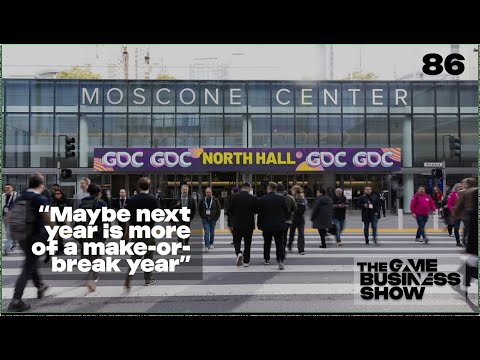
and they're like, "Oh, maybe there's some hybrid we can do in here for business." And we haven't thought about this. This is what makes it super interesting. But I think what like this the responsibility for us is to get out in the community more and like go to more conferences, go to more events, talk to more developers, and try to get a greater understanding for where the industry is heading so that we can represent it appropriately at the event. I've got a question here that I feel it feels feels really loaded and I apologize but [laughter] well I didn't mean I didn't want to yeah I was trying to the previous one was a little bit law like I I don't want to suggest this is what I'm coming from but would you consider this a bit of a make or break year for GDC it's a big change you're trying to bring about change and and some people will be on board but some people won't be but yeah do you how do you consider
that's a good question to ask I think I think I'll be curious what you what you think about this too Beth Um, my opinion is that maybe next year is more of a make or break year because we'll make a bunch of changes this year and then next year if people don't show up, [laughter]
huh?
Yeah,
that'll be more of a signal than than this year. But so far this year is looking pretty strong. Um, but you know, yeah,
what I'll add to that is I don't really feel like change happens right away. Change takes a little bit of time. And the important thing for me is that we have so much support from our our parent company over at Informa Festivals. They really believe in us and believe in what we're doing and they recognize that it's going to take a little bit of time. It's not if, you know, we're probably going to have, you know, hiccups here and there.
Yeah, of course.
But, uh, it's not, you know, we're not getting the the top down of if that doesn't work, then it's over. It's that we get we get space to experiment and have fun and try new things which is really a blessing when you work in an event.
Yeah. And indeed it's what game developers uh also you know want to be able to do. They want to try something launch it. If it doesn't work make changes to it. Um and when you're trying to change do so many different things at the same time. Not all of it's going to work. It's inevitable. Um it's just
whether or not it works well enough that but you get you get another crack at it and all that kind of stuff. Well look I'm I'm conscious of the time. Um, thank you for your survey results. It's really f genuinely really fascinating to see those those numbers and um and I'm I'm looking forward to going to GDC um speaking for someone who is international attendee.
Y
I'm very I'm very much I mean it helps the Nintendo store's open now but I'm I'm [laughter] the um I'm
joking but I am I'm looking forward to attending it and um and I wish you the best of luck in getting everything ready. I appreciate it is a busy time.
We look forward to seeing you there.
Yeah. Thanks Chris. Thank you. Thanks, Mark and Beth. There some real challenges ahead for GDC, I feel. But I will be going out there. I I will be interested to see what they do and I and I hope I hope for a good show and I hope for the best for them. Right, before we finish, I do have one last segment for you. The Game Maker Sketchbook is opening submissions for its fifth edition uh tomorrow, January the 30th. Well, tomorrow if you're listening to this on January the 29th, if you're not,
it's already live. The submissions close on March 26th. You've got plenty of time to submit. And to do so, you need to go to www.gamemaker gamemakers sketchbook.com. If you don't know what the GameMaker Sketchbook is, it's this annual celebration of sort of art and artists. It's done by the Academy of Interactive Arts and Sciences. That's the AAS. They're the people that run Dice and the Dice Awards. I am 8bit who they run lots of things and and they're they're a shop and they do art exhibitions and all sorts. And 47 Communications. The art that gets submitted and gets selected will be shown physically at the Summer Game Fest play days in June. and fans will be able to buy prints that go to charitable causes, giving uh fans a chance to directly support the games industry and also get some nice artwork at it. The the charity initiatives in particular, or at least one of the main ones, is the AAS Foundation, which is all about sort of advancing an inclusive interactive entertainment community through collaboration, education, and professional development. I could talk about this for a little bit, but I I actually thought, why why not invite the AAS on? I know they've got dice coming up, but hey, I'm sure they got time to
talk about this. So, I'm pleased to be joined by Megan Scavio, the head of DICE, who who's here to tell us more about the sketchbook and the AIAS in general. Hello, Megan. Welcome to the show.
Thank you.
The sketchbook, it's a cool thing, but it's been going for four years. Uh, for those that sort of don't know what this is, give us a recap. What's it what's it all about?
We were kind of inspired by Into the Pixel. I don't know if you remember Into the Pixel.
Yeah, I remember that. Yeah. Yeah.
At uh E3. So when E3 sort of went bye-bye, we thought we would kind of bring back that celebration of art, but expand on it. So we created more categories, sort of more of a deep dive into art in games. So we have we're celebrating character art, environment art, impact, just different different categories. And we wanted to open it up to fans because at Into the Pixel it was more of an auction where people at E3 which was closed kind of would auction
off the art. But this is an opportunity for fans to actually have a piece of their favorite video games and take it home. And the point of selling the art is it is a fundraiser for our foundation, the AIAS foundation.
[clears throat]
And that has a couple different programs. We have a scholarship program
and the scholarship program we help early career professionals attend. They attend Dice Summit and they attend GDC and they're assigned a mentor for the calendar year. We also have student scholars that we help with their tuition assistant. So, they have to be in a game program, secondyear student in a game program, certain GPA, and they're they're given a mentor and brought to DICE, which I thought when I joined was a terrible idea. I thought, why are you sending people to Dice Summit? That doesn't make any sense. But they actually get jobs there. It's pretty impressive. And they attend GDC. What's
really interesting, we just recently had um I'm actually quite proud of this program. Last year we had Mark Cerny as a mentor for one of our student scholars.
Oh wow.
And he was so impressed with them. I know. He ended up donating $75,000 to our scholarship program which supports uh five students for the next three years because he thought the program was so amazing. I mean we're really really proud of the the scholars that we accept into the program. Now he also loves now the program so much he participates in our program other program called amplify new voices and that program was born out of Gamergate in 2014 and that is a program that is aimed to normalize diversity in video games where we bring in uh mid-career game developers
to GDC. We spend an entire day the Sunday before TDC and we teach them practical skills to become the next generation of spokespeople for video games.
Part of this um sketchbook, there's going to be an exhibition at the Play Days in June. Is that right?
Yes. We we like to hang the art, treat it like an actual exhibit. Um we've hung the art in actual art galleries before. We've hung it at GDC. I think we've found a home so far at Play Days. So, the art will be hung at play days and right after that it will be sold through IM8bit for a twoe window. Um, but please uh visit playdates to to see it live in person.
Is it that the game developers submit their artwork to to you and use? How's that work? Is it for your website? How do they get involved?
Yes. Uh game maker sketchbook.com. Your game has to have shipped this calendar year.
Mhm.
This will be our fifth year doing it. And if your game shipped this year, you you submit it on the 30th. I think we're
open for about a month. We've recruited a pretty incredible list of jurors. Oh, yeah.
So, we have art curators. We have artists outside of video games. We have artists from within video games. We have artists from films. We have art artists from around the world who review the art and they pick three selections from each category. So those are the people who really determine who are the best of the best and then we showcase them at uh we like we frame the art and we hang it in a gallery every year and then sell it for a two week window.
Great. You know, we get some resistance in in even submitting uh art to Sketchbook because people think we're just trying to make money off of their art, which is simply not the case. You know, we are we are willing to not sell the art if you tell us not to. But if we can,
we would love to and it is going to a charitable cause.
Yeah. Well, outside of the sketchbook and the and the foundation, you've got dice coming up, right? What else is going on from AIS this year? What else have you got on your plate?
Well, we've got the DICE awards which are very exciting. And we do uh we've got a DICE Europe. We we work on a DICE Europe that moves uh country every year. So, we'll be in Athens this year, which was great. We were in Edinburgh last year, which was nice.
Yeah, I know. I just missed Edinburgh.
We are focusing this year at DICE on recruitment. I will say that the board has been really really hyperfocused on making sure we have a lot of recruiters at DICE to help with the current climate.
I mean this has always been a challenge that the people finding jobs in the games industry coming out of education but it's becoming it's really hard right now. It's almost the advice that I know in the UK that uh I've heard in talks people being given is maybe consider other industries and and work your way
into games from there. And it it that's miserable. One of the benefits of being a nonprofit is that I don't have to make money. We're trying things out this year. We created a new badge that's cheaper than our traditional badge to allow more people to come and hopefully have access when they might not otherwise. We're really going to try to make an opportunity for for people to look for work.
Brilliant. Thank you, Megan. Thank you for your time and I hope people hear this and come knocking with all their funding.
Me, too. Thank you so much.
And that's it for today's edition of the Game Business Show. I am now off to do my talk here in Manchester. I hope it goes well. Um, thank you to Beth, Mark, and Megan for joining me on the show today. We'll be back next week featuring We've got loads of stuff next week. We're going to have an interview with the leaders of World of Warcraft. Um, that's in that was a really good chat. I think you'll enjoy that. Uh, I'll be a small piece with the CEO of Take Australic. us. We look at the state of the US games industry and predict what
the biggest games of the year will be that are not called Grand Theft Auto. Honestly, I've got some really good shows for you next week. And if you want to make sure you don't miss any of those really good shows and newsletters, they're not all shows. Just head to the gamebus.com and sign up. You'll get a newsletter every time we do something and you won't miss anything. That's it from me though for this week. Until next time, thank you for tuning in.
Auto-generated captions from YouTube — names and numbers may be misheard.




















Comments