Transcript
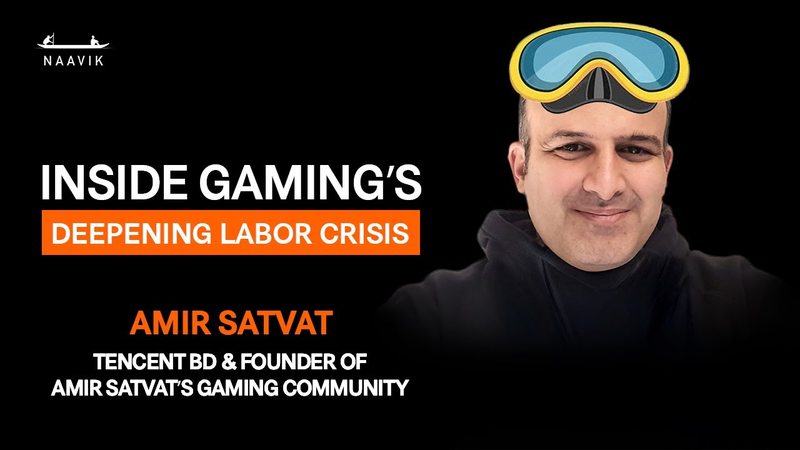
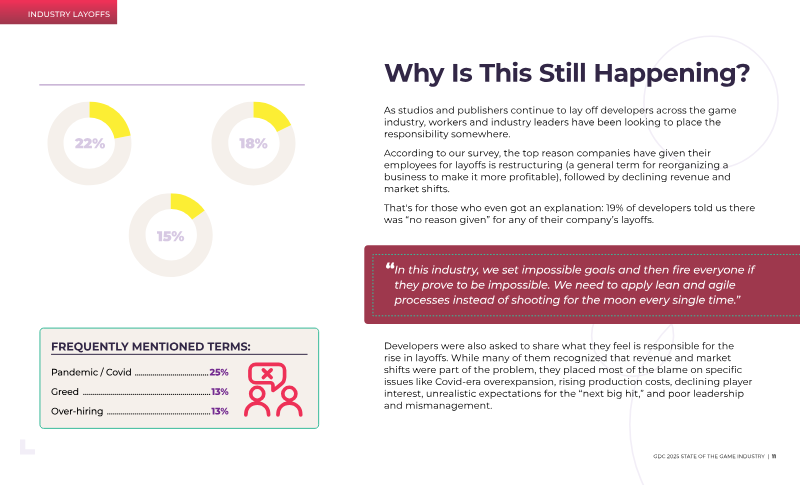
[Music] The key word here is shakeout, right? Talking about mostly survivor guilt and industry downturn. As mentioned before, the industry have shed over 35,000 jobs globally with layoffs. FYI and Amir Savat estimating a loss of 100,000 years of collective experience by the end of 2025. This is freaking important, right? When I saw that number, I was alarmed. How much experience is exiting the industry right now? And I think a large percentage of that is permanent loss. Right? I'm seeing this where a lot of old school game designers are just clearly exiting the industry looking for elsewhere or not even by their own choice but being
forced out. They're having the hardest time getting back in because right now our industry have become so concentrated on technical skills, right? like how do we make this look better? And we're pushing away from the fundamentals of game design, the ones who have a strong philosophy behind game design, the ability to have the kind of ability that I feel that that is irreplaceable that have made the game industry so great during the PlayStation 2, PlayStation 3 era that is vastly disappearing. All right. I think there's like a lot of empty soulless games being put out right now that are a poor shadow itself. Frankenstein together. So with all this shakeout that's happening, there's a lot of structural issues that are happening. There are a lot of structural issues that is really fueling this shakeout. So
AAA titles costs have soared right up to 200% in recent years. At the same time, investors have been pulling back because of the COVID hype about the metaverse, NFT, and all this crap that never panned out. Blockchain and console PC segments dipped 15% in 2024, 2025. Game industry.biz is captures the sentiment with survive until 2025 which have been like the last hope since this layoff happened in 2022 but even 2025 like I said before with 15,000 jobs already gone haven't really hit that reset that everybody was hoping and it's still I would say in a stalement right now like things are really stalling this year we're dealing still with the after effects of letting go with a lot of people.
The most interesting about this is like the survivor guilt of it all. A lot of people are talking about one aspects where a lot of jobs are being lost and those unemployed are having the toughest time. But those people who still have jobs are really going through their own struggles as well. All right, we talked about crunching earlier, but 40% of the remaining developers per GDC 2025 data, there's 20% productivity drops, right? And pushing 10% to leave the industry. So, the people who are remaining are just holding on until they find something better. And this of course is because what loyalty is left when you see everyone in your cubicle gone for doing nothing wrong, right? Just because of budget cuts. And it just is a signal that industry is not healthy. And if you're looking at long-term, do you really want to just
keep working on the project giving it your best or you going to spend half that time, especially when you're working remotely to plan your future better? And the age in the industry is still pretty young, right? Whenever we're talking about 30s to 40s as a kind of like the average age of a lot of game developers, they have to look out for the next 20, 30 years of what are they going to do. Are they going to wait around for the industry to do this again when they're at their weakest less profitable years as a developer, as a worker? So a lot of people as the data shows are spending the time if not half the time already exiting mentally from the industry itself. So the mental health
of anxiety and the loss of security. There's a lot of devs just mourning their lost teammates and and just spending the time just scared about them themselves being cut. So, how are their companies responding? Companies like EA Respond and others in Obsidian's 2025 layoff archive site market adjustments for hundreds of layoffs with GDC urging preventive measures like contract models. Contract models as in the visual effects companies, right? A lot of visual vet companies implemented contracts on a per project basis and in a way it does show a little bit more stability in the sense of when you start and you know when you end. That gives you a sense of control at least of being able to plan ahead
before your contract ends to look for something else. However, we all saw how that kind of played out. The visual effects industry is pretty much non-existent in North America. It's not a great solution. A lot of those visual effects guys and gals have tried to transfer to the game industry for the fact that the game industry is a lot more stable, right? They want longerterm job security. They don't want to keep jumping around from job to job, right? And always worrying about what's next and never feeling comfortable. I don't like the suggestion, especially when it already says that a lot of implementation of this have been lagging and gamedeveloper.com notes lingering morale damage despite lower cuts. So, in the short term, the shakeout leads to financial instability for laid-off devs and emotional fatigue for survivors. With productivity drops of
20% or more, slowing innovation in studios industrywide, it causes talent shortages, delaying projects, and inflating hiring costs amid mergers. The long-term effect over the next 3 to 5 years of this shakeout may build coping mechanisms like pure networks, hopefully something better than LinkedIn, but right now mostly LinkedIn for mental health and diversify skills for multis- sector roles. This I do see a lot right a lot of people are upgrading their skills and doing much more than their kind of like focus discipline. So enhancing career mobility the industry could shift to leaner models with better forecasting reducing volatility and fostering 50,000 new jobs by 2028 as per new zoo forecast while standardizing support programs to improve retention. So just three more years guys, just stick around three more years and things should be better. And it does feel pretty accurate. Everyone
kind of held on to 2025 as the time that we rebound. But I have been personally seeing a stalemate in progress. A lot of companies are really focusing on efficiency which in some respect I agree right there have been a crazy amount of overspending but I also see a lot of companies because of being focused on efficiency are really slow on ramping up right which means that they are really considering per role per discipline when looking at adding headcount to their team. Which means those 35,000 jobs lost since 2022 a large percentage of that will be permanent losses because the ramp up percentage is so slow compared the job losses that are continuing that the new
talent coming in will have a better chance, better optimism for these jobs that will open up. And unfortunately, I think that is probably in the long term better. That's coming from someone who's been in the industry for a long time. But you need new blood in these roles, sitting in these chairs without the fatigue or stress or post-traumatic stress of what have happened, right? to focus on the game, make better games so that the industry as a whole can rebound. Because in the end, the gamers have to feel the worth of these games and consistency of how good these games are to buy them and drive that bar chart up for investors and re to restore their
confidence in the game industry to be more predictable. And once that happens with more money being pumped in then hopefully we'll see what the AI sector have done for the tech industry where a lot of money flows back in a lot more project gets financed and smaller teams become bigger teams. But if you think of that process alone that's going to take a couple of years from here, right? It's not going to be next year. is it does feel like 2028. So for those who can hold on and stay optimistic, I do recommend upskilling and being more valuable than the one discipline that you've been focused on. [Music]
[Music]
Auto-generated captions from YouTube — names and numbers may be misheard.
Key insights
6 takeaways · ~2 min read- 01The game industry has shed over 35,000 jobs since 2022, with estimates suggesting a permanent loss of 100,000 years of collective professional experience by the end of 2025.
- 02Remaining developers are experiencing significant morale and productivity issues, with GDC 2025 data indicating a 20% drop in productivity and 10% of the workforce actively planning to exit the industry.
- 03AAA development costs have surged by 200% in recent years, while investor confidence has waned following failed investments in the metaverse and NFT sectors, leading to a 15% dip in the console and PC segments through 2025.
- 04The industry is currently in a stalemate where slow hiring and a focus on extreme efficiency are preventing a rebound, suggesting that many of the lost roles will not be replaced in the near term.
- 05To survive the current downturn, professionals are increasingly diversifying their skill sets beyond single disciplines to improve career mobility and mitigate the risks of future layoffs.
- 06Long-term industry recovery is projected to take until approximately 2028, at which point new, less-fatigued talent may help stabilize output and restore investor confidence through higher-quality game production.
Ask AI about this video
Cite this video
Citation
Generating citation…









Comments