VideoThe Game Business
Xbox plans 3,200 job cuts, and will drop five acclaimed studios
6 Jul 202612 min video

Transcript
Today, Xbox reveals plans for up to 3,000 job cuts. It will drop five critically acclaimed studios, but still plans to reach 1 billion gamers every single day. Hello and welcome to the Game Business Show. This is a very special one-off news version of the Game Business Show to react and talk about the news that's just come out of Xbox. If you've missed it, here are the headlines. Xbox plans to cut 3,000 jobs as part of a major restructure, and it will divest of five studios. The developer Double Fine, best known for Keepler and Psychonauts, and Compulsion, the developer behind South of Midnight and We Happy Few, will return to independence. They're going to be owned by their management. Both studios have been given some runway funding by Microsoft to help begin their next projects while they seek additional financing. These studios will also retain all their IP and their back catalog. Meanwhile, developers Ninja Theory, that's the team behind Hellblade and Undead Labs, famous for State of Decay,
you know, they have higher financial requirements, but they have found new owners. However, the deals have not yet been closed. New owners will get the IP, it will get the back catalog as well. We don't know who those new owners are just yet. Meanwhile, Arkane Lyon, that's the development team behind some of the best video games like Dishonored and Deathloop, they will enter the same process as the studios above. As of today, Microsoft hopes it can avoid closure for this team, too. Those was happening to those studios. Those studios um the first four studios around 350 people. I'm not quite sure the Arkane Lyon number. Um those are not included in the 3,000 job cuts. The 3,000 job cuts will take place across the whole Xbox business, including some of the other studios, in fact, most of the other studios. Now, some studios will see barely any cuts, while others will see much larger reductions. Microsoft didn't detail which studios are the worst affected. One area of the that will be hit hard, however, is the Xbox platform
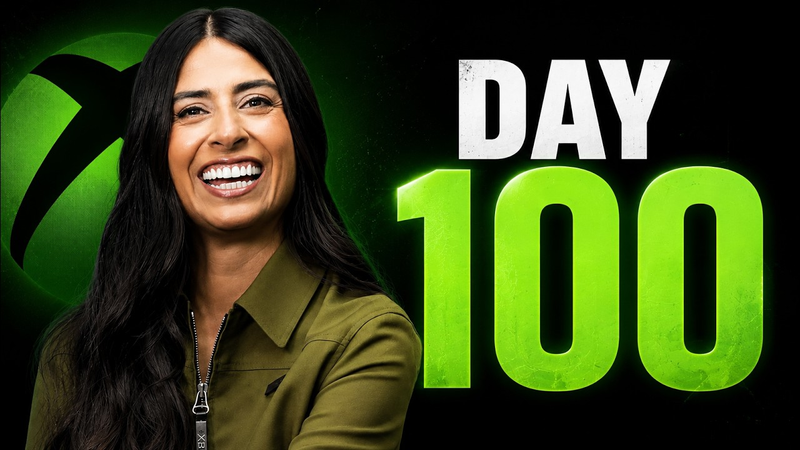
team, which covers hardware, software, services, the store, X Cloud, and Game Pass. Xbox hopes these cuts will simplify the business and allow it to move faster. Um those are the big sort of cuts and changes happening. Um on the studios front though, Xbox will be shifting from its previous decentralized studio model to a more centralized approach focused around those big franchises. Meanwhile, Mojang, that's the team behind Minecraft and King, which obviously does Candy Crush and all those mobile games, will now report directly to Xbox CEO Asha Sharma. They're very important to Asha Sharma's vision, which is to reach 1 billion players every day. Currently, Xbox reaches 500 million a month. Um trying to explain some of this. Those job cuts represent it's difficult, it's not an exact science. You have to try and work out some of the job cuts and some of the hires, but you're probably looking around 15% of the Xbox business is being cut here. And the reason why these cuts are happening is well, it's been a really tough time for Xbox. Their accountability margin, which is sort of their version of a profit margin, is just 3%. And despite they're spending $20 on making games over 5 years, annual
revenue has declined by half a billion dollars. That doesn't include Activision Blizzard, which was acquired during that time. Put it simply, Xbox has seen revenue, profit, and players decline over the past half a decade. The company needed to make some changes. It had to stop. Now, the Xbox strategy over the past 5 years has focused on growing Game Pass, which is their Netflix-like subscription service, if you don't know what that is, and building a strong business on PC and mobile, plus streaming as well. It's not been the biggest focus for them, but that's part of it as well. Now, this strategy simply hasn't met expectation, and it's these strategies that those studios were acquired for. They wanted to get games into Game Pass. They wanted to grow their presence on PC. It hasn't really worked out. In addition, Xbox's investment in smaller studios has come at a time when that market has become highly competitive. It's basically exploded. You know, there are loads of indie games, loads of double-A games released all the time, and the company decided simply not to compete in this space, and they will instead support these smaller teams as a publisher rather than compete directly with them.
Does make a bit of sense. Now, its platform team is one of the teams that's getting the biggest hit. Now, Xbox has invested a lot in its platform teams over the last 6 years, so that's of course across Game Pass and the streaming platform and the console and PC. The division has seen its head count rise 40% since the start of the pandemic. However, despite this investment, the number of players Xbox platforms are reaching has declined. You know, that their audience has gone down. Now, Xbox CEO Asad Qizilbash prioritized speed for its platform. She She's been very much talking about how many updates have got gone out ever since she took the CEO role. And she believes the team needs to be closer to developers and gamers. As a result, the company is reducing the number of managerial layers within that part of the organization, so people are closer to developers and they're closer to consumers. The hope is this will lead to a faster and more reactive platform team. That's the goal. Um I think it's interesting the centralized um shift is quite interesting as well. Xbox used to have this um limited integration strategy. Interestingly, it
was inspired by Mojang. They acquired Mojang, they acquired Minecraft, they left that studio alone, they let them do what they wanted to do, and it grew. Xbox was there to support them, Xbox was there to help them where they could, but they broadly speaking let them do what they wanted, and it worked. They actually adopted that strategy Microsoft when they acquired LinkedIn as well. And that was the strategy they adopted when they acquired all these studios since 2018. However, it hasn't obviously worked out. So, they're moving down to a slightly more centralized way. I'm sure the studios will still have their autonomy to a degree, but um it's going to be a little bit more, I imagine, uh run as a centralized organization. At least that's what they say. One thing that Xbox is keen to stress here is this is not about saving money. Xbox says it will spend as much on content this coming year as it did the previous year. Ultimately, what the company feels is it's spread itself too thin. It needs to focus on its franchises that it believes have been underfunded and malnourished. This includes some famous IPs such as Halo and Gears of War and Fallout. If it can grow them and deliver them, it will have a far bigger impact than if it starts investing in indie and smaller
projects. That doesn't mean these indie and smaller projects aren't worthwhile and, you know, it would be in a different organization, they could be extremely successful organization that's perhaps a little leaner, a little bit more focused on those sorts of experiences as opposed to an Xbox which has to you know, one hand it's doing friends flop game like Killn and then it's doing a Call of Duty. Makes more sense to sort of steer them towards Call of Duty. At least that's what they think. I think it's also worth noting that this isn't entirely down to Xbox. Obviously, Xbox has spent nearly a hundred billion dollars acquiring studios and they were acquired for a strategy that hasn't delivered. And what's more, some of their big game bets haven't succeeded. Halo Infinite didn't do as well as I think they wanted it to do. Starfield didn't do as well, either. So, there's lots of things that Xbox has sort of got wrong or hasn't worked out for them during this process. But, there are also wider industry trends and challenges which has seen video game growth stagnate. So, if you've been following the game business show, you'll know a lot of this. Following the COVID-19 pandemic, video game spending and engagement fell. People were no longer locked down. They were no longer having to entertain themselves at home. They could go out. And so, that
naturally impacted video game time. But, it wasn't all because of this. There's been a sharp rise in the number of games being released. You know, you've seen the numbers like over 21,000 on Steam last year. And although those aren't all professional games, there are still an awful lot of games coming out all the time. Meanwhile, big online games like Roblox and Fortnite and all those titles have become entrenched. They're dominating player time and by extension, revenue. Hasn't been quite so bad in the last years as it has been in previous years, but it's still pretty bad. Those games are dominating everybody's time. Furthermore, other entertainment sectors such as TV streaming such as Netflix and short form video, you know, TikTok have taken a larger share of people's time, too. So, you've got all of that going on. It's got a lot more competitive. Meanwhile, the cost of making games has increased significantly, and for Western game companies there's been increasing competition from developers in Japan, China, and South Korea. So, a lot of challenges there, which is impacting growth and making it hard for the whole video game industry, not just Xbox. Now, Xbox has set itself a really ambitious target. You may have heard it at the top of this. Xbox CEO Asha Sharma
says there are 1 billion players who play Xbox games or use Xbox services every year, or 500 million a month. It's a good number, but the aim is to get that to 1 billion players daily. That's big. That's a huge a huge goal. Will this restructure deliver that? The thing is, this is an artistic industry. There are no guarantees. Xbox has a number of big challenges. Component costs for its consoles have risen substantially. By the end of the year, the cost of storage will have increased fivefold compared to 2 years ago for Xbox. While memory prices are sort of following a broadly similar trajectory. As a result, the company has raised the price of its hardware three times over the past 18 months. To be clear, they're not the only ones to raise their price. In fact, all hardware manufacturers have. But, Xbox being in that third place position, this has certainly been a negative impact for them. And its Game Pass user base has tumbled as well. It had a significant price increase in October last year, you may remember, and it just caused a big drop in um Game Pass users. Things have
stabilized and improved after a price reduction in May. But, Xbox says the subscription service is in need of a rethink, and Asha Sharma's mentioned that a few times. We don't know what that rethink is going to look like, but the fact they're closing some of these studios that were built for Game Pass suggests that maybe Game Pass isn't the be-all and end-all for the company anymore. Meanwhile, outside of May's Forza Horizon 6, which did incredibly well, it's not really delivering many breakout software hits. Last year's Call of Duty Black Ops 7 didn't deliver the sales results of previous games. It was actually it was outsold by rival Battlefield 6. It's the first time Battlefield has beaten Call of Duty in the franchise's history. Now, Xbox hopes that by focusing in, by picking its battles, it can overcome these challenges and deliver growth. To quote Owen Mahoney, "Focus isn't about what you do, it's about what you don't do." And Xbox has decided some of the things it's not going to do. Can it deliver the growth and eventually reach over 1 billion players every day? Games take a long time to develop. It'll
be some time before we can see if this plan is going to work or not. That's it for today's bonus episode of the Game Business Show. It's just a a small little video here about today's news. I'm not giving my opinion on it. We have given opinions on this before. There was an episode a couple of weeks ago that we did. We talked about why these brutal cuts are happening. And then last week I I reported on how some of the internal teams are feeling about the Xbox plan. There is some division within that, but there's naturally going to be at this stage. There's a lot of emotions running high. Friends are being laid off. Plans that have been following now for 5 years, you know, being not completely ripped up, but changed. And that's going to cause that. Obviously, we hope for the best. There's lots of people here about to lose their jobs. It is good news that Xbox has managed to find homes for these studios. The fear was they'd be closed down entirely. That hasn't happened. That's a relief. Hopefully, Arkane Lyon will find a new home as well. We will, of course, be covering all of this as we go and move ahead. Good luck to all the teams there at Xbox. We will
be back tomorrow with a interview with Saber Interactive talking about how they built their business. But, until then, thank you for tuning in.
Auto-generated captions from YouTube — names and numbers may be misheard.




















Comments