Time
Company
Documents about Time
How He Sold 2,000,000 Copies Of His Games (Dave Gilbert) — Full Time Game Dev Podcast Ep. 039
Achieving long-term success in the independent game development industry requires a disciplined, incremental approach that prioritizes sustainable growth over high-risk, large-scale projects.
- Building a sustainable game development career is best achieved by starting with small, manageable projects that allow for rapid iteration and learning rather than risking all resources on a single long-term title.
- Developing a consistent brand and universe across multiple titles helps cultivate a loyal audience of returning players, which provides a financial safety net for future, more ambitious projects.
- Managing the psychological toll of public feedback requires a 'thick skin' that prioritizes mental health by choosing not to engage with negative criticism, even when it feels like a personal attack.
How He Sold 1,000,000 Copies Of His Games (Friedemann Allmenröder) — Full Time Game Dev Podcast 038
Successful game development requires a strategic synthesis of creative exploration and disciplined execution.
- Commercial success requires balancing external player feedback with internal design integrity, where developers act as the final arbiters to ensure solutions align with the game's core artistic vision.
- Adopting a subtractive design philosophy—consolidating complex systems into elegant, accessible mechanics—is essential to avoid feature bloat and create a cohesive player experience.
- Building a dedicated audience acts as a critical buffer against industry volatility, such as market oversaturation and shifting distribution models, to maintain long-term visibility.
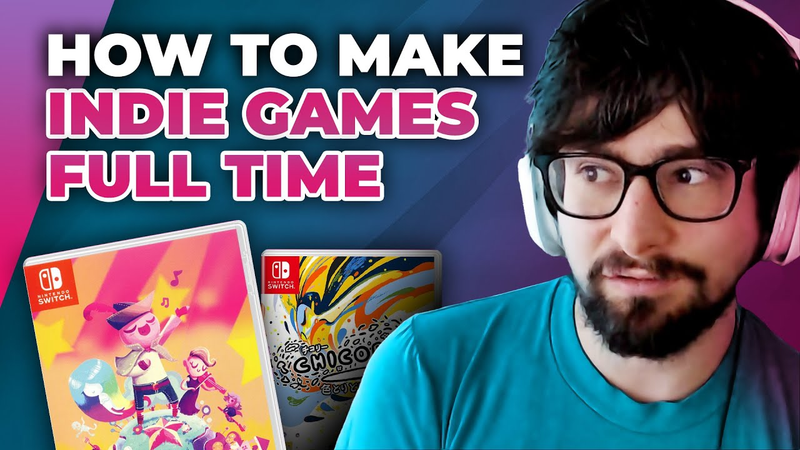
How To Make Indie Games Full Time (Greg Lobanov) — Full Time Game Dev Podcast Ep. 037
Achieving a sustainable, full-time career in independent game development relies on building a consistent portfolio of commercial projects rather than chasing singular viral successes.
- Indie developers do not need viral hits to sustain a full-time career; consistent income can be generated through a portfolio of smaller, non-explosive titles like Coin Crypt, Wandersong, Chicory, and Beastieball.
- When working with limited resources, developers should refine their core game loop and gimmick as a solo developer before hiring a team to scale production.
- Working with publishers can be a strategic choice for experienced developers to offload non-creative tasks, but creators should avoid large, high-stakes deals and prioritize clear, concise milestones to mitigate risk.
How He Sold 500,000+ Copies Of His Games (Oliver Joyce) — Full Time Game Dev Podcast Ep. 036
Achieving commercial success in the independent game industry requires a strategic shift away from chasing fleeting market trends toward cultivating authentic, niche-driven development.
- Diversify income streams—such as YouTube channels, asset sales, or consulting—to mitigate the financial risk of game development and avoid the 'quit your job' trap for early-stage projects.
- Validate market interest early by building a demo or trailer before committing years of development; for example, a poor reception to a trailer with 25,000 views can signal a need to pivot or cancel a project to save time.
- Prioritize core game loops that respect the player's time, as games that offer incremental rewards and avoid tedious mechanics often perform better for time-poor audiences.
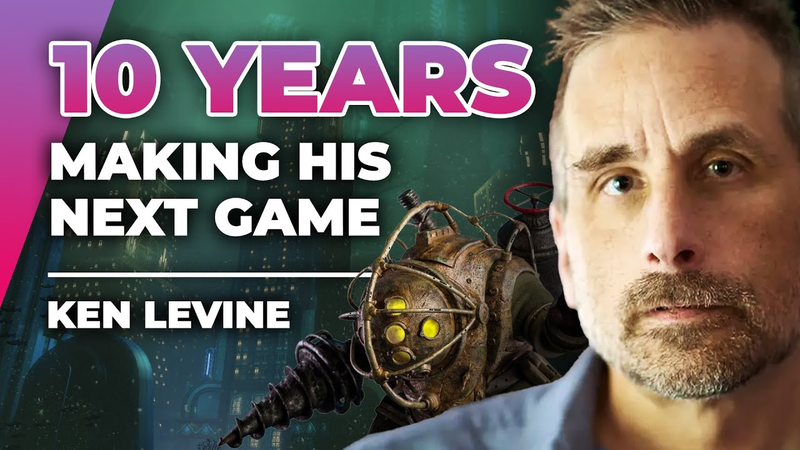
Why His Game Has Taken 10 Years To Make (Ken Levine) — Full Time Game Dev Podcast Ep. 034
The decade-long development of the title Judas represents a fundamental shift in creative methodology, moving away from traditional production cycles toward a research-heavy, iterative process.
- Ken Levine’s upcoming game, Judas, has been in development for 10 years, reflecting the extreme time and resource investment required for modern high-end game production.
- The 'Narrative Lego' system is a modular design approach that allows developers to create highly personalized, non-linear player experiences by rearranging story elements rather than relying on a strictly linear script.
- Effective game development requires a willingness to kill features that do not serve the core identity of the project, even if the developer initially believes they are essential.
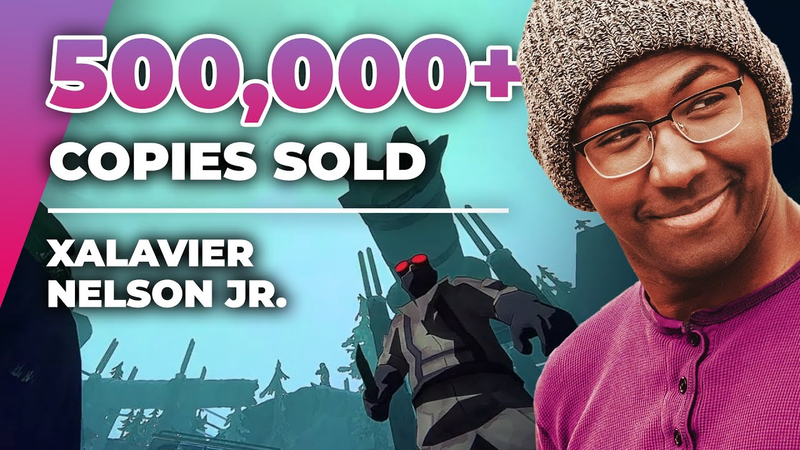
How He Sold 500,000+ Copies Of His Games (Xalavier Nelson Jr.) — Full Time Game Dev Podcast Ep. 033
The modern independent game industry is currently hindered by a pervasive culture of hyper-bloat, where developers and publishers unnecessarily inflate project scopes and budgets in a misguided pursuit of scale.
- Independent studios should reject the industry-wide trend of hyper-bloat, which unnecessarily inflates project scopes and budgets to the detriment of operational efficiency.
- Treating game development as a series of high-stakes, multi-year gambles creates extreme financial vulnerability that threatens both creative autonomy and long-term business viability.
- Adopting artificial constraints on development timelines and budgets transforms game production from an all-or-nothing gamble into a sustainable, professional business model.
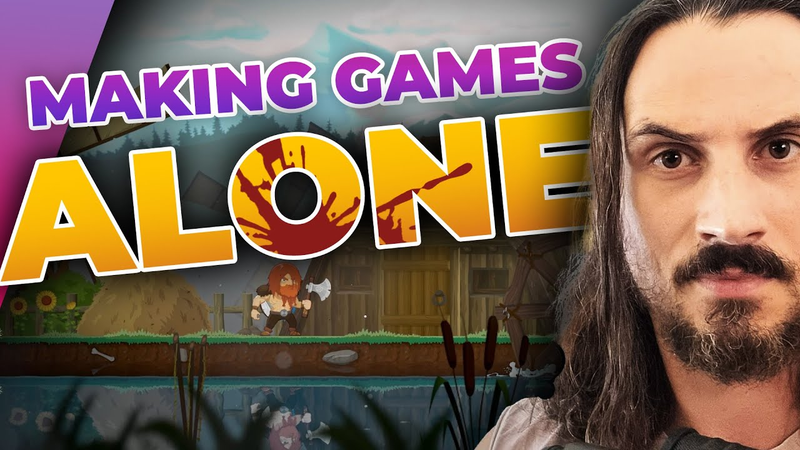
How To Make Games Completely Alone (w/ Lost Relic) — Full Time Game Dev Podcast Ep. 032
Solo game development is a high-stakes, all-consuming professional endeavor that demands a disciplined approach to scope management and market positioning.
- Solo developers must prioritize a singular, high-impact hook—either thematic or mechanical—to differentiate their product in a competitive, Steam-dominated market.
- To prevent feature bloat and creative burnout, developers should focus on cohesive, manageable projects rather than attempting to build massive, procedurally generated titles.
- Transitioning to 3D development significantly increases technical overhead, such as asset management and Z-fighting, requiring developers to avoid high-fidelity assets that exceed their production capacity.

How He Went Viral After Bombing On Steam (Bryan Blackford) — Full Time Game Dev Podcast Ep. 031
Achieving financial sustainability in the competitive game development landscape requires a strategic shift from broad-market aspirations toward deep, authentic engagement with niche communities.
- Achieve financial sustainability by shifting from broad-market aspirations to deep engagement with niche communities that align with your specific domain expertise.
- Prioritize iterative development and practical execution over technical perfection to avoid the pitfalls of overly ambitious, failed projects.
- Cultivate organic reach by aligning products with the interests of high-profile influencers and established communities rather than relying on traditional marketing budgets.
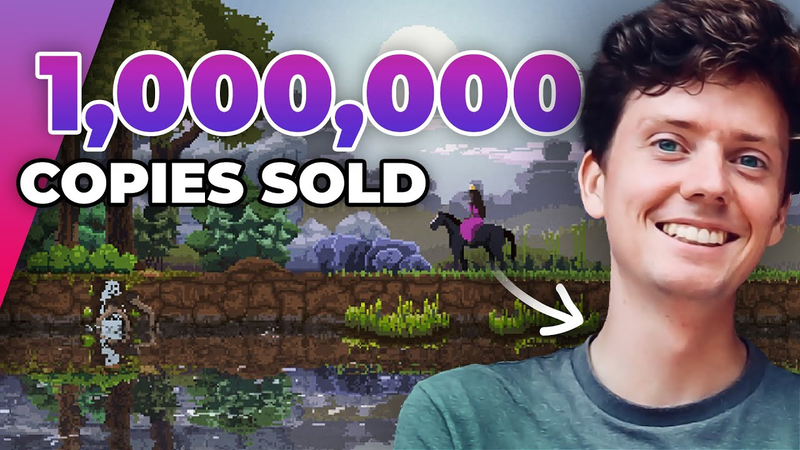
How He Sold 1,000,000+ Copies Of His Game (Thomas Vandenberg) — Full Time Game Dev Podcast Ep. 030
The path to commercial success in independent game development relies on a strategic balance between creative intuition and disciplined project management.
- Publishers provide essential financial stability and de-risking for indie developers, allowing them to focus on development without the mental toll of personal financial insecurity.
- The Kingdom franchise reached a state of 'elegant simplicity' after years of development, leading the creator to sell the IP to Raw Fury to pursue new projects after a decade of work.
- Game development productivity can be optimized by using a prototype-heavy approach, such as creating 20 prototypes in two-week sprints to identify the most viable concept for a six-month production cycle.
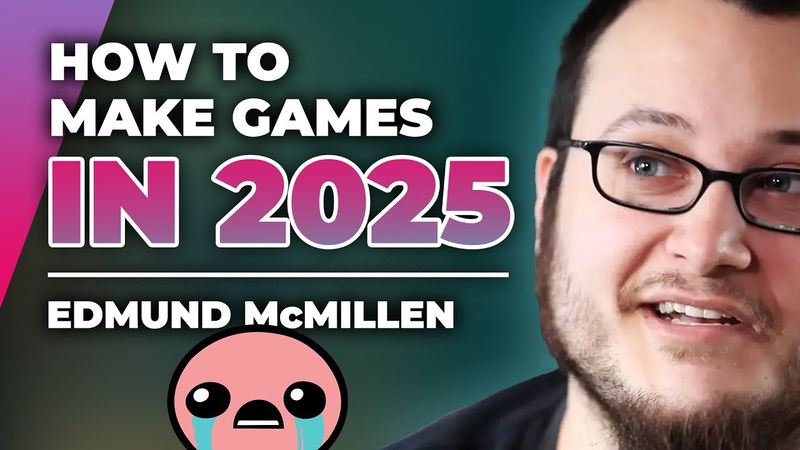
How To Make Indie Games In 2025 w/ Edmund McMillen — Full Time Game Dev Podcast Ep. 029
The independent game development landscape in 2025 demands a departure from trend-chasing in favor of radical creative autonomy and the cultivation of a distinct, uncompromising artistic voice.
- Success in the 2025 market requires prioritizing a distinct, uncompromising artistic voice over trend-chasing to differentiate projects in a saturated industry.
- Developers should adopt an organic, discovery-based development process that favors iterative idea-volleying over rigid design documents or speculative high-budget models.
- Financial constraints should be leveraged as catalysts for innovation rather than viewed as hindrances, as the industry shifts away from bloated, speculative investment models.
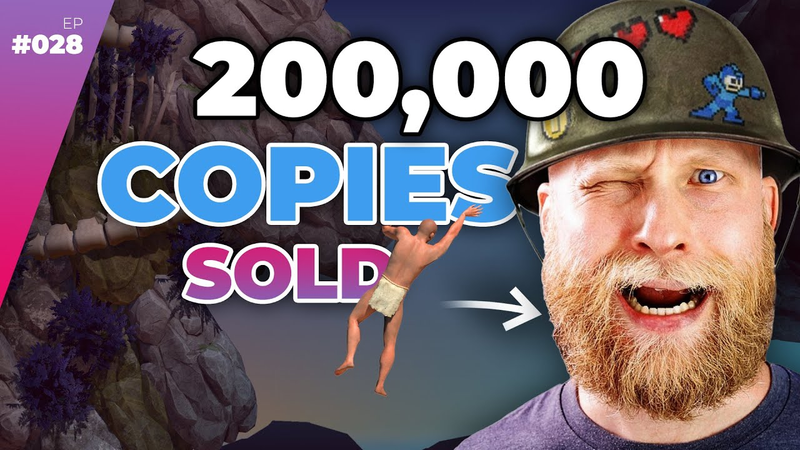
How He Sold Over 200,000 Copies Of His Game w/ PontyPants — Full Time Game Dev Podcast Ep. 028
Achieving commercial success in the independent game industry requires a strategic pivot from technical documentation toward high-impact, curiosity-driven marketing.
- Commercial success is driven by high-impact, curiosity-driven marketing that targets the general gaming public through streamer exposure rather than technical development logs that primarily attract other developers.
- Projects like 'A Difficult Game About Climbing' demonstrate that prioritizing entertainment value and narrative-focused content is essential for driving wishlists and achieving significant market penetration.
- Design should focus on refining a single, core mechanic through iterative prototyping while stripping away extraneous elements like tutorials and dense narratives to foster discovery and speedrunning potential.
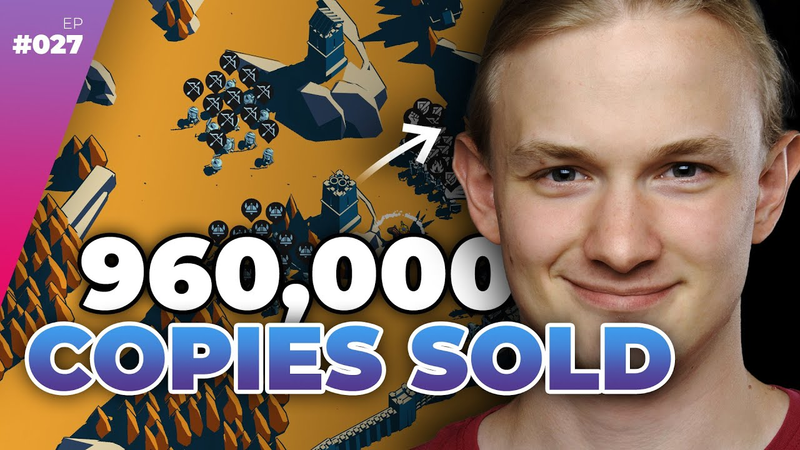
How He Sold Over 960,000 Copies Of His Games w/ @JonasTyroller — Full Time Game Dev Podcast Ep. 027
Commercial success in the independent game industry is not a product of luck but the result of a disciplined, iterative design process that treats development as an optimization puzzle.
- Commercial success is achieved through a disciplined, iterative design process that treats game development as an optimization puzzle rather than a product of luck.
- Developers should employ a rigorous search phase to test multiple prototypes, art styles, and mechanics, ensuring only high-potential concepts move into full-scale production.
- A concise two-sentence pitch should serve as the foundational filter for all design decisions to maintain focus and prevent scope creep throughout the development lifecycle.