Sky
Company
Documents about Sky
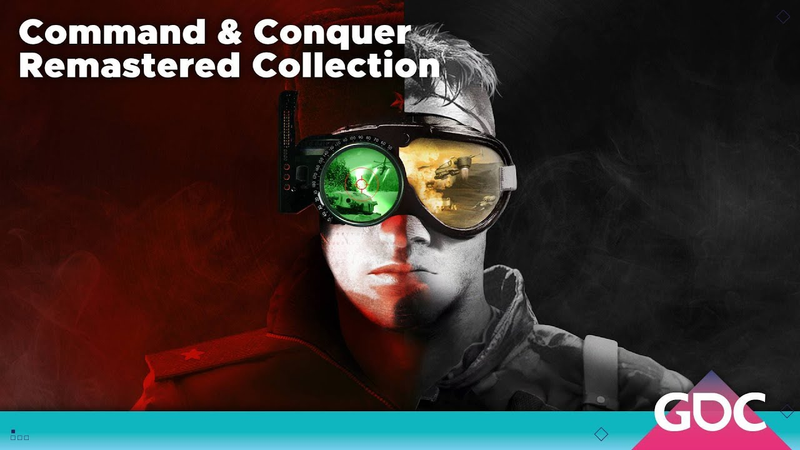
GDC Plays Command & Conquer Remastered Collection with Jim Vessella
The Command & Conquer Remastered Collection represents a strategic effort to revitalize a foundational real-time strategy franchise by balancing authentic 1990s gameplay with contemporary technical standards.
- EA partnered with Petroglyph Games and Lemon Sky Studios to develop the Command & Conquer Remastered Collection, leveraging the latter's prior experience in remastering legacy titles.
- Development began in November 2018 with a community-first approach, utilizing feedback from a community council to guide creative decisions before pre-production even started.
- Lemon Sky Studios re-conceptualized every game asset by referencing original hand-drawn sketches, manuals, and cinematics to create high-definition 3D models that were then exported as 2D sprites to maintain the original aesthetic.

GduX.me 2020 | Day 1
The 2020 GduX.me conference serves as a comprehensive forum for independent game developers to navigate the professional, technical, and cultural challenges of the industry.
- Marketing must be integrated into the development process from the conceptual stage rather than treated as an afterthought to ensure product viability.
- Developers should adopt a rigorous, experimental approach by testing concepts early and pivoting quickly based on market interest rather than relying on a 'build it and they will come' strategy.
- Success in the modern industry requires moving away from volatile social media algorithms in favor of data-driven strategies that identify a clear product 'hook' and foster direct audience engagement.

Presenter Announcement | GduX.me 2020
The Game Dev Unchained Expo (GduX.me) serves as a free, virtual conference designed to democratize access to industry knowledge for developers worldwide.
- The Game Dev Unchained Expo (GduX.me) is a free, virtual conference scheduled for June 1st–3rd, 2020, designed to provide global access to industry knowledge without financial or geographic barriers.
- The event features over 12 presenters who provide technical breakdowns and case studies on industry realities, focusing on both professional successes and personal hardships.
- Educational sessions cover critical business and legal topics, including long-term career sustainability, marketing strategies, intellectual property protection, and the legal implications of user-generated content.

Shoot for the Sky: The Ambitious HDR Time-Lapse Skies of Forza Horizon 3
The development of Forza Horizon 3 marked a significant shift in open-world environmental rendering by replacing traditional procedural sky simulations with high-fidelity, HDR time-lapse photography captured on location in Australia.
- Forza Horizon 3 replaced procedural sky simulations with 25 distinct HDR time-lapse sequences captured on location in Australia to achieve superior lighting realism and physical accuracy.
- The development team engineered a custom three-camera rig to record 24-hour sequences, resulting in 1.2 terabytes of raw data per shoot.
- To optimize performance, the team used motion vectors to interpolate between two-minute capture intervals, reducing the final data footprint from over a terabyte to under 2 gigabytes.
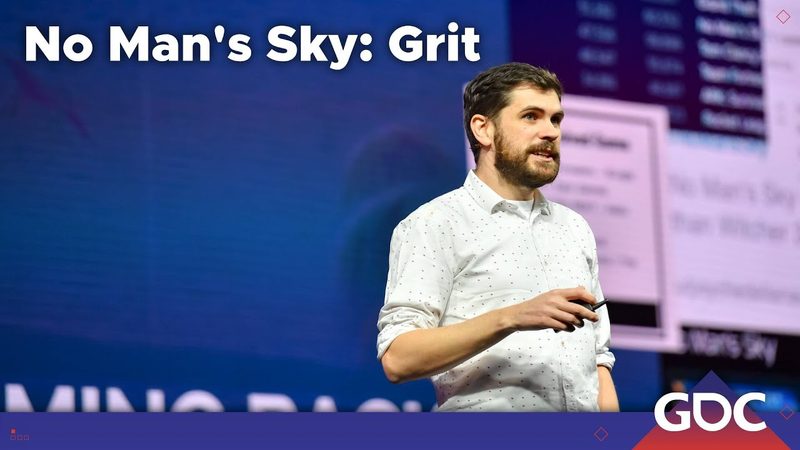
No Man's Sky: Grit
The development and launch of No Man’s Sky serves as a case study for navigating extreme industry adversity and managing the transition from a polarizing release to long-term success.
- Focus on actions over words by communicating with players exclusively through patch notes and game updates rather than blog posts or press releases.
- Filter feedback by treating it as raw data; analysis revealed that 80-90% of toxic commentary originated from individuals not invested in the game, allowing the team to ignore noise and focus on actionable player needs.
- Define a clear metric for success—such as player concurrency or critical reception—and optimize every team decision toward that specific goal to simplify complex development choices.
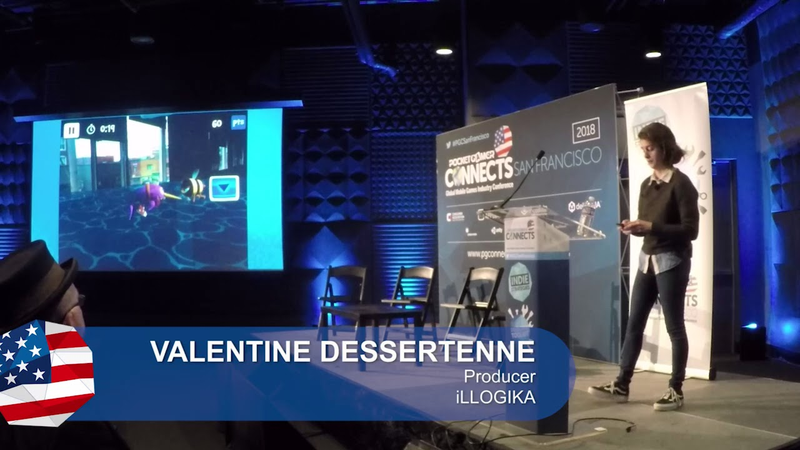
Augmented reality games for kids – Lessons learned from Sky Whale AR
The development of Sky Whale AR, an augmented reality (AR) expansion for a Nickelodeon-branded mobile game, serves as a case study for addressing the technical and ergonomic challenges inherent in creating AR experiences for children.
- To mitigate physical fatigue in children, AR sessions should be limited to approximately one-minute, high-intensity intervals with minimal edge-based screen interactions.
- Developers should adopt a non-gated approach to AR, ensuring it remains an optional feature that does not compromise the core 2D gameplay experience, as seen in the April 2018 launch of Nickelodeon's Sky Whale AR.
- Rather than relying on unreliable surface detection, developers should prioritize device movement as the primary control input to improve tracking consistency.
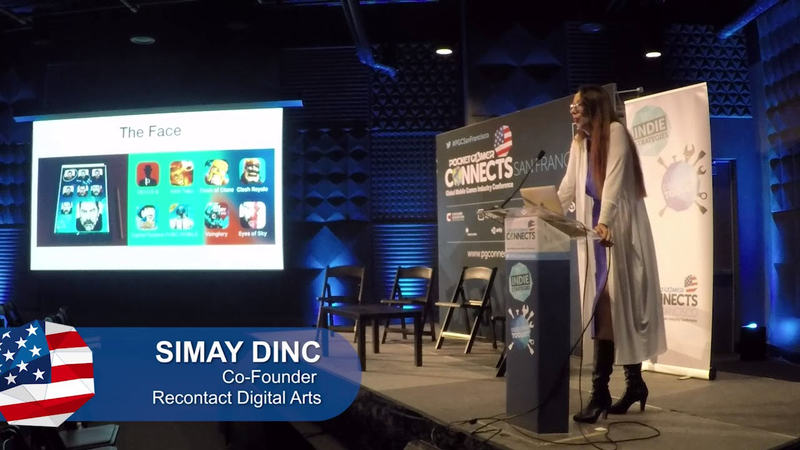
Recontact Istanbul: Eyes Of Sky postmortem
Recontact Digital Arts, a Turkish studio, developed the Recontact series to pioneer the integration of interactive cinema and mobile gaming.
- Recontact Digital Arts scaled its development team from three to 30 employees to produce the interactive cinematic game Recontact: Istanbul using the Unity engine.
- The studio successfully reached approximately 60 million users globally by merging high-fidelity live-action film with interactive mobile gameplay.
- Technical optimization was critical to the project, requiring the studio to compress high-resolution video assets from two gigabytes down to 500 megabytes for mobile performance.
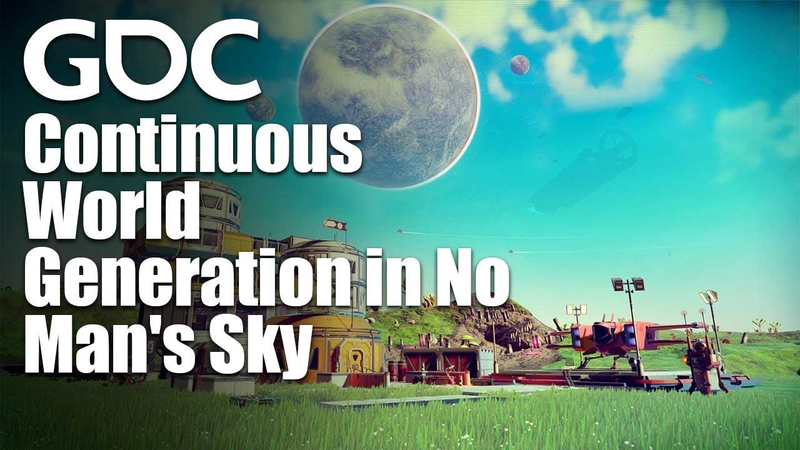
Continuous World Generation in No Man's Sky
No Man’s Sky achieves a seamless, galaxy-wide exploration experience through a custom C++ engine designed to handle real-time, procedural world generation.
- No Man’s Sky utilizes a custom C++ engine that balances procedural generation with artistic control by prioritizing developer-facing tools over purely autonomous algorithms.
- The engine simulates terrain on a sphere using an octree structure projected onto a cube, which eliminates flat-plane wrapping artifacts and manages complex gravity and coordinate systems.
- To optimize performance and memory, the system employs dynamic levels of detail and a multi-threaded job system that offloads generation tasks across diverse hardware.
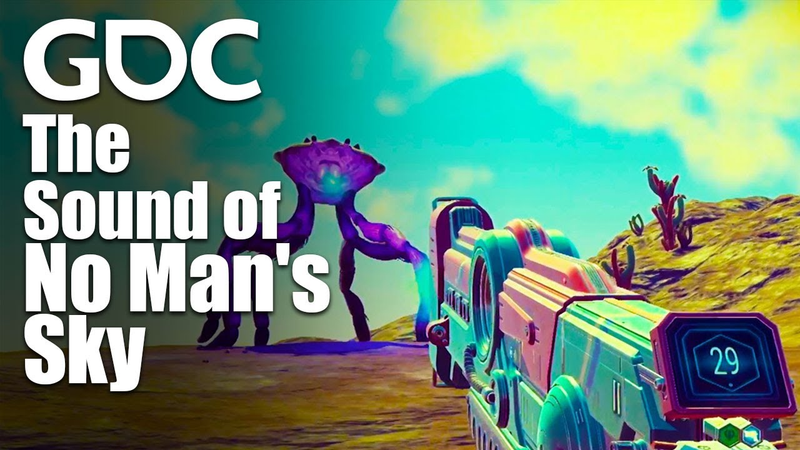
The Sound of No Man's Sky
The audio architecture of No Man’s Sky represents a fundamental shift from traditional event-driven sound design toward a highly flexible, state-driven system capable of supporting an infinite, procedurally generated universe.
- No Man’s Sky utilizes real-time ray casting to dynamically adjust audio layers and filters based on environmental variables, replacing the need for manual sound emitter placement in a procedurally generated universe.
- The 'Pulse' music engine deconstructs original compositions into 16,000 individual elements, remixing them in real-time based on player movement and location to create a non-linear, evolving soundtrack.
- The 'Rock Alien' synthesizer employs feedback-based pipe modeling and phoneme filtering to generate creature vocalizations that scale biologically according to specific in-game traits like size and behavior.
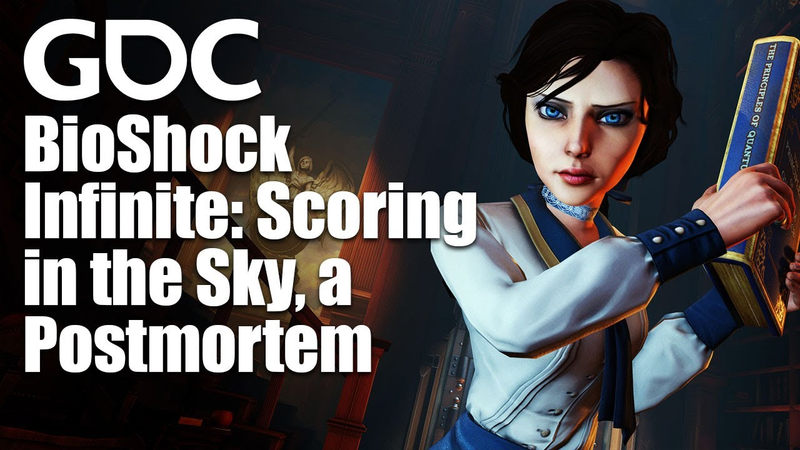
BioShock Infinite: Scoring in the Sky, a Postmortem
The musical direction for BioShock Infinite represents a deliberate departure from the grand, large-scale orchestral scores characteristic of the series' predecessors.
- The score moved away from traditional large-scale orchestral arrangements in favor of a minimalist ten-piece string ensemble to emphasize emotional intimacy and character-driven narrative.
- The composition utilized aleatoric writing and unquantized performances to create organic, visceral textures that reflect the game's 1912 setting and its underlying dystopian themes.
- A recurring open-fifth motif was implemented as a foundational anchor to symbolically represent the core narrative themes of infinity and time.
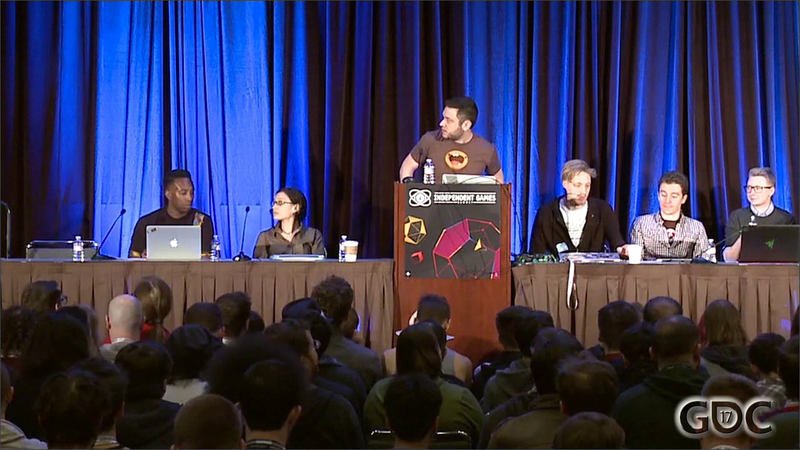
The 2017 GDC Tech Toolbox
Custom tool development serves as a critical catalyst for modern game production, enabling studios to overcome technical constraints while fostering creative iteration.
- Custom internal tool development is essential for overcoming technical constraints and enabling small teams to achieve high-fidelity results that off-the-shelf software cannot support.
- Procedural pipelines, as seen in titles like No Man's Sky, utilize modular texture layers, XML metadata, and shader-based processing to increase visual variety while maintaining memory efficiency.
- Development productivity is significantly improved by tools like Dark Config, which allow for the hotloading of configuration files to accelerate the design iteration cycle.
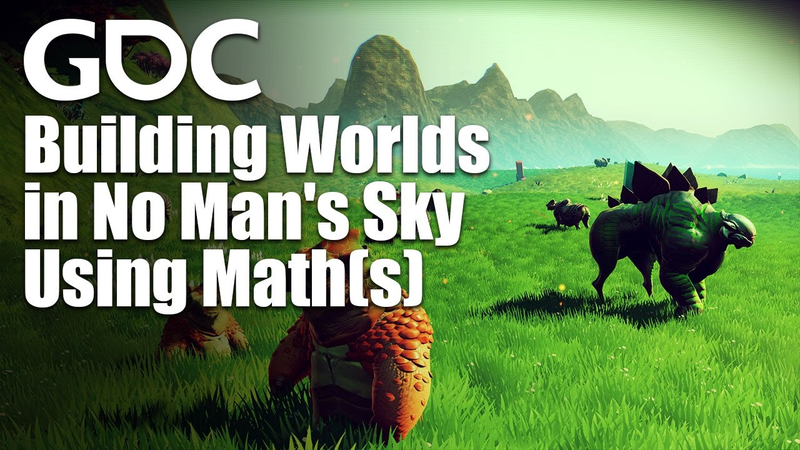
Building Worlds in No Man's Sky Using Math(s)
Procedural generation serves as the foundational architecture for No Man’s Sky, enabling the creation of a vast, diverse universe within a remarkably compact 300MB footprint.
- No Man’s Sky achieves a vast, diverse universe within a 300MB footprint by utilizing a custom engine driven by mathematical functions rather than pre-baked assets.
- The engine employs 'Uber noise'—a synthesis of layered 2D and 3D noise—to generate organic, non-repeating terrain features like erosion and overhangs without needing context from neighboring voxels.
- The procedural framework successfully handled a launch load of 500,000 concurrent players while maintaining a stable 1% crash rate.