Quest
Company
Documents about Quest
10 Key Quest Design Lessons from 'The Witcher 3' and 'Cyberpunk 2077'
Quest design functions as the narrative backbone of modern open-world role-playing games, requiring a highly iterative pipeline that prioritizes story as the primary driver of development.
- Quest design should function as the narrative backbone of open-world RPGs, utilizing an iterative pipeline that moves from conceptual outlines to playable block-outs to ensure quality.
- Designers should employ 'information subtraction' during investigations, withholding specific details to transform routine gameplay into mystery-driven experiences that engage player curiosity.
- Emotional resonance is best achieved by prioritizing character-driven 'gut-punch' moments and quiet, humanizing interactions over visual spectacle or redundant busy work.

Steel Media's Chris James and Dave Bradley On A New Era Of Mobile, Blockchain, and AI At GDC 2023
The 2023 Game Developers Conference (GDC) served as a significant industry barometer, signaling a robust return to live events with approximately 28,000 attendees.
- GDC 2023 signaled a strong industry recovery with approximately 28,000 attendees participating in the live event.
- Mobile gaming is shifting toward hybrid monetization models—combining subscriptions and cross-platform play—to counter rising user acquisition costs and data restrictions.
- Blockchain gaming is pivoting away from speculative financial models toward 'game-first' development, where technology serves as a functional layer within established frameworks.

Why Did Magic Eden Make Creator Royalties Optional? - The Metacast by Naavik
Riot Games’ acquisition of Wargaming Sydney serves as a strategic maneuver to secure specialized technical expertise for its upcoming League of Legends MMO.
- Magic Eden’s shift to optional creator royalties highlights the structural fragility of NFT marketplaces, where a lack of protocol-level enforcement triggers a race to the bottom on fees.
- To ensure long-term viability, NFT marketplaces must pivot away from transaction-fee reliance toward alternative revenue models like value-added services and paid placements.
- Riot Games acquired Wargaming Sydney to secure specialized expertise in the BigWorld technology stack and live-service operations, specifically to de-risk the development of its upcoming League of Legends MMO.
Ryan Wyatt: Polygon’s Quest for Scale
Polygon Studios serves as the primary business and operational engine for the Polygon ecosystem, dedicated to scaling Ethereum through advanced infrastructure and strategic enterprise partnerships.
- Polygon Studios is transitioning from a startup model to a mature infrastructure layer by adopting operational rigor from established tech giants like Google and YouTube.
- The core strategy focuses on making blockchain technology invisible to end users by prioritizing frictionless gaming experiences and digital ownership over technical jargon.
- The organization is heavily investing in ZK-EVM technology and supernets to provide the high-performance infrastructure required for complex game economies and large-scale corporate loyalty programs.
The 2022 Game Developers Choice Awards (Full Video)
The 22nd annual Game Developers Choice Awards serves as a comprehensive recognition of excellence within the global interactive entertainment industry for the 2021 calendar year.
- Inscryption was named the Game of the Year at the 22nd annual Game Developers Choice Awards, which recognized excellence in the 2021 calendar year.
- Valheim achieved significant market impact by securing both the Best Debut and the Audience Award.
- Ratchet & Clank: Rift Apart demonstrated industry-leading technical and artistic standards by winning awards for both Best Visual Art and Best Technology.
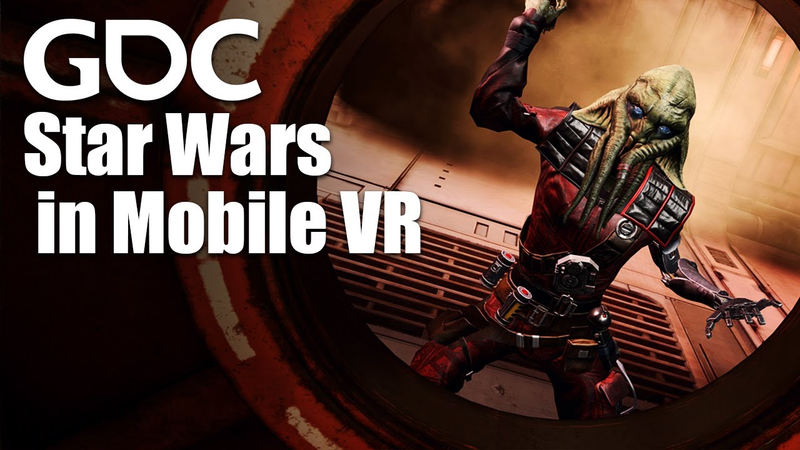
Building an Expansive 'Star Wars' World in Mobile VR
The development of Star Wars: Tales from the Galaxy’s Edge for mobile virtual reality platforms, specifically the Oculus Quest and Quest 2, required extensive technical optimization to maintain high-fidelity interactive storytelling within constrained hardware environments.
- To overcome mobile CPU bottlenecks, the team implemented a custom object pooling system to eliminate hitches caused by spawning and despawning actors.
- Engineers optimized complex component hierarchies by replacing scene components with actor components and utilizing skeletal mesh detachment to allow animation graphs to function independently.
- The team developed a custom, automated pre-computed visibility system using navigation mesh geometry to limit cell placement, which significantly reduced computation time compared to standard occlusion methods.

The Impossible Quest: Getting a Job in Games
Securing a position within the competitive game industry requires a strategic blend of technical preparation, professional adaptability, and intentional networking.
- Prioritize the creation of a role-specific portfolio that clearly delineates your individual contributions to collaborative projects.
- Approach networking as a long-term strategy by building genuine relationships with peers and support staff rather than focusing exclusively on senior leadership.
- Maintain a proactive career management system by utilizing industry-specific resources like GameDevMap and keeping an organized log of all job applications.

TWIG 146: The Real Problem with VR
The current state of the consumer virtual reality (VR) market is characterized by a reliance on heavy corporate subsidization, specifically from Meta (formerly Facebook), which serves as a critical life-support system for the industry.
- The VR market is currently dependent on heavy corporate subsidization from Meta, which acts as a critical life-support system for the industry.
- Despite the Meta Quest 2 reaching an install base of approximately 10 million units, engagement remains low, with most Steam VR titles maintaining fewer than 100 concurrent users.
- Major third-party developers are hesitant to invest in VR because the current user base and engagement levels do not justify the high production costs.
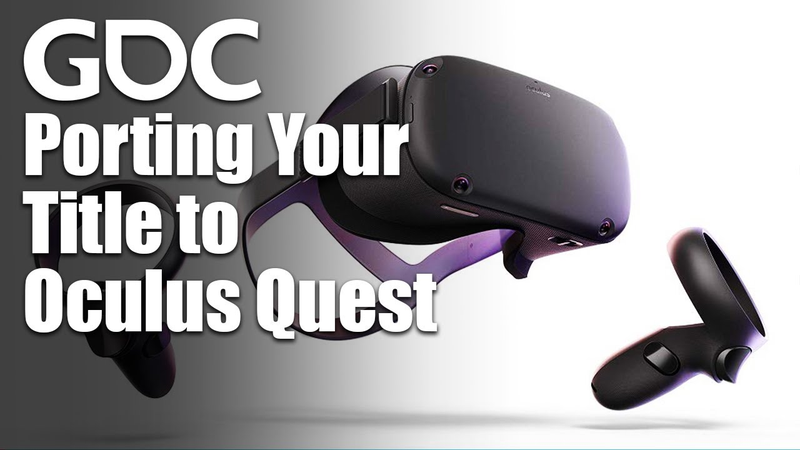
Porting Your Title to Oculus Quest
Transitioning a virtual reality title to the Oculus Quest necessitates a fundamental shift toward mobile-first development principles.
- Maintain a strict 72 FPS performance target by aggressively optimizing draw calls and vertex counts to accommodate the Quest’s mobile-first, tile-based rendering architecture.
- Manage the 2.75 GB RAM constraint by utilizing ASTC texture compression and shifting from static dependencies to dynamic asset loading.
- Avoid GPU-intensive features such as Z-passes, alpha testing, and dynamic lighting, opting instead for texture atlases, shader-based optimizations, and faked lighting effects.
Gamification and how Games are Occupying the World! PG Connects Digital #2
Gamification serves as a powerful mechanism for enhancing human motivation and productivity by applying game design principles to non-game contexts.
- Effective gamification shifts focus from extrinsic rewards like points and badges toward fostering intrinsic motivation to drive sustainable behavioral change.
- Successful systems utilize human-centered design by categorizing users into four distinct player types—killers, socializers, explorers, and achievers—to tailor engagement strategies.
- Gamification frameworks must incorporate activity loops that provide immediate, ongoing feedback to maintain user engagement and productivity.
Launching Spaceteam VR PG Connects Digital #2
The development and launch of Spaceteam VR represent a strategic adaptation of a classic mobile cooperative experience into the immersive virtual reality landscape.
- Spaceteam VR launched in May 2020, requiring a shift to remote development workflows and digital-only community engagement due to the global pandemic.
- The project successfully implemented cross-play functionality between Steam and Oculus Quest to maintain the original game's cooperative social dynamics.
- Technical challenges, specifically synchronization discrepancies and low player density, hindered initial user conversion rates and long-term retention.
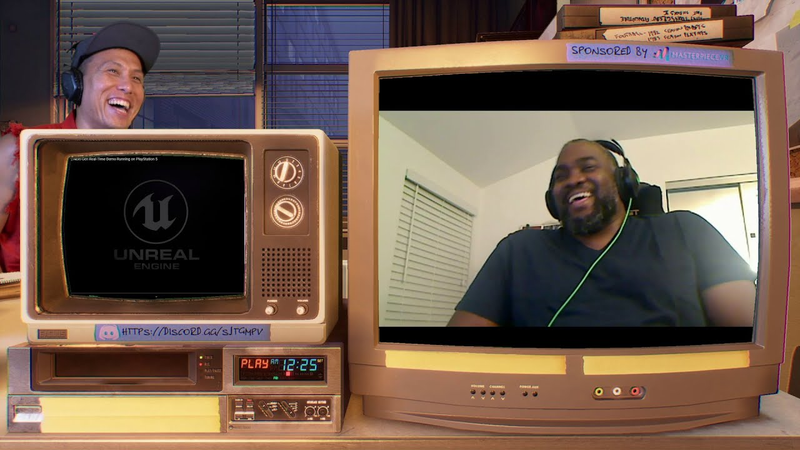
Unreal Engine 5 Reactions, And Last of Us 2 Ending a Generation | Game Dev Unchained Roundtable News
The introduction of Unreal Engine 5 marks a pivotal shift in game development, primarily driven by the integration of Nanite geometry and Lumen real-time global illumination.
- Unreal Engine 5 introduces Nanite geometry and Lumen real-time global illumination to automate light-baking and eliminate traditional optimization bottlenecks for high-fidelity assets.
- Despite technological advancements, Unreal Engine 5 does not remove the need for rigorous character animation, physics simulation, and efficient asset management in full-scale production.
- Industry experts view high-end tech demonstrations as aspirational marketing tools rather than immediate standards, as most studios continue to prioritize cohesive art styles over raw photorealism.