Nike
Company
Documents about Nike
LPL 2023: New Logo, Partners, and NIP Enters the Fray
The League of Legends Pro League (LPL) initiated its 2023 season with significant organizational and branding updates, marking a decade of operations in China.
- The League of Legends Pro League (LPL) has unveiled a new logo to commemorate its 10-year anniversary.
- Chinese apparel brand Li-Ning has replaced Nike as the LPL’s new strategic apparel partner following the expiration of Nike’s four-year exclusive contract in 2022.
- The LPL has secured 14 league sponsors for the 2023 season, including Mercedes-Benz as the chief partner and strategic partners Li-Ning, Jing Dong, and Momchilovtsi.
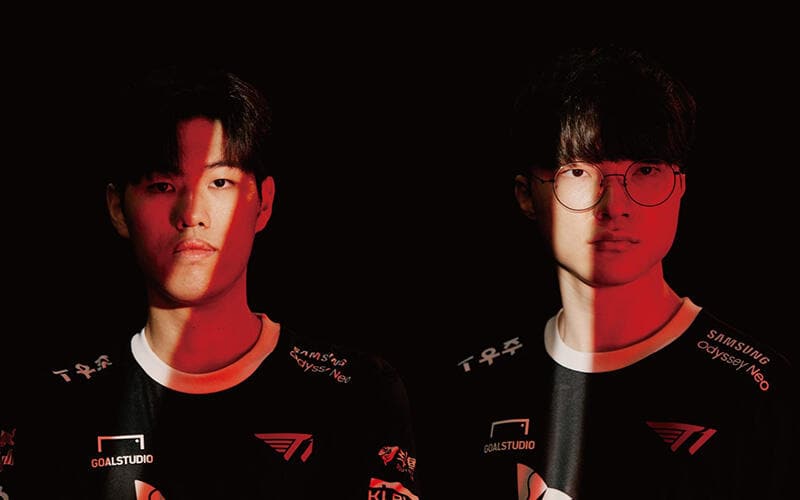
T1 Replaces Nike With Goal Studio as its Official Apparel Partner
South Korean esports organization T1 Entertainment & Sports has entered into a three-year partnership with the sports lifestyle brand Goal Studio, designating the company as its new official apparel partner.
- T1 Entertainment & Sports has signed a three-year deal with Goal Studio to serve as its new official apparel partner.
- Nike will remain a partner of T1, transitioning from its previous role as the exclusive apparel provider to the official footwear and fitness partner.
- The partnership with Goal Studio provides T1 with increased creative flexibility, including the ability to design custom uniforms for specific events and the potential for home and away kits.
Nike Replaced by Li-Ning as Exclusive LPL Apparel Sponsor
Li-Ning has replaced Nike as the exclusive apparel sponsor for the League of Legends Pro League (LPL), the premier professional esports circuit in China operated by TJ Sports.
- Li-Ning has replaced Nike as the exclusive apparel partner for the League of Legends Pro League (LPL), the official professional league operated by TJ Sports.
- Nike’s previous four-year exclusive deal, signed in 2019, was valued at approximately $7.48 million USD (¥50 million) annually.
- The partnership transition follows significant public and government backlash against Nike in 2021 regarding the company's stance on Xinjiang labor practices, which briefly led to the obscuring of Nike branding during LPL broadcasts.
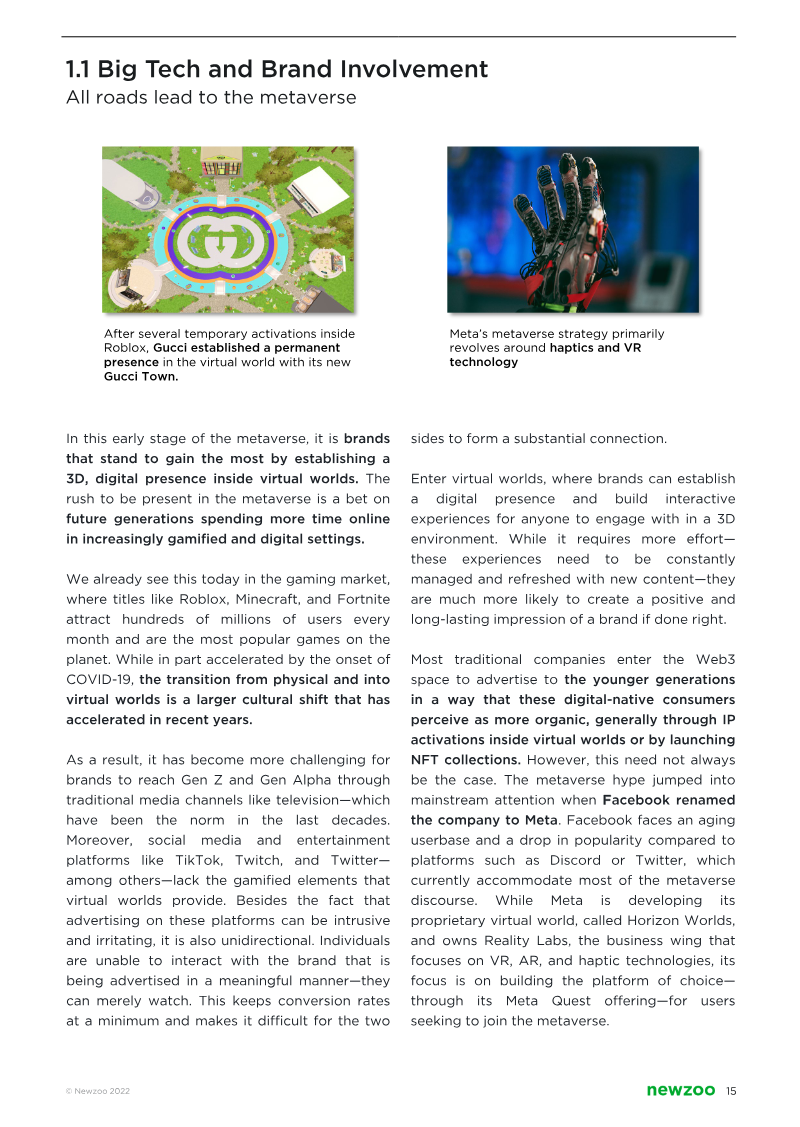
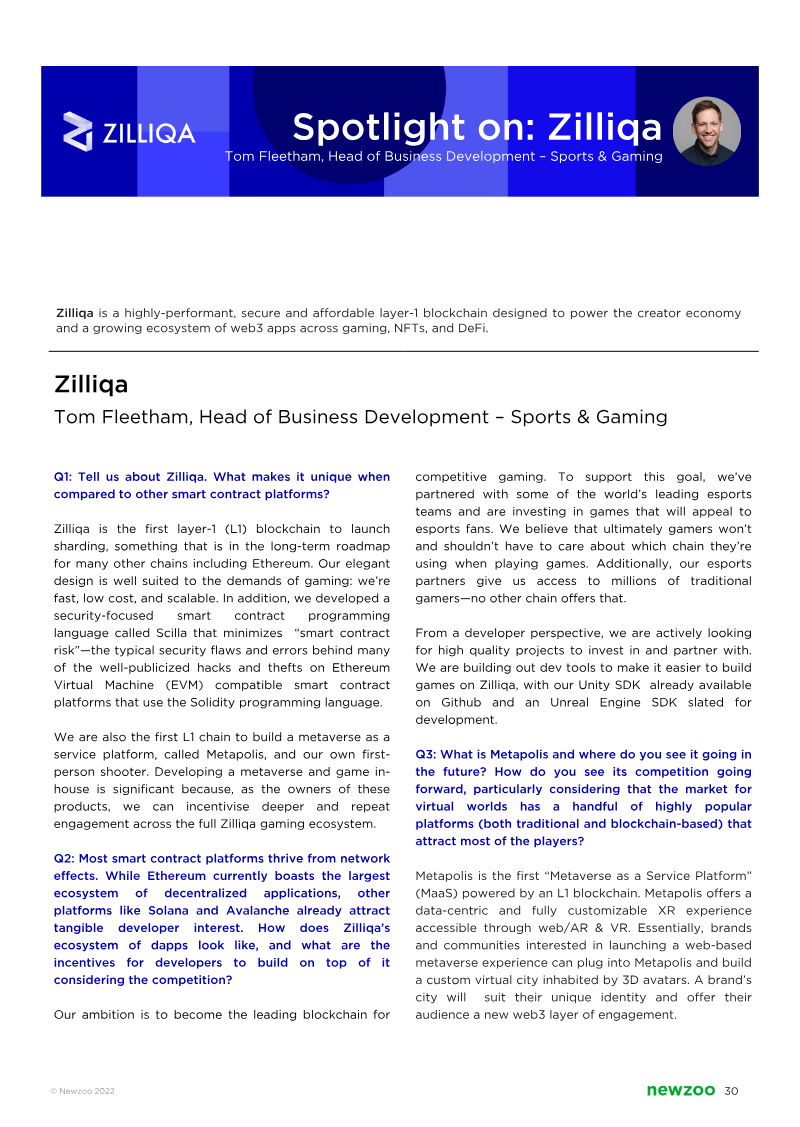
The Metaverse, Blockchain Gaming, and NFTs: Navigating the Internet’s Uncharted Waters 2022
The analysis demonstrates that the metaverse, blockchain gaming, and NFTs have transitioned from niche curiosities to mainstream commercial forces, reshaping consumer engagement across entertainment, fashion, and gaming.
- The metaverse and blockchain gaming have evolved into mainstream commercial forces, with major brands like Nike, Gucci, Samsung, and Louis Vuitton investing in virtual storefronts and digital real estate.
- Virtual events are demonstrating massive scale, as evidenced by Ariana Grande’s Rift Tour and Justin Bieber’s Wave performance attracting millions of concurrent viewers.
- Blockchain gaming is expanding through play-to-earn models, highlighted by Axie Infinity’s 3 billion gamers and Illuvium’s $72 million in funding, though long-term viability depends on engagement beyond speculative gains.
Gamification and how Games are Occupying the World! PG Connects Digital #2
Gamification serves as a powerful mechanism for enhancing human motivation and productivity by applying game design principles to non-game contexts.
- Effective gamification shifts focus from extrinsic rewards like points and badges toward fostering intrinsic motivation to drive sustainable behavioral change.
- Successful systems utilize human-centered design by categorizing users into four distinct player types—killers, socializers, explorers, and achievers—to tailor engagement strategies.
- Gamification frameworks must incorporate activity loops that provide immediate, ongoing feedback to maintain user engagement and productivity.
The Games Industry's China Syndrome
The analysis examines the growing tension between the global expansion of the video game industry and the geopolitical realities of operating within the Chinese market.
- The 2019 suspension of Hearthstone player Ng 'blitzchung' Wai Chung by Activision Blizzard exemplifies the conflict between Western corporate values of free expression and the economic necessity of maintaining favor with Chinese regulators and partners like Tencent.
- China represents a critical market for the gaming industry, evidenced by the fact that approximately half of the global World of Warcraft player base resides within the country.
- The gaming industry is experiencing a maturation phase similar to Hollywood and the NBA, where companies can no longer maintain political neutrality while operating in polarized geopolitical environments.
Bread and Games: Playing Is, and Has Always Been, a Political Act
The intersection of entertainment, politics, and corporate strategy serves as a primary focus for analyzing the modern media landscape.
- Gaming is increasingly treated as a mainstream media category rather than a siloed vertical, evidenced by YouTube folding its dedicated gaming app back into its main platform to leverage 200 million daily unique visitors.
- European gambling authorities are moving toward stricter regulations for younger audiences due to the blurring lines between interactive gaming and gambling, specifically regarding loot boxes and skin betting.
- AT&T is pivoting its post-merger WarnerMedia strategy toward aggressive, data-driven content spending to compete directly with Netflix.