The metaverse and blockchain gaming have evolved into mainstream commercial forces, with major brands like Nike, Gucci, Samsung, and Louis Vuitton investing in virtual storefronts and digital real estate.
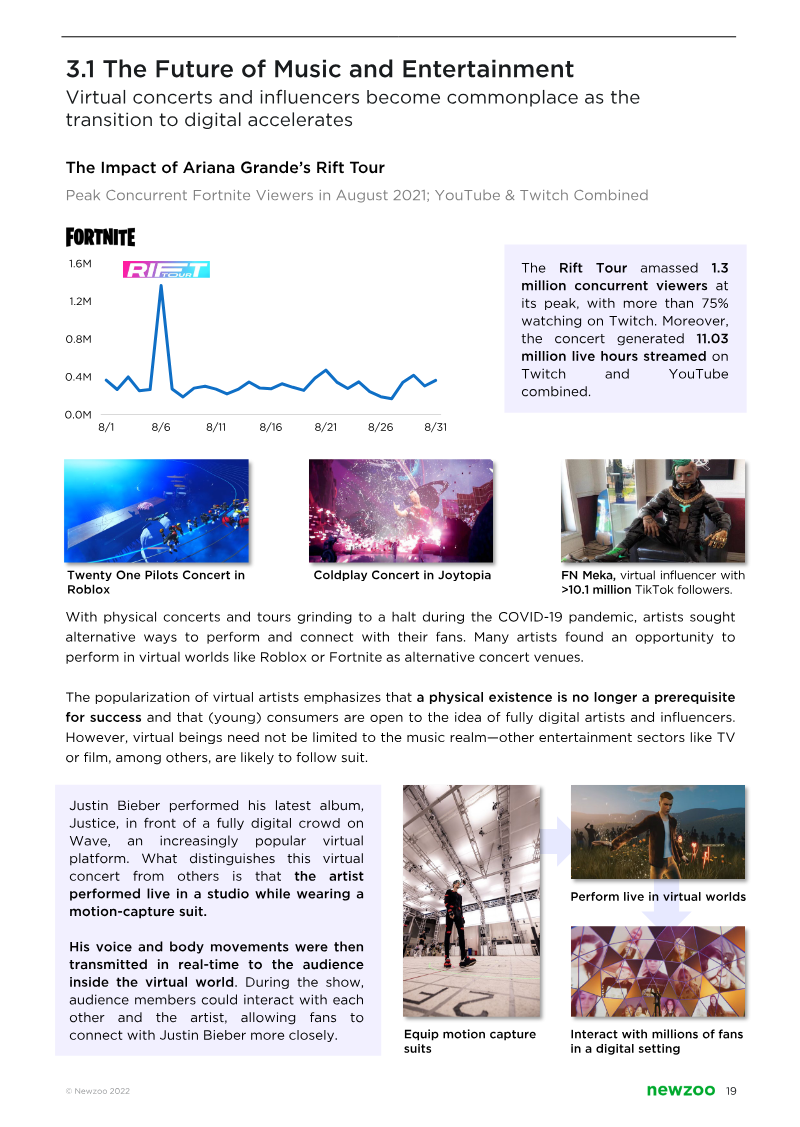
See it on page 37Virtual events are demonstrating massive scale, as evidenced by Ariana Grande’s Rift Tour and Justin Bieber’s Wave performance attracting millions of concurrent viewers.
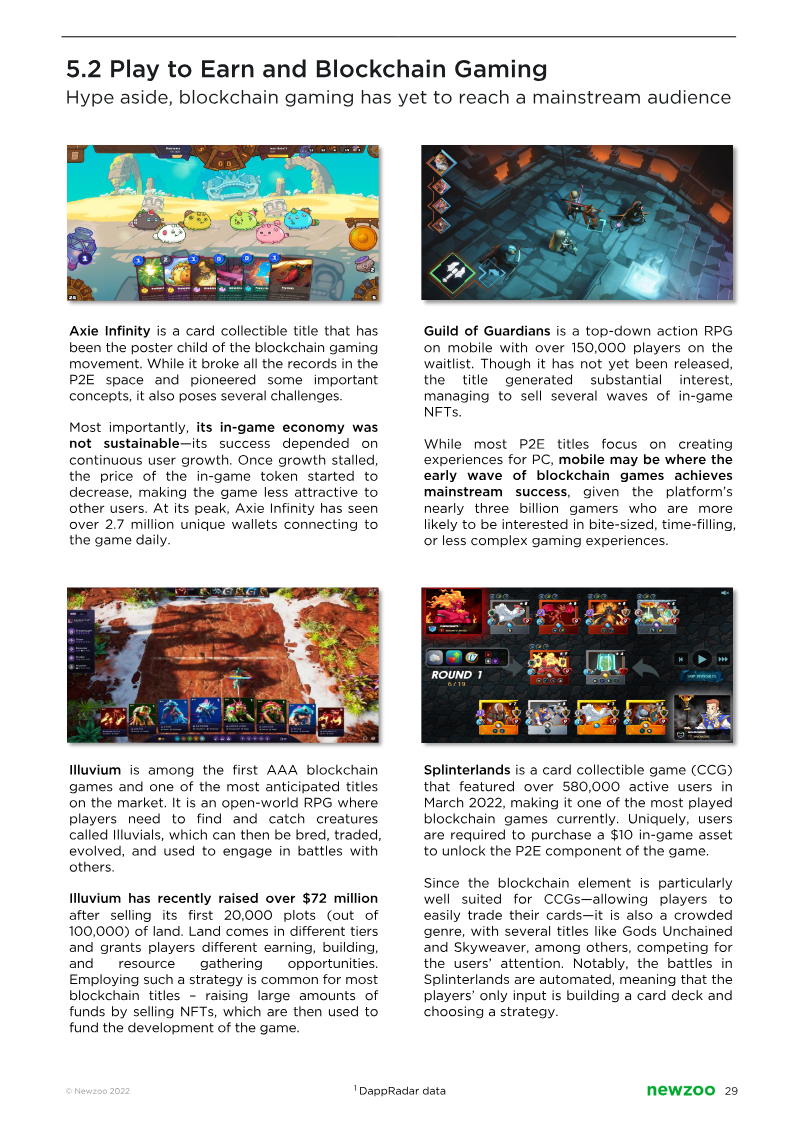
See it on page 19Blockchain gaming is expanding through play-to-earn models, highlighted by Axie Infinity’s 3 billion gamers and Illuvium’s $72 million in funding, though long-term viability depends on engagement beyond speculative gains.
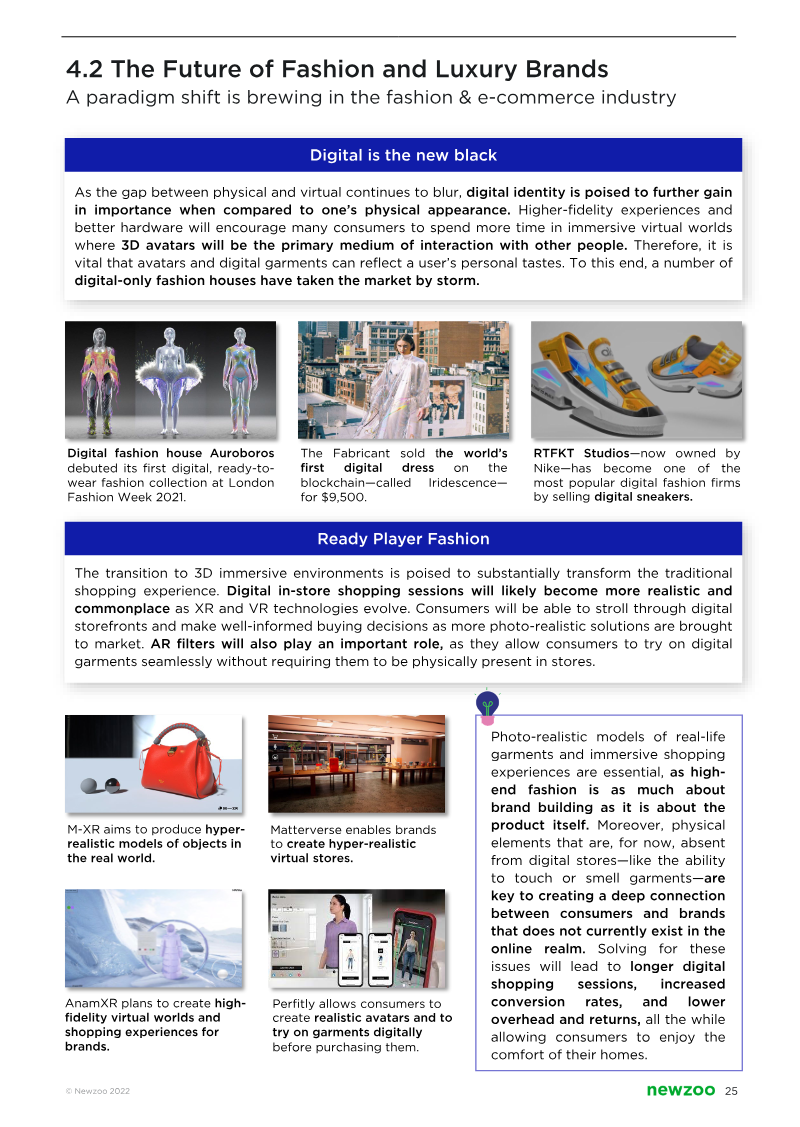
See it on page 29Digital-first fashion houses like Auroboros and The Fabricant are successfully monetizing virtual garments, utilizing NFTs to provide ownership and community benefits to users.
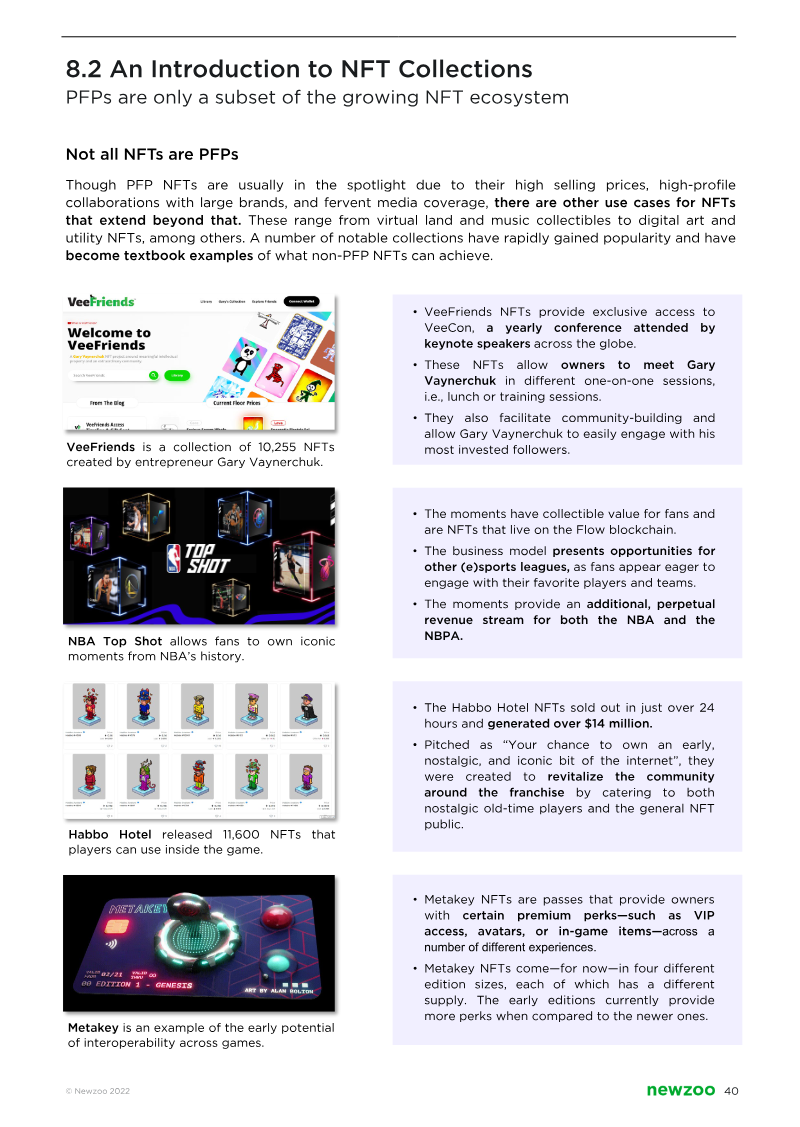
See it on page 25Non-PFP NFTs, such as virtual land and music collectibles from projects like NBA Top Shot and VeeFriends, are gaining traction by focusing on utility and cross-game interoperability.
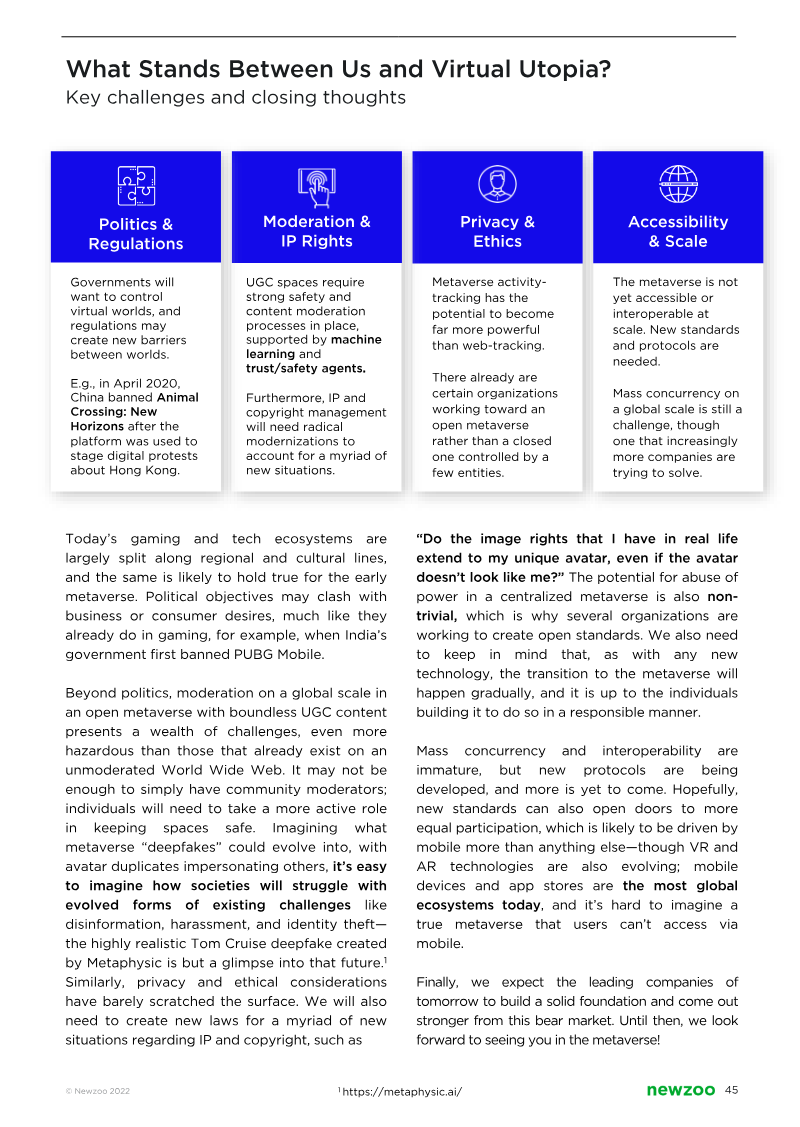
See it on page 40The industry faces significant regulatory and safety hurdles, including the need for new legal frameworks to address deepfakes, disinformation, and harassment within user-generated content.
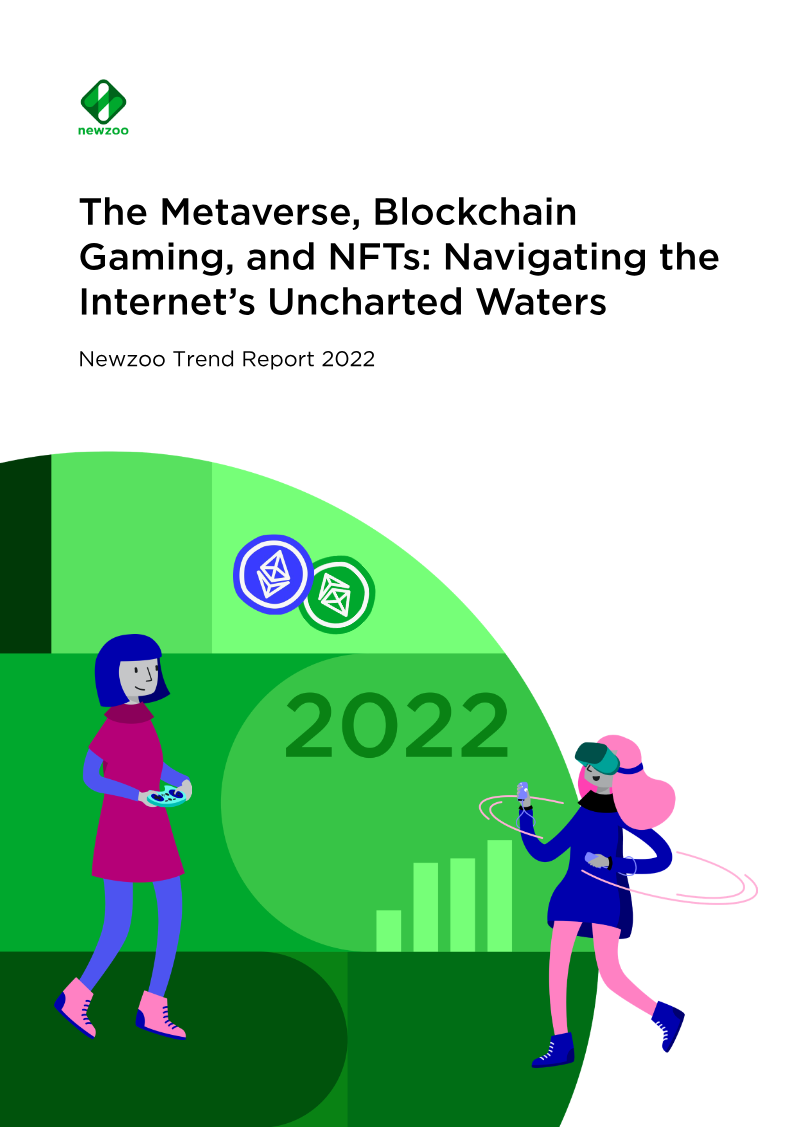
See it on page 45The analysis demonstrates that the metaverse, blockchain gaming, and NFTs have transitioned from niche curiosities to mainstream commercial forces, reshaping consumer engagement across entertainment, fashion, and gaming. Major brands—including Nike, Gucci, Samsung, and Louis Vuitton—are investing in digital real estate and virtual storefronts to capture a digitally native audience, while music artists leverage virtual concerts and NFT sales as alternative revenue streams. Virtual events such as Ariana Grande’s Rift Tour and Justin Bieber’s Wave performance illustrate the capacity of fully digital experiences to attract millions of concurrent viewers, signaling a shift toward immersive entertainment and fan‑centric monetization.
In the fashion sector, digital‑first houses like Auroboros and The Fabricant generate millions of users by selling high‑priced virtual garments, integrating NFTs to provide ownership and community benefits. The report projects that realistic XR shopping, AR try‑ons, and interoperable digital wardrobes will drive higher engagement and conversion rates, enabling luxury brands to test markets digitally before physical production. Blockchain gaming remains dominated by low‑revenue titles, yet play‑to‑earn (P2E) ecosystems—exemplified by Axie Infinity’s 3 billion gamers and Illuvium’s $72 million funding—are expanding, with guilds such as Yield Guild Games monetizing in‑game assets through lending models. Sustainability hinges on continued user engagement and broader adoption beyond speculative gains.
Non‑PFP NFTs, including virtual land, music collectibles, and utility tokens, are gaining traction through community‑building perks and cross‑game interoperability, as seen in VeeFriends, NBA Top Shot, Habbo Hotel, and Metakey. These use cases broaden the NFT value proposition and support deeper metaverse integration. However, the industry faces significant regulatory and safety challenges: governments are pushing for open standards to mitigate political, moderation, and privacy risks, while the proliferation of user‑generated content amplifies concerns over deepfakes, disinformation, and harassment. Addressing these issues will require new legal frameworks and robust community moderation before a safe, inclusive metaverse can be fully realized.