Kongregate
Company
Documents about Kongregate

Inside NYT Games: Why They Don't Play by the Same Rules
The New York Times Games division operates under a distinct philosophy that prioritizes long-term brand integrity and subscriber value over the aggressive monetization tactics common in the mobile gaming industry.
- The New York Times Games division rejects standard mobile industry monetization tactics like gacha systems and battle passes in favor of a subscription-based model that prioritizes long-term brand integrity.
- The development team utilizes a democratic, open-pitch greenlight system that allows any employee to contribute ideas, which led to the creation of successful titles like Connections.
- The division mandates a 60-day content buffer for new prototypes, using Canada as a primary testing market to analyze retention metrics before committing to a full-scale release.

Inside New York Times Games: Why Killing 96% of New Ideas Is the Win
New York Times Games operates on a subscription-based model that prioritizes long-term player engagement and brand integrity over the aggressive monetization tactics prevalent in the broader mobile gaming industry.
- New York Times Games maintains a rigorous development filter, greenlighting only 3% to 4% of all proposed game concepts.
- The division prioritizes a subscription-based model over aggressive monetization, explicitly avoiding gacha mechanics and in-app purchases to focus on long-term player engagement.
- New game concepts undergo soft launches in Canada to validate retention metrics, specifically analyzing D7/D1 and D30/D7 slopes before global release.
From a Double Exit to Double Loop Games, Serial Gaming Entrepreneur Emily Greer
The evolution of the browser and mobile gaming landscape is defined by a shift toward data-driven distribution and developer-centric business models.
- The shift from browser to mobile gaming requires balancing technical analytical rigor with an intuitive understanding of player psychology to overcome market saturation and privacy regulations like App Tracking Transparency.
- Kongregate democratized the gaming market by implementing a model based on fair revenue sharing and developer intellectual property ownership, which proved resilient during the 2008 financial crisis.
- Strategic pivots, such as Kongregate’s transition to in-app purchase monetization and subsequent acquisition by GameStop, were essential for scaling from a browser-based platform to a mobile game publisher.
Don't Ship a Product, Ship Value: Start Your Minimum Viable Product With a Solution
Minimum Viable Products (MVPs) serve as a strategic framework for game developers to deliver value while minimizing resource expenditure.
- An MVP must be a deliberate, iterative solution designed to solve a specific user problem rather than a generic prototype used to gauge general interest.
- Developers must maintain a firm product vision to filter feedback, exercising the discipline to reject feature requests that do not align with the core purpose of the product.
- The failure of the 'Cartridge' PC platform demonstrates that high-quality design cannot compensate for a lack of a clear, unique value proposition or the failure to address negative user feedback.
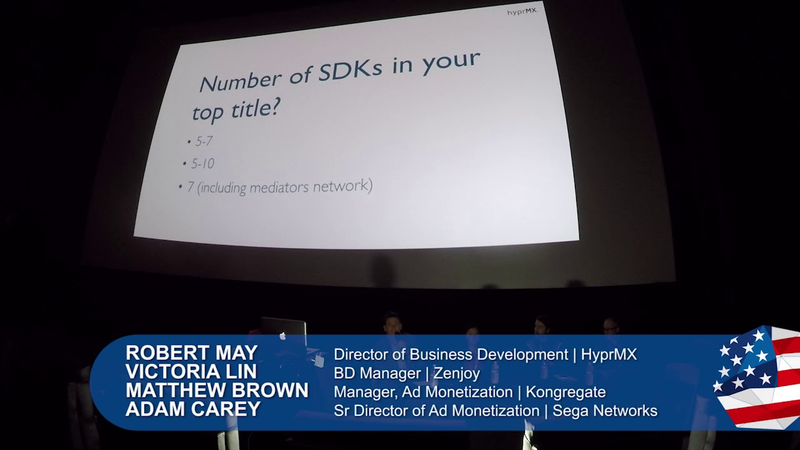
Monetisation from the trenches – Lessons from the fight to maximise ad revenue
This panel discussion, held at Pocket Gamer Connects San Francisco 2018, features monetization experts from Zenjoy, Kongregate, and Sega Networks discussing strategies for maximizing mobile game ad revenue.
- Integrate advertising into the core game loop during the early development phase rather than treating it as an afterthought to ensure a balanced, data-driven monetization strategy.
- Prioritize rewarded video as the primary ad format due to its superior completion rates and positive user reception compared to other formats.
- Maintain a diversified ad strategy by utilizing interstitials and banners for non-paying users or specific game contexts to supplement rewarded video revenue.
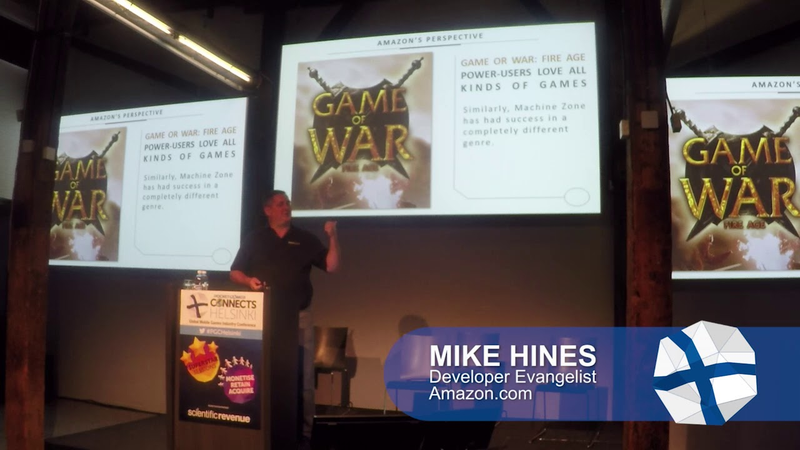
Organic high-value user acquisition
This analysis examines strategies for identifying, acquiring, and retaining high-value users—often referred to as power users—within the mobile gaming industry.
- Power users constitute less than 0.1% of the total player base but generate a disproportionate share of revenue, frequently spending over $200 per month.
- High-value users typically concentrate their spending within only two specific game titles, demonstrating extreme loyalty rather than broad-market engagement.
- Developers should shift monetization strategies away from addictive mechanics toward identity and social status, offering elite items that allow players to signal achievement.

The Flash Games Postmortem
Flash technology served as the primary catalyst for the modern independent game industry, offering a low-barrier, cross-platform environment that enabled rapid prototyping and global distribution.
- Flash served as the primary catalyst for the modern independent game industry between 2006 and 2011 by providing a low-barrier, cross-platform environment for rapid prototyping and global distribution.
- The professionalization of the Flash ecosystem was driven by platforms like Mochi Media and Kongregate, which introduced revenue-sharing models, transparent bidding, and analytics that enabled developers to pursue full-time careers.
- The industry hit a critical turning point in 2010 when Apple rejected Flash on mobile platforms due to performance and security concerns, triggering a shift toward social gaming and mobile-native development.

GotW: BattleHand
BattleHand, a card-battling RPG developed by the London-based startup Another Place and published by Kongregate, serves as a notable entry in the mobile gaming market.
- BattleHand is a mobile card-battling RPG developed by London-based startup Another Place and published by Kongregate, targeting the mid-core Western market.
- The combat system utilizes a turn-based, team-oriented structure that incorporates elemental affinities—such as earth, water, and fire—to dictate tactical advantages.
- The game differentiates itself from competitors through a steeper difficulty curve and a design philosophy that prioritizes core gameplay mechanics over metagame-driven progression.

IAP Inspector: BattleHand
BattleHand, a fantasy-themed card battler developed by Another Place Productions and published by Kongregate, utilizes a monetization model that blends standard industry practices with unique narrative-driven engagement strategies.
- BattleHand prioritizes manual gameplay by requiring players to complete dungeons before unlocking auto-battle features, contrasting with the automated progression models of competitors like Star Wars: Galaxy of Heroes.
- The game utilizes a multi-currency system comprising keys for energy, gold as soft currency, and gems as hard currency.
- A daily gem subscription service is offered for approximately $13.99, a price point that may hinder its effectiveness as an entry-level conversion tool compared to lower-priced market alternatives.

TrailPlay on engaging fresh audiences
The primary thesis of this analysis is that developers can overcome the saturation and high user acquisition costs of the mobile market by adopting a cross-platform strategy that includes desktop and web-based platforms like Facebook, Steam, and Kongregate.
- Adopting a cross-platform strategy across desktop and web channels serves as a low-cost user acquisition alternative to the saturated and expensive mobile market.
- King reported a 50% increase in average play time and a 100% increase in user engagement after porting their titles to additional platforms.
- PopCap successfully utilized Facebook Connect to enable cross-platform play, resulting in 20% of their monthly active users engaging with these connectivity features.