Kongregate
Company
35 documents in the library are about Kongregate, from writers such as Modern Times Group, PocketGamer.biz and Game Developers Conference. Each has a summary and key insights with the page they come from.
Connections
The documents about Kongregate on the inner ring, the other games and companies they name on the outer one. Select a cover to see it up close and open it in a new tab; drag to move, pinch or Ctrl + scroll to zoom.
Key figures from the reports
Successful web game models historically relied on a mix of ad revenue and in-app purchases, with some platforms like Kongregate seeing up to 80% of revenue generated from IAP at their peak.
a16z Games, 2024 · Why Web Gaming Died, And How It’s Coming Back
The company merged its studio Kongregate into Monumental, retaining a 30% stake in the combined entity to optimize its asset structure.
Modern Times Group, 2024 · Modern Times Group Q4 2023 Investor Presentation, p. 3
The MTGx division, which includes esports and online gaming, achieved 27% organic sales growth and transitioned from an EBITDA loss to a profit following the consolidation of InnoGames and Kongregate.
Modern Times Group, 2018 · MTG Q1 2018 Financial Results, p. 8
The MTGx gaming division doubled its revenue to SEK 2.96 billion, achieving 37% organic growth driven by the strategic acquisitions of a 51% stake in InnoGames for SEK 801 million and 100% of Kongregate for SEK 463 million.
Modern Times Group, 2017 · Annual Report 2017: Shaping the Future of Entertainment, p. 18
Esports revenue grew by 32%, supported by the successful integration of acquisitions InnoGames and Kongregate.
Modern Times Group · Interim Report: January-March 2018, p. 8
On Steam
Steam estimates as of 9 Oct 2026. Revenue is premium revenue on Steam only: game sales, without DLC.
- Revenue as publisher
- $1.4M
- 9 games
- Revenue as developer
- $0
- 1 games
- Units sold
- 2.8M
- as publisher or developer
Kongregate’s best-selling games on Steam
| Game | Released | Share of the best seller | Revenue | Units |
|---|---|---|---|---|
| PinePublisher | 2019 | $1.2M | 68K | |
| The Trail: Frontier ChallengePublisher | 2017 | $137K | 13K | |
| GRIDD: RetroenhancedPublisher | 2017 | $13K | 1,551 | |
| Realm GrinderPublisher | 2017 | — | 1.4M | |
| Animation Throwdown: The Quest for CardsPublisher | 2017 | — | 352K | |
| Bit HeroesPublisher | 2017 | — | 695K | |
| surviv.io - 2D Battle RoyaleDeveloper and Publisher | 2020 | — | 90K | |
| SpellstonePublisher | 2016 | — | 116K | |
| Office Space: Idle ProfitsPublisher | 2017 | — | 83K |
Documents about Kongregate

Inside NYT Games: Why They Don't Play by the Same Rules
The New York Times Games division operates under a distinct philosophy that prioritizes long-term brand integrity and subscriber value over the aggressive monetization tactics common in the mobile gaming industry.
- The New York Times Games division rejects standard mobile industry monetization tactics like gacha systems and battle passes in favor of a subscription-based model that prioritizes long-term brand integrity.
- The development team utilizes a democratic, open-pitch greenlight system that allows any employee to contribute ideas, which led to the creation of successful titles like Connections.
- The division mandates a 60-day content buffer for new prototypes, using Canada as a primary testing market to analyze retention metrics before committing to a full-scale release.
Q3 2025 Investor Presentation
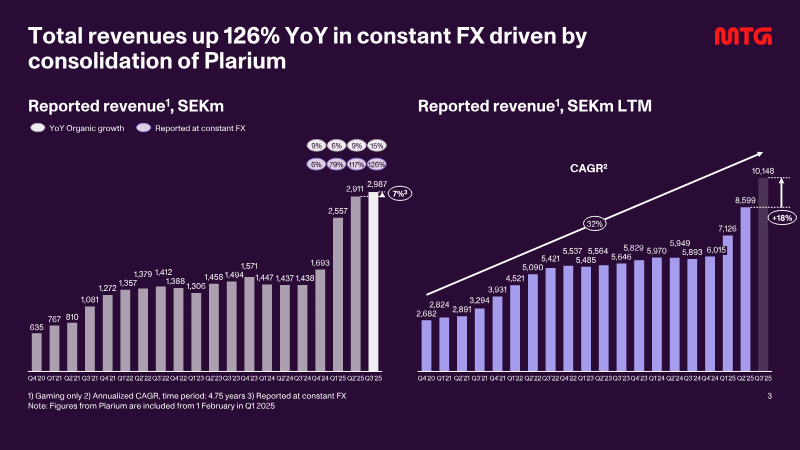
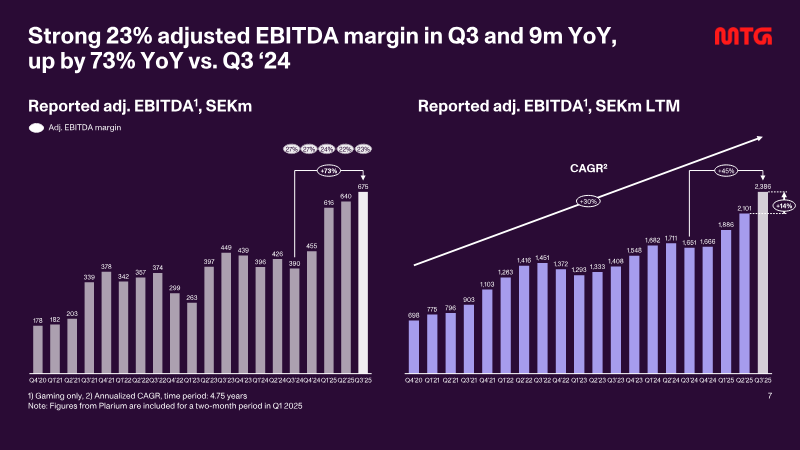
The presentation delivers a quarterly performance update and revised full-year outlook for a mid-core and casual gaming group, emphasizing the impact of organic growth and the recent integration of Plarium.
- Q3 2025 net sales reached SEK 2.987 billion, representing a 15% year-over-year organic increase and a 126% rise in constant-currency revenue driven by the Plarium acquisition.
- The company raised its FY 2025 guidance to a total revenue target of SEK 11.4–11.7 billion, with an expected adjusted EBITDA margin of 21–24%.
- Adjusted EBITDA for Q3 2025 was SEK 675 million (23% margin), with free cash flow of SEK 404 million and a 60% cash-conversion rate.

Why Web Gaming Died, And How It’s Coming Back
Web-based gaming, which flourished in the early 2000s through portals like Miniclip and Kongregate, experienced a significant decline following the rise of mobile gaming and the discontinuation of Adobe Flash.
- Web-based gaming is experiencing a resurgence driven by modern technologies like HTML5, WebAssembly, and advanced game engines such as Unity and PlayCanvas, which allow for near-native CPU performance.
- The primary competitive advantage of modern web games is frictionless distribution, enabling users to launch games instantly via links without navigating app stores or performing manual downloads.
- Discord is actively re-entering the gaming space by opening its web-based Activities platform to all developers and introducing support for in-app purchases (IAP) to enable more sophisticated monetization.
Modern Times Group Q2 2024 Investor Presentation
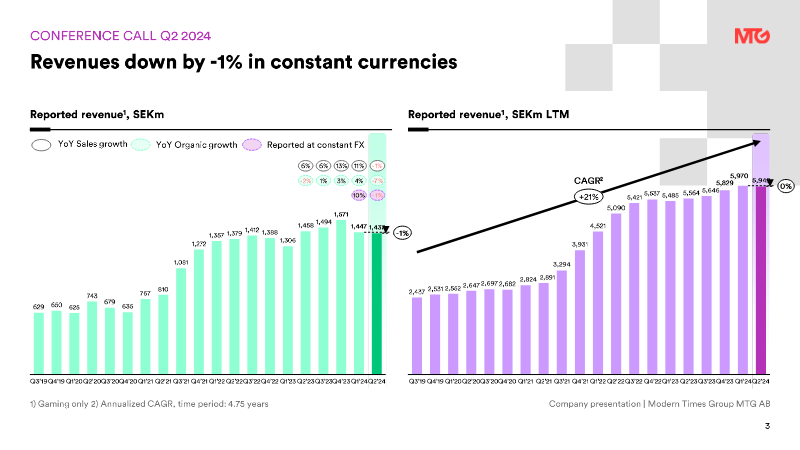
Modern Times Group’s Q2 2024 investor presentation outlines a period of disciplined operational focus, characterized by stable revenue and significant growth in profitability.
- Modern Times Group reported Q2 2024 adjusted EBITDA of 426 million SEK, a 7% year-over-year increase, achieving an operating margin of 30%.
- Net sales for Q2 2024 were 1,437 million SEK, representing a 1% decline in constant currencies compared to the previous year.
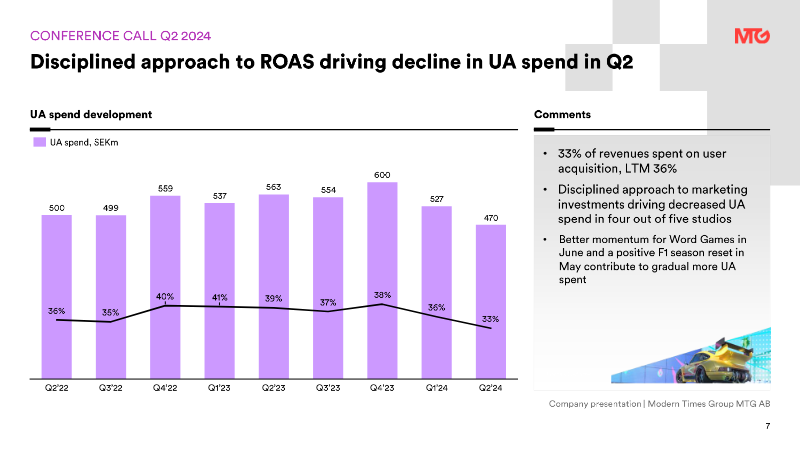
- The company maintained a disciplined approach to user acquisition (UA) spending, which decreased to 33% of revenue in Q2 2024 compared to 36% for the last twelve months.
Modern Times Group Q4 2023 Investor Presentation
Modern Times Group’s Q4 2023 investor presentation outlines the company’s financial performance and strategic shifts, confirming that the organization met its full-year outlook.
- Modern Times Group achieved record full-year adjusted EBITDA of 1,548 million SEK, maintaining a 27% margin.
- Q4 2023 net sales reached 1,571 million SEK, driven by 7% comparable growth and 3% organic growth year-over-year.
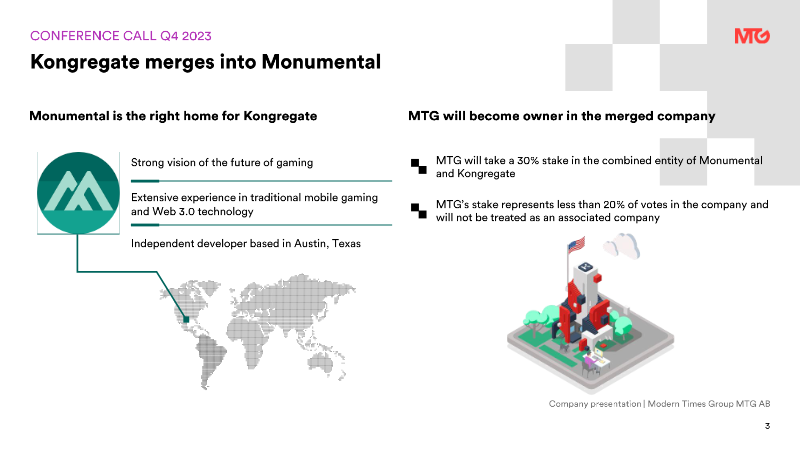
- The company merged its studio Kongregate into Monumental, retaining a 30% stake in the combined entity to optimize its asset structure.
From a Double Exit to Double Loop Games, Serial Gaming Entrepreneur Emily Greer
The evolution of the browser and mobile gaming landscape is defined by a shift toward data-driven distribution and developer-centric business models.
- The shift from browser to mobile gaming requires balancing technical analytical rigor with an intuitive understanding of player psychology to overcome market saturation and privacy regulations like App Tracking Transparency.
- Kongregate democratized the gaming market by implementing a model based on fair revenue sharing and developer intellectual property ownership, which proved resilient during the 2008 financial crisis.
- Strategic pivots, such as Kongregate’s transition to in-app purchase monetization and subsequent acquisition by GameStop, were essential for scaling from a browser-based platform to a mobile game publisher.
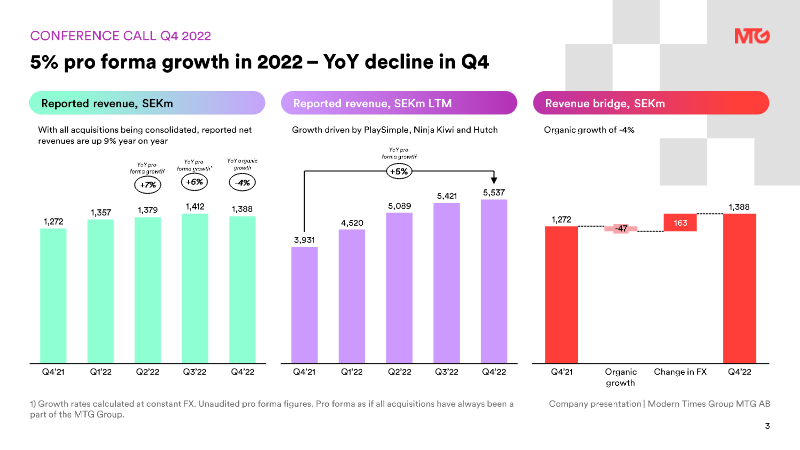
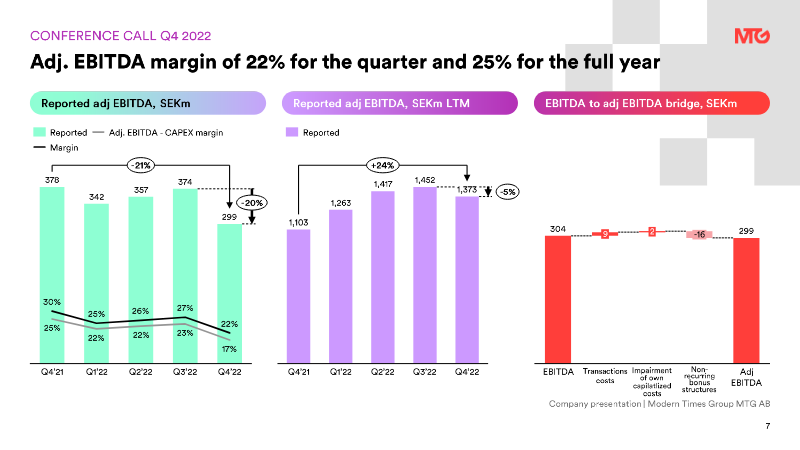
Modern Times Group Q4 2022 Investor Presentation
Modern Times Group’s Q4 2022 investor presentation outlines a fiscal year defined by resilience in a challenging, low-visibility gaming market.
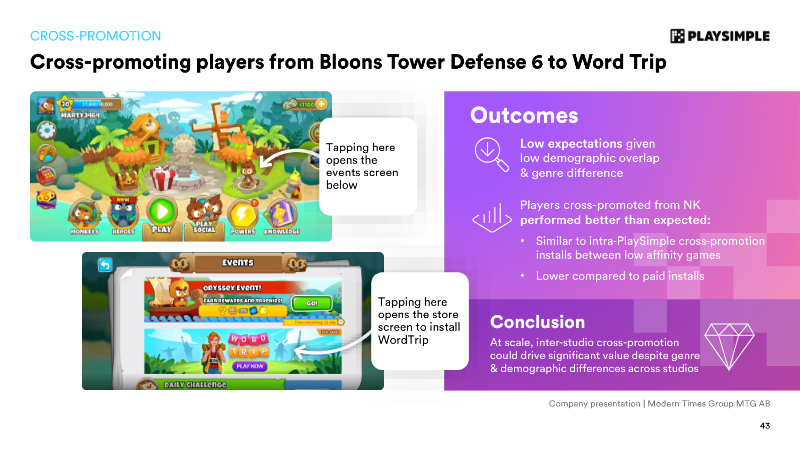
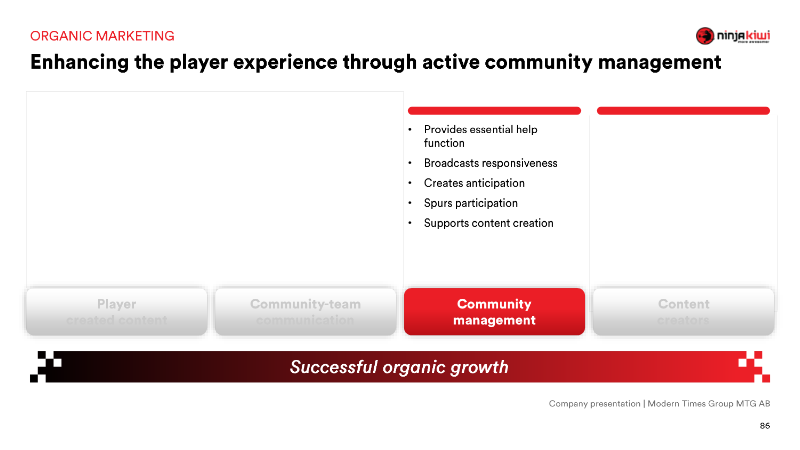

MTG Game Makers Day 2022
MTG has successfully transitioned into a pure-play mobile gaming group, shifting from a diversified holding company to an integrated acceleration platform.
- MTG has completed its transition into a pure-play mobile gaming group, operating as an integrated platform rather than a diversified holding company.
- The 'Flow Platform' serves as the central ecosystem for sharing data, marketing technology, and monetization tools across all portfolio studios to drive growth above market averages.
- PlaySimple drives revenue through a proprietary ad-tech stack focused on word games, while InnoGames utilizes AI-driven CRM and LiveOps to maintain long-term player retention.
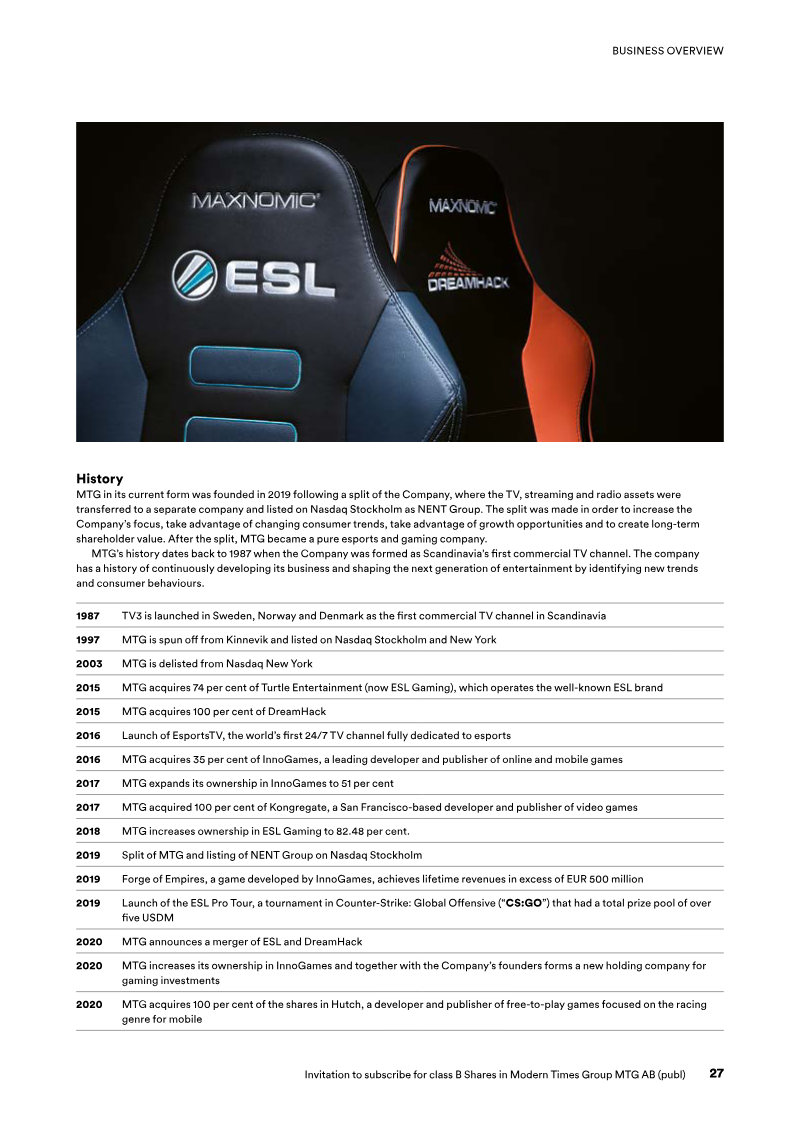
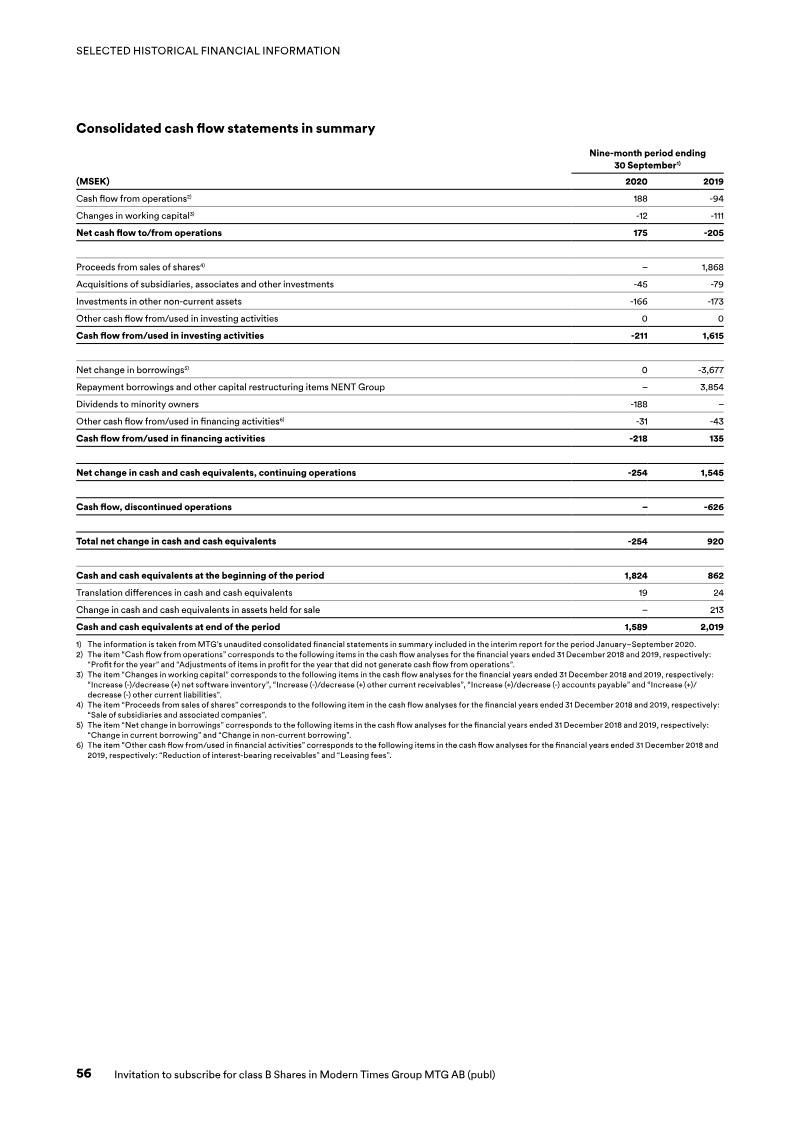

Invitation to Subscribe for Class B Shares: Modern Times Group MTG AB
Modern Times Group (MTG) is executing a rights issue of up to 28,320,697 new Class B shares to raise approximately SEK 2,549 million.
- MTG is launching a rights issue of up to 28,320,697 Class B shares at SEK 90 per share to raise approximately SEK 2,549 million.
- The capital raised is primarily earmarked to repay a SEK 1,800 million bridge loan and a vendor note associated with the acquisitions of Hutch and increased ownership in InnoGames.
- Failure to complete the rights issue risks a working capital shortfall and potential breaches of financial covenants within the next twelve months.

Don't Ship a Product, Ship Value: Start Your Minimum Viable Product With a Solution
Minimum Viable Products (MVPs) serve as a strategic framework for game developers to deliver value while minimizing resource expenditure.
- An MVP must be a deliberate, iterative solution designed to solve a specific user problem rather than a generic prototype used to gauge general interest.
- Developers must maintain a firm product vision to filter feedback, exercising the discipline to reject feature requests that do not align with the core purpose of the product.
- The failure of the 'Cartridge' PC platform demonstrates that high-quality design cannot compensate for a lack of a clear, unique value proposition or the failure to address negative user feedback.
MTG Q2 2019 Interim Report
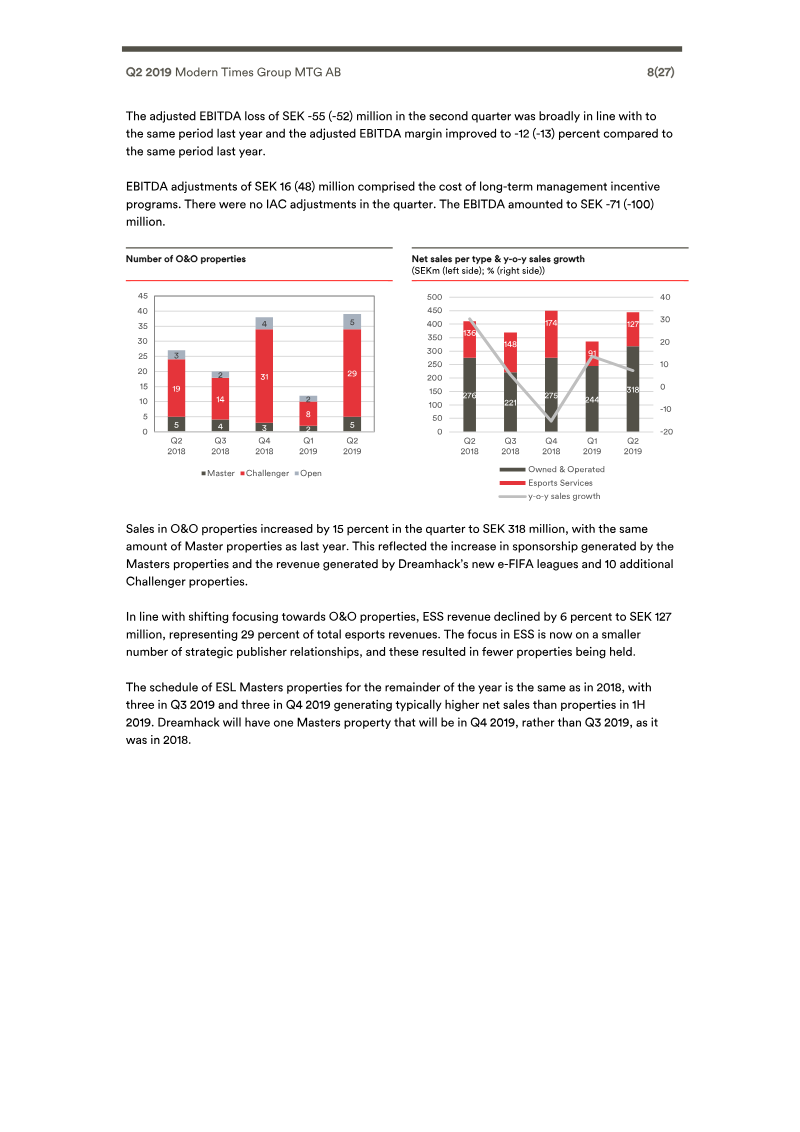
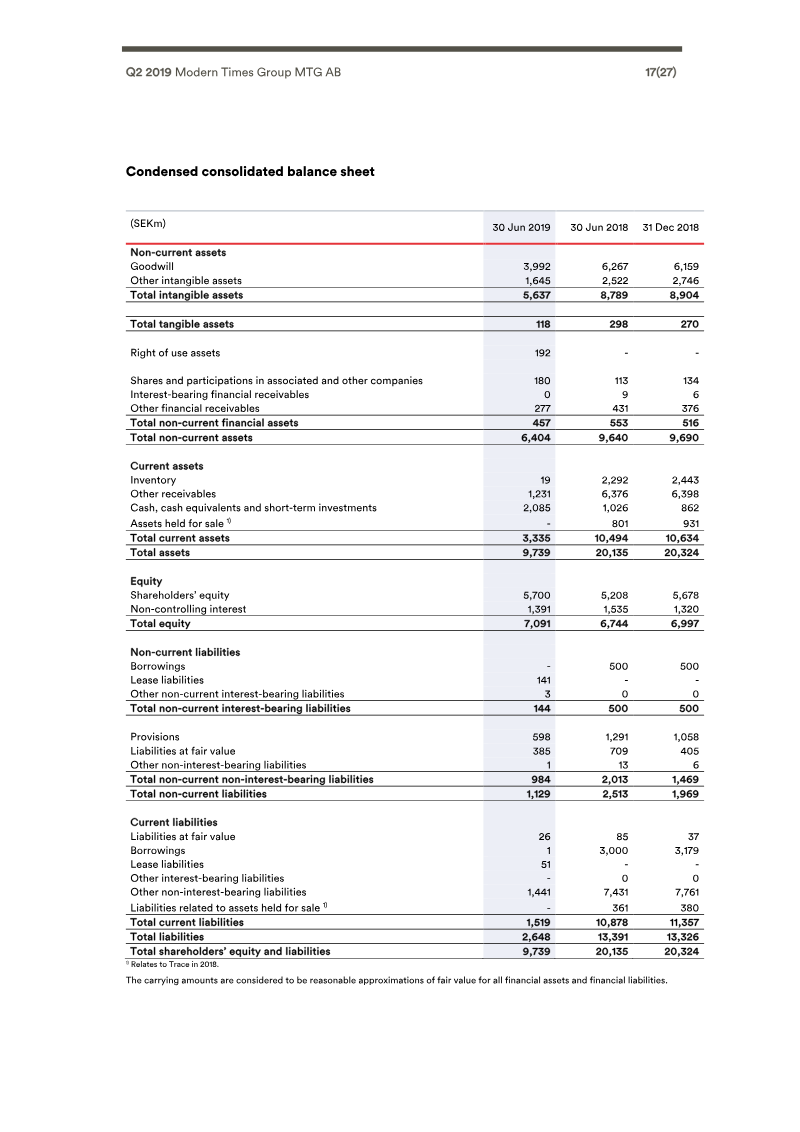
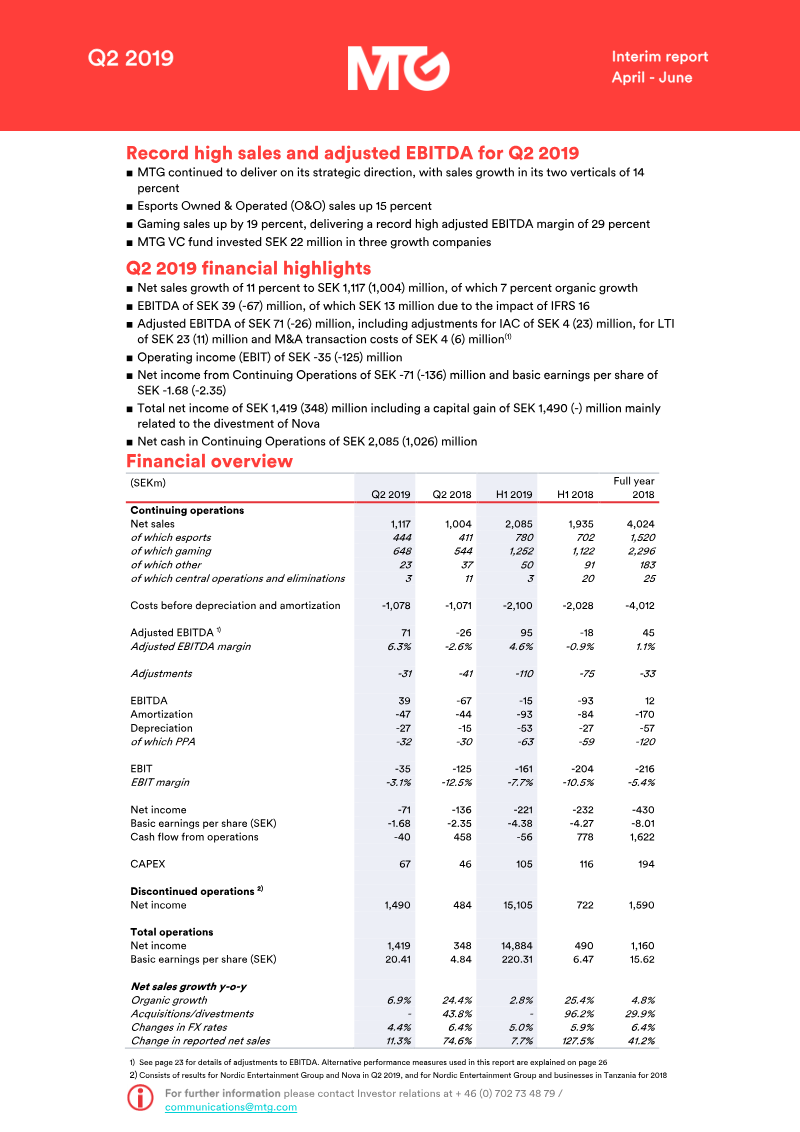
MTG underwent a significant structural transformation during the second quarter of 2019, pivoting its core business model to focus exclusively on global digital entertainment through esports and gaming.
- MTG completed a strategic pivot to a pure-play digital entertainment company by divesting Nova Broadcasting Group and distributing Nordic Entertainment Group shares.
- Net sales grew 11% to SEK 1,117 million in Q2 2019, supported by a 19% increase in gaming revenue and 15% growth in the esports segment.
- The company lowered its full-year organic growth guidance to 8–12% due to slower-than-expected monetization of esports media rights.
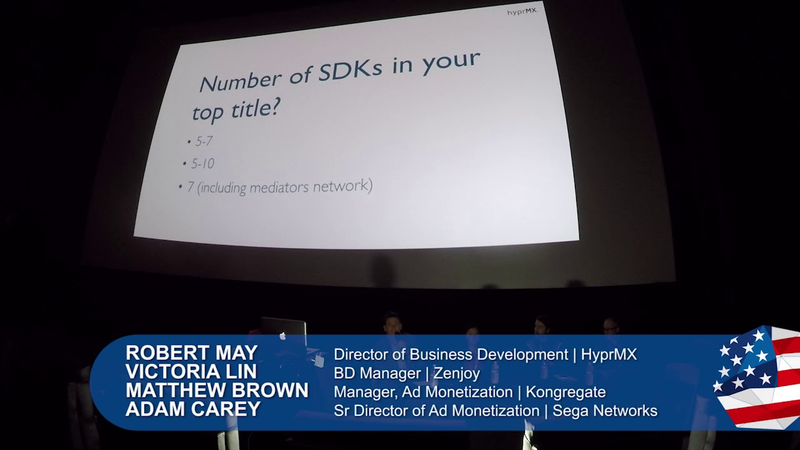
Monetisation from the trenches – Lessons from the fight to maximise ad revenue
This panel discussion, held at Pocket Gamer Connects San Francisco 2018, features monetization experts from Zenjoy, Kongregate, and Sega Networks discussing strategies for maximizing mobile game ad revenue.
- Integrate advertising into the core game loop during the early development phase rather than treating it as an afterthought to ensure a balanced, data-driven monetization strategy.
- Prioritize rewarded video as the primary ad format due to its superior completion rates and positive user reception compared to other formats.
- Maintain a diversified ad strategy by utilizing interstitials and banners for non-paying users or specific game contexts to supplement rewarded video revenue.