indie
CompanyUnited States
Documents about indie
How LORT Rode the Chaos to a Top 5 Steam Launch in 2026
The analysis examines the successful early 2026 Steam launch of the co-op action roguelite LORT, while contextualizing broader industry trends through the Game Developers Conference (GDC) 2026 State of the Game Industry survey.
- Big Distraction’s co-op roguelite LORT achieved a top-five Steam debut in early 2026, selling 281,000 units within its first two weeks of Early Access.
- The industry is experiencing significant volatility, with 50% of companies conducting layoffs in the last 12 months and 28% of professionals reporting job losses over the past two years.
- LORT’s commercial success was driven by a strategic $10 price point and a low-six-figure investment in targeted influencer marketing campaigns.
DunDev: The Springboard to Success
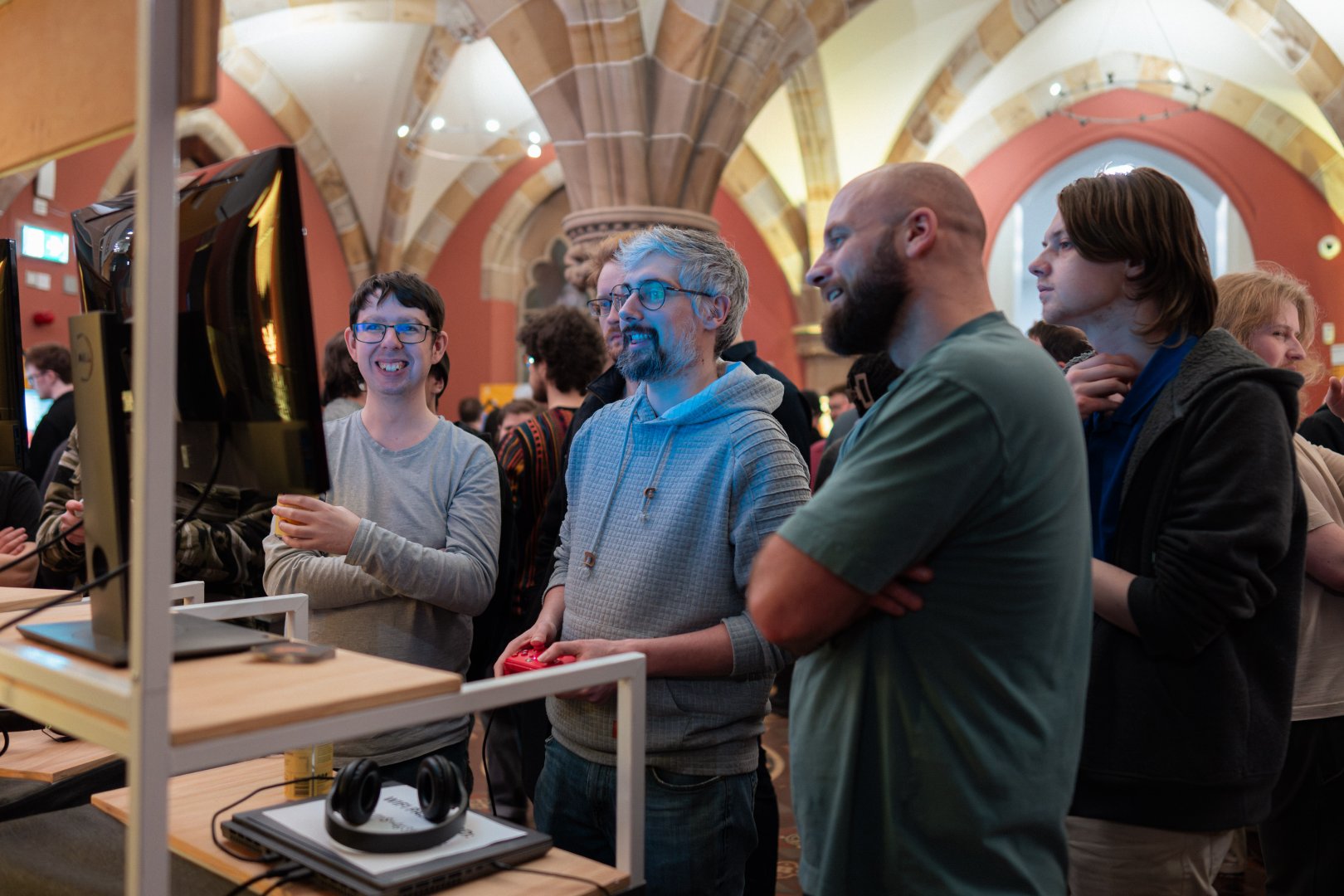
The DunDev residential program serves as a strategic accelerator for early-stage independent game development studios in the United Kingdom.
- The 2026 DunDev residential program provided a four-week intensive accelerator in Dundee for four early-stage UK indie studios: Nostalgicat, Mothlight Studio, MVGIE Studios, and Jardus Games.
- The program curriculum focused on bridging the gap between creative design and commercial viability through mentorship, expert-led workshops, and industry networking.
- Participating studios engaged in public play-testing at Dundee Contemporary Arts and private pitch sessions with publishers to stress-test game concepts and business strategies.
Should You Keep Your Demo Up Post Launch?
The decision to maintain a game demo post-launch is a common point of contention for developers, particularly those working on linear or narrative-driven titles.
- Keeping a demo live post-launch significantly increases average review scores by over 5.5 points (89.83 with demo vs. 84.22 without demo) for games with 1000+ reviews.
- Approximately 21% of successful indie games (those with 1000+ reviews in 2025) still had their demo live post-launch.
- Souls-like games had the highest percentage of post-launch demos, followed by City Builders and Rhythm games at 50%.

Live Q&A With Chris Zukowski about Steam Next Fest
Steam Next Fest serves as a critical promotional milestone for indie developers, but its efficacy is fundamentally tethered to the volume of wishlists a game accumulates prior to the event.
- Launch your demo well before Steam Next Fest to build wishlists, as the event itself is highly competitive and favors games that already have significant traction.
- Use median playtime on your demo as the primary metric to evaluate game quality, as it is a more reliable indicator of player engagement than average playtime or subjective feedback from friends.
- If your game consistently ranks in the bronze or silver tiers on Steam benchmarks, it is likely that the core concept is not resonating with the market, and you should consider shipping the project to move on to a new game.

Why 'How Many Dudes?' Gets Pre-Release Discovery Right!
The analysis examines effective pre-release discovery strategies in the modern video game industry, using the indie title How Many Dudes? as a primary case study.
- A public Steam demo acted as the primary catalyst for growth, driving over 100,000 wishlists in a single month after reaching 3,000 concurrent users.
- High-concept, viral-ready premises—such as the 'how many people to defeat a gorilla' debate—are essential for breaking through in the saturated 2026 PC and console market.
- Game design should prioritize shareable, streamer-friendly loops, as seen in the autobattler mechanics of 'How Many Dudes?' that facilitate audience participation.
Azur Games' Head of Publishing Sergey Marcinkiewicz on Vietnamese Mobile Gaming Ecosystem
Vietnam has emerged as a premier global hub for mobile game development, characterized by an exceptionally rapid pace of production and a unique mastery of the puzzle genre.
- The mobile gaming industry is shifting away from hyper-casual models toward complex, high-quality titles inspired by PC mechanics such as roguelite, tower defense, and survival arena games.
- Vietnam has established itself as a premier global development hub, distinguished by its rapid production speed and expertise in pioneering new puzzle sub-genres.
- Due to rising user acquisition costs, studios now require at least three months of data to effectively optimize return on ad spend (ROAS).
Making Beautiful 3D Games Is Easier Than You Think
Creating a high-quality, stylized 3D adventure game—modeled after the aesthetic of titles like The Legend of Zelda: Breath of the Wild—is achievable for independent developers using free assets and a disciplined approach to visual design.
- Achieving a stylized, Breath of the Wild-inspired aesthetic relies on a limited terrain palette of three to four textures, using hue shifting and saturation adjustments to ensure all environmental elements, such as grass, dirt, and stone, remain color-coordinated.
- To avoid visual repetition in terrain, use noise spreads for grass billboards and maintain a consistent tiling scale across all terrain layers to create a unified look.
- High-fidelity assets should be placed strategically to anchor the scene, as the human brain interprets the presence of a few high-resolution objects as an indicator of overall high-quality visual fidelity.

Split Fiction’s Josef Fares on Clair Obscur success, AI fears and EA’s reputation
Josef Fares, the creative director of Hazelight Studios, emphasizes a philosophy of prioritizing creative vision over market data to drive game development.
- Hazelight Studios has achieved significant commercial success by prioritizing creative vision over market data, resulting in 27 million units sold for 'It Takes Two' and 12 million for 'A Way Out'.
- Josef Fares explicitly rejects taking Hazelight public, arguing that the pressure to satisfy stock market stakeholders forces companies to prioritize short-term financial gains over long-term creative quality.
- The studio maintains a staff of approximately 80 employees and operates under a co-op-only design philosophy that intentionally avoids risk-averse, data-driven decision-making.

Larian Loses the AI High Ground, Farewell to Anthem, and Minecraft Goes Mini! | Games For Breakfast
The gaming industry is currently navigating a period of intense friction between corporate efficiency mandates and a deeply skeptical player base.
- The gaming industry is experiencing a widening divide between AAA studios prioritizing shareholder-driven cost-cutting and indie developers who maintain a focus on human-led creative innovation.
- Generative AI integration in game development is facing significant player backlash, with critics arguing that reliance on AI tools leads to a regression in emotional resonance and craftsmanship.
- Labor instability remains a critical issue, highlighted by the closure of Ubisoft Halifax following unionization efforts and ongoing allegations of union-busting at Nintendo.

Let's Review Your Games — Ep. 040
Independent game development requires a delicate balance between creative vision and technical accessibility.
- Indie developers frequently fail to bridge the gap between creative visual identity and fundamental user experience, leading to disoriented players.
- Common technical failures include inconsistent control schemes, such as conflicting button mapping, and unreliable audio or UI cues.
- Poorly paced onboarding sequences and the premature introduction of complex mechanics often prevent players from engaging with the core narrative.
How To Make "Zelda: Breath Of The Wild" Workshop: Day 2 (Part 2)
Creating a high-fidelity, open-world environment reminiscent of The Legend of Zelda: Breath of the Wild requires a disciplined approach to asset integration, terrain sculpting, and atmospheric post-processing.
- Effective terrain sculpting relies on using specialized brushes for large-scale mountain creation rather than manual, single-brush detailing.
- Fog is a critical tool for managing visual depth and environmental cohesion, helping to blend distant terrain and improve the overall aesthetic of the game world.
- Manual painting of environmental details like snow and grass requires balancing artistic intuition with logical placement based on mountain topography to avoid a 'mappy' or unnatural appearance.
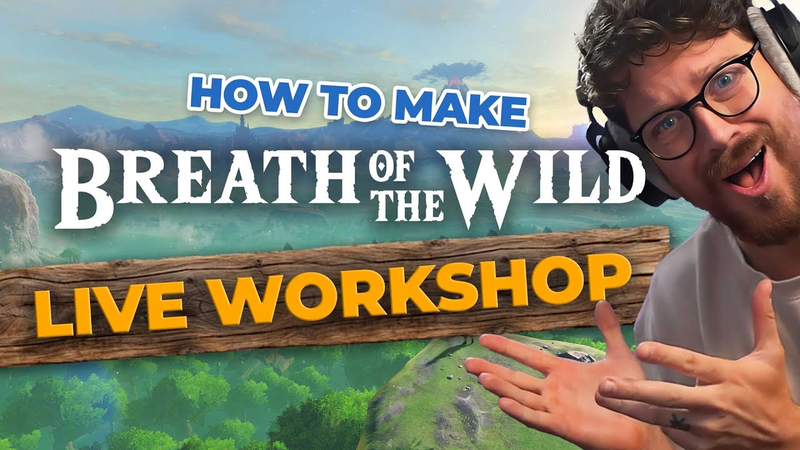
How To Make "Zelda: Breath Of The Wild" Workshop: Day 1
Replicating the distinct visual aesthetic of The Legend of Zelda: Breath of the Wild within the Unity engine requires a disciplined approach to asset management and color theory.
- Establish a consistent color scheme for environments and biomes early in the development process to create a cohesive visual foundation, even if deviations occur later.
- Implement Level of Detail (LOD) groups for all exterior assets to manage poly counts and texture sizes, preventing performance issues when rendering large-scale environments.
- Maintain strict folder organization for all imported assets to ensure project scalability and prevent workflow bottlenecks during development.