indie
CompanyUnited States
Documents about indie
My Broadcast
This broadcast serves as a live Q&A session focused on Steam marketing strategies, game development, and promotional tactics for independent developers.
- To determine a competitive game price, analyze the pricing of similar games within the same genre and quality tier, then set your price at the average plus a 20% premium to account for future discounting.
- A game's commercial viability is typically determined within the first six months; if a project has not reached approximately 800 to 1,000 wishlists by this point, it is unlikely to succeed, and developers should pivot to a new project.
- Developers should prioritize shipping games quickly to learn the Steam ecosystem rather than obsessing over release dates, as the specific day of release is largely irrelevant compared to the volume of competition.
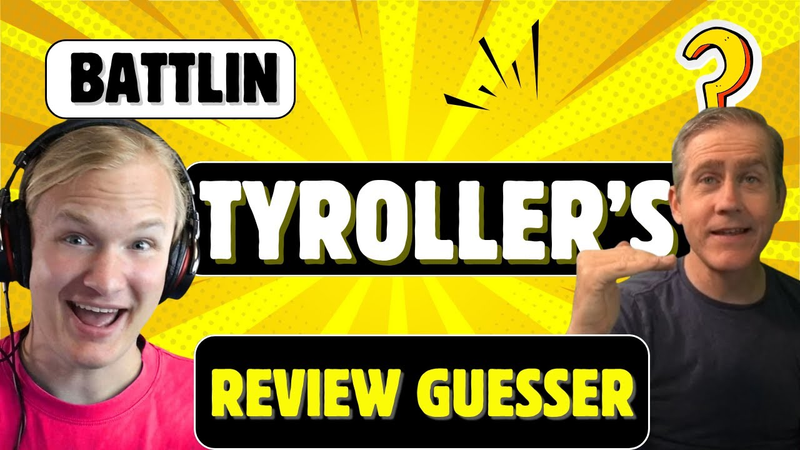
Zukowski VS Tyroller's Unreleased Review Guesser Game
This analysis evaluates the efficacy of using visual and marketing cues to predict the commercial performance of Steam games, specifically testing the ability to outperform a baseline strategy of consistently selecting the lowest review count.
- Approximately 78% of games released on Steam fall into the lowest review tier, establishing a baseline statistical success rate of 70% for predicting performance by consistently choosing the lowest option.
- Professional industry analysis—evaluating asset quality, UI design, and trailer production—failed to outperform the baseline, achieving only a 60% success rate in a test of ten games.
- The high volume of low-performing titles on Steam makes statistical guessing a more effective predictive strategy than qualitative assessment for the vast majority of releases.
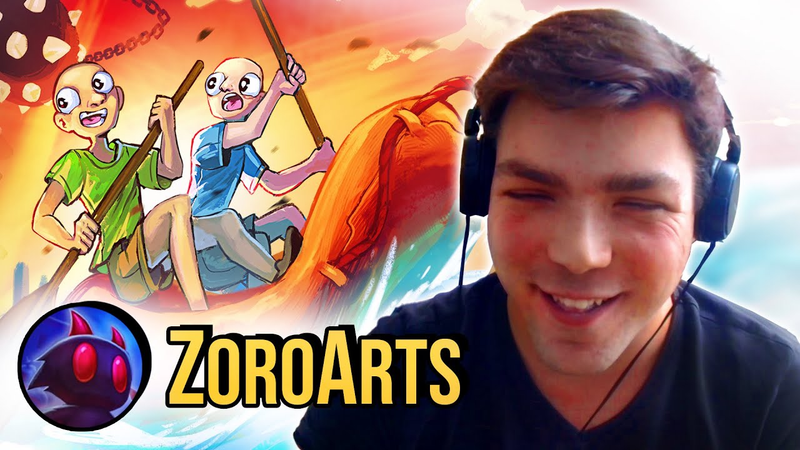
This Young Solo Dev Built a Steam Hit in 4 Months
The rapid success of the co-op title Pedal Pedal Pedal, which achieved 120,000 units sold following a condensed four-month development cycle, serves as a compelling case study for modern indie game production.
- Solo developer Zoroarts achieved a Steam hit with 'Paddle Paddle Paddle' by limiting development to four months, following a two-week demo phase, to avoid the scope creep that plagued his previous two-year project, 'Maki's Adventure'.
- To prevent feature creep, the developer strictly adhered to a pre-defined list of 30 core elements and biomes, refusing to add new features during the development cycle.
- Marketing success was driven by leveraging TikTok, where the developer used negative comments about game graphics as content to go viral, and by building a database of over 1,000 influencer and press contacts.
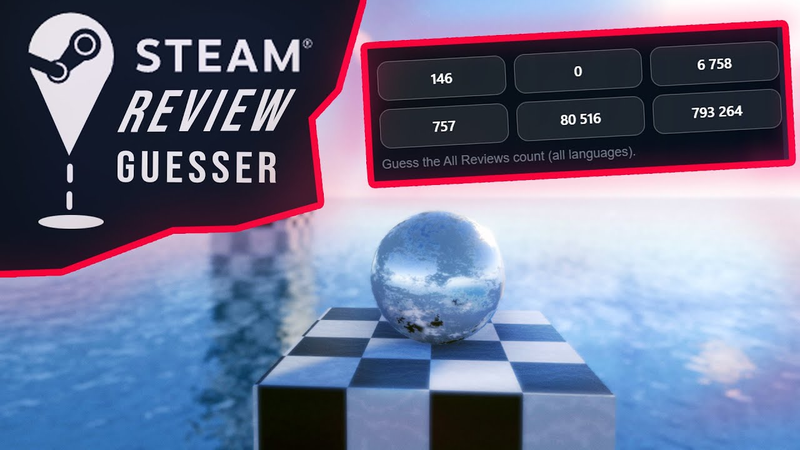
Can You Guess Which Game Is a Success?
The practice of evaluating a video game’s commercial success based solely on its Steam store page provides a unique, data-driven perspective on the indie game market.
- Game success on Steam is often signaled by 'juiciness'—the presence of high-quality sound effects, polished animations, and satisfying feedback—which distinguishes successful titles from those that struggle to gain traction.
- Laggy or unpolished trailer footage is a primary indicator of poor commercial performance, frequently correlating with games that receive very few reviews.
- Pricing strategy significantly impacts sales volume; games priced at $1–$2 often see higher review counts than similar titles priced at $9–$15, unless the higher-priced game demonstrates exceptional production value.
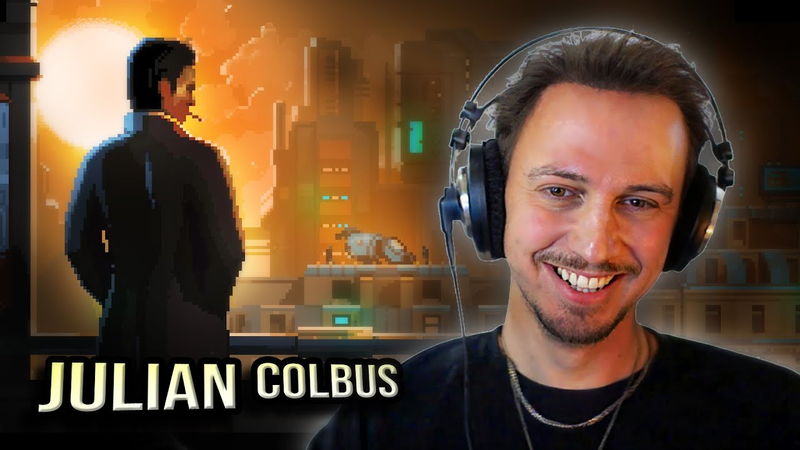
Their Second Game Did Worse, Now What?
The commercial underperformance of a studio’s second title often stems from the common trap of scaling production complexity at the expense of a clear, marketable core concept.
- Commercial success in indie development is more achievable by keeping budgets low—such as aiming for a 100,000 euro return on a 50,000 euro budget—rather than relying on the high-risk, high-cost model of large-scale sequels.
- Indie developers should avoid the assumption that a successful first game guarantees a sequel's success, as the player base for a title with 1,000 to 2,000 reviews is often not large enough to justify a sequel strategy.
- Detective game design should prioritize player engagement by integrating story into gameplay mechanics, such as requiring players to pass tests based on information gathered during dialogue to avoid the 'click-through' apathy common in RPGs.
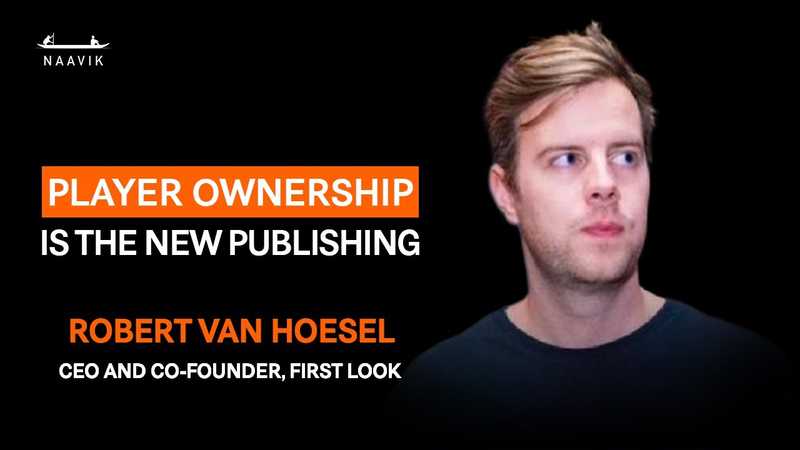
The Future of Game Publishing Is Player Ownership
The modern game publishing landscape is undergoing a fundamental shift toward self-publishing, necessitating a transition from traditional marketing models to data-driven player relationship management.
- First Look acts as a CRM for game studios, centralizing player data from platforms like Steam, Discord, and email to streamline playtesting, feedback collection, and community management.
- The platform currently serves over 100 active game studios, helping them manage self-publishing operations that were previously handled by external publishers.
- First Look was acquired by Pragma to unify the backend and frontend of game development, creating a more cohesive infrastructure for studios to manage player relationships and game operations.
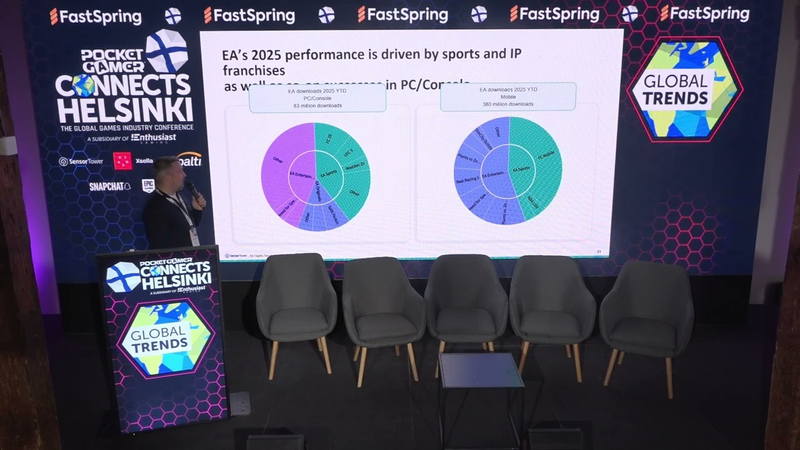
Session: Level Up - Gaming In 2025 & Beyond - Josh Skinner, Sensor Tower
The gaming industry in 2025 exhibits a resilient and evolving landscape, characterized by a shift in player behavior and a robust performance in consumer spending across both mobile and PC/console platforms.
- Mobile gaming in 2025 shows a 10% year-to-date increase in in-app purchase revenue despite a 6% decline in total downloads.
- Live operations are no longer a guaranteed growth driver, as many top-tier games are experiencing revenue declines despite active event schedules.
- Data-driven optimization of event cadence is critical for success, exemplified by titles like Gossip Harbor shifting from 24-hour to 7-day task events to improve performance.
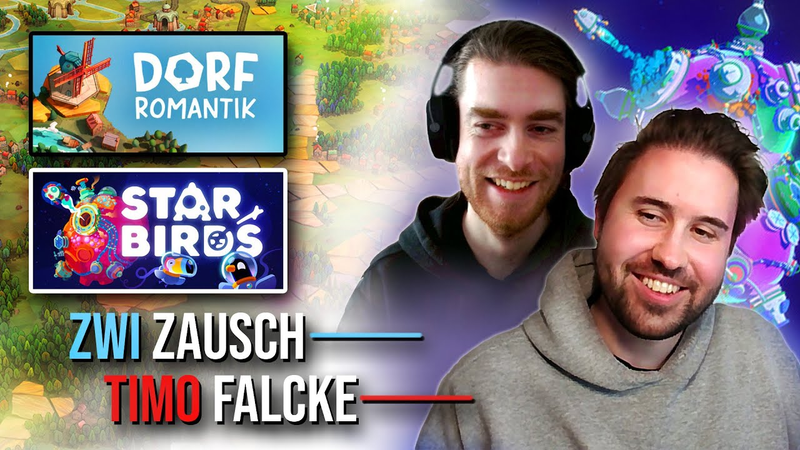
Making the Correct Game Is Key
The primary thesis for sustainable indie game development centers on the necessity of disciplined prototyping, clear core mechanics, and the strategic balance between innovation and market familiarity.
- Success in game development is difficult to replicate, even for the same studio, as evidenced by the distinct market performance and development challenges between Toukana Interactive's titles Dorfromantik and Star Birds.
- Toukana Interactive optimized Dorfromantik for the Nintendo Switch by using shader-based techniques to generate unique object seeds based on position and scale, avoiding the need for high-resolution meshes or textures that would exceed hardware limitations.
- The studio emphasizes that while making a game fun through iteration is a manageable skill for experienced developers, the primary challenge lies in establishing immediate visual appeal and communicating the core concept clearly through a single screenshot.
What Sells on Steam: You Don't Need a Hook
Successful indie game development on Steam does not require a unique gameplay hook—a specific mechanic designed to differentiate a title—but rather a focus on compelling player experiences and market appeal.
- Commercial success on Steam is driven by the player's desired experience and fantasy, rather than a unique gameplay mechanic or 'hook'.
- Developers should prioritize solving for 'appeal'—the visual or conceptual urge that makes a player want to engage with the game before they have even played it.
- Successful game development strategies include iterating on proven formulas (like Thronefall), finding market gaps (like Islanders), or translating successful media tropes into a game environment.
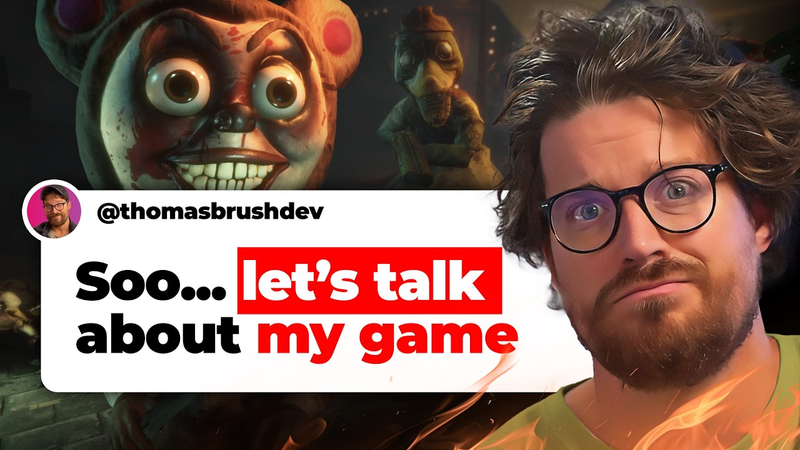
After 4 Years, We Need To Talk About Twisted Tower
The four-year development cycle of the horror title Twisted Tower serves as a case study in iterative refinement and the necessity of overcoming the sunk cost fallacy through strategic pivots.
- The four-year development cycle of Twisted Tower demonstrates that pivoting from a broad, self-directed vision to a focused, genre-aligned experience is essential for achieving commercial viability.
- Technical performance was significantly improved by replacing default real-time shadows with a minimal lighting setup, which simultaneously enhanced the game's horror aesthetic and ensured compatibility with hardware like the Steam Deck.
- Development shifted from melodic compositions to atonal, layered soundscapes to better manipulate player tension and improve atmospheric cohesion.

How Balatro Became a 7-Million-Copy Indie Hit | Harvey Elliott, CEO of Playstack
The success of the poker-themed roguelike Balatro, which has surpassed seven million units sold, serves as a primary case study for a publishing model that prioritizes niche community engagement over mainstream marketing.
- Balatro has achieved commercial success with over 7 million units sold by prioritizing niche community engagement over traditional mainstream marketing.
- Publishers can scale resource-constrained indie titles by focusing on games that combine an immediate, compelling core loop with long-term strategic depth.
- The publishing model for Balatro relies on organic discovery through social media and specialized forums to reach target audiences without aggressive, short-term promotional spending.
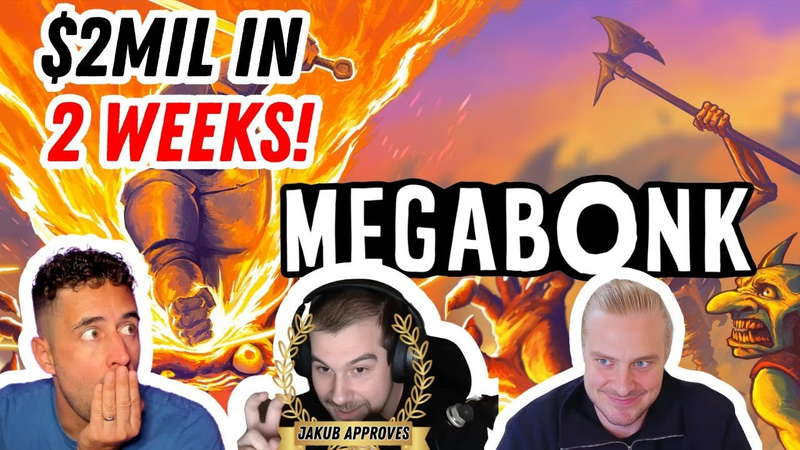
🎮 Megabonk: The New roguelite phenomenon EXPLAINED
Megabonk has rapidly established itself as a significant breakout success within the roguelite genre, recording 300,000 units sold and generating $2 million in revenue within its first 11 days on Steam.
- Megabonk achieved 300,000 units sold and $2 million in revenue within its first 11 days of release on Steam.
- The game’s design successfully hybridizes the accessible gameplay loop of Vampire Survivors with the 3D verticality and depth of Risk of Rain 2.
- Core mechanics such as extreme character scaling, infinite inventory systems, and complex item synergies have driven high Twitch viewership and replayability.