indie
CompanyUnited States
Documents about indie
How You Can Beat the Algorithm and Release Small Games
The primary objective is to reconcile the "rapid release" development strategy—characterized by short development cycles and minimal marketing—with the Steam visibility algorithm, which inherently favors established titles with longer marketing runways.
- Steam's algorithm is optimized for established developers with long marketing runways, meaning rapid-release strategies often surrender the free visibility that Steam grants to games with longer lead times.
- To maximize visibility, developers should keep a Steam page live for at least 6 to 8 months before launch to accumulate 7,000 to 10,000 wishlists, which helps secure placement on the 'Popular Upcoming' list.
- Developers should avoid giving away free keys to Patreon backers, as Steam does not count reviews from free-key users and early-week sales are critical for triggering algorithm-driven visibility.
Plus: Back 4 Blood's Beta & a New Switch Lens
This analysis examines current market trends and sales performance across Steam and Nintendo Switch platforms during early August 2021.
- Back 4 Blood secured a top-grossing position on Steam months ahead of its October 2021 release by utilizing an early August beta as a pre-order incentive.
- New Steam releases showed varied performance: Grime exceeded expectations with 2,000 concurrent users (CCU), while Death Trash reached 1,000 CCU, and Starmancer struggled due to 'Mixed' early access reviews.
- Niche genres, specifically anatomical horror and simulation titles, are effectively driving discoverability and sustained sales in a saturated market.
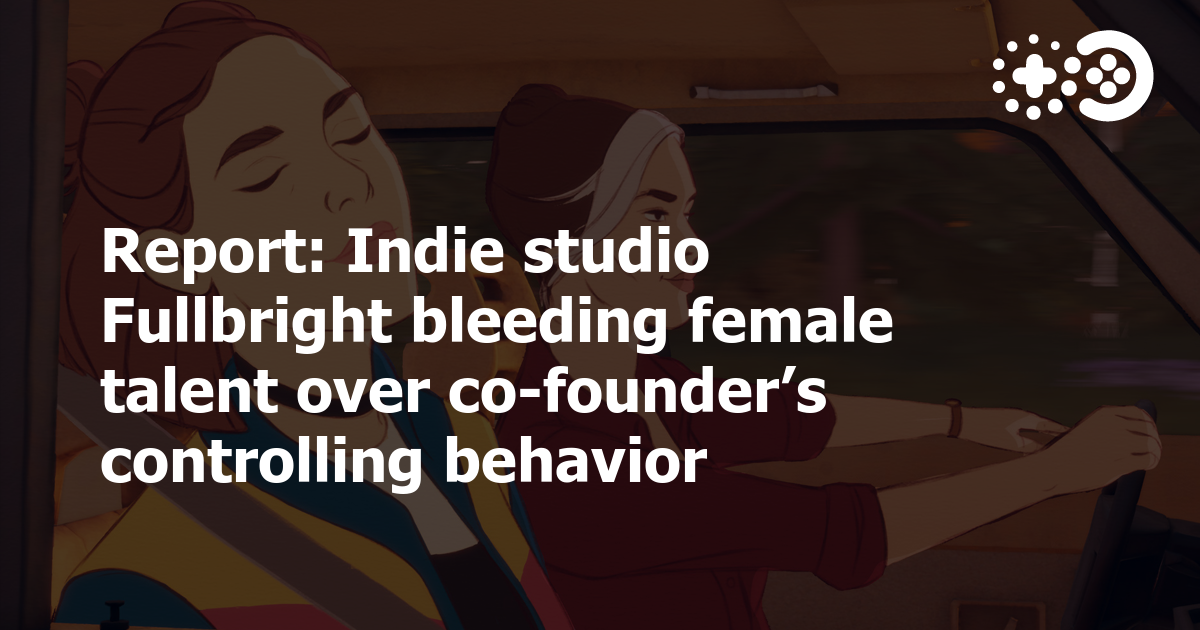
Indie Studio Fullbright Bleeding Female Talent Over Co-Founder's Controlling Behavior
The indie game studio Fullbright, creator of the acclaimed title Gone Home, has faced a significant internal crisis stemming from allegations of a toxic workplace culture.
- Fullbright co-founder Steve Gaynor stepped down as creative lead of the game 'Open Roads' in March 2021 following allegations of a toxic, controlling, and demeaning leadership style.
- Since the development of 'Open Roads' began in 2019, 15 staff members have left the studio, including at least 10 women, leaving the current team size at approximately six people.
- Former employees reported that the studio lacked an HR department, preventing them from effectively addressing or reporting Gaynor’s micromanagement, gaslighting, and belittling behavior.
Instruments Of Destruction's 'Build & Smash' Launch – Deconstructed
Instruments of Destruction, a physics-based vehicle-building sandbox developed by solo indie Luke Schneider, achieved a successful Steam Early Access launch in March 2022.
- Instruments of Destruction achieved a 0.27 sales-to-wishlist conversion rate in its first week, significantly outperforming the 0.2 industry median.
- The game generated approximately $229,628 in net revenue from 17,880 units sold during its March 2022 launch month.
- Pre-release wishlists grew from 40,000 to nearly 80,000 within 30 days of release, supported by 20 to 30 million estimated YouTube views.
Deep Dive: Analyzing Slapshot Rebound's F2P Steam Success
This analysis examines the commercial performance and operational strategies of the free-to-play (F2P) multiplayer hockey title Slapshot: Rebound on Steam.
- Slapshot: Rebound achieved over 650,000 free licenses and 15,000 daily active users in its first year without a traditional marketing budget.
- The game utilizes a balanced 50/50 revenue split between Steam Wallet transactions—including a $15 'Lifetime' DLC and cosmetics—and in-game display advertising.
- Automated ad brokers successfully integrated real-world brands like Lexus and Microsoft onto in-game rink boards, monetizing the player base while maintaining thematic immersion.
GDC 2021 Wrapup: The Best Slides of the Event
The 2021 Game Developers Conference (GDC) provided critical insights into indie game marketing and development strategy, distilled through high-impact presentation slides.
- Indie developers should focus on building a catalog of titles rather than relying on a single hit, as reusing existing technology significantly reduces development time and costs while maintaining revenue levels.
- Iterative improvements to game capsule art can lead to substantial performance gains, such as one publisher increasing daily wishlists from 8 to 25 through targeted design changes.
- Cross-promotion strategies with other developers—including shout-outs, knowledge sharing, themed Steam sales, and tool sharing—are effective, low-cost methods to drive wishlist growth.
One More Run: The Making of Spelunky 2
The development of Spelunky 2 serves as a case study for indie game design, emphasizing the value of iterating on established genres and the viability of sequels within the independent sector.
- Indie developers should prioritize finishing their primary project over starting new ideas; if a new concept arises during development, write it down to clear it from your system rather than abandoning the current game.
- Releasing a sequel is a viable strategy for indie developers because players often prefer more of a familiar, beloved genre rather than constant novelty, and established IP significantly simplifies the marketing and press outreach process.
- Trailers serve as a critical early-development tool to gather unvarnished feedback from the public, allowing developers to identify issues like art style reception before the game is finalized.
Deep Dive: How Game Platforms Can Amplify Your Game's Reach
This analysis outlines strategic frameworks for independent developers to leverage major gaming platforms—specifically Steam, Nintendo Switch, Xbox, and Stadia—to amplify game visibility and sales.
- Platform holders prioritize developers who provide data-backed requests and actionable content that enhances their specific ecosystem, rather than those seeking vague marketing support.
- Steam success is driven by self-service optimization, specifically effective tagging and wishlist management, with a historical conversion rate of approximately 25% from wishlists to sales.
- Major promotional coordination across platforms requires a minimum lead time of 30 to 45 days to secure visibility slots.
Plus: Leave Your Cris Tales at Death's Door?
This analysis examines current and upcoming trends within the PC gaming market, specifically focusing on Steam and the Epic Games Store (EGS) during mid-July 2021.
- Monster Hunter Stories 2 achieved estimated sales of 150,000 to 200,000 units on Steam within its first eight days of release.
- Chivalry 2 outperformed Rocket League in gross revenue on the Epic Games Store during mid-July 2021.
- Death’s Door secured a position in the top 80 most-wishlisted games out of over 5,000 unreleased titles on Steam.
Plus: The Post-Summer Sale (Semi)-Rush of Game Hype
This analysis examines the state of game discovery and market performance following the Steam Summer Sale, focusing on upcoming releases and recent launches across Steam, Nintendo Switch, and Twitch.
- Construction and management sims are high-performing categories, evidenced by The Immortal Mayor securing over 15,000 followers and 150,000 wishlists prior to its July 2021 launch.
- Established franchises like F1 2021 maintain strong market momentum, building on a predecessor that achieved 20,000 Steam reviews and estimated lifetime sales of 500,000 to 1 million units.
- Marketing strategies involving free 'prologues' are effective for indie discovery, as demonstrated by the traction gained by SuchArt: Genius Artist Simulator.
Are These Really the 'Ugly Truths' for Indie Publishers?
This analysis explores the evolving dynamics of indie game publishing, focusing on the shifting expectations between developers and publishers in the modern market.
- The Steam market is highly concentrated, with 5% of titles accounting for 90% of total sales and 50% of the 9,279 games released in 2020 selling fewer than 640 units.
- Organic Steam wishlist velocity is a critical viability metric; projects generating 50 to 100 daily wishlists are considered viable, while those under 10 daily wishlists are unlikely to justify significant investment.
- Modern publishing contracts are shifting toward developer-friendly terms, such as the 70/30 revenue split during recoupment periods adopted by publishers like Neon Doctrine.

Denial of Service
The game industry is currently facing significant criticism regarding the operational practices of Sony’s PlayStation platform, specifically concerning its treatment of independent developers.
- Indie developers and publishers have publicly criticized Sony's PlayStation platform for its lack of support, citing opaque communication and a lack of control over game promotion and sales.
- Developers report significant operational friction, including months-long waits for account manager responses and disorganized internal communication from Sony teams.
- Sony's current developer tools lack essential features for modern indie success, such as the ability for developers to manually discount their own games or access meaningful data to optimize store visibility.