indie
CompanyUnited States
Documents about indie

Mini-MBA for Indie Game Studios
Indie game studios frequently struggle to achieve long-term financial viability because creative development often lacks the support of rigorous business frameworks.
- Indie studios often fail because they lack a systematic business framework for market positioning, customer behavior, and sustainable growth, treating business as an afterthought rather than a core discipline.
- Porter’s Five Forces analysis is essential for evaluating market viability; it requires assessing buyer power, substitute products, supplier dependencies, price sensitivity, and the intensity of rivalry within a specific genre.
- Competitive strategy for indie studios should focus on differentiation or niche specialization, as most lack the economies of scale required to compete on cost leadership.
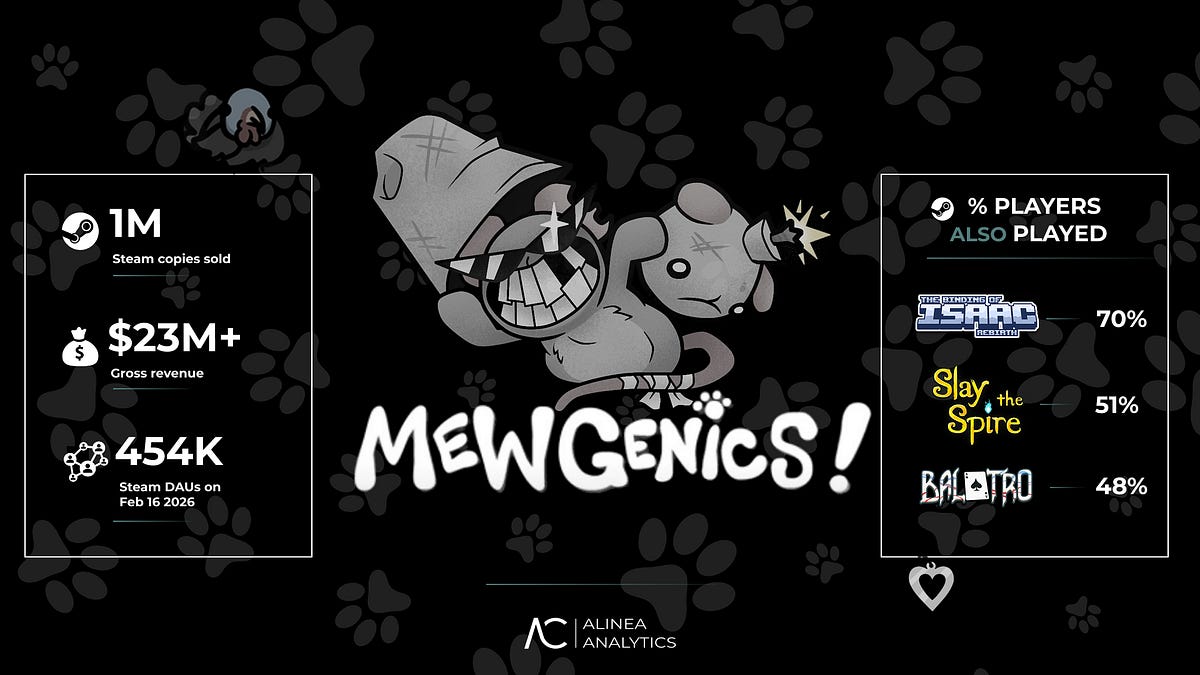
Mewgenics Pounces to 1M Sold
The roguelite title Mewgenics, developed by Edmund McMillen and Tyler Glaiel, achieved significant commercial success following its February 2026 launch.
- Mewgenics became the best-selling game of 2026 by units sold across Steam, PlayStation, and Xbox, despite currently being available only on Steam.
- The game achieved profitability within three hours of launch and reached over 115,000 concurrent players on Steam during its first week.
- Mewgenics is the second-highest revenue-generating game on Steam for 2026, trailing only the $70 title Nioh 3.
QA for Indie Game Studios: A Practical Guide
Quality assurance functions as a foundational pillar of indie game development rather than a terminal phase of production.
- Bugs identified during the same sprint they are introduced are significantly cheaper to fix than those discovered months later, as late-stage repairs often require refactoring multiple dependent systems.
- Development plans should integrate testing into every sprint rather than treating it as a final phase, with a recommended resource allocation of 70% for implementation and 30% for testing and bug fixing.
- Effective bug reports must include specific reproduction steps, frequency, expected versus actual behavior, environment details, and a clear distinction between severity (impact) and priority (urgency).
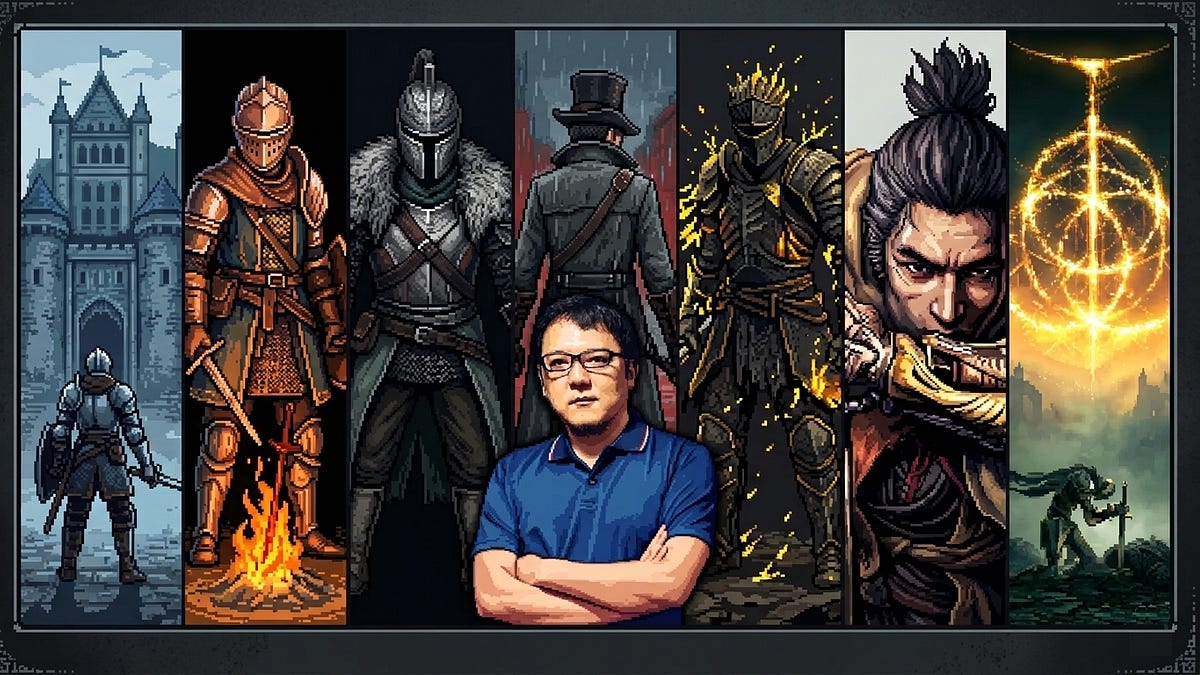
What Makes a Great Game Director
The role of a game director is defined not by unilateral creative control, but by the ability to orchestrate a cohesive vision while managing the complex human and technical dynamics of game development.
- A great game director’s primary role is leading people rather than just designing mechanics, as their ability to align and rally the team is the ultimate constraint on the project's success.
- Effective directors possess cross-disciplinary fluency, allowing them to mediate between art, engineering, and design to make informed trade-off decisions without needing to be an expert in every field.
- Great directors prioritize ruthlessly by cutting features that do not serve the core vision, even when those features are popular with the team or were previously championed by the director themselves.
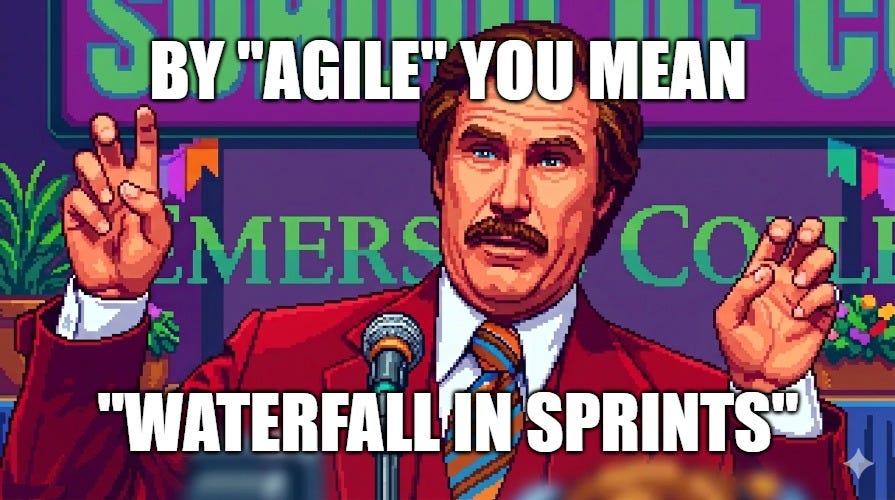
Agile Game Development: Where It Breaks and How to Fix It
Agile methodologies often fail in game development because studios frequently adopt performative, rigid adherence to frameworks like Scrum rather than embracing the underlying philosophy of empirical, iterative delivery.
- Agile frameworks in game development often fail because teams prioritize 'performative' ceremony compliance over actual communication, turning daily standups into status reporting rather than collaborative triage.
- The Scrum Master role is frequently conflated with the producer role, leading to significant overhead and project mismanagement; these are distinct functions that must be clearly defined and resourced.
- Forcing creative discovery and prototyping into two-week sprints with rigid deliverables is counterproductive, as the success criteria for exploratory work should be learning and decision-making rather than shipping features.
The Complete Publisher Relationship Guide
This guide provides a strategic framework for indie game studios navigating the publisher relationship, from initial outreach to contract management and potential exit strategies.
- Before signing a publishing deal, verify a publisher's marketing effectiveness by checking if their recent catalog titles have achieved over 100 Steam reviews, as this is a reliable proxy for actual sales performance.
- Avoid vague contract language like 'commercially reasonable efforts' for marketing; instead, demand specific, enforceable commitments regarding minimum spend, timing, and channels.
- Always retain a specialized games industry lawyer to review contracts, as rushing to sign or skipping legal counsel can lead to long-term financial and creative traps.
When the Founder Is Also the Game Director
The dual role of founder and game director in indie game studios often creates a structural environment that stifles honest feedback and leads to team disengagement.
- When a studio founder also serves as the game director, the concentration of power often creates a structural barrier that prevents honest upward feedback, leading to team disengagement and turnover.
- Founders frequently struggle with feedback because they lack the experience to have their assumptions challenged or mistakenly believe their general creative taste translates directly into effective game design.
- A common failure pattern occurs when founders are absent from daily development and make sweeping creative decisions without understanding the context or the second-order effects of their changes.
Game Development Prioritization: The Good, the Bad and the Overengineered
Effective game development requires a structured approach to feature prioritization to avoid the common pitfall of treating every task as equally urgent.
- Indie studios often fail to ship on time because they lack a structured prioritization process, leading to a backlog where every task is incorrectly labeled as high priority.
- The most effective prioritization strategy for small teams is a three-layer framework: using the Kano Model for feature classification, the ROI matrix for ordering tasks by value versus effort, and the Eisenhower Matrix for managing weekly urgency.
- The Eisenhower Matrix is essential for preventing 'urgency traps,' where teams over-prioritize immediate crises at the expense of important but non-urgent work like documentation, pipelines, and team cohesion.
The Kano Model for Games
The Kano Model serves as a strategic framework for game developers to prioritize features by analyzing how they influence player satisfaction.
- The Kano Model categorizes game features into four types—Basic, Performance, Excitement, and Indifferent—to help studios prioritize development based on how each feature impacts player satisfaction.
- Excitement features, which generate disproportionate positive reactions and word-of-mouth, provide no dissatisfaction when absent, whereas Basic features only cause dissatisfaction when they are missing or poorly executed.
- Feature categories are not static; what begins as an Excitement feature often migrates to a Basic expectation over time, requiring studios to account for this shift during long development cycles.

What Makes a Great Game Producer?: Clarity, Momentum and the Work Nobody Sees
Effective game production is fundamentally a discipline of human dynamics rather than mere administrative task management.
- A producer's primary role is to create the conditions for team success—managing interpersonal dynamics, clarity, and risk—rather than acting as an administrator or project manager.
- Great producers prioritize individuals and interactions over process, as high-performing teams at large-scale studios like Crytek and Riot Games rely on self-regulation rather than constant coordination overhead.
- Effective production requires the ability to remain even-keeled during project volatility, as a producer's visible anxiety or panic can cause a team to stop reporting critical problems.
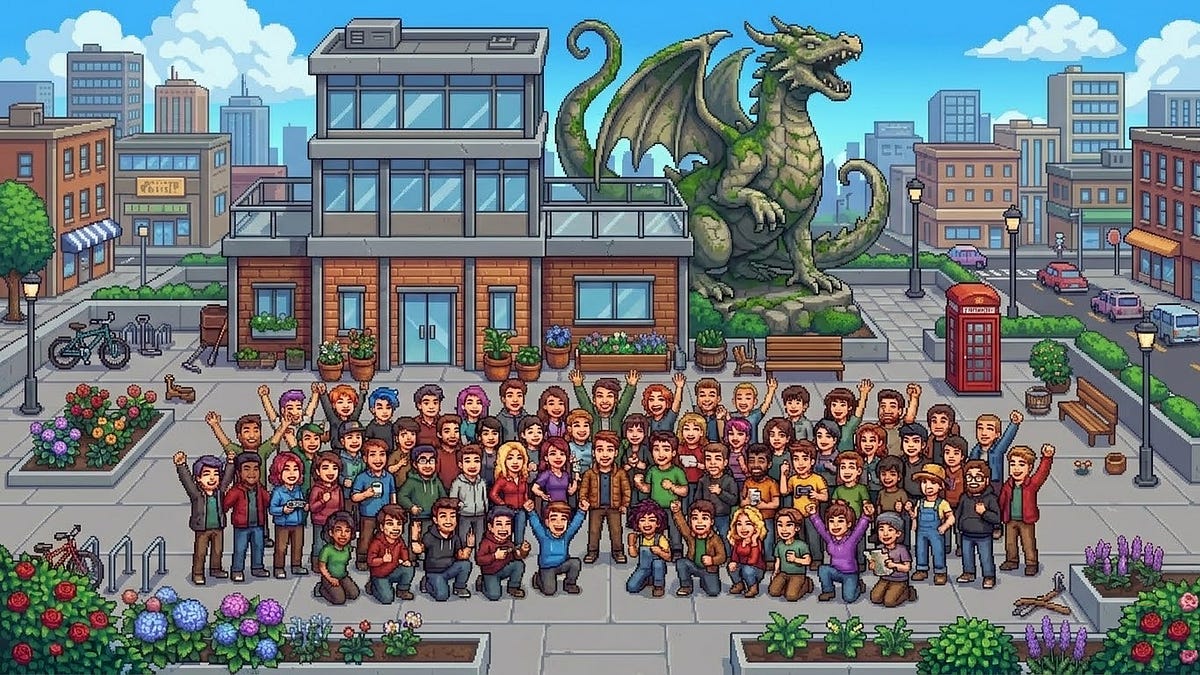
The Team Is Everything: Assembling, Nurturing and Retaining a World-Class Creative Team
The success of independent game studios relies fundamentally on the deliberate construction of cohesive teams rather than the mere aggregation of individual talent.
- Psychological safety is the most critical factor for team performance, as it enables members to take interpersonal risks, admit uncertainty, and surface problems before they escalate into systemic failures.
- Effective indie studio hiring should prioritize 'range'—the ability to operate outside one's primary discipline—and 'collaborative instinct' over prestigious employment history, which is often a weak signal for indie success.
- Leaders must actively build psychological safety by modeling vulnerability, such as admitting mistakes, and by responding to bad news with collaborative problem-solving rather than frustration.
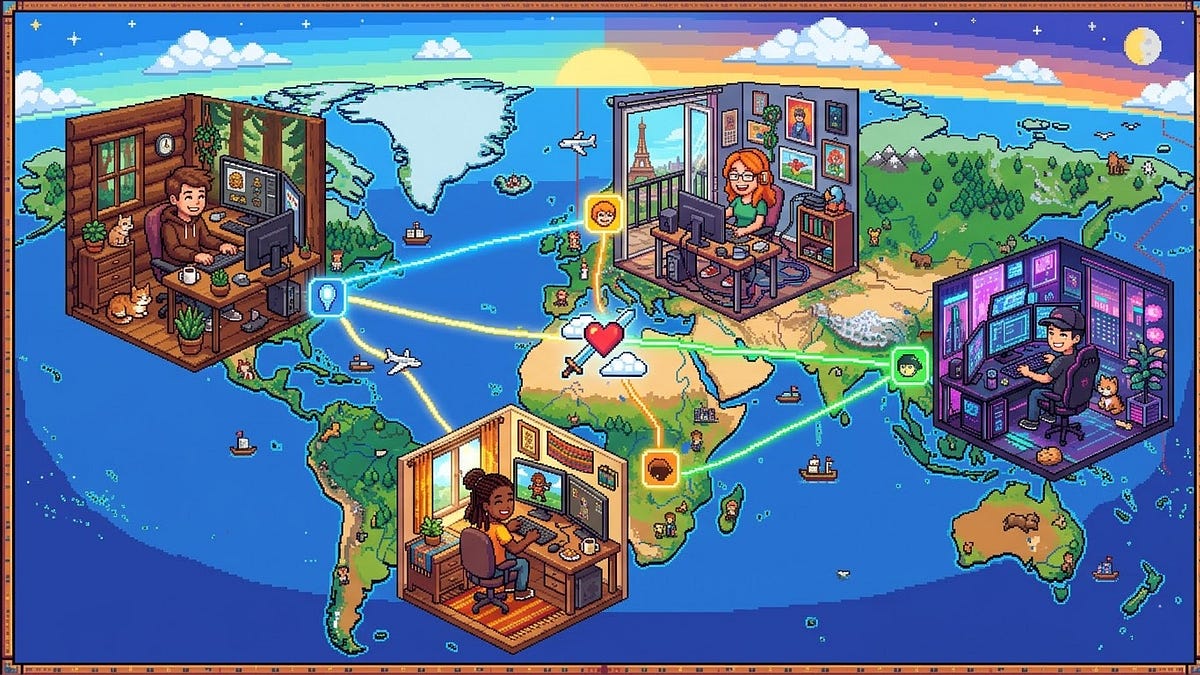
How to Build Distributed Teams That Succeed
Remote work has become the standard operating model for the modern game industry, with over 70% of indie studios utilizing remote work for core development and more than half operating on a fully remote basis.
- Over 70% of indie game studios now utilize remote work for core development, with fully on-site studios representing only the low teens according to the 2025 GDC State of the Game Industry survey.
- Remote work must be treated as an organizational design problem rather than a logistics one, requiring deliberate scheduling of interactions that would otherwise occur spontaneously in a physical office.
- Effective remote onboarding requires providing deep context on the game’s creative pillars and development phase before assigning tasks, as well as explicit documentation on decision-making processes and definitions of 'done'.