Engine
Company
Documents about Engine
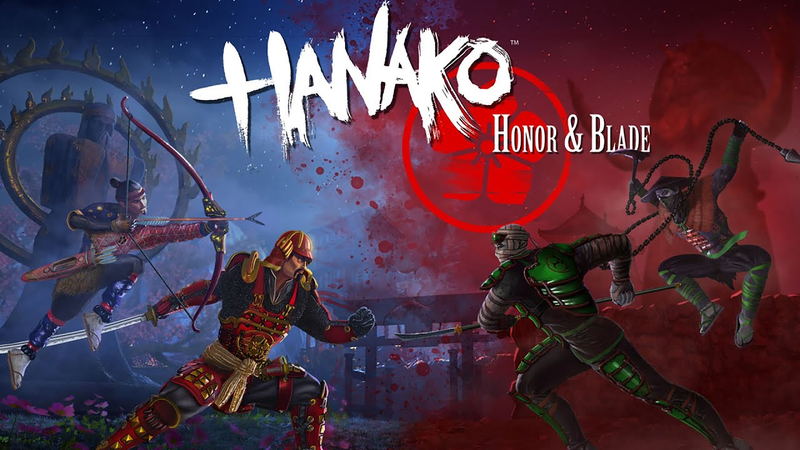
14 Years Development on Hanoka with Matt Canei | Game Dev Unchained Episode 284
The development of Hanako: Honor & Blade serves as a case study in the endurance required for long-term indie game production.
- The 14-year development of Hanako: Honor & Blade required a total labor investment equivalent to only 14 to 18 weeks of work for a 100-person studio, demonstrating the efficiency of a volunteer-driven, methodical approach.
- The project successfully navigated major technical shifts, including migrating the entire game from Unreal Engine 3 to Unreal Engine 4 while adapting to evolving market trends like the rise of battle royale games.
- By positioning the project as a mentorship platform for junior developers to build professional portfolios, the team effectively mitigated the impact of high turnover over the project's decade-plus lifespan.
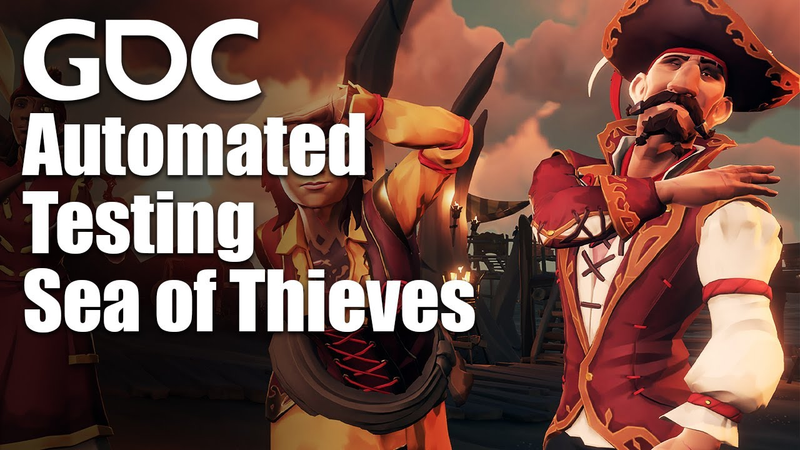
Automated Testing of Gameplay Features in 'Sea of Thieves'
Developing and maintaining a live-service, open-world title like Sea of Thieves requires a robust automated testing framework to replace inefficient manual processes and mitigate the risks of regression.
- By implementing automated testing for 'Sea of Thieves', Rare reduced the time required to verify game builds from two weeks to approximately 1.5 days.
- The studio successfully reduced its manual testing team from 50 people on 'Kinect Sports Rivals' to 17 on 'Sea of Thieves' by automating repetitive checks.
- Rare utilized a continuous integration system via TeamCity to run automated tests on a build farm of PCs, averaging a full test cycle every 20 minutes.
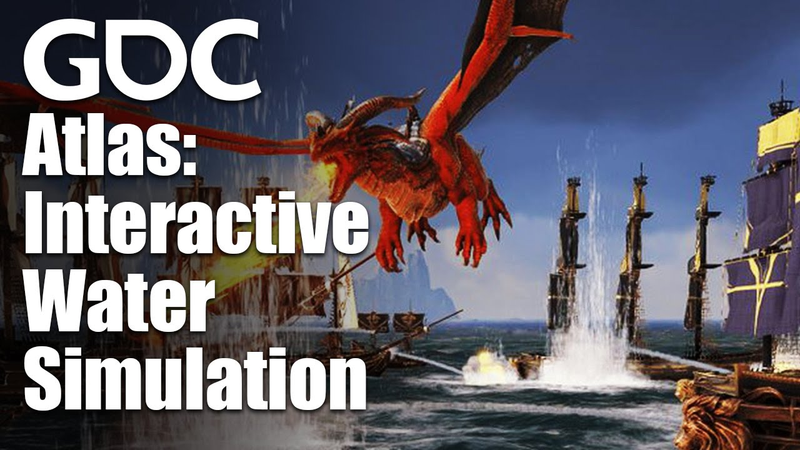
Wakes, Explosions and Lighting: Interactive Water Simulation in Atlas
The development of the ocean simulation for the massively multiplayer online game Atlas centers on balancing high-fidelity visual realism with the rigorous performance constraints required for a seamless, multi-server environment.
- To simulate vast ocean surfaces for Atlas, Grapeshot Games replaced the standard Phillips spectrum with JONSWAP and JONSWAP-variant spectra to avoid unrealistic wave heights in non-oceanic environments.
- The team optimized FFT-based ocean simulation by using larger waves to distort smaller frequency bands, effectively masking tiling repeats without sacrificing performance.
- Buoyancy for rigid bodies is calculated by taking discrete displacement samples along a boat's hull and using an iterative Newton's approximation method to determine height at specific world locations.

Star Atlas | Metaverse Game on the Solana Blockchain
Star Atlas functions as a AAA-quality, space-themed grand strategy metaverse built upon the Solana blockchain.
- Star Atlas is a AAA-quality space strategy metaverse built on the Solana blockchain, which utilizes a high-throughput architecture capable of processing 50,000 transactions per second.
- The game utilizes a dual-token economic model where ATLAS functions as the primary currency for commerce and POLIS serves as a governance token for the project's Decentralized Autonomous Organization.
- The platform operates on an invest-to-play paradigm, utilizing NFTs for all in-game assets to grant players true ownership and the ability to extract real-world value from their digital investments.
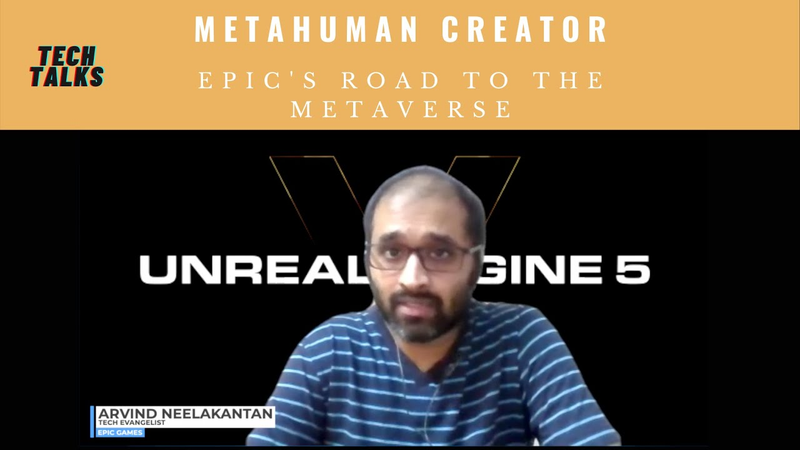
MetaHuman Creator | Epic's Road to the Metaverse ft. Arvind Neelakanan (Epic Tech Evangelist)
MetaHuman Creator serves as a transformative cloud-based solution designed to accelerate the production of high-fidelity, rigged digital characters.
- MetaHuman Creator is a cloud-based platform that reduces the production time for high-fidelity, rigged digital characters from months to hours by automating facial rigging and skin rendering.
- The platform is designed to augment professional artists rather than replace them, keeping creative oversight central to the final production quality.
- The system features a flexible Level of Detail (LOD) architecture, allowing developers to scale visual fidelity to meet performance requirements across different hardware environments.
Content Fueled Gameplay Programming in Frostpunk
The development of Frostpunk centers on a data-driven architecture built upon a proprietary Liquid Engine, utilizing an Entity Component System (ECS) to manage the game’s intricate society-survival mechanics.
- 11 bit studios utilized a custom data-driven architecture based on Entity Component Systems (ECS) to manage the high entity count and complex gameplay logic required for Frostpunk.
- The architecture enforced a strict 'one system per component type' rule, which improved code clarity and maintainability for a growing development team by adhering to the single responsibility principle.
- Designers were empowered to control game flow, narrative events, and building visuals through a template-based system that allowed them to configure game state conditions and effects without direct programming.

Towards Filmic Quality at 30 FPS: Real-Time Ray Tracing for Practical Game Engine Pipelines
Achieving filmic visual quality at a consistent 30 frames per second requires a strategic integration of real-time ray tracing within standard game engine pipelines.
- Achieving 30 FPS filmic quality requires a minimal ray strategy of one to four rays per effect, paired with temporal accumulation and joint bilateral filtering to manage noise without heavy denoisers.
- Computational load is significantly reduced by rendering indirect specular reflections at quarter-resolution and utilizing camera-aligned voxels for spatial management.
- Performance is maintained by combining brute-force path tracing with light probe systems using spherical harmonic encoding to ensure visual stability.
Unreal Engine 5 Reaction | Unchained Report
The release of the Unreal Engine 5 tech demo represents a significant milestone in game development, sparking widespread industry discussion regarding the future of graphical fidelity and production workflows.
- Unreal Engine 5 introduces Nanite for automated geometry management and Lumen for real-time global illumination, aiming to eliminate traditional production bottlenecks like manual baking and level-of-detail management.
- The UE5 tech demo functions primarily as an aspirational marketing benchmark for next-generation hardware like the PlayStation 5 and Xbox Series X rather than an immediate, universal standard for all game development.
- While these technologies offer significant productivity gains, they do not remove the necessity for artistic expertise or rigorous optimization in dynamic, gameplay-heavy scenarios.

Best of 2020 | Game Dev Unchained Episode 248
The game industry in 2020 experienced a period of profound transformation, characterized by rapid technological advancement, shifting labor dynamics, and the normalization of remote work.
- The industry is experiencing a fundamental shift in business models, evidenced by Epic Games' legal challenges against platform holders over commission structures and ecosystem control.
- Technological advancements like Unreal Engine 5’s Nanite and Lumen systems are setting new benchmarks for real-time rendering, though they currently require significant optimization for practical production use.
- Systemic labor issues, including 'crunch' culture and the treatment of independent contractors and QA staff, remain critical challenges often stemming from poor management and unrealistic project scoping.
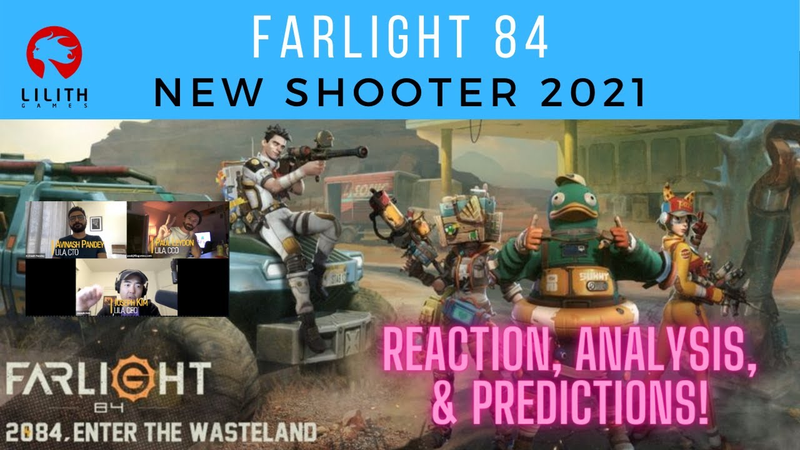
Farlight 84 - New FPS Shooter in 2021 | Reaction & Analysis
Farlight 84 represents a strategic entry into the competitive battle royale market, aiming to capture the mobile and cross-platform audience through a blend of high-fidelity aesthetics and fast-paced, class-based combat.
- Farlight 84 targets the mobile and cross-platform battle royale market by combining class-based combat with unique movement mechanics like jetpacks and legged vehicles.
- The game utilizes Unreal Engine to support a 40-player map structure, specifically optimized for mobile hardware performance.
- The core gameplay loop integrates squad-based tactical objectives with a persistent social hub model similar to Fortnite to drive player engagement.
Procedural World Generation of Far Cry 5
The development of Far Cry 5 relied on a sophisticated procedural pipeline designed to manage the immense scale of the game world while maintaining artistic control and environmental consistency.
- Ubisoft developed a procedural pipeline for Far Cry 5 that automated complex world-building tasks, including freshwater network generation, biome distribution, cliff geometry creation, and fog density mapping.
- The procedural system operates on a sector-based granularity of 64 by 64 meters, allowing developers to bake data locally under the camera, across specific map sections, or within the camera's frustum to optimize performance.
- Cliff generation is driven by terrain slope thresholds, which are then remeshed to remove stretched quads and processed with flow simulations to create realistic geological stratification and erosion effects.
Superstar Session: Azure PlayFab Party Showcase
Azure PlayFab Party serves as a comprehensive networking and communication solution designed to enhance multiplayer gaming experiences by fostering social connectivity, inclusivity, and cross-platform interaction.
- Azure PlayFab Party provides a cross-platform networking and communication solution for Windows, Xbox, PlayStation, Nintendo Switch, iOS, Android, and Google Stadia.
- The service secures multiplayer traffic against DDoS attacks by routing data through geo-distributed cloud relays instead of peer-to-peer connections.
- Integration includes built-in accessibility and communication features such as real-time voice-to-text and translation across more than 70 languages via Azure Cognitive Services.