Discovery
CompanyJapan
Documents about Discovery
TWIG Jr: Awards, Predictions, and Gen Alpha's Take on Gaming
Generation Alpha’s gaming preferences reveal a sophisticated shift away from hypercasual mobile titles toward experiences that offer depth, narrative, and social utility.
- Generation Alpha is shifting away from hypercasual mobile games toward indie titles like Hollow Knight and Undertale, citing a preference for mechanical depth and a dislike for intrusive advertising.
- Platforms like Roblox and Fortnite are functioning as essential digital third spaces, though players are showing signs of fatigue regarding the aggressive pop-culture collaborations currently driving Fortnite’s model.
- Children are developing high brand awareness for sports betting platforms like FanDuel and PrizePicks due to the pervasive integration of wagering advertisements into televised sports and gaming environments.
Everyone Got the EA Deal Wrong — This Was NEVER an LBO
The acquisition of Electronic Arts (EA) by the Public Investment Fund (PIF) represents a strategic shift rather than a leveraged buyout.
- The Public Investment Fund (PIF) holds 93% ownership of Electronic Arts, shifting the company's strategy from traditional game development toward a global sports, betting, and media super-platform.
- PIF’s long-term vision for EA centers on integrating interactive gaming with live sports rights and predictive simulation technology, though current management lacks the media-industry expertise required for this transition.
- Large-scale media conglomerates, such as those bidding for Warner Brothers Discovery, are deprioritizing gaming divisions in favor of volume-based streaming and algorithm-driven retention metrics.
🚨📢 BREAKING NEWS: Unity Fee Drama, Netflix vs WB, Casino Games Everywhere 🤯
The mobile gaming and entertainment landscape is currently defined by significant shifts in corporate monetization strategies and evolving genre dominance.
- Unity has implemented an Enterprise Minimum Commitment Program that mandates annual fees between $250,000 and $2 million for large-scale developers based on gross revenue, sparking significant industry backlash regarding developer trust.
- Warner Bros. Discovery has shifted its corporate strategy by rejecting a $108 billion takeover bid from Paramount in favor of a $72 billion deal with Netflix, highlighting the growing market dominance of streaming platforms over traditional media.
- In the U.S. mobile market, Monopoly Go and Royal Match currently lead in absolute in-app purchase (IAP) revenue, while 4X strategy titles like Last War and Whiteout Survival dominate global performance.

TWIG #361 WB Games’ Fate, CoD’s Apology Tour & the UA Financing Trap
The global gaming industry is currently navigating a period of intense structural realignment, characterized by aggressive media consolidation, shifting advertising paradigms, and evolving hardware strategies.
- Large-scale media consolidation, exemplified by potential sales of Warner Bros. Discovery and PIF interest in Electronic Arts, is treating gaming assets as secondary to broader streaming and sports ecosystems, threatening the stability of studios like Avalanche and TT Games.
- The mobile gaming user acquisition landscape is shifting as e-commerce brands increasingly outbid game studios for ad inventory, forcing developers to contend with higher costs and more complex financial leverage.
- Platforms like AppLovin are fundamentally altering mobile monetization by displacing rival game studios in ad space, which paradoxically helps developers by reducing player cannibalization while simultaneously driving up acquisition costs.
Netflix's $83bn Warner deal doesn't value games & why award shows hate mobile | Week in Mobile Games
Netflix’s recent $82.7 billion acquisition of Warner Bros. Discovery highlights a significant strategic ambiguity regarding the role of interactive entertainment in large-scale media mergers.
- Netflix assigned a $0 valuation to the Warner Bros. Games division despite acquiring the company in an $82.7 billion deal, signaling uncertainty regarding the strategic value of interactive entertainment in streaming-focused mergers.
- The acquisition of Warner Bros. Discovery includes major developers like Rocksteady Studios and Avalanche Software, yet their long-term operational autonomy remains in question under Netflix’s current corporate structure.
- Mobile gaming faces a persistent legitimacy gap, evidenced by its continued exclusion from major industry honors like The Game Awards and the BAFTAs, which critics argue favor console-based intellectual property.
What’s next for Warner’s mobile games, why award shows ignore mobile, weird TikTok ads and more
The mobile gaming industry currently faces significant uncertainty regarding the potential acquisition of Warner Bros. Discovery by either Netflix or Paramount.
- Netflix’s potential $72 billion acquisition of Warner Bros. Discovery puts the future of Warner’s mobile game portfolio at risk, as Netflix co-CEO Greg Peters reportedly excluded the gaming division from his valuation of the company.
- Jam City was fined $1.6 million by a California court for violating privacy laws related to its failure to provide opt-out mechanisms for the sale of player information.
- Global consumer spending on mobile games in November reached $6.68 billion, a 2.8% decrease month-on-month, while total downloads fell 4.1% to 3.62 billion.
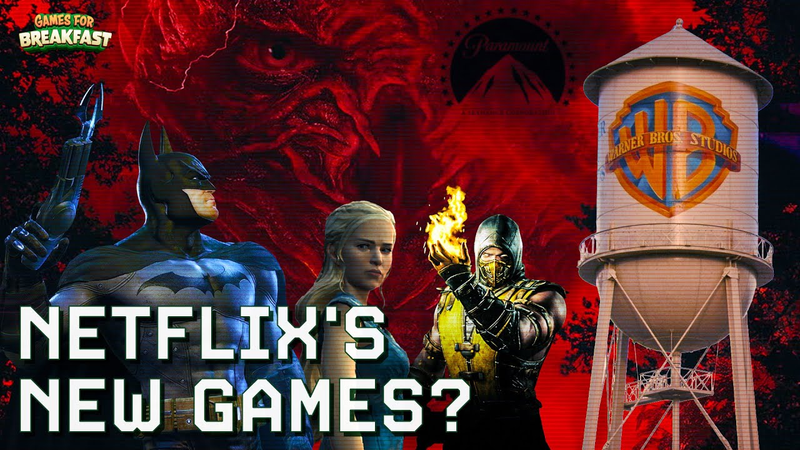
WB Game’s (Possible) Netflix Future, Mario Kart Patch & Game Awards Gossip | Games For Breakfast
The gaming industry is currently navigating a period of intense corporate consolidation and shifting market priorities, exemplified by rumors of a potential $72 billion acquisition of Warner Bros. Discovery by Netflix.
- Rumors of a potential $72 billion acquisition of Warner Bros. Discovery by Netflix highlight a broader industry trend toward massive corporate consolidation.
- Industry consolidation is increasingly associated with negative outcomes for the workforce and consumers, including aggressive monetization, widespread layoffs, and a prioritization of short-term profits over artistic integrity.
- The Game Awards face growing criticism for prioritizing marketing and corporate interests over the recognition of individual creative talent, evidenced by the removal of advocacy programs like the Future Class.

Warner Bros. Discovery: Form 10-Q (Q3 2025)
SEC 10-Q filing for Warner Bros. Discovery, filed 2025-11-06.
- Warner Bros. Discovery reported a net loss of $143 million for Q3 2025, a significant decline from a net income of $141 million in Q3 2024. For the nine months ended September 30, 2025, the company had a net income of $996 million, a substantial improvement from a $10.842 billion net loss in the same period of 2024.
- Total revenues for Q3 2025 decreased by 6% to $9.045 billion compared to $9.623 billion in Q3 2024. For the nine months ended September 30, 2025, total revenues were $27.836 billion, a 5% decrease from $29.294 billion in the prior year.
- The Global Linear Networks segment experienced a significant revenue decline of 22% in Q3 2025 to $3.883 billion, and a 13% decline for the nine months ended September 30, 2025, to $13.460 billion.

Global Publishers Refine Strategies Ahead of 2026
The article outlines strategic shifts in the global video-game sector as publishers prepare for 2026. Warner Bros.
- Warner Bros. Discovery is evaluating strategic alternatives for its gaming division following unsolicited bids, amid a broader industry trend of accelerating consolidation.
- Microsoft plans to expand its cross-platform strategy by bringing Halo titles to PlayStation in 2026, signaling increased industry-wide collaboration.
- Nintendo is targeting 25 million units for its Switch 2 console by March 2026, while Xbox maintains a 30 percent margin target for its hardware business.
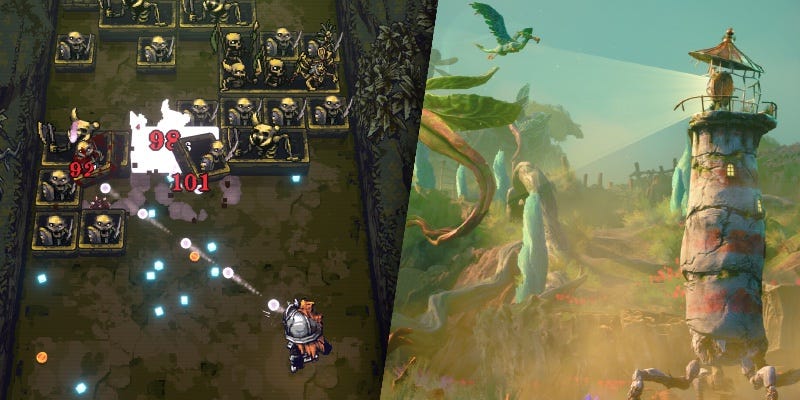
Why Sessionability Radically Affects Game Discovery
The concept of sessionability—a game’s structural capacity to provide a satisfying, complete experience within short play sessions—is a critical driver of modern game discovery and commercial success.
- Sessionability—defined by short, repeatable gameplay loops and meta-progression—is currently a primary driver of commercial success and organic discovery on platforms like Steam.
- Games designed for short, satisfying sessions consistently outperform linear, narrative-driven titles in concurrent player counts within competitive retail storefronts.
- Subscription services like Game Pass provide a more viable ecosystem for linear, narrative-focused games because their business model reduces the consumer's focus on dollar-per-hour value propositions.

What demos are winning Steam Next Fest?
Steam Next Fest functions as a primary discovery engine for the global PC gaming market, serving as a high-stakes environment where visibility is largely dictated by pre-existing wishlist counts and algorithmic favorability.
- Steam Next Fest participation has scaled to nearly 3,000 titles, making pre-existing wishlist counts and algorithmic favorability the primary drivers of visibility.
- High-traction genres that consistently capture broader audience interest include open-world survival crafting, simulation, and cooperative multiplayer games.
- Click-through rates in the Discovery Queue are heavily influenced by professional capsule art that utilizes strong visual hierarchy and custom typography instead of cluttered, generic designs.
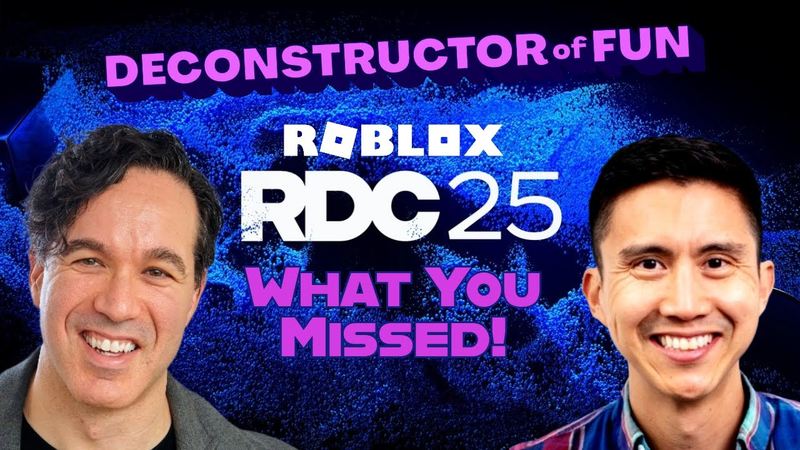
Inside RDC 2025: How Roblox Is Courting Pro Developer
Roblox is undergoing a strategic transformation to transition from a hobbyist-driven ecosystem into a professional-grade gaming platform capable of competing with major industry incumbents.
- Roblox is shifting its strategic focus toward professional-grade content to compete with industry incumbents, supported by 112 million daily active users and 48 million concurrent users.
- The platform is incentivizing the creation of high-fidelity, mature content by increasing the developer exchange rate by 8.5 percent.
- New monetization tools include a mobile-style ad technology suite featuring rewarded video ads developed in partnership with Google.