Discovery
CompanyJapan
Documents about Discovery
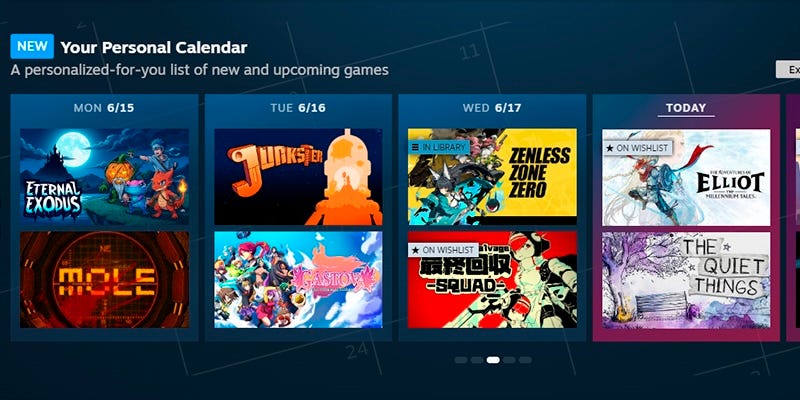
How Steam's Personal Calendar Is Supercharging Pre-launch Discovery
Steam’s recent homepage redesign has introduced a Personal Calendar feature that aggregates users’ wishlists and recommended titles into a 30-day view, positioned prominently on the main page.
- Steam's new Personal Calendar feature is driving significant pre-launch wishlist spikes by recommending games based on user playtime profiles rather than just ownership history.
- Solarpunk reported a massive surge in pre-launch discovery following the Steam homepage update, gaining 14,000, 22,000, and 35,000 wishlists over three consecutive days.
- The developer of Vampire Syndicate observed a sustained increase of 2,000–3,000 daily wishlist additions leading up to their June 25th launch, building on a pre-existing base of 65,000 wishlists.
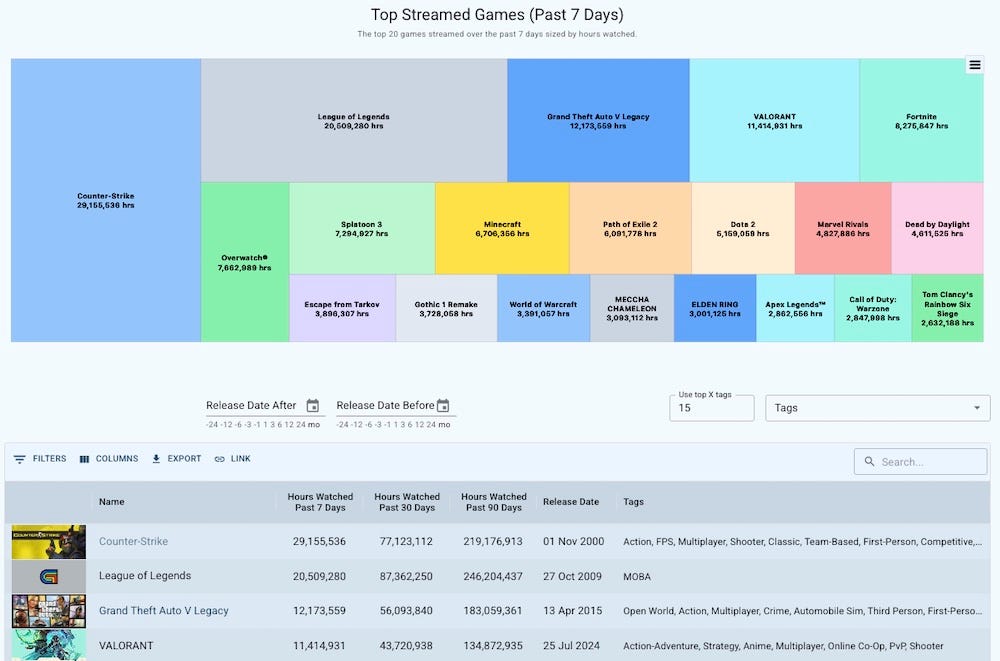
What Twitch Data Adds to Our View of Game Discovery
The integration of Twitch streaming data into game discovery analysis provides a more nuanced understanding of how titles gain visibility and sustain interest.
- GameDiscoverCo is now integrating over 10 years of Twitch data, including daily hours watched, number of channels, and top streamers for tens of thousands of games, into its analysis.
- Twitch's acquisition of IGDB in 2019 and the requirement for streamers to select a game ensures accurate metadata, making Twitch data reliable for even smaller games, unlike other platforms.
- While games like Path of Exile 2 demonstrate 'Games as a Service' (GaaS) stickiness on Twitch with sustained viewership and sales boosts from updates, this is an exception, with most games like Manor Lords seeing a large initial spike followed by a significant drop-off.
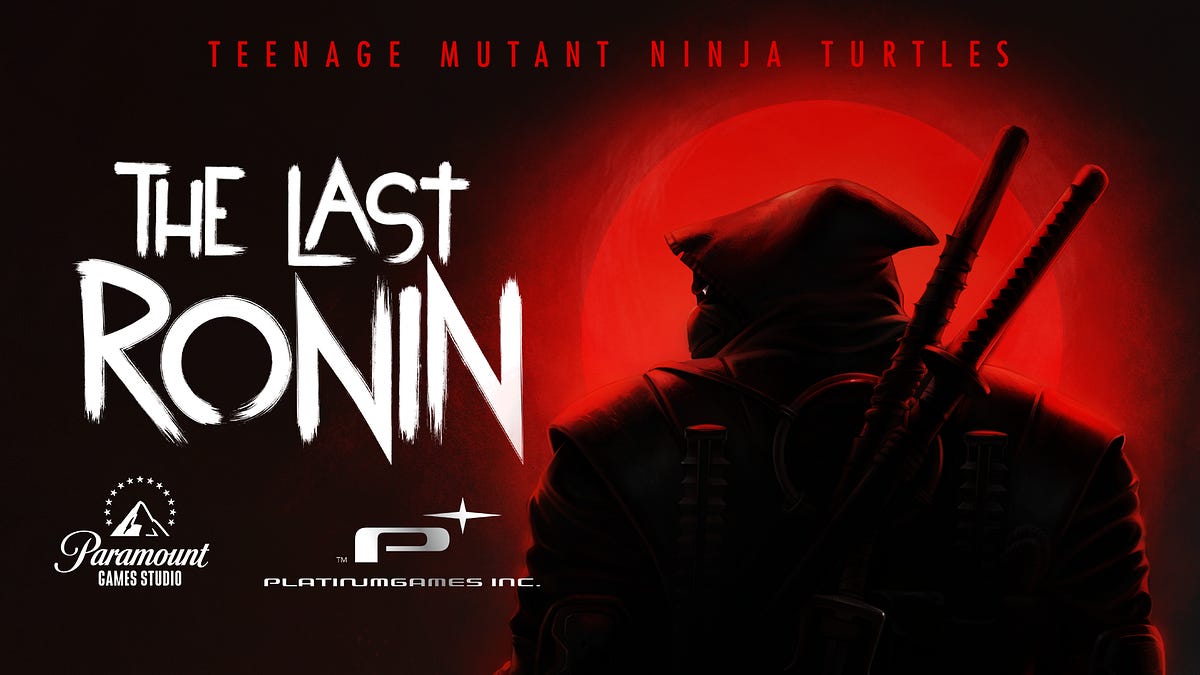
Inside Paramount's New Gaming Division
Paramount’s newly formed Games Group, created after the 2025 merger with Skydance Media, positions itself as a core content pillar alongside film and television.
- Paramount has established a new Games Group following its 2025 merger with Skydance Media, elevating gaming to a core content pillar alongside film and television.
- The division is prioritizing a conservative growth strategy that focuses on high-potential intellectual properties like Teenage Mutant Ninja Turtles, SpongeBob Squarepants, Star Trek, and Avatar: The Last Airbender rather than rapid studio expansion.
- PlatinumGames is developing 'TMNT: The Last Ronin,' a third-person action-adventure title overseen by former Tekken producer Yohei Shimbori.

Why Hobbyists Are a Bigger Discovery Disruptor for Games Than AI
The primary thesis posits that hobbyist and semi-professional game developers represent a more significant disruptive force in the modern PC gaming market than artificial intelligence.
- Hobbyist and semi-professional game creators, not AI, are the primary disruptors in the PC game market, exemplified by titles like "Running Train" and "Dinkum" ($23 million LTD Steam gross revenue).
- The rise of hobbyist developers is fueled by accessible, inexpensive engine technology (e.g., Unreal, Unity), readily available asset stores (e.g., Fab.com), and global distribution platforms like Steam that offer equal reach.
- "Dinkum," a solo-developed game, achieved $23 million in lifetime Steam gross revenue and secured a publishing deal with Krafton, demonstrating the commercial viability of hobbyist projects.
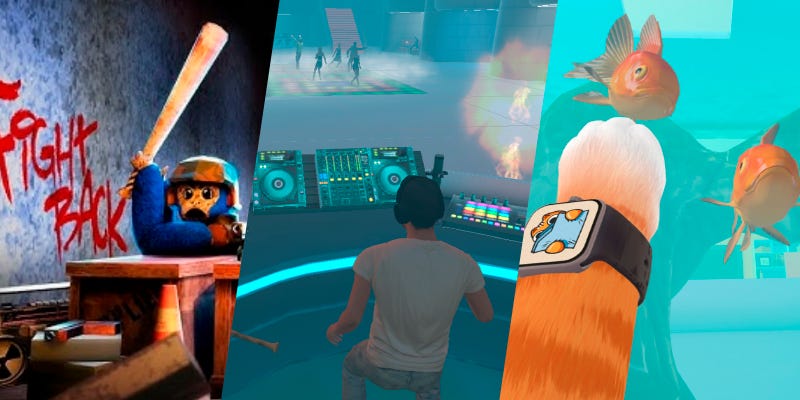
Scary Baboons, Sim Hits: The State of Quest Discovery in 2026
The newsletter examines the Meta Quest VR market in 2026, arguing that the platform remains vibrant but has shifted from early-stage experimentation to a mature ecosystem dominated by free-to-play (F2P) titles and social-centric experiences.
- The 2026 Meta Quest market is dominated by free-to-play (F2P) titles, which account for seven of the top ten grossing games.
- Revenue generation is primarily driven by high-volume downloads and in-app purchases, specifically focusing on cosmetic and functional items.
- Social-centric experiences and co-op world spaces like VRChat, Rec Room, and Job Simulator lead the market in total hours played.
How Old Are Your Players, and Does It Matter for Discovery?
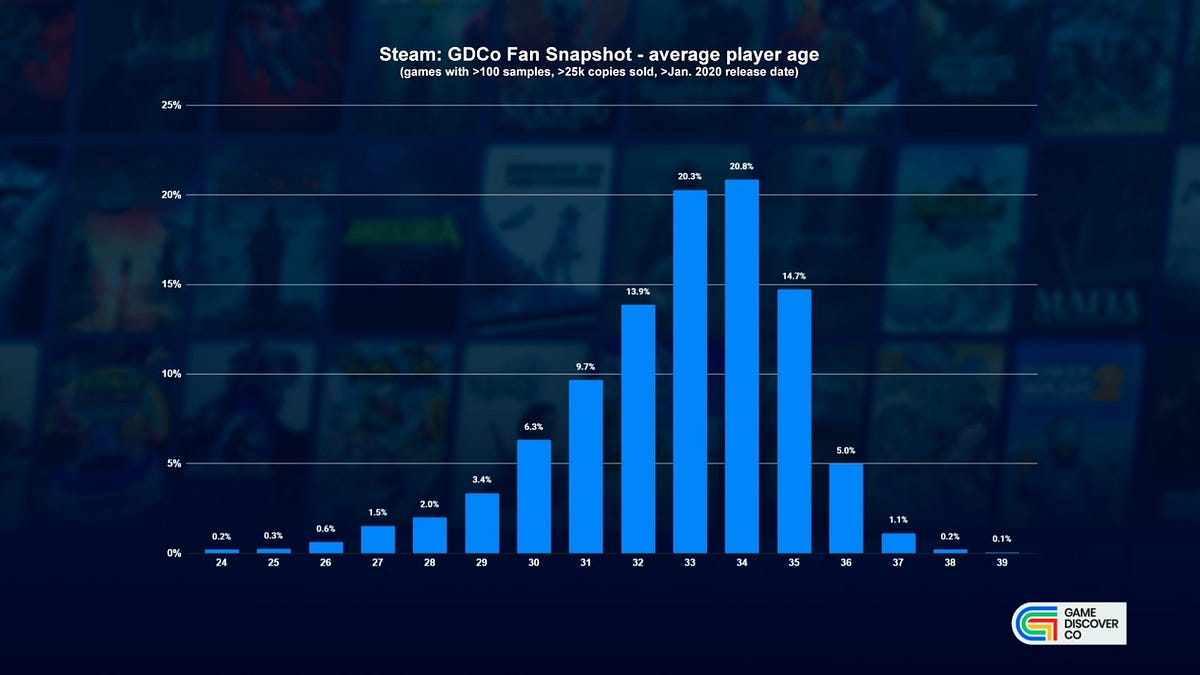
The piece investigates the average age of Steam players for games released after January 2020 that have sold over 25,000 copies, using a 10,000-sample survey called the Steam Fan Snapshot.
- The median age of Steam players for games released after January 2020 with over 25,000 sales is 33, confirming that older players constitute the core demographic.
- Games with an average player age of 36 typically feature single-player and strategy tags, while those averaging 28 years old are five times more likely to feature multiplayer tags.
- High-average-age titles are predominantly single-player, strategy-heavy, or retro games like Titan Quest and Songs of Conquest that appeal to users with long PC histories.
The Discovery Problem | Design Club
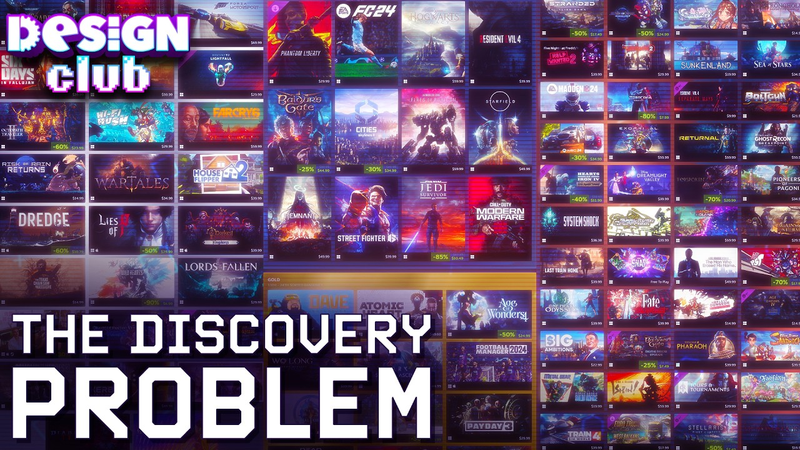
The primary challenge for independent game developers in the current digital landscape is navigating the discovery problem, which remains a manageable hurdle for those targeting the dedicated Steam audience.
- The primary driver of game discovery is the ability for players to immediately identify a game's genre and hook from its store page, as shoppers make rapid decisions based on visual clarity.
- Steam's algorithm prioritizes games based on opportunity cost, meaning even highly-rated games may struggle for visibility if they fail to convert impressions into sales compared to other available titles.
- Steam's discovery queue is effective because it targets 'tastemakers'—highly engaged players who act as gatekeepers; if these users engage with a title, they often drive organic growth through word-of-mouth recommendations.
How Far, Far West Sold >500k in Less Than 2 Weeks
Far Far West, a $20 co-op roguelite shooter released on Steam on April 28 2026, achieved over 500 000 sales within two weeks of launch and is projected to exceed 750 000 units, a rare milestone in the current market.
- Far Far West sold over 500,000 units within two weeks of its April 28, 2026, launch, with projections to exceed 750,000 total sales.
- The game secured 650,000 wishlists prior to launch by utilizing two public playtests and a February 2026 Next Fest demo that ranked fifth out of 3,500 titles.
- A tiered community engagement strategy—incorporating VIP access, newsletter codes, and Discord key drops—successfully polished the build and drove organic streamer and short-form video visibility.

Warner Bros. Discovery: Form 10-Q (Q1 2026)
Warner Bros. Discovery’s first-quarter 2026 results reveal a company navigating significant strategic and financial turbulence while maintaining core content operations.
- Warner Bros. Discovery reported a $2.9 billion net loss in Q1 2026, driven primarily by a $2.8 billion cash fee and $204 million in restructuring charges following the termination of the Netflix merger.
- The company faces significant liquidity constraints with cash balances of $3.27 billion against a total debt load of $32.97 billion, necessitating a new $1 billion credit facility secured in April 2026.
- Adjusted EBITDA rose 29% to $438 million, bolstered by a 19% increase in ad-lite streaming revenue and a 7% lift in distribution income.

Is 'Marketing Before You Build' a Good Discovery Idea in 2026?
The practice of marketing video games before full development—often referred to as "marketing before you build"—has emerged as a strategic approach for indie studios to validate market interest and mitigate financial risk.
- Marketing before full development is becoming a standard risk-mitigation strategy for indie studios to validate market interest and secure funding before committing significant capital.
- Early validation through short-form viral content and cinematic trailers can drive massive initial interest, as evidenced by 'Cartel Pilots Wanted' securing over 200,000 Steam wishlists in one week.
- The primary risk of this approach is a disconnect between initial 'vibes' and final gameplay, which can lead to poor reception if the finished product fails to meet the expectations set by early promotional material.


Global Gaming Report Q1 2026
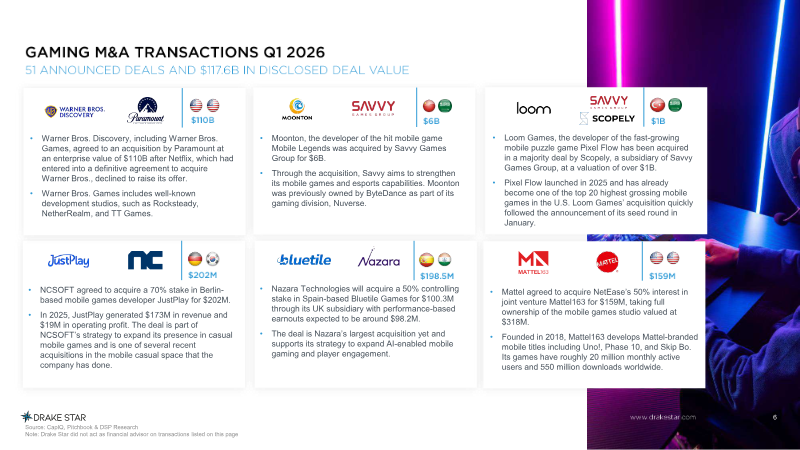
The global gaming industry experienced a period of significant structural realignment during the first quarter of 2026, characterized by a surge in high-value consolidation alongside a cooling of public market sentiment.
- Q1 2026 saw 106 private placement deals totaling $785 million, a significant decrease from Q1 2025's $5.0 billion across 149 deals, indicating a cooling investment landscape.
- Project financing is now the primary funding path for studios due to headwinds in studio equity, with dedicated User Acquisition (UA) funds emerging as a new lifeline for mid-stage mobile studios.
- Key strategics to watch include PIF/Scopely, KRAFTON, NCSoft, Tencent, MTG, Take-Two, Netflix, everplay, and Keywords Studios, while Private Equity is expected to drive take-private transactions of publicly listed gaming firms.
What Electronic Arts Thinks About the Future of Game Discovery
The future of game discovery is increasingly defined by the dominance of established intellectual property and the transition of individual titles into long-term service platforms.
- Major publishers like Electronic Arts and Warner Bros. Discovery are shifting strategy toward 'platform economics,' prioritizing a small number of massive, recurring-revenue franchises over a broad portfolio of new releases.
- The industry is pivoting toward a 'big get bigger' model where games like Apex Legends, The Sims, and Hogwarts Legacy are treated as permanent social hubs to combat flat growth in the PC and console markets.
- Generative AI is being deployed to drastically accelerate production cycles, with development times for complex assets like sports stadiums reportedly dropping from months to days.