ArticleGameDiscoverCo
How Steam's Personal Calendar Is Supercharging Pre-launch Discovery
19 Jun 20261 pages~9 min full read
Key insights
6 slides
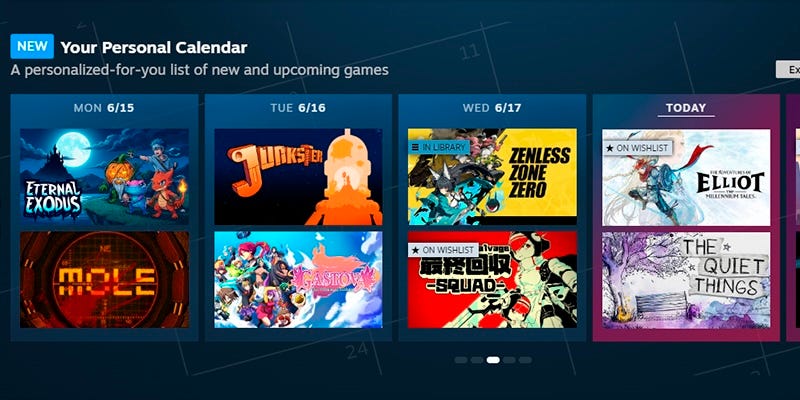
What changed
Steam's Personal Calendar aggregates wishlists and recommendations into a 30-day view.
The feature is positioned prominently on the main page. Its algorithm prioritizes playtime similarity and recent wishlist activity.
Key number
Solarpunk saw a rise from 14,000 to 35,000 daily wishlists over two days.
Early adopters report dramatic spikes in wishlist additions for titles within the 30-day pre-launch window. Solarpunk reported a massive surge in pre-launch discovery following the Steam homepage update.
35,000
Daily wishlists for Solarpunk after the update
- Daily wishlists before the rise
- 14,000
- Daily wishlists on the second day
- 22,000
What changed
Vampire Syndicate added 2,000–3,000 new wishlist entries after the update.
The developer observed a sustained increase leading up to their June 25th launch.
2,000–3,000
Daily wishlist additions for Vampire Syndicate
- Pre-existing wishlist base
- 65,000
Key number
Karjala doubled its 1,000 wishlists in two days.
The indie horror title saw a significant increase in wishlist additions.
1,000
Wishlists for Karjala before doubling
- Wishlists after two days
- 2,000
What it means
Mid-tier games can see daily wishlist growth jump from 300–500 to 5,000–6,000.
A case study showed this jump immediately after the redesign. It peaked at 10,000 once front-page inclusion was achieved.
The trade-off
The calendar offers a low-effort discovery channel without guaranteeing conversion.
Many new wishlists may be casual and less likely to convert on launch day. The feature's impact appears proportional to existing public interest.
1 / 6
Ask AI about this report