Discovery
CompanyJapan
Documents about Discovery
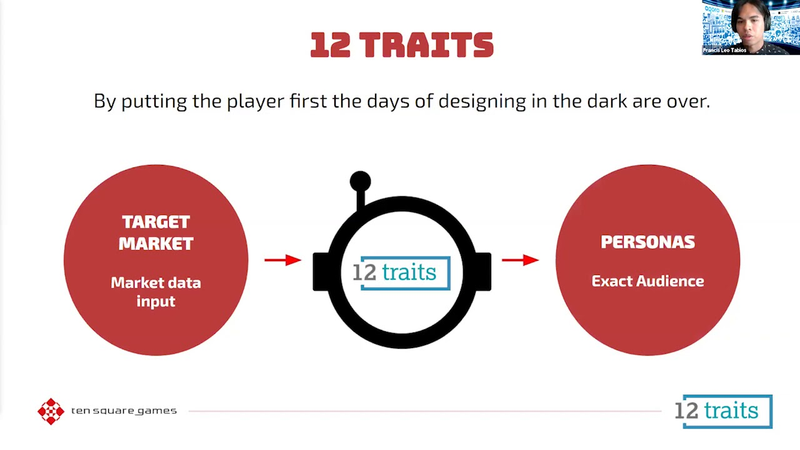
Reinventing the Discovery Process
The modern game development landscape requires a shift toward a player-centered discovery process that prioritizes rigorous validation before full-scale production begins.
- Studios must shift to a player-centered discovery process that mandates rigorous validation of game concepts, mechanics, and art styles before full-scale production begins.
- Development teams should utilize detailed, data-backed player personas—developed alongside behavioral research firms—to map psychological traits and motivations directly to monetization and design strategies.
- Integrating big data analytics into the discovery phase allows studios to replace generalized assumptions with targeted experiences that align with specific, sustainable market opportunities.
Finding Your Favorite Game - Game Discovery in a Crowded Market - Extra Credits
The modern gaming landscape is characterized by an overwhelming volume of content, which frequently prevents players from discovering titles that align with their personal preferences.
- The gaming market is saturated with over 30,000 titles on Steam alone, with thousands of new games released weekly across various storefronts, creating a significant barrier to effective discovery.
- High localization costs, which can start at 10 cents per word, frequently restrict game distribution to home regions and prevent global accessibility.
- Promotional ecosystems are heavily skewed toward blockbuster AAA franchises, which often results in high-quality indie projects being buried and overlooked by consumers.
Designing for Non-Linear Story Discovery in Tacoma
The evolution of narrative design in Tacoma represents a significant departure from traditional linear storytelling, moving away from the static audio diaries popularized by earlier titles toward a dynamic, non-linear experience inspired by immersive theater.
- To support non-linear narrative discovery, the development team utilized a 'hub and spoke' level design, where a central room (like a dining area) allows players to observe multiple concurrent character interactions and choose which threads to follow.
- The team abandoned traditional 'key and lock' progression systems during playtesting because players prioritized finding keys in desktops, causing them to fast-forward through narrative content rather than engaging with the story.
- Level layouts were locked down in 'gray block' format before writing the script, as the physical placement of rooms and furniture dictated the characters' movements and interactions within the AR scenes.

Creating League of Legends Champions: Our Production Framework Revealed
The production of champions for League of Legends relies on a rigorous, multi-phase framework designed to balance creative innovation with operational scalability.
- Riot Games manages the creative chaos of champion development by implementing a structured production framework that prioritizes clarity, scalability, and flexibility to prevent creative energy from being wasted on process-related confusion.
- The development process is divided into distinct phases—Ideation, Pre-production, Production, and Sustain—each with clearly defined deliverables to ensure the team knows exactly when a project is ready to advance.
- During the Ideation phase, the team utilizes a 'pattern lock' deliverable, which requires identifying the champion's strategic identity and finalizing three of their five core abilities to prove the character's viability.
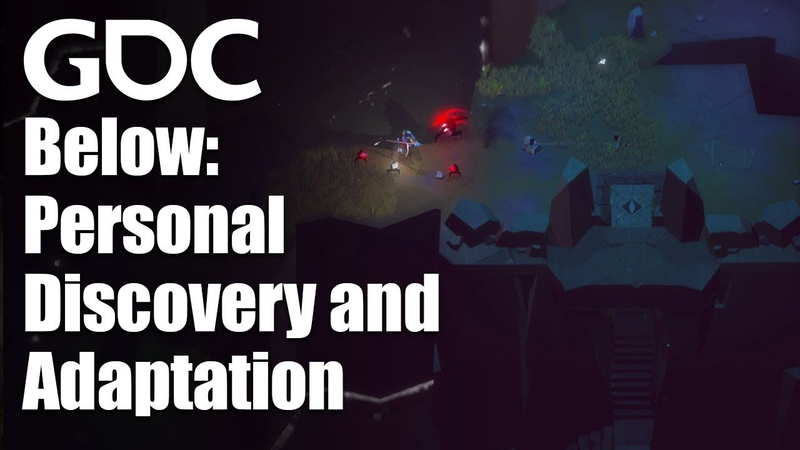
A New Dimension to Below: Personal Discovery and Adaptation
The development of the title Below serves as a case study in overcoming significant technical and creative hurdles through iterative adaptation and cross-disciplinary collaboration.
- The development team for Below achieved its distinct visual style by combining 3D geometry with hand-painted normals and flat cards, creating a complex 'Zelda-skew' perspective where objects point toward the camera to avoid clipping.
- Initial production workflows were highly inefficient, requiring artists to compile assets via batch files that took up to 30 minutes and script changes through text editors rather than using a real-time game editor.
- To improve productivity, the team developed in-game tools that allowed for real-time movement of assets, light editing, and post-process adjustments, significantly reducing the need for external scripting and level reloads.
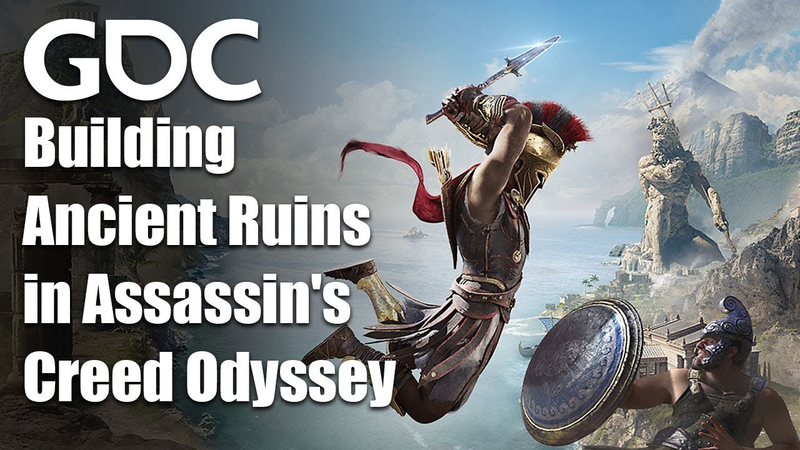
Building a Living World from Ancient Ruins in Assassin's Creed Odyssey
The creation of ancient Greece for Assassin’s Creed Odyssey centers on the synthesis of rigorous historical research and large-scale, modular production techniques.
- The development team managed the massive geographic scope of ancient Greece by coordinating nine global studios under a unified creative vision and a honeycomb design philosophy.
- Production efficiency was achieved through a robust pipeline featuring over 35 architecture kits and 4,000 unique props, supplemented by procedural tools for vegetation and cave systems.
- The project utilized agile two-week development sprints to maintain consistency and alignment across decentralized teams throughout the production cycle.
The Digital Museum - Assassin’s Creed Origins Discovery Tour - Extra Credits
The Discovery Tour mode in Assassin’s Creed Origins represents a significant milestone in the integration of interactive entertainment and formal education.
- The Discovery Tour mode in Assassin’s Creed Origins establishes a proof-of-concept for AAA studios to repurpose commercial game engines into formal educational tools for historical study.
- By removing combat and incorporating expert historical consultation, the mode successfully transforms a high-fidelity game environment into a digital museum experience.
- The current implementation relies on a restrictive, linear 'on-rails' design that mirrors traditional audio tours, which limits the medium's potential for self-directed learning.
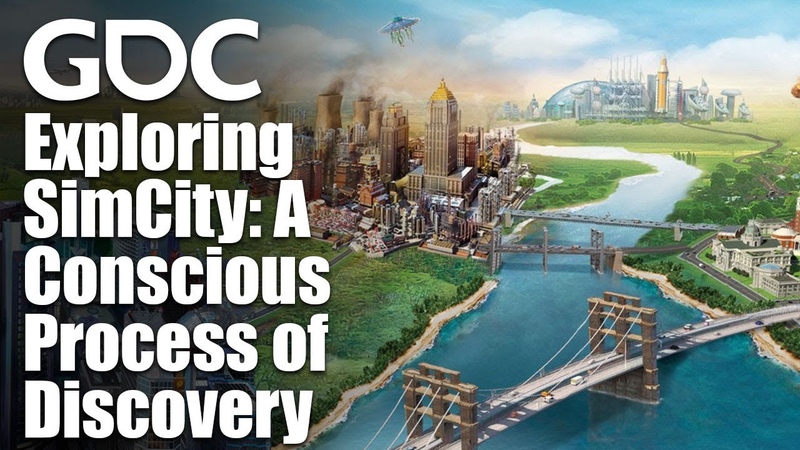
Exploring SimCity: A Conscious Process of Discovery
The development of SimCity centers on the philosophy that sandbox games thrive when built upon simple, modular systems that encourage emergent gameplay.
- Sandbox game development should follow a breadth-first approach, layering core mechanics, feedback, and player tools incrementally to justify development effort through actual gameplay experience rather than theoretical design.
- Avoid the 'complexity rabbit hole' by keeping individual simulation components simple; early prototypes for SimCity (2013) showed that over-engineering systems like power plants created unmanageable UI and performance requirements.
- Performance in sandbox simulations requires avoiding global loops; instead, use bucketed systems and round-robin scheduling to propagate navigation and agent information across frames.
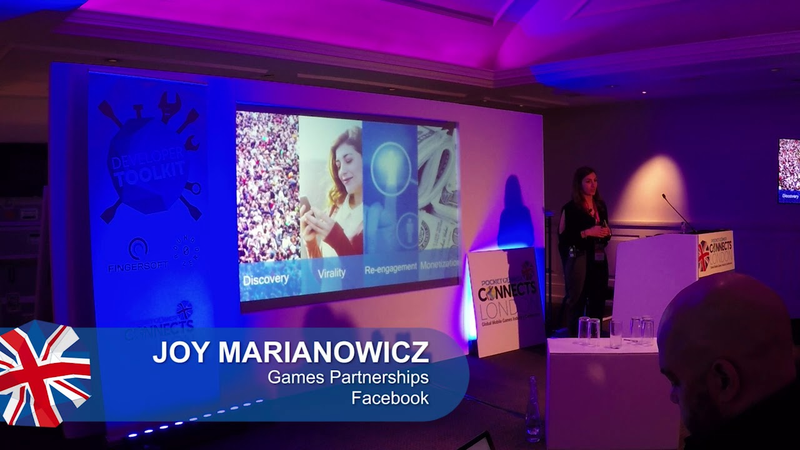
Facebook Instant Games – The state of play
Facebook Instant Games functions as a cross-platform, HTML5-based gaming ecosystem integrated directly into the Messenger and Facebook interfaces.
- Multiplayer engagement is the primary driver of retention, with users playing across multiple chat threads exhibiting up to five times higher engagement than solo players.
- Facebook Instant Games leverages a massive potential audience of over 2 billion users on Facebook and 1.3 billion on Messenger to facilitate frictionless, social-first gaming.
- In-thread updates are the most critical discovery channel, accounting for 47% of all game sessions on the platform.
Project Discovery: Lessons From Scientific Research in EVE Online
Project Discovery serves as a pioneering model for integrating citizen science into the AAA gaming landscape, specifically within the massive multiplayer online game EVE Online.
- Project Discovery, a collaboration between CCP Games and MMOS, successfully integrated citizen science into EVE Online, resulting in over 25 million protein location classifications by players.
- The project utilizes a consensus-based validation system where each data sample requires between 15 and 50 independent player submissions to ensure scientific accuracy.
- Scientific outcomes from the initiative include the identification of approximately 100 new protein candidates related to 'rods and rings' structures, which were subsequently published by researchers.

Discovery is a challenge but one we can overcome says QuizTiz's Albert Marshall
The mobile gaming landscape presents significant hurdles for independent developers, particularly regarding user acquisition and game discovery.
- Game discovery remains the primary challenge for mobile developers due to the high volume of new titles entering the market.
- QuizTix is targeting a broad demographic of smartphone users who do not identify as traditional gamers to expand their market reach.
- Successful user acquisition requires a hybrid strategy that balances traditional PR and marketing with data-driven analytics.