1 free read left. Create a free account for unlimited reading + AI research.
Create free account
A UX toolkit – The player’s perspective
Key insights
6 takeaways- 01Top-tier studios like Bungie integrate user research during the earliest conceptual stages, testing mechanics and UI long before final assets are produced.
- 02Deliberate practice and constant feedback loops are essential to ensuring that original design intent aligns with actual player interaction.
- 03Developers must shift from subjective design assumptions to a rigorous, objective framework that measures player behavior to mitigate market risk.
- 04Failures in early-stage design, such as ineffective onboarding or confusing tutorials, directly result in significant losses to user acquisition budgets.
- 05UX failures are categorized into five critical, interconnected layers: appeal, learnability, usability, player experience, and monetization.
- 06A structured self-assessment toolkit allows teams without dedicated research departments to identify and resolve sources of player friction early in the production cycle.
Ask AI about this video
Transcript
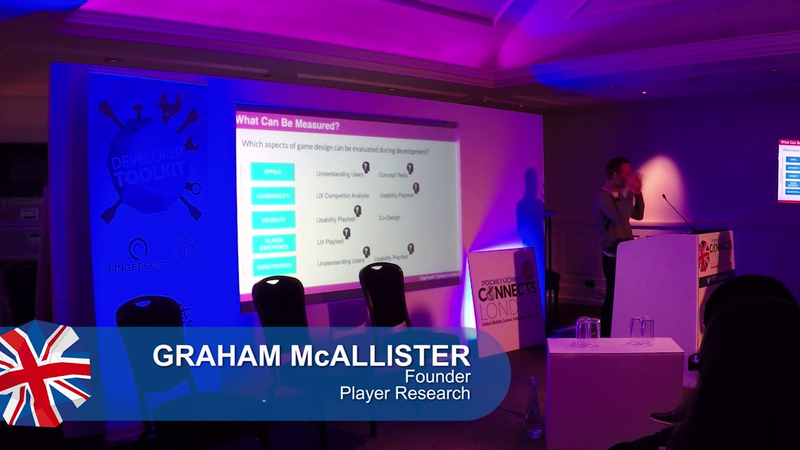
[Music] [Music] okay hi everyone good afternoon my name is Graham McAllister I run play research in Brighton and Montreal and what we do is try and help you see your game from the player's perspective so essentially we're the guys that marks the designers homework so you've designed the game that's great good for you did you do a good job now this is the developer track developer toolkit track most people think of toolkits you think of software but that's not the case for this talk when I'm going to try and do is reprogram your brain essentially so how can you think differently about your game and how you make it and you heard before the previous chop saying that's important to know your own game brain want to try and do the opposite which is how would you see your game from the
player's perspective because that may be the very thing that you need to make the best game possible and we'll see some stuff from that so there's a podcast you may or may not know of called tribe of mentors from Tim Ferriss um what he does interviews some of the world's most successful people from from a very wide range of disciplines including science and arts and CEOs and billionaires amore tries to understand is what makes them do what they do how did they get to be so great anyway does anybody know how to make a great designer well we'll get to that it's not three interested in how do the best people become the best at what they do and he asks the same 11 questions to each of these people one of those questions is what message would you put on a billboard that you would want everyone to see another way of thinking about this is what quotes do you live by what guides your life what helps you make the best decisions possible and the guy interviewed this week if you don't note it or read the book is Adam Robinson who is basically at World Chess Champion a pani Rai
thinking he's not a financial guru basically his what he's interested in is how do you change people's thinking for the better and you've probably seen quotes similar to this but this one's a little bit different it just modifies a small amount but again small things is what I'm interested in and you should be too so if you're not getting the result you want you may want to change what you're doing or change what you're doing there are some reports to this such as the definition of insanity which you've all heard things like that but he modified a little bit to add this bit because it contains an action change what you're doing he tells you how to solve the problem if your game is not the top of the iOS from Google Play charts if you're not the top of the steam charts if your Metacritic is not 100% or close if you're not getting I don't know the top game you were cons with five billion downloads so you're not getting 5 billion downloads why not why not why are you not getting the results you want there's a reason for that so the important thing here is you've got to
take action but there's a problem with taking action so change what you're doing sounds like a really simple thing hello I shouldn't say hello to people in the audience what I'm talking real life anyway so we have to change what you're doing but the problem with change is that well which direction and what most people do when they're not getting the results they want is they just try harder so trying harder is probably the thing that you don't need it leaves the burnout and it leads to more mistakes because that what you were doing in the first place so how do you actually change yourself isn't the most difficult thing if you don't know are you going to enter just more risk maybe you're having some success and you'll have no success if you change oh my god what do I do well so many possibilities and in fact the very thing you may need to do is to go backwards which sounds insane but that's what ma'am maybe I solved your problem but how do you know this so this is a clip from or a slide from Bungie this is a clip that the user researcher
the UX researcher for them Bungie showed at GDC talk what he was talking about is well how do we measure change in the game industry and the people he measure change in the game industry is what we do the user researchers third job is to say okay you've made something how good did you make it it's the job of the UX research department to say let's measure the change let's measure the experience let's measure the things that you're making so John Hopson the guy who presented this it's his job within Bungie to figure out the changes we're making the decisions we're making are they good changes so this is the development plan for Halo 2 and they did it and along the bottom if you can see it this is the months away from release so release here on four years forty seven months started development so for hello - they did a bunch of tests about 17 months out a year and a half before release and then they got a bit more active about it months or so before release good for them that's a pretty good start right we did a little bit 18 months before release Iommi ramped up our measuring
activity or user research activity before lunch to make sure it was going in the right direction you looked we did pretty well I think most people would agree good job all right what do they learn well for halo 3 they said well that work pretty well but we made some mistakes I'm fine this time we're gonna start a little bit further back two years before at least 23 months we're going to start just measuring business getting players in and seeing what they're doing and in fact we're gonna do a lot more measuring this time a lot more understanding of the player we're not gonna make as many mistakes and then of course I'll skip forward a little bit Bunge destiny well deaths there was a whole different whole different league entirely for destiny what we have 9 is more risk unlock go into the whole story between the studios and how they changed I'm sure you won't know it but if you're going to take more risk and be more creative guess what you have to measure more not less so if we're going to bet the farms that were on making a new again we better be pretty sure we're making
good design decisions how do we do that well we'll come to that but you can see their activities start my day 1 4 years old on the amount of activities is vastly increased vastly and Korean it covers everything at the beginning you'll see things a punji dead if you go get on concept art they're holding up it's a paean things and saying how did this character move what does that weapon - are they fast are they slow way before final art and code was even in the game way before so funny one thinks just too early it definitely isn't you're probably too late because they're starting day one and they made a billion dollar game so it works like pretty well so wasn't by chance it was consistent structured measuring all the way throughout I'm one of these guys do next the plan will be just as rigorous so this being an expert business how does that work there's a book called outliers by Malcolm Gladwell you may have read it but there's one part of the book where they say basically to be an expert in any discipline you need 10,000 hours of experience so for 10,000 hours
I'll be an expert in what I do and so he goes through the book me tells some examples so as an academic I went back and read the original research that that book was based on and you know what it's not quite true I'm not saying he's lying exactly I'm just saying there's a bit he left thought it is true that you may need 10,000 hours to become an expert that is more or less being studied for example from learning the rules of chess to being a grandmaster it's my 10 years first studying the big grid composition 10 years scientists from the first publication to their best possible work such as a Nobel Prize it's about 10 years so-and-so goes on but there's something interesting about these disciplines that you'll see you do need to practice but it's only one form of practice to be an expert as a thing called deliberate practice so that means as part of the earth practicing you need to get feedback on what you're doing and if you don't get the feedback on what you're doing that's just called practice
which is could be structured I could make you better and I can make you worse if I don't plays a musical instrument for example you may not got better in 20 years despite playing every day there's many examples of that and that's why you see people in the games industry have 20 years experience and there may be knew better than where they were when they first started yes they've learned some things but there's blue lines basically saying the reason why you've got world-class designers as they were doing something different they were also practicing just as hard but they were doing it better they were getting the feedback that corrected them all the way throughout their career so I'm gonna speed up a little bit what sort of things can you measure during game development in the past we spent a lot of time analyzing games professional reviews from user reviews Metacritic and other sources including all the common magazines you've read we're also running play tests on about 80 to 100 games a year and speaking to players and things like that and all the issues that come up in your games and all the games worldwide pretty much fall into one of these five categories
these are the categories of mistake that are being made on a regular basis in other words when someone's trying to figure out did you make a good game these are the things intentionally or otherwise that that the players are talking about and critics as well so very very quickly appeal is your game interesting if you describe you're given one sentence is it even interesting why is your game different than anyone elses why would someone download it why should they pay attention learnability did you teach the player well do they know the rules of your game usability can they do what you want them to do player experience is the game interesting enjoyable is our depth why would they want to come back and finally for the free-to-play guys or all it's more complicated than that these days but monetization with someone pay you for what you made now in terms of how you measure that these are the things that we're doing for these those levels and by the way Bungie they're doing the same things too so this measuring business it happens every single stage of development from appeal all the way throughout development long before
you've got codes on before you've got art it is not a coincidence that the games at the top of the charts are at the top yes they may have luck they may have bigger marketing but pretty much these sorts of things is what they're paying attention to so that when the player gets that game they're staying and they're not confused and they want to give you money because they understand the benefits the thing is most of these methods that ourselves are Bungie or other companies are using involve the user hence the Union user experience by the way if you're not involving users and user experience you're not actually doing user experience just to let you know can I call question a lot the you means a human and if you're not bringing the humans in to study them in a structured way that's called making stuff up and that's fine but you have to measure it that's what the humans are for so this is what today's talks about saying we know this is how you make great games you've involved these humans in a structured way use different methods at different times that give you a triangulation of methods to understand exactly how your game will perform when it's released and hopefully these issues aren't present that's all completely
common sense what I'm talking about today is what happens if you don't have access to these people what if you say that's great I can't do it for whatever reason or I won't do it that's fine that's up to you but what can you do to change your thinking that's what I'm trying to talk about Tran like 15 minutes to change your brain it's a it's a lofty goal I understand but what can you do to think like this but for actually doing this so let's have a quick run-through so I think I'm running out of time but what I want you to bear in mind is these five layers the issues and errors in your game these layers are critical these are the groups that come up time and time again in every game of every genre every platform there's no exceptions and your game will have issues today and these layers I promise you they all have them even the top games in the world so that's one but appeal I'm gonna read these out but bear in mind this is your homework there's no answers to these I'm asking you to ask these to yourself I'm asking you a few of the designer or the programmer to catch these issues earlier
in development I want you to print these out pretty much and put them in front of you and ask yourself then while you're making design decisions because if you start to think like the players maybe you'll catch these issues earlier in development maybe I don't know that's why humans are there to verify it but again this isn't substitute of the best possible so ask everyone on your team to describe the game in one sentence do they all agree probably not some companies do they're awesome first this is important because if you're making design decisions you would like to think you're making the decision in the same direction and if you're not well there's a problem right away does the uniqueness of your game shine through in other words that one-line description of your game is everyone talking about the unique feature they should be right because let's back to the appeal layer through your interest in this game because it's different well how long have I got left by the way I don't want wonderful thank you who's your game for this is a fundamental
problem to every company we worked with we send you in a sheet a Word document so with two pages long at the very bottom it says by the way who's your game for and you'd be amazed at the answers which I cannot tell you but you get the idea right it's a very confusing thing but it's also very important because if you're making a design decision designed by its very nature as a discipline is for someone you're designing for a human so if you don't know who that is why on earth have you just made a design decision if you didn't know who it was far you're not practicing design anymore you're making stuff up and that's fine enough to Hobby but most of us are in a business you want someone to enjoy and pay you for that thing that you have made so who's your game for and I don't mean age and I definitely don't mean gender I'm talking about who are they why do they play these sorts of games tell me in detail what brands are they playing what platforms are they on how long why don't they pick it up do you know these things if you don't you really should your competitors may do so
be interesting to see am i specific you can be about who you think your game is for what might put potential players off from playing your game be honest and daf down sir and I your homework it's good are you ok with that yep players may really dislike this thing what you're trying to identify is the risk it's too similar to gear max it's too different from gear Max and these too much commitment is too complicated what was the greatest risks in your game they would be nice to know as soon as possible ok that's the appeal there learn ability is about getting up player into your game there's been talk to this conference about user acquisition paying someone to download your game and what they seldom talk about is the onboarding experience I would be very upset if I'd paid someone $5 to download my game we need to understand that they're not getting beyond the tutorial because they can't figure it out so we've seen many companies we asking tens if not more
thousands of dollars on user acquisition and all the players points off it's not because they don't like it it's because they can't figure it out so your user acquisition budget you really need to make sure that the onboarding process is really really smooth otherwise don't pour a penny into you a because you're paying for people to bunt off anyway that's another talk another time look give knowledge if you assumed in other words we're all gamers assume we're all playing games roll used to the language the genre expectations the control layouts for that game have you assumed that what if the player died noting it does not know that what would happen how do you reinforce the essentials of your game in psychology this is called schedules re-enforcement Highview reinforce these principles that teach someone did you tell them once and say good luck see you later did you reinforce it did use different methods at different times did you introduce it within context many people don't do any of these things and then they wonder why can't they figure it out I told him yeah you did the least amount possible to tell him and then they left
are you really so surprised what happens is the player doesn't understand your mechanics system in terms the most important to least important and then ask that question if the player does not understand that mechanic what is likely to happen and what am i doing about it do you have unrealistic unrealistic expectations of the players memory do we make a list of everything you're trying to shove into someone's brain how many items is it can they use recalled or recovered or as a pure memory can use recognition experiment recognition that we call here's here's a screenshot from cuphead funny ones played it there's no what the problems of this this tutorial anyway one of them uses the word - and that's fine if you play a game of whether it's a - mechanic but if you've never played a game of the - mechanic what on earth is that and you probably all saw the video that went viral of the day journalists trying to play the Cup editorial I gave a talk on this tutorial last week whole talk just on how bad
this tutorial is and it's not the journalists fault at all as the designers or a surprise and pretty much everything is wrong with that tutorial it's not his fault I may take some flak for that but there you go anyway there are lots of problems with this including language players memory right of context or the list is very very long indeed usability which part of your game do you think would cause the most unintended frustration this is important in games such as deck management anymore you're managing inventory things like that is it easy to switch high frequency of items are these things easy to do again look at your again which part do you think today that calls the most potential frustration I don't mean good frustration like challenge I mean the bad stuff like wine Arthas designer making me do this every single time and I have to do it you know time's a minute wow that's a strange thing to do if the player isn't playing correctly which is common what do you do to correct them to put them back on track what mechanism have you got in your game to say if the player isn't
playing correctly these are the things I am doing to make sure they eventually get it I think we have a sticky bun think about frequency what do you use the most of in your game is easy to use the most frequent items should probably be the easiest to access again I'm only mentioned everything I mention has been a real issue and again I'm not making stuff up and in fact most games have these issues but if you're making a player make a decision does the presentation of that information makes sense have you presented everything the player needs to actually make an informed decision really important to monetization or stores the amount of times when we ask the player what are you buying and they say I don't know I don't know how to decide I don't have all the information I need sounds really simple it's costing you money today if we ask players to describe the UI just March round would they know where every part does I'm gonna speed up a little bit with people
with different impairments vision color blindness motor control auditory we turn the sound off does it work if you're color blind did your game still work I don't know maybe it did though I can't belt with five minutes that will speed up a little bit this is the layer that most developers do focus on having made a fun game and then four minutes and the reason why I spent reason why I covered those other layers is they are the barriers to getting to the fun you can't measure fun directly as such it'll be a mistake to try and judge this before judging the previous previous layers because you want to know are any barriers in the way however this is obviously important this is the game you're making the fun stuff right where does the enjoyment come from in your game you'd be amazed how many developers give different answers for this that's because they can't agree where the fun comes from maybe because they're different people with different preferences that's fine nobody's got different markets that's cool but you should know have you signaled why the player comes back for more how did you do that right at dawn that
you're meant to write all these things done don't just mental exercises nothing I say today is complicated the complexity isn't doing it actually taking action that's the hard stuff how did you signal the depth in your game there's more to it don't leave yet this game gets better how did you tell the player that why do you think they left early why do those things happen well let me just skip over the look this one a little bit but is everything important we've seen developers make many different mechanisms in their game different mechanics and some are very rarely used and they're surprised at that but again it's not okay maybe it's something you intend maybe it's not it's not there's a reason for it but you should have a brick Donald we think the player will do these things with this frequency okay the very end volatilization this one may sound crazy but this happens on a lot of games we work on does the pair even know that there's a store to buy anything and maybe you're laughing like oh come on
nobody would make that mistake yeah yeah they do under some of the biggest players we've asked players hard as this company make money and they say we don't know on the front page of that game is a store and they don't know so these things can definitely happen they're probably hopping in your game today to different levels do you compute the player what they're buying exactly so if you ask players what are you buying would they knew that would they know exactly what they're buying on what it does because if they don't they're certainly not gonna give you any money again two minutes we better hurry up all right getting to the end there's a parent with the item dollars all these things are related but again I want you to think about these things in your store this is the stuff that will help you keep the lights on and find them your tronic of joy to the players not just about money these things should be giving a better experience as a player all these five theirs are related they're not they're not separate things to think about
sticky buttons two key button do you make the player do mental arithmetic you buy this one for forty gems or get this plus 20% extra or my god I have no idea that's a better deal what do I buy I don't know I'll just buy nothing so spell it out for the player it's not a test make it easy for them and you have to do that in the supermarket during those beans of those beans oh my god not a better six for that there's three of us 50% extra at 25% in the can I don't know what to buy why do you thought most people don't like math obviously the people in this room ate my leg mouth and most other people do not like mouths so don't make them do it you're losing players identify the greatest point of friction again I think people in your team will disagree where this comes from and that this agreement will help you get better above all else these are things to think of when it comes to monetization does the pair understand what they're buying can they do it and do they see the value it's not last sentence if the player can't answer those questions you've just lost a ton of cash on engagement and everything else so if I'm called boiling
at dawn did that last sentence is absolutely critical okay that slide for Elish wide something what's this talking about it's busy saying most companies have a really structured user research process but if you don't have access to it I've tried to outline the major problems in all games are in these five layers and asking yourself these questions will definitely help you catch these issues much earlier in development if you want to so I'm asking you to just try and measure and ask yourself these difficult questions on above all else take action thank you [Applause] [Music] [Music]
Summary
The provided text outlines a framework for improving game design through a structured, user-centric approach to development. The primary thesis is that game developers often fail to achieve their desired market performance because they lack a rigorous, objective understanding of the player’s perspective. By shifting focus from simply "trying harder" to implementing deliberate, measurable design practices, developers can identify and resolve critical issues early in the production cycle.
The analysis categorizes common UX failures into five distinct layers: appeal, learnability, usability, player experience, and monetization. Appeal concerns the game’s unique value proposition and target audience clarity; learnability focuses on the effectiveness of onboarding and tutorial design; usability addresses the removal of unnecessary friction in mechanics and interfaces; player experience evaluates the core engagement and depth of the game; and monetization examines the transparency and ease of the purchasing process. The text emphasizes that these layers are interconnected and that failures in early stages—such as a confusing tutorial—often lead to significant losses in user acquisition budgets.
The methodology advocated is rooted in the concept of deliberate practice, which requires constant feedback loops. Drawing on industry examples, such as Bungie’s development processes for the Halo and Destiny franchises, the text highlights that top-tier studios integrate user research from the earliest conceptual stages. This involves testing mechanics, character movement, and UI long before final assets are produced.
Ultimately, the toolkit serves as a self-assessment guide for developers who may lack dedicated research departments. By forcing team members to answer difficult questions regarding their design decisions—such as identifying the specific target demographic or pinpointing the greatest sources of player friction—developers can move beyond subjective assumptions and create more cohesive, successful products. The core takeaway is that consistent, structured measurement is essential to mitigating risk and ensuring that design intent aligns with actual player behavior.














Comments