Adam
Company
Documents about Adam

S08, E03: Amazon and Agentic Commerce (with Adam Epstein)
Agentic commerce currently functions more as a theoretical aspiration than a mass-market reality, as the prevailing retail infrastructure remains fundamentally incompatible with the open integration of third-party AI agents.
- Amazon is leveraging its $80 billion advertising business to pivot from transaction-based take rates toward an ad-driven monetization model for AI-integrated retail.
- To prevent losing traffic to external AI tools, Amazon is integrating its proprietary advertising stack—including the Amazon DSP and responsive e-commerce creative units—directly into third-party platforms like ChatGPT.
- Amazon’s strategy of embedding its ad stack into external interfaces allows the company to maintain closed-loop purchase tracking and monetize consumer intent outside of its own ecosystem.

TWIG #402: Xbox Bets on Kojima, Halo Gets Handed to CoD and AppLovin Hits the Road
The gaming industry is currently undergoing a period of intense structural realignment, characterized by aggressive consolidation and a strategic pivot toward transmedia expansion.
- Microsoft is restructuring its internal studios into vertical business units—Activision, Bethesda, and King—to streamline operations and reduce corporate hierarchy.
- The Halo franchise has been moved under the Activision umbrella as part of a strategic effort to stabilize the brand's performance.
- Microsoft has taken control of Hideo Kojima’s espionage project, Physint, following Sony's withdrawal due to concerns over high production costs and limited commercial reach.
S07E18: Understanding Amazon's advertising advantages (with Adam Epstein)
Amazon is rapidly evolving from an endemic retail advertising platform into a comprehensive programmatic powerhouse, leveraging a deterministic identity spine that reaches 90% of U.S. households.
- Amazon is leveraging a deterministic identity spine that reaches 90% of U.S. households to transition from an endemic retail platform into a comprehensive programmatic powerhouse.
- By integrating proprietary first-party retail data into its Demand Side Platform, Amazon is aggressively competing with The Trade Desk for premium Connected TV advertising budgets.
- Amazon is embedding advertising into AI-driven discovery tools like the Rufus chatbot to protect its search-based revenue model against changing consumer search behaviors.

Watch us chat with British comedian and Taskmaster star Maisie Adam
The comedy and gaming industries share a fundamental structural challenge: the necessity of balancing creative evolution with the preservation of core elements that initially fostered fan loyalty.
- Success in both comedy and gaming requires balancing creative evolution with the preservation of core elements that initially established fan loyalty.
- Iterative development, similar to the software industry's early access model, allows creators to refine material through direct audience feedback before final release.
- Creators must manage the tension between maintaining a unique artistic voice and adapting to the shifting expectations of a diverse, global audience.
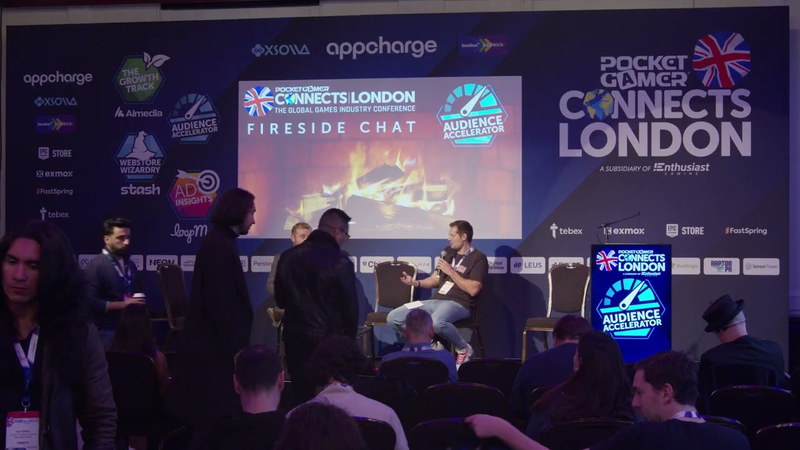
Fireside Chat: Money Talks - Listening To Buyer Signals - Adam Smart & Edik Mitelman, AppsFlyer.
The data collaboration platform SignalHub, developed by AppsFlyer, enables gaming companies to leverage real-world consumer spending data for highly targeted user acquisition.
- AppsFlyer’s Signal Hub platform allows game studios to build custom user acquisition audiences based on real-world consumer spending data from partners like Mastercard, Factures, and Equifax.
- The platform enables targeting based on specific merchant transactions, product SKUs, spending ranges, and socioeconomic status, allowing studios to reach users with high propensities for in-app purchases.
- Data is processed through a privacy-compliant, hashed, and encrypted environment where no raw data is downloadable or shared, meeting strict audit requirements from major financial institutions.

How To Make Games Full Time (in 2026), 8 Years On One Game, Slop vs. Polished Games (Adam Younis)
Achieving long-term financial sustainability in independent game development requires a shift away from traditional publisher reliance toward a diversified income model.
- Long-term game development requires a sustainable financial model, often involving a hybrid approach of 50% contract work and 50% original IP development to maintain cash flow.
- Accepting large publisher funding can be counterproductive for solo or small-team projects, as it often forces developers to prioritize rapid delivery milestones over the time needed to iterate and discover the game's true identity.
- Developers with an established audience (e.g., 300,000+ subscribers) may not need the platform-specific traffic provided by Kickstarter, as they can leverage their existing community for launch support.

Why He Spent 8 Years On A Single Game (Adam Younis) — Full Time Game Dev Podcast Ep. 040
The development of independent games is increasingly defined by a tension between traditional marketing metrics and the cultivation of long-term community engagement.
- Live-streaming the creative process serves as a sustainable alternative to traditional marketing, fostering accountability and building a dedicated audience that values handcrafted development.
- Solo developers often rely on a hybrid financial model to maintain creative autonomy, combining personal savings, contract work, and government grants rather than seeking external funding that necessitates rigid deadlines.
- Human intentionality is a primary market differentiator, as AI-generated content lacks the cohesive, meaningful, and authentic experience that players seek in modern indie titles.
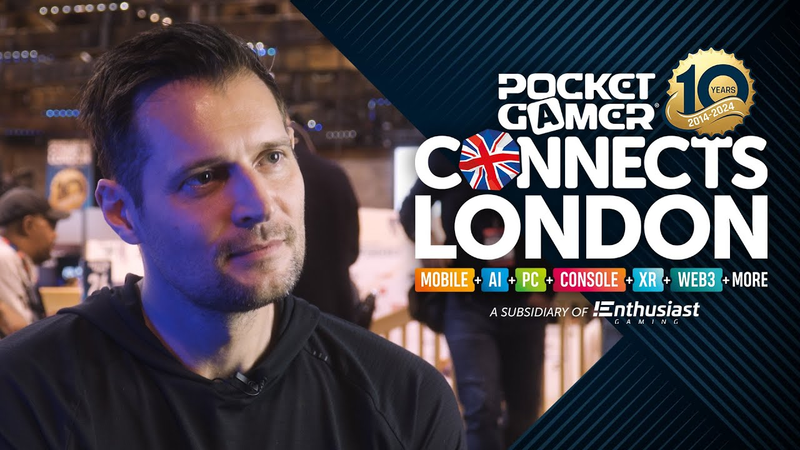
How has attribution changed since ATT Privacy? | Adam Smart from AppsFlyer
The mobile gaming industry is currently navigating a period of significant structural adjustment, characterized by a cooling of post-pandemic growth and a tightening of privacy-focused data regulations.
- The current mobile gaming industry downturn is a structural correction following pandemic-era overexpansion rather than a systemic collapse.
- Probabilistic modeling remains a viable and effective attribution method for measuring campaign performance despite Apple’s privacy-focused data restrictions.
- Companies are successfully maintaining user engagement by shifting toward transparent, secure data methodologies rather than relying on obsolete tracking practices.

Gamesforum Live Special w/ Adam & Gus: Rewarded play, AI in game development. Are UA managers lazy?
The rewarded gaming model has emerged as a dominant strategy for driving profitability, utilizing real-money incentives to encourage user engagement through ad interactions and data-sharing tasks.
- The rewarded gaming model achieves profitability within a three-day window by using real-money incentives to drive high-value user cohorts and rapid capital recycling.
- Modern game development is increasingly subservient to acquisition metrics, where marketing requirements dictate core design choices to function as high-performance affiliate platforms.
- A significant skill gap exists among user acquisition managers who rely too heavily on automated platform algorithms rather than integrating creative strategy with game mechanics.
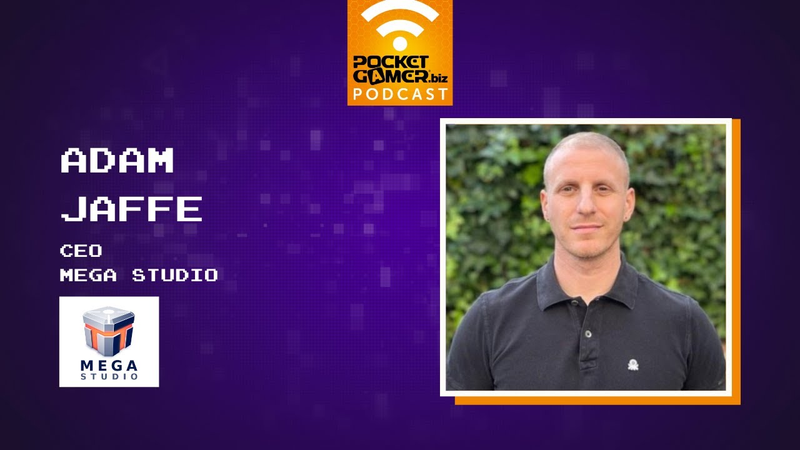
Mega Studio’s Adam Jaffe On The Impressive Benefits Of Incentivised Traffic
Incentivized traffic has transitioned from a low-quality acquisition tactic into a sophisticated, high-performance channel capable of delivering retention rates 40% higher than non-incentivized cohorts.
- Incentivized traffic can drive retention rates that are 40% higher than non-incentivized users by creating a 'railed environment' where developers can guide players through specific, high-engagement paths.
- The responsibility for incentives has shifted from the game developer to the publisher or media company, which now often provides direct rewards like gift cards or vouchers to users who reach specific in-game milestones.
- Incentivized traffic serves as a critical data signal that allows developers to understand exactly why a user downloaded a game, enabling more precise benchmarking of LTV and behavioral patterns compared to organic or non-incentivized traffic.
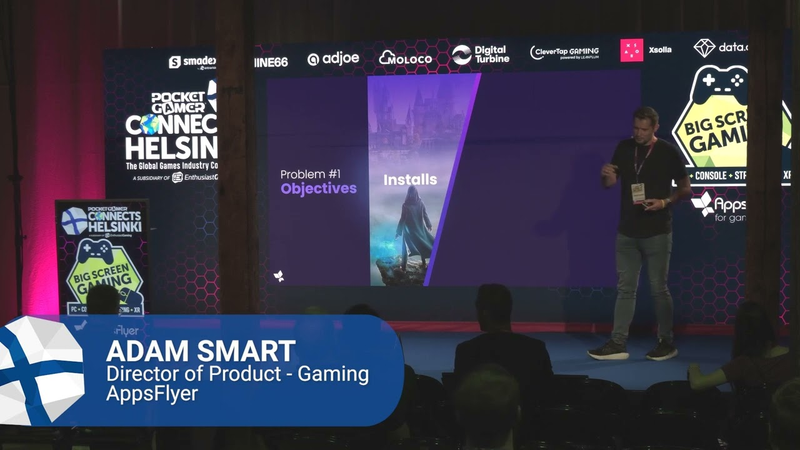
Superstar Session: Performance Marketing on PC & Console - Adam Smart, AppsFlyer
Performance marketing on PC and console is currently undergoing a significant evolution, mirroring the data-driven maturity mobile gaming achieved years ago.
- PC and console gaming are shifting from traditional brand-focused marketing toward data-driven performance models, mirroring the maturity previously established in the mobile sector.
- The industry is currently managing three distinct monetization models—legacy one-time purchases, free-to-play live services, and hybrid models—each requiring specific measurement strategies ranging from simple install tracking to complex ROAS analysis.
- Technological infrastructure is evolving to support PC and console attribution through server-to-server integrations and specialized SDKs, enabling more granular measurement of user acquisition.
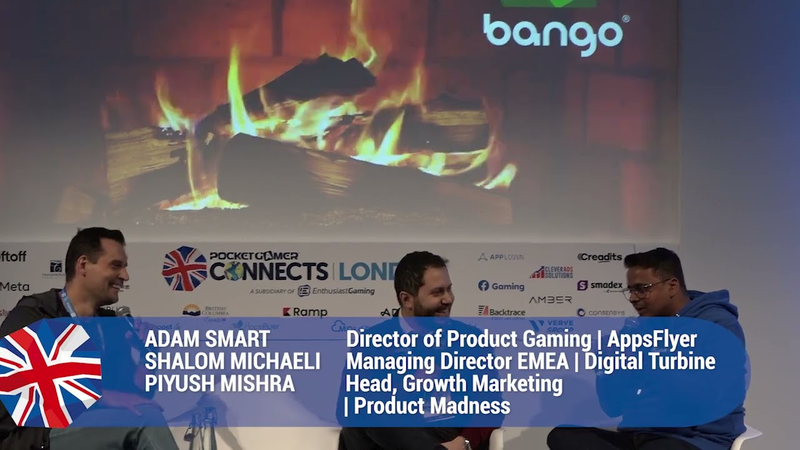
Fireside Chat: In the Sandbox With Adam & Piyush, the Live at PGC One
This discussion, held at Pocket Gamer Connects London 2023, explores the evolving landscape of mobile user acquisition (UA), supply-side mechanics, and the impact of privacy regulations on the gaming industry.
- The supply-side ecosystem—comprising SSPs, ad exchanges, and mediation platforms—functions as a multi-layered auction system where the primary goal is to maximize yield by rendering the highest-paying ad impression for the publisher.
- Publishers should determine their monetization model (IAA vs. IAP) based on game genre and the underlying economy of the title, rather than relying solely on Daily Active User (DAU) volume.
- Privacy-centric changes like iOS 14's ATT framework have forced the industry to shift toward contextual targeting and audience segmentation as alternatives to user-level data for media buying.