VideoThe Game Business
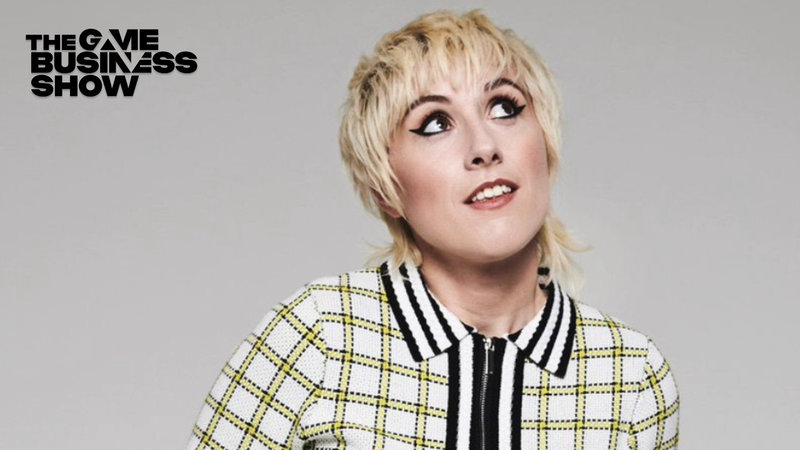
Watch us chat with British comedian and Taskmaster star Maisie Adam
2 Apr 202641 min video
Transcript
Hello and welcome to the game business show with me, Christopher Dring. A few weeks ago I was in Middlesbrough in the UK at an event called New Horizons. I was asked to host a keynote session with someone outside of the games industry. That person was stand-up comedian Maisie Adam. Now Maisie is well known in the UK. She's just been in the TV series Taskmaster. She's an upcoming series of Last One Laughing. They're very popular in the UK those shows. And she's a regular on British panel shows. And I thought it would be interesting to hear about her industry. She's in an exciting industry herself after all. And I wanted to hear what it's like, how she deals with the nervous communities, how she tests out material. And there are obviously big differences between our industry and that industry. But also maybe some interesting parallels going on as well. I also thought frankly this might be a fun interview to do. And now the team at New Horizons has supplied me with a video version of the session. I thought it would be good to sort of share it with you. Maybe the subscribers to the game business might find this insightful. So here it is. I hope you find it interesting.
HELLO MAISIE.
HELLO.
HOW ARE YOU?
WELL doing thanks and all.
Thank you. It's nice to be here. I should just quickly explain my weight limit on the way over there. I did a charity wrestling match last week. Yeah. You thought this was weird. And it ended with a move called the net breaker. And I found out why it's called that. So I've got a bit of a bit of a thing going on there.
All right.
It's just nice to be sat down for once. Yeah. Yeah. How lovely I've been.
Okay. Have you have you showered today?
Yes. Absolutely. Yes. Oh yeah.
Well I'm going to ask I'm going to ask my next question on TV.
It's fine at the moment. This is normal. Oh yeah.
Yeah.
What are the competitive elements?
I didn't realize I was that competitive in it. It's such an ugly try. It's so awful. Um yeah. I I swear a lot in it and I might
have to like black few words out. But uh, yeah, it's really good fun. It's really, really good. But I've been a big fan of the show for a long time, so it's kind of It's that weird thing of suddenly realizing, oh my god, I'm in the actually. That's my house. I know I'm doing it. It's really strange.
Is it hard to be calm, particularly prepared for that?
No, I wouldn't think so. Yeah, you try and prepare like I you know, I've sort of watched the show the previous series and and loved it. But because of the nature of the show you can't prepare. It It is just turning up, opening an envelope and letting just pure human instinct take over. Um, and I sound like that in some not always a flattering light.
It doesn't matter. It's good fun.
It's really, really good fun. I think so much relies on who you end up on the series with and um, so I'm on with with Reece Shearsmith and Meera Syal and Inside No. 9 and Sanjeev Bhaskar and Robert Llewellyn and Anna Maxwell Martin and Steve
Pemberton who are two really comedians. Um, and but even Meera Syal and Anna Maxwell were the only ones I knew, but I'd only kind of gigged with them a couple no more than like three times, so I didn't know them very, very well. So it's kind of been like the whole experience has been like going on one big dinner party with people you don't quite know but you end up having a really good night. It's been really It's been a real laugh.
Yeah, well. What You do a lot of TV work.
I guess. I'll let my agent know.
How important is that to you?
Yeah, I think what I like about it is is the the different the sides it can show. So like I broke through probably my breakthrough in terms of TV was was Mock the Week and I I really loved that show because again I've watched it as a killed for years. And then again, it's when the fight was was quite surreal. But I really liked how I had that space to kind of
be just in a in a panel discussion and a chat. And you get little ribbing going. And I thought that was really good in terms of kind of showing my personality across to to to people who otherwise might not have have heard of me. And and then there was that um terrifying round at the end of scenes we'd like to see where you just I don't know if you remember, but you would all walk up to the microphone at the same time and it was basically a game of chicken of who would stop walking. Then if you went and did a joke and it died on his ass, you just felt horrific. Um but it was that was really good for for working up my um comedy chops, basically. You had to kind of and and bring it bring your A game. It was it's I remember the first one it felt really ruthless, but uh you get into like this pattern of it and it's it's like it's a stand-up gig spread out into a half an hour as a show. So, I love I loved Womb Like That. And then Taskmaster is just like a long big escape room, um which which is just really fun to play. Um
and then some of the other ones like League of Their Own was a huge one for me to to to land being a a huge sports fan. And I remember being so scared to do it because I thought I'm going to be around all these people that achieved so much in sport and I I got a B in GCSE PE. Like I was so I got real like imposter syndrome going into it. And then you realize like they're lovely, everybody on League of Their Own. Well, your job as the comedian there is to bring comedian me and bring a bit of my the everyday person's perspective to it. And also to show how hard some of the sports are because I I'm there to demonstrate how bad the average Joe is at them. Um and they're lovely, but but sports people are often uh the in the room. They can They can sort of stop telling an anecdote, but it doesn't really have a punchline. It just sort of ends with a very story about that game they played in 1999.
And then you have to It's your job there to come in with something funny and witty and chill. It's been really fun. So, yeah, I like the TV opportunities can can show the all the different sides of And then the new series of Taskmaster, which was I think the hardest one I've done because it's so counter. As I say, every other show you go into, it lends itself to you enjoying it and giving as much. Like the The brilliant thing really early on with panel shows is if you give a lot and you laugh at other people's jokes and you're you're generous with it, you get that back. And Taskmaster strips all of that away. It's essentially just being in a room with 10 of the comics deliberately trying to not find each other funny. And they say it's filmed for six hours. It's filmed for 12. It's Yeah, it was like a long anxiety dream. But uh yeah, very very jarring. Also, it was filmed with some of the funniest people I've ever I mean, a lot of them I haven't met. A
lot of them were heroes I've grown up watching. So, there was again a bit of a sort of starstruck element to it and a bit of the like, I'm being really really funny. And now I have to contractually not find you funny. Yeah, really really excited that to come out, I think. I'm a little bit worried it's just going to make me look at my job. But we'll find out.
Do you do much fan interaction outside of the TV and tournaments?
Do you engage with them?
Yeah, I I have a podcast that's about women's football and um one of the things that I love the most is called Binky Energy and the sort of the Sorry, I forget that the name is Binky and the We've had done years now. It's too late to change. Well, ironically, it is quite a family-friendly podcast. And we get the premise of it is that it's me and another comedian, Suzy Ruffell, and she's a total novice to football, whereas I'm a die-hard fan. And Suzy's um
Yeah, I'm devastated to be here today. Uh, Suzy's certainly new to it, and the whole concept is me making it a fan app. Like, we need to get her on board, and our listenership is basically either 50/50, the die-hard fans like ourselves, or people that have kind of got into women's football after the the girls um won the the Euros in 2022. And it's a real range. We get um We get kids doing voice notes from their first ever game that they go to, a match report. We get um women who can remember the ban, uh and it was only lifted in the '70s. So, it's I love that because you sometimes when you're podcasting, especially, I'm sure you find this, you you forget that And I heard a lot of like radio uh presenters have spoken about this, that the most it's most successful when you try and picture one person, and you talk to that fan. Like, in my head when we podcast, I
picture a fan that we're talking to. And actually, you forget that they are they're in abundance, and they range from a 5-year-old listening to it on the smart speaker while they're getting buttered on their toast having their breakfast at school, right up to someone in their '60s, '70s, um who has avidly messaged um asked for help on how to email in from their from their phone before, um which is kind of amazing that they're somehow listening to our podcast. But that's what I love about it, is is the fan interaction.
When you decided you wanted to do something bigger
Yeah, yeah.
and evolve what you do, you've got this fan base. How do you manage that?
They expect us something.
This is it. And I think this is why we were excited for this to happen is there's actually we were both quite nervous about this because we were like why why what what how what are the what are the similarities between comedy and and gaming? But I think that's that's it we've hit on the head there is games are are very reliant on staying true to the original concept that the fans loved and enjoyed
what made it so appealing to them. But also how do you how do you dwell it? How do you bring in new people to that world? And it's basically something that I'm felt acutely aware of with comedy is that you get those people for example I I still get people coming to see me on tour who know me from Not the Week and that hasn't been on air now for like two or three years. But then there'll be in the new people who only know me from a podcast. And you kind of have to somehow write a show and create a world and lean into that character that I am on stage. But it's just a heightened version of me. I'm not like some sort of character. But how do you how do you bring in how do you present a a a product in my case a show and a to an extent a world that pleases both those those both groups. And I think it's interesting with with gaming because that's it's that times 10 because it's a whole world like at least when you come and see me on tour everybody's like we're
all seeing the same thing it's a woman on stage in a friend's house. And and also if you if you like it or don't like it you got what you wanted from the ticket. But with with with gaming it's um I think so much of it relies on on and I may be interested in your thoughts on this but reputation and and and how could it get passed through with a gaming community of oh if you like that you'll love this. What I liked about it was that and you get it in forums and you get like nobody's really and well I've got this is a very terrible way to find out. And to my knowledge there's not forums of people discussing whether or not my next show is going to be as good as my last one. I have it. And if there is, please don't tell me. But yeah.
You you you you know stand up comedy is completely different now. Comedy is a form of entertainment. You didn't have the same challenges as games and studios. You're not getting attention. Getting the
Yes.
Keeping your fans on board, keeping them engaged, keeping them wanting the next show, building and building and
building. You know, one hundred percent it is a new so conversation. You actually just different form of entertainment.
It's a different form of entertainment. Yeah.
So you need to be into
Yeah, and it's sometimes tricky to to sometimes you're very conscious of not changing it too much that you sort of completely reinvent yourself and neglect everything that made you popular make or make make certain people click with what it was that you were offering. I get very very easily worried about what I'm doing by watching brilliant other comics but comics that do a completely different style to me. You know, I can sometimes if I'm at like the Edinburgh Fringe or I'll go and see something in London and I thought that's that is absolutely brilliant. I I in fact I even had it in Taskmaster like Rishi Sunak is such a brilliant writer and I adored his work especially for me Inside No. 9 I think is his best work. And I I adore it and and he would sometimes in between filming in that in
in the house cuz we were all on a team together. He'd be talking about like and you can just just just from how he speaks you can hear how his brain works. And I would go but I would never I I would never think like that when I write. But then and and you feel like oh god I'm nowhere near what I could hope to be. But that's that's also I'm never My style of comedy is I like crowd work or like working off the back with people. I'm very anecdotal. I like making the really ordinary stuff funny, the mundanity of life. Whereas Reese creates whole like fantasy worlds sometimes and and it's quite macabre as well. Like he's he's not afraid to go into dark places and suddenly bring in a bit of humor. And sometimes you just have to block that out and go like we're going for two completely different things. Maybe it's the same in gaming. You can Maybe maybe the makers of a certain game look at
something like I don't know, Elden Ring and go oh my god, we've got to do that. And you're not You're not trying to do fantasy. You're trying to do sport. It's completely different worlds and you're going for a completely different audiences. There's enough to go around.
Yeah.
I'm trying to write my comedy inside another line and he's trying to do a 10-minute routine about a hen party. Yeah. I'm up for it.
How much time do you spend sort of writing you do versus reading the work that you do?
This is a conversation I have so much with other comedians because again, everybody is so different. And like even with Suzy, you know we do the podcast with like we've been on a train before and she's been going through her notebook finding a new page that we can write some ideas for the pub. And I can see that she'll write in full-on bullet form. Like it's almost like a diary entry. She writes her whole jokes out. And basically kind of learns it and then she has this She also has a
process where she puts post-it post-its on a wall and learns by going around her room in her in her house. And she pictures the post-it notes. Which to me I think I mean this will sound ridiculous but I think that's so professional. I think that's so I do. I mean I don't know but that's so clever. I write trains down and hope that I'll remember what the joke is about. It's just and I I quite I quite like the looser element. I quite like that I'll go and start gigging tonight with that bit about trains. I'll hopefully remember the large big punchline, but there might be something that suddenly goes into my brain on that in that moment that will stay in it. I suppose it's like like baking a cake. I sort of just work work out measurements. I'll look at maybe that, maybe that. Susie and Barry anything thought the scales out. Anything thought. I'm very And often it comes like in the middle of the night I think oh that's so funny and I'll
write it down in like my notes app on my phone and I'll wake up the next morning and it will just say something like what's the deal with wardrobe? It's so It's so bad and I've no idea what it was I was thinking about. This it felt really funny at 2:00 a.m. But I I do wish I was a bit more thorough and wrote things more long form, but it's often just voice notes onto my notes app. Uh I will listen back to them and see if I can kind of get back into that same head space and go with it.
And how do you test this stuff? Do you do you do stuff at home and then you
Yeah, I No, you you just got to you just got to wing it. Like new material nights and working progress shows. No matter how many times you bill it as a work in progress show, people will still come expecting the finished product. I'll be like what's she up to there with a notebook? That's a bit unprofessional. You're like did you pay 5 pounds? Um Uh
but I I really like the working progress shows. I like the stakes of it going wrong. I know that sounds quite sadistic. But I quite like a lot really valuing a having a loose skeleton of what I think. Um well well and and that's it as well. Sometimes I'm like, I'll write something, even long form, and I'll think, that's beautiful, killer. That's That's brilliant. That's going to raise the roof with a quick in Leicester. And I'll go up in Leicester, and it'll get a room of confused faces. Um, and then I'll say something off the back, and it'll it'll it'll get a nice a nice big laugh. I think, that's the That's That's what it's all is, just being honest in the room. Um, but I have quite a weird I write everything out in black pen, and then I go over it with a red pen. I basically sort of like Strictly Come Dancing, I score it out of 10 after each joke. I just put a big number next to each one, and then get rid of anything that's less than a seven. Um, And then
This is what I keep when I feel it out.
We do a kind of similar thing with games with early access.
Do you?
And and people got our game that's not quite finished yet. And they get feedback from people, but gamers do expect basically a finished game.
Yeah. It's so frustrating. You're like, how do you think you get there? And I thought you were like, so how do you finish it off? And you've gone into really new stuff sometimes. And it's like throwing spaghetti at a wall.
Yeah, when you go to when you go to one of those sort of people's shows, what should I think you had a breakdown on stage?
Yeah, that's how that show went. Sure, I think I had a breakdown every night. It It really It really did. Um, I really like the working progress shows. I like I like going to see them as well, cuz you can see where You can see where someone's going with it. Maybe it's the same in early access games. You can see You can see the vision.
But yeah, it's the same like I guess, isn't it? Challenge of actually getting people to um, getting their reaction.
Yeah. And the people who have access to to early access games, are they Are they concentrated groups?
Well, they can be. They think about the
Yeah. Just cuz the kind of people that come to working progress shows and new material nights tend to be die-hard comedy fans. Which you'd think would be really great because you don't go there, but it's a bunch of progress. They'll get this new They'll get this This is experiments. And actually, it's the opposite. They absolutely never bring to comedy. So, they want to come and have the best night of their life. And they'll They will compare you to when they saw Victoria Wood at the Palladium in like in 1992. They're like, "Well, I'm in a room with a poet and it's a bookie's joint. Like, what have you got?" Um but it's
I think that quite fitted the audience cuz potentially quite good if you're trying to test them.
Yeah. I don't know. I don't know. That's what I mean though. That's what I'm interested about audience responses. Is it Is it in specific, you know, fringe groups that are that are doing it or like is it open the doors to the
public? Sometimes I think I want to know what that's going to stream freeze of this thing more than somebody who lives and breathes every single last syllable of this.
I mean, what's the beginning you did like 5 years ago which was about polarization and political polarization?
Do you know, I was thinking about that the other day. It was like a BBC show. Yeah, I was thinking about that the other day and I I think my opinions have really changed on that.
You really?
Yeah. I did a show about 5 years ago that was about kind of like Uh I mean, I was newer in comedy and I think the political landscape at the time of doing it it would have obviously been pre-a pandemic.
And it would have been
post-Brexit but but I don't think I don't think personally the uh divide in the country was anywhere near like what it is right now. I mean, even just then from my dressing room, you can see the flags up outside. That like that wasn't That kind of discourse
wasn't really happening when I did that. And I I'm not a massively political comedian in terms of I'm not an extreme or you know I'm not I'm not really I'm not satirist suppose is the word. But I did that video and it was basically a video about the polarization of politics and how how how quick we are to align ourselves at either end of the spectrum and actually what that results in is is a loss of meaningful conversation. We call it debate but it's it's not a debate it's it's screaming at each other from the other side. But something that's true but I was thinking I haven't watched it but I was thinking about it. I think as I would go to bed the other night which is when I think about what I wrote and if it was good. And I I would imagine that I would watch that back now and think it was a bit of a wishy-washy opinion. Um because it's but that's because I'm now
older arguably wiser arguably more politically certainly more politically engaged and that the landscape I think has got more divisive where actually to kind of center yourself especially as a white privileged British person uh I think to sort of make a piece that's essentially going hey why can't we all just get along? That's what I worry it if it looked like if I watched it now. And to be honest I'm quite nervous that's out there. Um but that's sort of I think like what you were saying with you you try and you fail and you don't get stuff right you don't get stuff wrong. I think I'd probably still agree with the core message of that. I think that um conversation needs to happen. But I worry I don't think I'm the person to pose questions or indeed and answers on how that's done. Yeah. Are we about to finish? But it's in it's it's interesting sure and I think
I think especially with comedy now we're trying to get an audience to come to shows. Anything you say now, especially when online, it can completely void somebody wanting to come to Mock The Week. Even if I don't like the way Mock The Week is for you, which is quite, you know, it's the BBC um you know, which is whether you're a pink dot. I don't know what your opinions are about the BBC, but it is ultimately I've just come back from a month in America and that is you go through the channels there and you can tell immediately after like two two minutes where they where they lie on the spectrum. The BBC, like or loathe it, is the closest thing they have to impartiality like on on on media. And Mock The Week News for You is a satirical look at the week's news. And I always think as a comedian my job is to to We we we always said this about Mock The Week as well. It wasn't about the fact that the Prime Minister was a Tory and
that I might vote you know, I I might be left leaning. It's about It's basically jesters making fun of those in power. That's That's your job as a comedian is to go what a what a idiot. And that has happened since Kier Starmer's come in. It's our job to to point up at people and go that's that's ridiculous. It's It's to point at the people in power and go no, you're you're making an idiot of yourself, mate. Whoever that is, whatever it is they said. And that I do think that's got more and more difficult, though. Because it used to be just certain policies that were being kind of spoken about and it seems to me that it's going more in a dangerous direction of like it's people's rights that are getting exploited, like it's people's my behaviors and their sanctity while Mock The Week was written. Uh and that is really hard to make fun of. And sometimes it's not right to make fun of it. Like it just is. Um
Yeah.
Well, we call it in the industry a comedy black hole.
Yeah, and also you get and you might like them or follow them or something takes it personally and sort of you won't be in
Oh, yeah. Yeah, sorry. That's where I was going with it. It's It's like you just say something and somebody will be Oh, my Instagram being like you nasty liberal, you know, vegan. And you're like it's fine. I know. I'll pull pork for you or But stay come to my show. That'd actually be fine. Like I'm fine with um those people not coming to my show or anyway fish guts. But it'll be the other way as well, you know. Jack Whitehall I think is a fantastic comedian who was
Is he my favorite?
Does he know me? He's He's great. He's a really If you don't know Jack, he's fantastic, but he's um an out and out conservative. But he will He will voice his opinions as he has the right to do so and very funny about it cuz he's a great comedian. Also, he might like my latest video. And they last made me Reagan and he's all down with it. And
I'll be honest. He says in the moment he but he's obviously He's not Jim Davidson.
No. Oh, no. No. I'd actually forgotten about Jim Davidson. Oh, why did he fall out with him? Oh. I did get him learning in Blackpool not too long ago and I looked like my skater life in Bristol but on holiday. It's okay. I was so excited and my husband it's in Portsmouth if any of you've ever been. And he thought he comes to Blackpool. And then so he came with me and we went to the North Pier. And the two acts they had on that night were Boy George and Count Arthur Strong and Count Arthur Strong. So different comedians. It's another one that
Yeah. Yeah. Yeah.
So she's got a support act this year and
Oh, wow.
Uh yeah.
Well, I was just going to ask you where you're from there.
I think she's uh um
Um obviously comedy is about telling stories.
Yeah.
Games is can be about telling stories.
Yeah.
Um and often can be in shared environments
No, I wouldn't.
with each other and that kind of thing. And as a sort of creative as an artist, I guess, um what do you see as the sort of the theme component in getting people to connect what you're telling stories and how do you
I think and and from my limited game play as well, like I'm saying it's it's in both, but it's connection with the character, connect connection with the the person or people at the center of
Uh-huh.
that world or that story. If you can feel some sort of uh either you either you feel it as affinity or you make them believe you feel the aspiration to be like them. And I I think certainly with my comedy it's the affinity. I don't I don't I'm not like doing Ted Talks of hoping to inspire people like that.
They lean down higher. Um
but uh the the the connection I think is a is a really important thing to establish. It's why I start all my shows with crowd
play. I like to see who you've got in and chat to them and feel uh find a common denominator, find a a common ground or a common thread or a common opinion on how we see things. And I um but this is the these are big things, but if I can chat into people and it's how they met, you know, telling how you guys met. Finding a a a common thing about it amongst the rest of the room about the dread you have in your dating apps or um
Uh
the the fear you have of people going on a first date or or um the regret you have after getting too too drunk and messing up with somebody fancy. Whatever those theme stories how can we spread that amongst everybody else? And so it's very specific to person, but it's making it relatable, I guess. Whereas there'll be other comedians who go for more like high status, right? I guess
Jimmy Carr would be one of those where I mean he's not relatable, and Jimmy Carr shows being up.
Yeah. We're alike.
And I maybe that's the same in building in gaming and you need the or playing some role of someone that you would want to to to be like. Again, I'm I'm sort of going off on my own again, but I never I guess in like Assassin's Creed, but I don't think anybody's playing that game going home and laying But then always always always always think that, you know, you'll you'll play your absolute hero. Or it's kind of the more this could happen to you. You're put in the world as the you're playing your character and you like to believe that this could also happen to you. You could be exploring or you could be set these challenges. How are you going to deal with them in that moment? And so I think it's it's one of those two. It's either connecting with them and knowing into it or it's connecting with them in a way
that you're either on a I can see myself as this person or I want to be that person.
Yeah.
Yeah.
I know you don't play a lot of games, but what do you feel about sort of games as a medium to tell really funny
What do we think of games to tell them?
Me as a medium to tell sort of sort of tell funny stories.
It's it's fascinating because I've been like what we were talking about with that that political polarization video. Things change so quickly and and and sense of humor therefore and what people find funny what I'm going to write will change, but also what you're going to find funny is going to change really really quickly. Um and I think that's arguably an even bigger challenge for a game because you are not writing a set for an hour. You're writing of in in creating a whole world, people with personalities. So, if you take GTA for example, they've got this funny little twist that people inside as well, stealing a car. Like but that has that is really hard to come
up with in that world. Way harder than me telling a story from my perspective about something that happened to me to a bunch of people. So, I think it's so much harder to create comedy with I suppose what I'm saying in gaming because what works this week might not work in 2 weeks' time. And I have the luxury of being able to change that as I'm on tour, as I go out each time. Once that game is out there, as you said, it's it's open to the world both to criticism and to everything else, really. Uh I do think gaming and comedy are in the laughing in this sort of it's not even a new phenomenon, but that's the whole idea now that there's a there's a huge market and community that love watching somebody who is funny game. That's massive. I think that's so important for that connection as well.
Um I did Soccer Aid this year and I only had to meet me like so intrigued by chatting to Angry Ginge, who's whole I mean, I hated chatting to a Man United fan. But um it was fascinating cuz he has made an entire living, but but also an entire community that he's he's engaged with, um out of people who just love watching him gaming. It's it's amazing, but it's I I was intrigued to ask him, do you think they they love him for the gaming content or his personality. I don't I'm convinced it's 60/40. I think it's predominantly him and how he responds to the game. It's that person, whether your life language into my It feels something, you know, quite introverted and you're nothing like him. Is he voicing them things at you? I don't know. I think I think there's something really, really interesting about that overlapping of a comedian person, somebody who is funny
naturally, but he's a real person with a real sense of humor about playing a essentially a fantasy world, a fantasy game.
In that just talk.
Yes. Yeah. Yeah. Yeah. He's watching somebody uh yeah, enter a enter a world and you go, "That's how he deals with it." How would I deal with it? Oh, yeah. I guess you're right. But I find it fascinating that that's an um new direction of the gaming.
I must admit that he's quite sort of quite genuine, right?
Yeah. What's the hardest part
of your job?
Uh social media, I think. Social media, but I think that's the case for most industries now. I As I've said, I have no problem with jokes not landing in the early days. That's part of it. It's what I genuinely didn't know about it. Um and I can take a room full of people not laughing at a joke, and I can make it funny as about how awkward that was. I feel really confident and comfortable in that arena.
And then uh I will be got on the way home from that gig, and somebody will put a comment under like a post of me or a comment on appearance I did on Being an Adult, just about like a physical appearance thing. And you're like, "Oh, no." Yeah, that doesn't Yeah, it's fine. It's fine. I'll make a little funny joke about it. But it does build up, and it's really it's really quite exposing social media. Um and the the quickness with which people can come up with a offend people and that's not at all asked for. Well, if you don't find me funny
Absolutely. Absolutely fine. Like the same way you might not like certain things. Sure, but it's the social media and being put like when I choose to go out on stage, I choose to go out on stage to see how people react to my jokes, but social media means it's open season. And it's oh, how do you react to literally anything about me. And and please tell me
anything and everything and any detail or little bits you don't like about me. That's that's the bit that I struggle with. And I really wish I was that person that could go, "Oh, I don't read the comments." Um and every time I read the comments again, "Don't read the comments." And then I'll see you later. Guess what I'm doing? I'm reading the comments. Um but it's it's really hard not to. It's really hard not to because stand-up in its own nature is um standing on a stage asking for validation. It's an incredibly embarrassing to see. It's a really strange job. It's It's It's quite an insecure profession. It's It's standing there going, "Please like me. Please like me." But I can't stress this enough, but I mean by that is please like the jokes that I've written. Feel free to enjoy. Please do not tell me that you think my teeth are weird. It's just something very, very different. Um yeah.
Yeah, I Whenever I went through human people on PlayStation Live
Yeah. It's really hard. It's really hard. And
like I remember I used to do again, me, massive football fan. I used to do a uh another podcast with a journalist called Transfer Gossip Daily in the transfer window. It's just about who was maybe going to which team. And um when the BBC would put it out on Twitter as it was then uh they'd tag us both and the journalist, Luke Edwards, he's a journalist for the Telegraph. Really nice guy, knows his stuff. And you know, feeling quite 30 second tweet about where maybe Moises Caicedo was going. And the the reaction to the tweets, I don't know how to turn them off. And you know what it meant that it would always at Luke and they hated Luke because they knew that he was um he'd maybe write a scathing article about their team a week before. But they were going in about like his house like they they like because it was on Zoom in the pandemic. They were going to work out where he lived and be
posting that sort of stuff and they were just like saying really shitty things about they'd be like maybe his wedding picture in in the background of his Zoom background and like they managed to zoom in on that and be like a thing and put stuff about his partner. But it's just like it's really really exposing being online sometimes and I I buy I struggle with that. And the way comedy's going now as well is the clips, right? It's all about the clip after the clip after And again, I think I think that's why I I and this the the online side is is really scary. I have no problem going out to a comedy club and the tech guy telling me that there's six stag do's there and there's a piss break on the front row. There's a woman who's had nine bottles of Prosecco. I'm fine. I'm fine with that. Heckle, I will deal with it. I'm absolutely grounded heckled people. I'm so glad you didn't ask what's the worst heckle you've ever had. Every interview asks that. It's like You have to have been there like three and a half years and also it wasn't that funny at home. Pin them down immediately. Definitely
not the But I feel really comfortable in that arena, in the live arena. People are gripped out and like the amount of people that just forget their kicks then posting stuff like really enough like oh tell me when the comedy starts. It's not really stuff. And you're like off and it really DOESN'T IT REALLY HURT. LIKE, IT annoys me more than a heckle in a comedy club. I guess because I can't see their face with someone with no profile picture. Or it's a woman with big eyes. Don't have friends. Pretty pretty weird.
I've been I was I'm running out of time, but I do you want to answer bottom of the question?
Yeah, sorry. I'm in a rush.
But what is that game? What's the What's the name of your job? What is fun?
The live stuff. I just love that. I love being in a room and everything being different night after night after night after night. I'm really really like that. And um the like the last I was saying um the last
time I was here in Middlesbrough I was just at the town hall and um I had to deal with so much stuff cuz they're quite a rowdy group. And then like the next night I was in Woking and the average age was about 103. Cuz none of the jokes I'd made the night before in Middlesbrough where there was a couple of stand-ins. Like, I've got to switch it up for our next one. And that's that's what I like is that challenge of looking out and going, "Right, this is going to be a different show than last night. And how can I how can I riff off this audience? I have a lot more standbys." That's what I like is is is adapting to them. It's never the same group of people. Like, statistically that is never ever going to happen. The exact same group of people. Unless I do the New Horizons Game Republic thing next year. It's not going to be going to be the same group of people.
Yeah.
I like that.
And Paul have the major
Yeah, it.
That's it for today's episode of The Game Business Show. I hope you've found that fun. If you did enjoy it and would like to see me interview more folks from
outside of games, do let me know. We will be back, of course, in the days to come with more news, analysis, insight, and interviews into the video game industry. Until then, thank you for watching and listening.
Auto-generated captions from YouTube — names and numbers may be misheard.


















Comments