
GameMakers
F2P product management, game design, and monetization strategy by Joseph Kim.
Documents
Scaling a Games Studio: How to Win?
Early-stage game studios face significant risks when founders become overly attached to initial concepts, often leading to excessive capital expenditure on unproven ideas.
- Mitigate early-stage financial risk by prioritizing rapid prototyping and market validation through ad testing before committing to full-scale development.
- Scale by adopting a decentralized, horizontal organizational structure that treats individual teams as independent startups to preserve speed and agility.
- Embed core values into hiring and performance review processes from the outset to ensure cultural alignment, as culture is defined by the trade-offs made during development.
Love Bros: How Companies Should Stop Wasting Time!
Corporate inefficiency stems primarily from excessive meeting culture and a failure to protect time for deep, focused work.
- Organizations must protect deep work by decoupling the schedules of makers and managers to prevent productivity-killing context switching.
- Replace redundant meetings with asynchronous communication tools, such as status notes and video updates, to reduce operational bloat.
- Mandatory meetings must be strictly limited to 30 minutes, featuring clear agendas, designated owners, and the smallest possible participant list.
Trip Hawkins | The New High Score (Past and Future of Video Games)
The video features industry pioneer Trip Hawkins, founder of Electronic Arts, 3DO, and Digital Chocolate, discussing the evolution of the gaming industry and his career philosophy.
- Strategic reverse-engineering of the Sega Genesis allowed Electronic Arts to secure favorable licensing terms, driving the company's valuation from $60 million to $2 billion in two years.
- The gaming industry is evolving into a series of vertical social media platforms, with cloud-based streaming and esports identified as the primary drivers of future innovation.
- Cloud gaming technology is expected to eliminate the necessity for specialized hardware, a shift that will likely trigger significant industry consolidation through large-scale acquisitions.
Art Director for Video Games | Ron Ashtiani (22 Years of Art)
Art direction serves as the critical bridge between creative vision and commercial viability within the video game industry.
- Art direction acts as the primary bridge between creative vision and commercial viability, requiring a shift from hands-on execution to high-level budgetary and management oversight as studio scale increases.
- Visual identity must be established using 'strange attractors,' a technique that combines familiar themes with novel elements to ensure the product stands out in competitive markets.
- Maintaining visual consistency across large-scale projects requires 'living documentation,' such as style pitches and legacy guides, to align internal teams and external partners.

Content and Events Planning for Live Ops Panel | Zynga, Murka, Storm8, Funzio
Live operations strategy centers on the integration of long-term content roadmaps with tactical, data-driven event cycles designed to stabilize game economies and maximize player engagement.
- Live operations success requires separating development teams, who build scalable foundational systems, from dedicated operations teams that manage the daily cadence of content releases.
- Teams must utilize quantitative tools like Sankey charts to optimize user interface flows and balance content consumption rates against currency inflation or resource bottlenecks.
- To prevent revenue cannibalization, developers must define feature-specific KPIs for every event to ensure they drive incremental growth rather than simply shifting existing player spending.
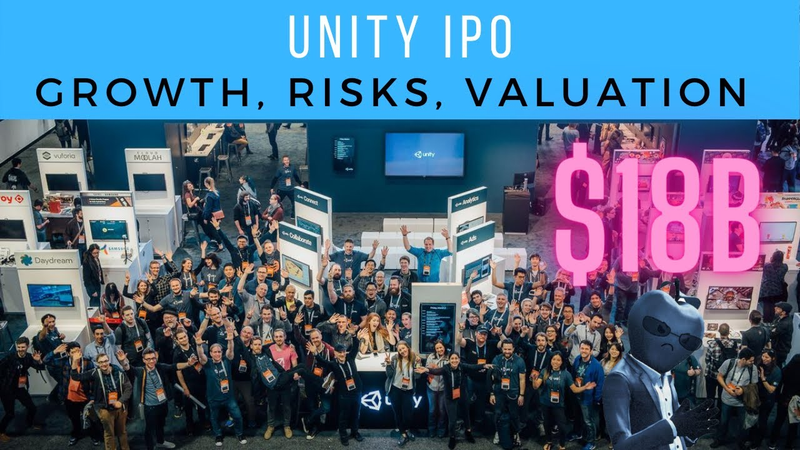
Unity Software IPO Analysis: Growth, Risks, & Stock Valuation
Unity occupies a central position in the gaming ecosystem, functioning as a dual-revenue engine that combines a foundational software development platform with a robust suite of monetization and analytics tools.
- Unity operates a dual-revenue model combining a software development platform with monetization tools, maintaining high gross margins of 80 percent despite current operating losses.
- The company faces significant concentration risk in its advertising segment due to its heavy reliance on mobile platform gatekeepers like Apple and Google and the deprecation of mobile identifiers.
- Unity’s valuation trades at a premium compared to established software peers, reflecting venture capital-style multiples that require near-perfect execution to justify.

Liveops: Mapping Player Journeys (Andre Cohen Head of Data Science Tilting Point)
Player journeys function as dynamic, evolving frameworks essential for optimizing game performance, monetization, and retention.
- Linear 'golden path' funnels are often inaccurate because they fail to account for the diverse, non-linear ways players naturally engage with games.
- Data scientists should replace static funnels with state-based visualizations that map players across multiple dimensions, such as retention duration and level progression.
- K-means clustering should be used to identify distinct, multi-dimensional player segments, enabling personalized LiveOps and targeted A/B testing.
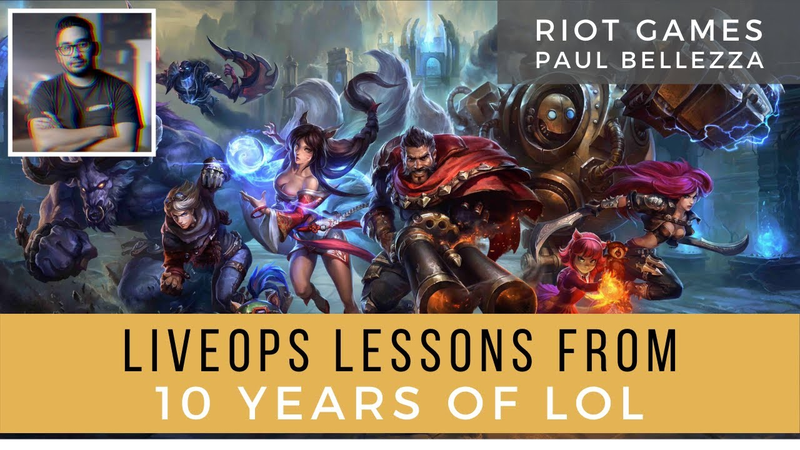
League of Legends | Product Lessons from 10 Years of Operations (Paul Bellezza Riot Games)
Operating a global title like League of Legends requires a fundamental shift away from Western-centric development toward a model that respects diverse international cultural standards.
- Long-term product sustainability requires the discipline to prioritize high-impact initiatives while strategically declining lower-value requests to protect the development roadmap.
- Developers must balance community feedback with core gameplay integrity, as evidenced by the failure of the Dynamic Queue system, which eroded competitive foundations by prioritizing convenience over skill.
- Global scaling requires moving away from Western-centric development in favor of rigorous research into regional aesthetics, heroism, and color palettes to ensure content maintains perceived value across diverse markets.
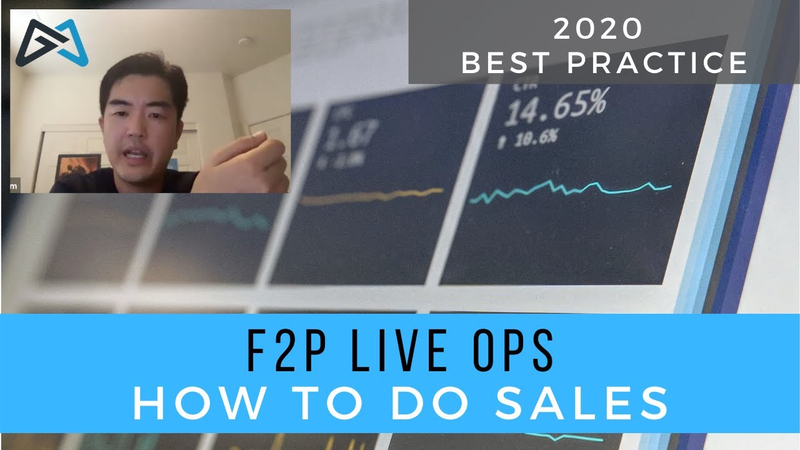
LiveOps - F2P Sales Best Practices 2020
Maximizing player lifetime value in free-to-play gaming requires a transition from static, calendar-based promotional strategies to a dynamic, behavioral-driven framework known as Targeting, Timing, and Offers.
- Transitioning from static, calendar-based promotions to behavioral-driven targeting can increase player lifetime value by 40% to over 100%.
- Utilize RFM segmentation (Recency, Frequency, and Monetary value) combined with machine learning to identify optimal engagement moments, such as progression difficulty or churn risk.
- Avoid generic, deep currency discounts that train players to wait for sales, as these erode long-term revenue and devalue the game economy.

Epic Games Lawsuit vs. Apple Court Hearing | Lawyers Explain! (Fortnite Mobile Killed)
The legal challenge initiated by Epic Games against Apple and Google represents a fundamental assault on the prevailing 30% commission structure and restrictive payment policies governing mobile app ecosystems.
- The Epic Games litigation challenges the industry-standard 30% commission structure and restrictive payment policies enforced by Apple and Google on mobile app ecosystems.
- Epic Games aims to dismantle the closed-loop nature of mobile platforms by legally classifying app stores as essential facilities, though this remains a high-burden antitrust argument.
- A judicial intervention prevented Apple from terminating Epic’s developer accounts and restricting access to the Unreal Engine, citing disproportionate harm to third-party developers.

Data Driven Decision Making | Murka's Growth Through Data at the Organization and Product Level
Murka achieves sustained revenue growth and market outperformance by embedding a comprehensive, data-driven framework across its organizational, product, and portfolio operations.
- Murka utilizes a three-tiered player segmentation model—categorizing by demographics, activity patterns, and a 360-degree holistic view—to dynamically adjust live-ops, rewards, and challenges.
- The organization maintains a structural separation between business intelligence infrastructure and business-focused analysis to ensure teams can adapt to player behavior without being overwhelmed by data.
- Data analysts are embedded directly into product and monetization teams to facilitate the use of machine learning for predictive modeling, including churn forecasting and conversion optimization.

Anime IP in Games | Crunchyroll's Plans for Gaming
The anime-based gaming market presents a significant opportunity for expansion in Western territories, though it faces distinct challenges regarding audience expectations and localization strategies.
- Western expansion for anime-based games requires moving beyond brand recognition to provide deep game mechanics, robust end-game content, and a high cadence of live operations.
- Japanese publishers frequently struggle in Western markets by treating these regions as an afterthought rather than tailoring localization and strategic focus to local expectations.
- Role-playing games (RPGs) are the most effective genre for the Western anime audience, as they better leverage narrative depth and character-driven experiences compared to casual genres.