1 free read left. Create a free account for unlimited reading + AI research.
Create free account
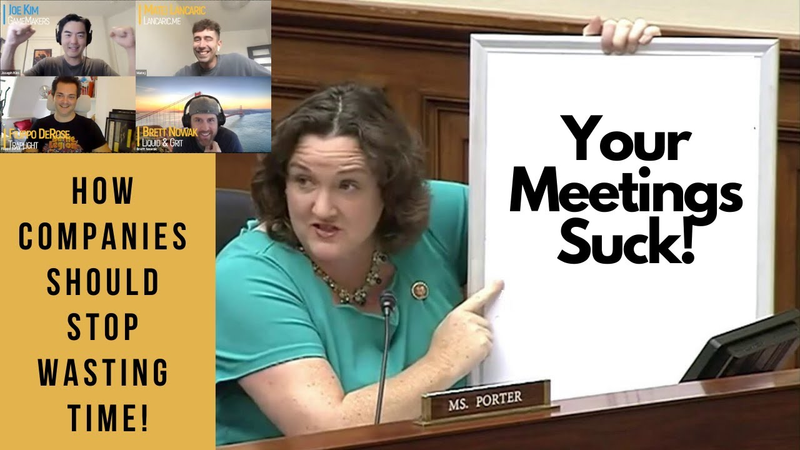
Love Bros: How Companies Should Stop Wasting Time!
Key insights
7 takeaways- 01Organizations must protect deep work by decoupling the schedules of makers and managers to prevent productivity-killing context switching.
- 02Replace redundant meetings with asynchronous communication tools, such as status notes and video updates, to reduce operational bloat.
- 03Mandatory meetings must be strictly limited to 30 minutes, featuring clear agendas, designated owners, and the smallest possible participant list.
- 04Product managers should replace constant check-ins with comprehensive documentation and specifications that allow development teams to execute tasks independently.
- 05Shift from consensus-based, political decision-making to a model that empowers individuals to test contrarian ideas and experiment with new operational structures.
- 06Automate repetitive marketing tasks and create permanent training resources to eliminate the need for manual oversight and redundant onboarding sessions.
- 07Treat internal operations as a product development cycle rather than adhering to rigid frameworks like OKRs, which often incentivize static metrics over strategic agility.
Ask AI about this video
Transcript
hello everybody and welcome today we have a little bit of a different content focus today we're actually going to be talking about how to stop wasting time in other words what are some of the practices processes that companies that people just follow and just don't make any sense that you're just kind of turning your wheels but not really getting a lot of effectiveness out of and with us today to talk about this we have this group of three gentlemen here who i call the love brothers and just to give you a little bit of context on that so we originally had a talk between mate and falipo and this was supposed to be the great debate where we debate this issue about performance marketing uh unfortunately it turned into a love fest but actually the content wound up to be really good so
you know i got a lot of great messages about that but we had the love brothers and then the three of us are on a kind of one of these secret private slack groups and you know i'm reading these messages and i'm just sorry guys i'm trying not to throw up when you know it's like mate's like you complete my sentences yeah you complete me but anyway so getting to here let me just introduce you guys really quick we've got brett novak who is ceo of liquid and grit the industry's best uh marketing research company with respect to video games research we have mate lonzerik who was actually in terms of your just to just to give you your product shops and and let people know about brett's uh product experience use also had a career on the product side working in various companies but including as lead product manager at zynga on zinga poker mate you've been at a bunch of companies leading user acquisition and growth companies like pixel federation boom bits uh super scale
you've scaled a ton of companies to billions of users and now you're kind of uh you're on your own doing your own consulting firm very currently just to jump in uh yeah with this love fest as well i currently work very closely with philly poetry as well love brothers are reunited nice nice nice and filippo is currently chief growth officer at trap light trap light is you know one of these hot startups there was a lot of excitement about the recent fundraise and so congrats on that congrats on the new game that just launched uh battle legion it's a very cool game very very interesting game but felipe you've had a long career and not not to go over like we'd be here forever if we went through your whole career but you know you've been at a bunch of different companies uh maybe you could tell us what was the most interesting company you were part of falepo just to put you on the spot pixelberry
or was it somewhere else um yeah i think it's fair to say pixelberry although everyone was really interesting with different challenges right but um it was really interesting to to learn pixelberry was really a very the very first success story and uh everything else before was sort of like um a failure story if you will meaning that uh products were not so successful right you guys were wasting too much time on various things well i mean no previous products were mildly successful and the point that i was just trying to say was it was interesting to be in a super successful product because you learned that there is the there's an alignment of stars for failure and there's an alignment of stars for success and it's pretty much the same thing basically you can see these stars lining going yeah
things are not good or just these stars aligning going okay now it's starting to make a lot of sense this is really going to do well so it's really just it there isn't like uh one thing that tells you this is a mess or one thing that tells you this is going to be amazing but you start seeing a collection it's almost like a domino effect right self-fulfilling prophecy as such okay well let's jump right into the topic at hand which is how to stop wasting time at companies and if i were to think about one of the biggest areas of waste and something that we talked about on slack are meetings and i don't know if you guys read the wall street journal or pay attention to some of the stuff that's being reported on but a lot of ceos are coming out and saying people are having way too many meetings there's uh there's talk about having like zoom off days because people are just in zooms all day long and so let's talk about meetings and any other like in your opinion you know what are some of the biggest areas that people are sort of wasting time on or not spending
efficiently maybe starting with you brett yeah i well i at our company joseph as you know we have zero meetings so that's not an exaggeration we had one meeting every week and that has been since cancelled so we are the anti-meeting company i i think we do this for a couple of reasons the first is i think verbal communication just tends to be a very poor form of communication right it's somebody speaking their mind and someone responding to what they just heard so you're not having really quality communication versus if someone's writing something down they're actually thinking through what they're going to say they're editing it they're reviewing it and then they're saying it and then the next person is going to do the same thing you know the other thing that we really don't like about meetings is it it it has the effect of causing people to switch context right if i'm working on a project and i'm 90 of the way done instead of
finishing that project i didn't have to go jump on a meeting and then talk about that other topic and then go back to the other project whereas if it's in a document or recorded or something like that i can finish the meeting and finish the project and then jump into the meeting but those are two of the things and but the the primary thing is i think just verbal communication is just a poor form of communication uh the poorest and i know guys like jeff bezos have talked about restructuring meanings in a way where you start with the written communication first you read through memos and stuff like that i mean he hasn't kind of gone to the extreme like you have in terms of eliminating all meanings but then for you if you don't have meetings then how does that it sounds like you guys are communicating more via uh notes or is it all emails or can you talk about how do you then coordinate different people communicate with different people how's that done in your company yeah the primary thing that i was frustrated about was that communication
was primary in companies right meaning that email makes communication primary slack makes communication primary so does meetings the thing that's making the company money that's the product is secondary right it's over here we don't see it we're not talking about it so the way that we structure our communication is typically with a document either dropbox paper we like for project management or a google document for a report or product and then the product itself is primary and the communication is through chat around that product so communication is secondary right it's supporting something that's moving through the company to make the company money right or to to produce something and that's really how i like to structure communication is communication ends up being secondary to the primary thing and too often meeting slack email make communication primary and then you just have things going back and forth right we're just you know right chatting and then yeah all right so mate from your perspective would you agree or what's what's your
take on this oh what's your experience first thing i thought only you use use the paper on dropbox anyone else well i do think that like meetings uh a lot of times are just um waste of time uh and like the recurring meetings that can happen um you know like talking to facebook google on a weekly basis that's that's fine but obviously if that's not planned well enough uh you you have one meeting in one day then second meeting on tuesday thursday and that's and your week suddenly you have two two calls or meetings during the day you can't focus properly on on deep work in the between so that's something that really is pissing me off i try to plan my day in advance when i can because obviously like if i have like 24 hours pla before the day and everything is
planned then obviously i don't have these ad hoc calls and hoc meetings or whatever i can focus directly on the work and deep work that i could do on a daily basis so basically like what uh brett said like communication in these kind of like documents that seems to be very interesting it's definitely definitely interesting in a way you don't need to have like millions of calls just to sync you know focus on that communication inside that document right so to your point i it sounds like what you're saying similar to brett is that when you have these meanings it forces a context switch there's there was actually a pretty famous blog post by uh paul graham the uh the y combinator guy who talks about you know different types of people at a company where you are you're either a manager or you're kind of like a maker so like the maker schedule versus the manager schedule the managers you just have a bunch of meetings and for makers you
to your point you would need deep thought you'd want to not be interrupted by all these likes status check status check status checking so when does when do you get to a point where the status check overwhelms like the work that you do right so then then you got to think about what's the overhead relative to the actual work so uh that's a point well taken and then probably the point that a lot of folks don't get is you know how do you then structure meetings if at all i mean i to to be honest with you i think brett's kind of taken it to an extreme but you know there's probably a good balance for people but the balance is going to be different for the kind of person that you are a manager or maker things like that and filippo what uh how are you guys doing stuff what what's your take on meetings maybe your experience from previous companies or even currently at trap lite yeah it's um very biased towards small groups of people uh i certainly don't have you know
zynga sized uh experience um so the tricky part is to your point um a lot of people including the managers are actually makers as well at the same time uh small reality wearing different hats so it's a bit tricky and even more tricky now um with the distance covered and so on to uh just completely remove meetings uh but we still love brett because we're all love brothers here um the but the the truth is that um what's really important is the focus and it's tremendously cliche uh but setting a very clear like what are we talking about here and then um what do we walk away with it so what what consequent actions and follow-up are there to this
and be very diligent on the timing uh because especially from far away we lack human contact and so we are desperate for more human contact and we end up just sort of going off on tangents and digressing very naturally and organically because we need to talk right we're alone in our rooms but in fact we have to just remember to kind of focus on why did we meet originally and so try to be a bit more disciplined about agenda and and action points right um because the toughest part from far away is really the planning stage the execution stage is uh is really uh easy to do from far away sitting at home away from everyone else uh the trouble that you know mate was describing is then you're in the middle of the execution phase that you had planned before and suddenly a new planning phase comes in right yeah so wait a minute i still need to finish the execution but first
otherwise we just keep planning stuff and do nothing um so that's really uh it's more about sort of disciplined management but self-management really you know not like have a boss telling you all right here's the agenda so um and that ultimately would require uh some proper training so one of the things that we are going to include at trap light is leadership training um because a company is now evolving into full-on live ops on battle legion and growing figures and content and so on so we really need to arm the team leaders with the tools to you know how do i run properly a meeting here you know especially right and i would say that most companies don't have that most companies do not have a email or meeting training seminar right they have more high-level touchy-feely oh you know this or that that isn't practical but to your point
maybe we should have that more at companies uh basically training around okay if you're gonna send an email here is an efficient way of sending email here's an efficient way of running a meeting and then to the other point that you raised earlier then how do you make that meeting useful how do you have action items and follow-up so that it becomes a worthwhile meeting and then i i i i started to jump just uh i do believe that there should be at least like when there is a meeting there should be someone who is leading the meeting and then like beforehand should send send out any agenda that needs to be discussed on the on that specific meeting just to to make it more efficient right because i i i also like the meetings that were supposed to belong like there was supposed to be like 30 minutes right and then i ended i ended up like one and a half hours and i was like okay all scheduling you can throw that into the trash and then and planning everything just right obviously
so let's talk about that but maybe i could actually even frame that issue as well which is okay that was brad wanted to say something come on yeah we're free we're i know you have an agenda joseph well we're this is that's no yeah let's find an example of a meeting is like we're gonna just take it wherever we want okay yeah i wanted to demonstrate so i'm gonna just like just yeah you want to be a leader well there's two points that i at two points so first is i think companies when they're smaller don't think about this because it's very easy to manage these things when you're small right and so you slack for example as per example it works pretty well when you're five ten people when it gets to a thousand people slack is just like it's super super costly right and we can go i'm sure for hours on just slack alone so one of the things that i've been very focused on with the expansion of getting bigger and bigger is that you have to have a system that's going to be able to scale right so if you're a ceo or a manager and you're like well i'll just have one one on one
what happens if your company grows ten times the size or five times the size all of a sudden your meetings all day and the second point i wanted to mention that was brought up which is an important one is that humans when they get on to meetings are going to become social and they want that i i'm kind of a salty ceo in this but like businesses aren't supposed to be your social outlet right like businesses my theory is human beings want to work they want to create something that they're proud of and they want to have deep thought experiences and be challenged and have autonomy that's what work is supposed to supply to the workers and the teams not social like that's for when you go home and you hang out with your friends and your family um we have social but i think it's overemphasized in working cultures now and that's why there's so many meetings is because to be honest people enjoy them yeah yeah my weekend my dog my cat like you know the sky the smoke whatever kova the debate let's talk about something
totally random like as a ceo who wants to have a great company like i get that you want to talk about that but that's not what my company is for my company is for creating this great product for for product managers and game industry people um so i probably should edit that out later but that does open up a bigger issue of you know what is what should be the objective of some of these meanings and because i i do think there are some ceos who are being trained today that you know i don't know if you guys read trillion dollar coach but like one of his things is like actually start the meeting and build a relationship that relationships are important or is so i mean i think there's different philosophies and different things that that you know i i think depending on your situation and the kind of company that you have it it could be different uh and so and and to your point like some companies may have complete work life separation some may be more integrated so
that to me opens up a bigger question of you know whether the should the objective of a meeting also be partly social i mean i i'm just raising that as an open question i i personally run meetings more more business oriented but i am actually increasingly now starting to do kind of what what brett you're suggesting maybe we don't which is to try and actually build more relationships with people in meetings because i'm i'm more as uh former bosses have told me more transaction oriented but um i hate that business culture has turned into that like like business cultures like i mean i remember my first manager meetings it was like what are we going to do for happy hour what are we going to do on our ski trip what are we going to do like you know like this isn't what business is supposed to be about it and it makes it's fine that if you do that and i'm not saying that you know we we have a wonderful culture and everyone likes each other at our company and we we do some you know but it's over
emphasized and it's it's replacing just creating a wonderful environment for people to create things that they're proud of and that's what what i think is the most important thing not that they have a fun social hour and i think unfortunately people are masking this bad work environment with well i have a lot of friends there and i have a good social you know we have great ski trips or whatever the heck you do you know like no like create a great working environment and and you know yeah sure be nice to each other but like if you do that people will stick around you know and they'll be happy so let me even open a bigger can of worms so like okay so we've got brett novak on one end no meanings everything's written and then on the other end at big companies you have managers who basically from 10 to let's say five have meetings back to back to back to back to back and you know at at 501 i'm walking to
the bathroom and i see one of these guys i'm like hey how's your day and he's like oh i had the most incredible day i'm like okay what what did what'd you do today i had this this meeting this meeting this meeting this meeting and basically in the back of my mind i didn't say it i was like so you basically didn't do jack [ __ ] today you just had a bunch of meetings right now okay so that's just to be honest that's kind of what i'm thinking but but like so then is that like what do you guys think should there be this role for this manager that basically just sits through meetings all day and just kind of and basically they basically just weigh in oh well i think this oh i think that oh i think this and by the way they're not the deepest on any in any topic that they're weighing in on they probably know the least let me just throw that out there what do you guys think about that well uh probably in big companies i mean these managers uh they have these meetings because you know they want to look busy that that's probably it i don't believe
that it's like like you said they do check [ __ ] during the day but on the other hand you know if they they were not there uh who is supposed to get on those meetings and it's it's those workers i'm not sure if that's uh viable and if you have that a lot of time to actually go to those meetings right so hard to say and and and i think like brothers at the point uh when you're a small company well it's definitely different than when you have thousand people right the other point here is that for some of these bigger companies too it's also about politics right it's also about relationships like the people that move up are the ones who actually have that better relationship like oh yeah you know fred's awesome i like fred we hang out we talk about this we talk about that we have all these meetings together and so part of the objective of the meeting and i'm sure probably infuriating you know brett is that some of this is relationship building because you can't
advance in some of these companies without doing that so what do you guys think about that i think um that's mr chief growth officer very true unfortunately but i there is something a little bit more subtle here which is specifically on your point of the management right because that manager that sits the whole day in the meetings uh this actually echoes something that brett said in another conversation not in this call but on the super secret slack um the manager's ultimate role right is to uh unblock obstacles and let those people passionate about the product do their job at their best set up for success so um the reason the objectives of those back-to-back meetings is to identify all the possible
obstacles that stop that product from succeeding those people from succeeding in that product right if that manager is just networking in the meetings back to back then well he's not doing his job period so um so that's really i mean mate has been in a couple of meetings with me now just a couple and uh he knows that i always conclude on the note of you know is there any any other problems any other obstacles and literally um trivialism may seem that if uh somebody in our team needs to um i need a new laptop because mine is slow and broken okay i'll take care of it uh because because they're like you said the expert in their subject and the the manager's role is to ensure that uh they really succeed so that that product right is front and center for them as brett
saying i think brett put it as we we are the servants right right and let me actually unpack an issue that it seems like we're talking about but just to make sure that we separate these two issues which is one there's kind of in terms when we think talk about objectives of the meeting there's one objective which is basically you're having these meetings for yourself right like to to build relationships to sound smart and one of the things that i think i've talked about on other recordings before is that for some at some companies because the number of transactions especially in our industry and games is so small you don't actually have to be right you actually have to appear to be right so it's more important to sound smart so if you're in these meetings and you're a you're a talker you sound smart and so it's like oh yeah that guy flippo he's so smart he sounds great right but you don't actually have to be right because we don't know if you're going to be right for
a long time from now especially if you're on the product development side right and so there's like this objective of a meeting to advance your career and then to brett's point he's kind of like eliminated that stuff and said well there's also the objective should be just about product and so i i don't 100 agree with brett that meetings can be completely well at least in the situations that i'm part of maybe for brett's situation that's the ideal scenario but in terms of uh just to kind of unpack the two issues one would be having meetings and unfortunately there's this issue of do are we having the meetings for myself and to advance my career or is it to help make the product better and then i think the other issue would be if we aren't going to have meanings how do we make them as efficient and effective for the product as possible if if at all and so uh maybe we could talk about that in terms of okay so i would i would submit i don't know if you agree with this spread or
not that not every company can do what you have done which is completely eliminate meanings and so for me i think it's important to still have meetings especially if you're in kind of complex product development like games and stuff like that but if you are going to have a meeting then how should they be structured you know what are best practices how do you run these meetings so that they do wind up being as effective as possible you know i think that depends on on the people you have in the company as well i mean uh and also like the how you set up all the expectations if you if you say like okay so we don't have meetings let's let's do this and you have people that actually likes that though that's why i i am the love brother because i really love this approach and i would i would thrive in that uh in that culture but there are also like people that don't like this and they do like to talk and do uh do like to to talk to to other other people from the company and
have those meetings so it also comes always comes down to the people i would say um so so i think this is an important point because i i actually this is going to be the first time the love brothers have somewhat disagreed i'm going to disagree in life okay i think this is a really important point is letting people do what they like to do is where i think things go wrong uh because basically it's fun to go into meetings right it's much easier to be in a meeting than it is to sit down and grind through a hard problem right to sit there and really think and create something like that's hard work that that that's the struggle if it's really something that's great if it's a game design if it's a coding if it's art that's hard sitting in a meeting and talking about your dog and your cat and the debates the last night or the kobe whatever that's it's fun ugly joke i mean and so
you you're gonna have a lot of people who say well i really like meetings you know or i really like this and you know i really like going on slack it's like well yeah okay but as a ceo and the founder again i'm i'm 100 owner of my company so i can be pretty like you know i'm i'm the same way honestly like the meeting that we cancelled i was probably the one bsing the most on that meeting like telling stupid stories and stuff like my team was literally like we don't want to listen to you tell stupid stories like i was doing it i don't get to talk to anybody all day you know i'm like you know sitting here and and my mind thinks the same way i would really love to get a meeting i would really love to do that but i know on the other side of my brain is that i'm more likely to advance my company to make more money to create better products if i don't right and so i think that that's really what it comes down to is this discipline in terms of meetings for us at least we do have memes so generally they're ad hoc right so like when a discussion
is going on that does get so complex right and that both parties are already focused on that thing right like if we are maybe in slack although we don't do slack that often or we're commenting on something that is really complex like we'll say like hey let's jump on a call right now or we do develop our technology and when we are talking about something through we will generally jump on a call i will note that before that i have mentioned in our game makers awesome game maker slack channel that we also use loom which is a tool that you can record yourself going through something and then it automatically uploads it to the browser and then you can share that link and that's generally a first step so we'll share like our thoughts in video format because it's more complex we want to write it out we want to show things and then if needed we'll go into the meeting so that's generally what we do and we find to be effective but i think set meetings are like on the calendar have a there's a lot of cost to that and i
think there needs to be like a really good reason to have a set meeting because there's switching costs there's just like people just going those meetings because they like it as you mentioned and other and then you know undisciplined meeting management things like that happen so all right mate you were talking about some best practices if you do have a meeting right so like having an owner agenda stuff like that can you go into a little bit more detail in terms of what you would consider a well-structured well executed meeting yeah of course i mean the agenda a couple of points not like super long agenda because um nobody wants to be stuck in the meeting for too long yeah so let's say i do like like uh short and efficient meetings like 30 minutes because i think everything can be can be done in 30 minutes instead as well and discussed so agenda beforehand uh really um efficient points that everybody can um discuss and like not a huge number of
people on the on the meeting as well i mean like five people from different departments and five people maximum because you know what happens uh multiple times and happened multiple times before it's like that you have 10 people in the call and nobody pays attention i mean there are two or three people that are discussing something everybody else is just you know playing better legion or playing in any other game uh which is not that efficient so i would say like agenda beforehand only the the people that are uh that needs to be there and that's it stick to the points talk efficiently and then after 30 minutes okay thank you very much bye aleppo any thoughts no yeah definitely that's a very important point uh from my love brother there that uh the the participants have to be relevant and that's right so much easier in a smaller company because you you you're forced to be selective um
but in the bigger company of course there's that i got a network effect right so i drag everyone in so i become more famous um but you can't do that in the small company where you know you're gonna really do i really need this person or can i just let them do their thing and and uh brett i i i definitely agree with you there is a form of um people escaping the hard work um and again that's really more down to the ability to identify why are people escaping right and is there a blocker um and that's why they're coming to this meeting and maybe this meeting should be organized in a way that that blocker comes out right and you and it's identified um because either the person is the wrong person for the job or there is a real blocker and it's and the the hard grind has become too hard something is blocking it so that's really but that structuring
is is important and the the biggest challenge in the studios uh that we work in the the gaming studios particularly the small ones is that there's this constant complaint of you can't you got to let me do the brainstorm you know because otherwise the creative process is stifled so it's just more kind of boxing in the way that it's not stifled let the creative process happen but you know make the meeting well structured right if meaning meaning should solve um any issue or problem that might be there on the table and there should be definitely some action points after the meeting if uh and so everybody knows what needs to be done and who is responsible for what right and just so i you know just add a few points uh for my side as well as i i think that
just just to underscore brett's point about like have meetings when they count so like i do think that a lot of people don't think deeply enough about whether the meeting should actually occur or not so really thinking deeply about okay we should have this meeting or this meeting could actually be an email or a whatever so there's that too i like your point about making sure that the right people attend it it generally is often too wide i mean i may disagree with you a little bit on the five i don't think there's for me there's no specific number some people have the pizza rule two pizza roll or whatever i i think that just whoever makes the most sense and then uh also just like i think brett you mentioned this earlier as well is like i see too many meetings where because you don't have a specific owner of the meeting that that's when you have things go off but if you say okay mate you own this meeting so it's your responsibility to keep everyone on track because we know that bill or sally is going to go off again
so you got to corral them in right so like having that owner and then specific notes and action items after the meeting actually like your idea brett like since we're on zoom like it's so easy to record so those people who should be informed but not be relevant in terms of like the content if you use a service like a loom or right now you know you can actually use transcription services for zoo meetings and things like that but if you record it share it to the company or whoever needs to be informed there's a transcript people can skip around that would make meanings a lot more efficient and effective as well so definitely think there's there's a long ways to go and just be like you know facebook is supposed to be one of the the most advanced the best paid having the best pms but i'm hearing that not only at facebook but many other silicon valley companies they're just they're having back to back-to-back meetings
all day long right so it's it's definitely a problem that i think is very prevalent even in the best companies in the world or supposedly best companies in the world so hopefully this discussion here can uh can precipitate some debate and sometimes i feel right about that about the facebook and google because you know they those reps have uh like all day long back-to-back meetings and then you you receive these emails like at 9 00 p.m or 10 p.m and they're still working come on it's like it's not sustainable yeah uh you know another thing that we do at my company is we have this thing called daily notes and so basically what we do is like at the end of the day before we go home we just write what are all the things that we did during the day any challenges we had any issues we had blockers things like that and then you know the next morning we kind of read oh wait you know brett's doing this or mate's doing this or flippo is doing this or filippo has this blocker and we just eliminated a bunch of
meetings right and we got massive communication and at the end of the day that thing takes about two minutes to write so kind of going back to the point brett made but like are some of these meetings actually necessary or is there a better way all right so maybe we can actually talk about disciplines at this point and brent i know you've had a you've had occur before liquid and grit on the product management side so maybe we start with product management and then we can flip over to monte and philippo about growth and marketing but bret for you over your career if you were to just talk about product management and product management and you know not not necessarily confining this discussion to meetings but to anything else what would you say are other practices or processes from a product product manager perspective that are not that efficient or that wastes time well i think i can talk about meetings specifically in this regard i mean i
think as a product manager you're in this somewhat awkward position where you're given sort of leadership role over people who are the creators right and you're not necessarily a creator so you have to earn continually earn their um your sort of leadership equity right and one of the best ways i think you can earn leadership equity from your developers and your artists and people on your team is by creating very detailed very thoughtful well-written specs and documents that they can work off of on their own and by doing that and i think also excel spreadsheets and mathematical models that sort of give tools to why you're doing things that's very important as well but the spec i always said to the train the pianos i was training it's really the lifeblood of a ppm to earn that that leadership equity because the developer is going to look at that and say wow this person really thought about this feature and that is going to help me
build it it's going to help alleviate bugs it's going to help alleviate thrash it's going to allow me to do an accurate estimate it's going to allow me to comment on things they've done a lot of work as opposed to a pm that's just going to jump in a meeting say well i have this idea like what do you think i mean it's just already the developers thinking oh my goodness we're going to have so many bugs and issues go on so i think that having a really well documented thing and you're gonna i'm very confident saying is like you're gonna make your development team very happy by eliminating meetings like nobody dislikes meeting more than developers because they're the perfect example of people who need a lot of deep thought work to do their job well and meetings are the opposite of deep thought work so um i think that that's a perfect example of of something that is is an example of wasting time or just not doing things efficiently enough so right yeah so as a product manager basically one have your [ __ ] together be organized
protect your team from having their time wasted and you'll gain their respect maybe even one thing i can also add to that is that you know you're talking about specs but i think that as a product manager i would i would encourage product manager to also just think more deeply about are you doing things in the best way possible now whether it's your product so here's one one thing that frustrates me a lot about product managers it's like you know there's typically this debate on what's the best product management tool is it you know is it jira is it han soft is it asana and people are [ __ ] religious about this [ __ ] but here's the thing so i'll ask a product manager okay you want to use jira well what about asana don't you like like oh i've never used it like then shut the [ __ ] up you know like if you're a product manager and you're gonna weigh in on something try everything right and so what i what
frustrates me is that not enough product managers experiment enough try things out and think deeply in talking about design specs and one of the things that we've done at our company is is to think about okay for a game design spec does this notion of this massive 30 50 page doc makes sense or can we completely reimagine how you deliver a spec in a way that's more holistic more visual and that integrates like what is a spec it's a collection of thoughts data spreadsheets and other things in a more integrated way and we've kind of developed a new system around that but i would also encourage a lot of pms to like just not be lazy and to your point yeah have your [ __ ] together but also think about how are we doing things you're the product manager you need to think are we doing things in the most efficient and effective way
possible or is there a better way to even shave off ten percent because if you can find ten areas where you can shave off five ten percent and be more efficient over time you're gonna beat other teams so anyway so sorry sorry for going off on that tangent no i i think it's great i want to add two things to that and the first is that that even though you're writing a spec or creating a spreadsheet or or and it maybe sounds like you have to make it presented in a way that's open for discussion right and that's why absolute tools like google documents or google sheets you need to present then be very upfront about hey i put together this spec as a starting point for conversation and i thought my thoughts detailed through on this but i am certainly very open to any comments even if it's scrapping the whole thing right and it's in and i've provided some alternatives and i'm open to suggestions and and it's just a starting point so i think that's very important that you
establish that it's not a top-down this is the plan it's a well-thought-out current plan that is completely scrapped adjustable or whatever it's open for discussion right right and to not to not to go off to on too much of a tangent but i i would say i totally agree with you brett that as a product manager as anyone in the company to really have an open mind to not be so fixated to like not have an open mind about being wrong it's not about being wrong or being right it's about like correcting to get to the right point and having that discussion and debate i i totally agree with you is important but then also that the tricky part about discussion and debate happens in my opinion when you don't have an owner when people don't know who makes a call then you have all these politics and all this blah blah blah blah blah and and all this jockeying and all this nonsense instead of it's like okay well
you know what philippo's gonna make the call i totally disagree here's why i disagree okay philip filippo what's your call okay made the call all right let's move on right but when it's like oh me it's the call is kind of gonna be made by filippo kind of by mate and then we got the ceo who might overrule this then there's all this jockeying and all this nonsense that wastes i i think like massive massive massive amounts of time with a bunch of nonsense and [ __ ] all right all right well well i think just just to add to that i think that's extremely important if you want to be an innovative company which i think most companies want to be because generally innovation is a contrarian idea right like these are ideas like uber and um any other innovative thing out there that they presented it to lots of intelligent very intelligent vcs and over and over again you hear so many of them say oh that's crazy that's stupid that's never going to work right that's generally when you're on to
something that could be very big right so if you internally have a culture that only goes with ideas that are majority agreed upon then you are not going to be innovative because ideas that are majority agreed upon are not most most often not always but most often not innovative ideas so that's why it's really important to remove this likable political culture because at the end of the day you do have to have someone stand up and say i really believe this idea i know you guys don't i'm going to go with it and then figure out a cheap way to test that idea because it could be the next huge idea for your company okay all right let's shift over to growth okay from a growth marketing ua perspective what are the big time wasters what's going on in your world mate and flippo you want to start chilipo or i can start i mean i can i can go also like um what's definitely a huge
waste of time sometimes you know during the the classic eua marketing routine checking the campaigns numbers and everything and suddenly you see that something weird is happening in terms of data and then suddenly you are not doing any any ua or marketing activities and then checking if the data is you know correct instead of like doing your work you are just trying to see where this where is the problem if there is any issues and what kind of uh why this dashboard is broken and suddenly half a day has passed you didn't see or didn't do anything and uh and instead of like this data data checks uh you should definitely have something in uh in place like uh automation tools or uh data health checks that are uh required and then you check the data and and you see okay there is something wrong let's fix it then i can move on to the to the other topic that i can just uh
work on instead of like wasting the time and like uh working on now trying to find the issue there basically regarding this automation there are a lot of things that uh ua managers do manually and i think like all these optimizations on that network side like all the sub ids moving it up and down white whitelisting and then whatever else this can be all automated and if you're not doing this it's a [ __ ] ton of time that you you need to spend spend on that and it's like literally like you can spend uh like two days just optimizing side and uh and yeah that those two things i i think it's uh like the biggest time wasters uh in terms of like the ua um especially then i think um when you have like a junior colleague it's obviously like there is uh there needs to be some kind of like the uh time when they learn and obviously you
need to babysit and double check everything but like sometimes it happens like after one year you're babysitting and double checking this junior person and well that's well not that not the time that's not well spent i can i can do it myself and then uh and i will save some time so also babysitting colleagues they should be already like at least like media or senior levels that's pretty much a waste of time and and it happened to me um often in some previous companies unfortunately right and uh so the um the growth function of trap light is more um the the the one that i'm helping out with is more like the publishing divisions so to speak where there are um i'm helping you know supporting community team social media analytics uh ad monetization ua et cetera and
in general all these people are um over communicators so um they're they're the the the conflict really comes in when you have to start talking to the production side uh who prefer no meetings or less meetings and much more uh structure so um there is this sort of and it's a creative conflict it's a very good creative conflict that brings to some great results uh but it's really kind of uh important to remember that they're very different types of individuals uh within the same company um but all focused on the same thing so the the big deal is just making sure that the focus is on the product like brett was saying um and it's very easy for the marketers the
growth people because that's their you know that's their calling right they've got to do something that swings the needle and has a real measurable impact and it's and it's harder for uh on the production side to see that um measurable impact unless of course you work as a you know game designer product manager then yeah you can see your features making a difference so the but the funny thing is that in company retros right which is uh a little bit like our forum where you you have the the notes that every day where you say all the things that you've done today we do that on a weekly basis with retros retrospectives well the number one complaint usually is communication we're not we're not which is kind of funny because uh then we get told but there's too many meetings uh you know and so there is this problem that to address the lack of communication we
do overdo it on meetings and that's not the way we solve the communication the real the real gap exists because of this two different um audiences right there is the this this group of uh publishing people and then this group of production people and they need to find a better way to to communicate um and uh towards the same objective uh so you know the one bit that we've kind of hovered around a little bit but is really really important and central to all of this meetings communication is the culture um so when the culture really makes us all homogeneous then uh the communication should be a little bit more homogeneous all right so let me try to summarize a little bit in terms of the growth side but mate from you it sounds like some of the time racers are one just automation there's in your line of work there is there are
activities or tasks that can be automated and so like then being able to have tools or technology or something to automate some of those tasks would save lots of time so figuring out what those things are secondly you talked about it almost sounds like training right like there are folks who you might need to oversee their work are they doing things in the best possible way so there's kind of like both a training and oversight issue there and i would say that one thing that i have noticed a lot in companies is just like you know we talked about making videos but you know when we onboard people and when you train something train somebody on something it's so easy to just make a video about it once and then never have to train like the next 10 guys 10 hours or you can make a video one time in one hour but that doesn't happen at so many companies and so i i will have to definitely agree with you on that and but that is in my opinion a very easy fixable
problem but just not a lot of people i don't know why want to make that video to train and then and then just like even like onboarding process right you can just write up a set of notes in a google sites or paper or whatever and you'd only need to do that once rather than having to like redo the orientation redo the training for every new employee over and over again and having it lost and and like you know and sometimes people forget and then there's nowhere to go back so then you got to redo another meeting and that kind of thing that would save a lot of time what would those people do in in you know when you have uh everything uh written and then the recorded video and then that's right right that's right yeah and then filippo to your point i i definitely agree like having retros is great glad you have a retro i would say the one again not to go off on another tangent but i will say that in my opinion 95 plus the companies don't have real retros they have fake retros but i mean that's that's a bigger issue but to your point
on communication like i do think that there is a better way i mean we we have so for us you know we try to lean more on tracking progress against tasks and products in a tool like an asana or whatever as well as our daily notes to try and eliminate meetings and to provide more communication but i would you know encourage folks to try other approaches besides just meanings and then if we want to talk about culture that that's another bag of you know bag of worms but uh maybe we can i don't know we can talk about that or we can actually go on to our next topic which are specific processes that waste time do you guys have any thoughts on culture or should we just go right into okrs that's the favorite topic of filipino okay all right so so okay then talking about
wasting time processes that are wasted time and this is one of the things that we were talking about in our secret slack channel but okrs and brett you you were at one of the comp well i i don't want to okay let's just talk generally i want to talk generally but there are certain companies that are held up as the paragons of this is a company where okrs work really well but when i've talked to and i haven't talked to brett about this but i've talked to other folks at some of these companies and they're like not not bro okr's of trash it didn't work so let's talk about okrs as one of these processes is it effective is it not effective for me i've been at a few companies that have tried okrs on three occasions it hasn't worked what are you your thoughts on this specific process maybe starting with you brett yeah i think okr's and meetings and all these things
are good examples of things that are great for managers right like they they okr's are great because they simplify business into a couple numbers that they can check at the end of the quarter right like hey you need to grow engagement by five percent okay three months later passes where's engagement do a quick query boom it's at four percent you you know you didn't do your job it's at six percent you did your job great like as a manager that's awesome for me right it's it's but it's just oversimplifying a massively complex system that has so many variables that to think that you can accurately accurately predict how engagement or any number is going to move in three months is is unrealistic and then you're basing your judgment on somebody on this random number um so and then also the reason so that's the first main thing the second thing is that it makes it so
that your culture can be less agile and flexible because you have spent time and god forbid you do a yearly or three year okr or something like that and you're in a fast-moving environment like gaming you're going to get stuck on that right so you're going to say well engagement is what we said we were going to focus on well what happens when covid hits right your whole organization is focused on something that's totally unrelated to covin right now you can have a flexible organization that's true but i generally find that organizations that are set to these numbers and spend so much time investing in these numbers are then going to have a much harder time to adjust to what just happened because they're going to want to go back that number and everyone's going to say well what happened my number how am i going to get graded like where's my promotion going to be based on what like so many things are built on this number and so it creates the environment of like hey let's just stay with it let's just stick with it like covet happened i know but we have these okrs and we want to stick with it
so flexibility and agility is is core to a philosophy that of my business and i think it should be a philosophy of every business that's in a fast-moving environment like gaming so those are two big things i don't like about okrs but i'll stop yeah latte what do you think well uh my previous companies they uh always wanted to implement okrs and uh i think we had like one uh first uh version of all chaos but didn't work that well not sure why there is this hype about the okrs i mean you can have goals and it doesn't need to you know it doesn't you don't don't need to call it the okrs and uh stick to those goals on a quarterly basis and i just evaluate uh the performance i mean well i don't have anything else on okrs unfortunately because i don't have that many that much experience with the implementing regarding that
but filippo is smiling and i really uh see him uh do you want to jump in i have flipper that was really funny the my favorite topic it's uh not at all i prefer talking things however it's kind of uh like brett was saying it's it's really um a management tool right and it takes time and it takes practice and by far i'm not perfect at all and never will be probably uh and unfortunately any previous experience on it cannot be replicated in other companies because it really depends on what stage the company is at so i've already been through one iteration of trap light we're going through a second iteration but it's very useful in a context that really needs help focusing and laser focusing uh in the context of the bigger company it becomes a weapon unless it's correctly used so it becomes a weapon to to just you know punish and promote and not
and not encourage people to be more flexible so in the smaller company in general the culture is probably too agile and too flexible sometimes and in some situations some focus is required okrs are super tricky in a big organization for sure yeah and i think from my perspective i think the intent of okrs is actually really good right so the intent of it is good i think the execution and implementation of it is where you have a lot of problems and so so i i think if you take the simple like the the simple notion of okrs which is basically to try and align the company in terms of okay the company is trying to get here so what can everybody do to help the company get to this objective right so that's kind of like the high level simplified version of why okay ours are good because every person knows for me to help my company get here i have to do this thing i think the complication comes in when
first of all the the design of okrs actually wasn't meant for performance management but the way that it's implemented a lot of companies they've conflated okrs with performance right and then if it's not if it's separated from performance then you know the okrs don't have any teeth it's like okay well uh you know it's like two weeks away from my you know from our okr review okay i'll just try and do whatever i can and so that's where it's kind of like broken down and so i think that just like the imp so i personally don't know of any company even the companies again as i mentioned before that are held up as the like this is where okay arts of work but you talk to the people that have left that company or even people there today and they're like nah it doesn't work at all so uh and so for me it just goes back to this conversation that we had before about okay if for any person in the company if you're thinking about
what are we trying to do and are we doing things as efficiently and effectively as possible so whether it's okrs any other process i think you really just have to think deeply about whether it's working or not have the retros and we can talk about that on another time where we're kind of running over time right now so we'll we'll wrap up pretty soon here but you know retros are another thing right it's like and not to go into that right now but i will say that most people 99 of retros are [ __ ] like people do not actually talk about the real issues the real faults and let's just be real dude like if you're listening to this right now and you're telling me your retro is real at your company i'm going to say 99 you're full of [ __ ] sorry all right so we're running where i think this is just to note on that i think this is why we do such contrarian things at our companies because when i was at other companies i was saying things like that joseph like i was running around being like why are we in why am i in this freaking meeting you know like why am i
driving to work and parking and doing all this stuff just to get into an office you know like i constantly was saying those things to myself and i got to a point where i was sort of like well if you're social smarty pants like go prove that you know company can be run without these things and that's not really generally my intention just to prove myself but i think when you go start a company or you own your own company and you're starting joseph a company like remember those thoughts man because like do it right you know and don't be locked into this idea that you have to have okrs you have to have one-on-ones you have to have you know retros like this you have to use slack like you don't you know and and really question everything because because there has been a study on i think it was hbs that innovative they checked innovative companies and the one that was the most popular was actually just innovative structure of the company right they structure their company different like if you think of things like southwest or something like that like they did structural things that were innovative
it doesn't have to be product right it can be something different and they found that structural so i think if you think really critically about your company you can get a lot of value from it in that way yeah cool all right so let's wrap this up if you do you guys have any last messages for our audience and if not we can call it a day brett was that your last comment or do you have anything else to say you know i think that give give everything a try just like you would do something in product right is you're gonna have resistance for innovative ideas a lot of people are gonna say well meeting like people don't want change meetings are i have to have a meeting it's just like product it's an innovative idea that you have to push internally and test it out and say okay guys we're going to test this out for x amount of period we'll see if it works with our culture and i agree culture is very difficult to change and i have the luxury of being the owner so i get to do kind of what i
want so be careful with what you do but just test it try it see if it works all right mate final words yeah i think uh people should plan more uh way ahead i mean definitely a day at least a day and then like even i do i try to plan like the whole week at least you know sunday or monday morning and it makes my life definitely easier and i try to be really focused on what i need to do and that helps me a lot all right another big topic around planning all right flip of final final words take us home no one's getting this right so uh to echo what you're saying joe i think the reason why even we're having this discussion right is to share some war stories but if you think you're doing it right or you think you're doing it wrong that's you know do what you think is best for the company basically and that's the right thing to do all right there you have it guys end of our uh who knows maybe more
conversations to come love brothers stop wasting time there we go thanks guys thank you [Music] me
Summary
Corporate inefficiency stems primarily from excessive meeting culture and a failure to protect time for deep, focused work. Organizations frequently conflate the schedules of makers and managers, leading to constant context switching that disrupts productivity. Meetings are often utilized as social outlets or tools for career advancement rather than essential business functions, creating a cycle of meeting bloat that masks underlying operational weaknesses. To rectify this, companies must prioritize asynchronous communication, utilizing tools like status notes and video updates to replace redundant gatherings.
When meetings are unavoidable, they should be strictly limited to thirty minutes with clear agendas, designated owners, and minimal participant lists to ensure engagement. Product managers can foster better output by providing comprehensive documentation and specifications, which allow development teams to execute tasks without constant interruption. Furthermore, leadership should move away from consensus-based, political decision-making, instead empowering individuals to test contrarian ideas and experiment with new operational structures. Automation of repetitive marketing tasks and the creation of permanent training resources further reduce the need for manual oversight and redundant onboarding sessions.
Rigid frameworks like Objectives and Key Results often hinder agility by incentivizing static metrics over necessary strategic pivots. Instead of adhering to standard corporate processes, organizations should treat internal operations as a product development cycle, continuously testing and refining workflows to suit their specific culture and growth stage. By shifting the focus from performative busyness to high-quality output, companies can eliminate wasted time and create an environment that supports genuine innovation and sustained performance.