
GameMakers
F2P product management, game design, and monetization strategy by Joseph Kim.
Documents
Starting a New Game Studio | 3 CEOs Talk Funding!
The current landscape for launching a game studio is exceptionally favorable, driven by a rapidly expanding global market, the democratization of development tools, and a surge in venture capital interest.
- Founders must align their long-term business strategy with their chosen funding model early, choosing between bootstrapping for creative independence or seeking venture capital for mass-market scaling.
- Financial planning for new studios requires a 50 percent capital buffer to effectively mitigate risks associated with development delays.
- Investors prioritize teams that demonstrate concrete progress through playable prototypes, making the fundraising process a relationship-driven and time-intensive endeavor.

Making a Hit Mobile Match-3 Game | GenJoy's David vs. Goliath Story
The mobile match-3 market remains intensely saturated, requiring smaller studios to adopt highly disciplined, data-centric strategies to compete against industry giants.
- Success in the saturated match-3 market requires validating D1, D7, and D30 retention metrics via minimum viable products and fake store profiles before committing to full-scale production.
- Marketing expenditures for mobile match-3 titles typically dwarf initial development costs, necessitating a shift in resource allocation toward aggressive user acquisition.
- Smaller studios can compete with industry giants by utilizing lean, flat organizational structures that enable rapid decision-making and agile pivots based on real-time user data.

Economy of the Metaverse | Fortnite CEO Tim Sweeney (Exclusive)
The metaverse represents a critical evolution in digital interaction, transitioning from isolated, proprietary gaming environments toward a unified, participatory economy.
- The metaverse must transition from isolated, proprietary gaming environments to a unified, open architecture that supports technical interoperability for assets and code across diverse virtual spaces.
- Current mobile storefront commission models of 30 percent are significantly higher than the actual service provision costs, which are estimated to be between 5 and 7 percent.
- A sustainable and equitable economic framework for the metaverse requires platform fees to settle through market competition, ideally within the 7 to 12 percent range.
Building the Amazon of Game Companies | Long Term Defensibility!
Video game companies face unique challenges in achieving the long-term defensibility characteristic of major technology firms because their success is tethered to the volatile, hit-driven nature of creative content rather than static infrastructure.
- Long-term defensibility in gaming requires transitioning from a hit-driven model to an institutionalized portfolio approach that balances short-term financial survival with long-term strategic investment.
- Resilient industry leaders like Nintendo, Epic Games, and Riot Games maintain market relevance by prioritizing deep genre expertise and high talent density over purely data-driven decision-making.
- Sustainable growth is achieved by building scalable infrastructure that supports IP expansion across multiple platforms and geographic markets, rather than relying solely on capital or aggressive acquisitions.
Mobile Marketing for Card Games | Growing WildCard Games Ultimate Cribbage (UA Coffee)
Scaling a niche mobile title like Ultimate Cribbage requires a disciplined approach to user acquisition that balances aggressive automated bidding with rigorous creative testing.
- Scale niche titles by using a tiered geographic strategy, starting in low-cost markets like India before expanding to higher-value regions like Canada and the United States.
- Target specific D90–D120 payback windows to ensure long-term profitability rather than focusing solely on short-term acquisition metrics.
- Diversify marketing channels beyond Facebook’s automated bidding to avoid unpredictable costs and fragmented data that obscure true player lifetime value.

Investing in Game Startups | Venture Capital ft. London Venture Partners, Konvoy, and Transcend
Investment strategies in the gaming sector have shifted toward prioritizing experienced founding teams and sustainable community-building over speculative trends like the metaverse.
- Investment strategies have shifted away from speculative trends like the metaverse toward prioritizing experienced founding teams and sustainable community-building.
- Seed and Series A valuations in the gaming sector have declined by approximately 20% as founders prioritize deal certainty over aggressive growth.
- Industry success is now defined by long-term player retention and the creation of persistent, economy-driven digital spaces rather than traditional hits-driven models.
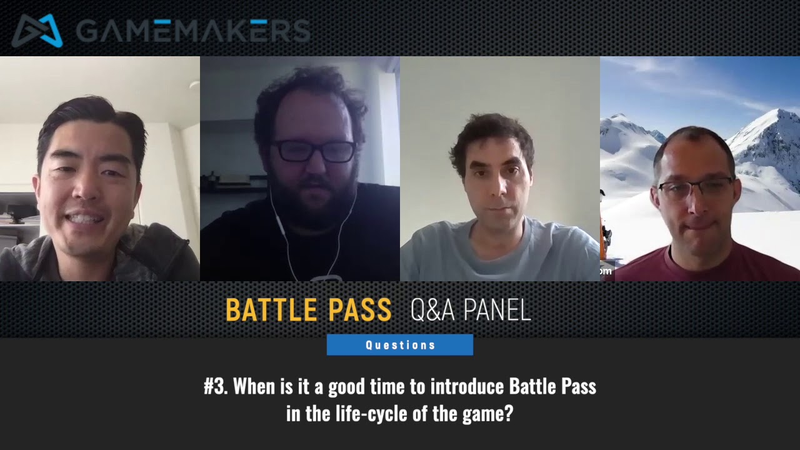
BattlePass Game Design: Q&A With Top F2P Designers and Product Execs
Battle Pass systems function most effectively as engagement and retention mechanisms rather than standalone monetization drivers.
- Battle Pass systems function primarily as engagement and retention tools rather than standalone monetization drivers, requiring a sound core game economy to be effective.
- Developers should target a 70% completion rate for the Battle Pass, as players who finish the progression track show a significantly higher propensity to purchase future iterations.
- Strategic pacing should prioritize accessible early rewards to build player habits, while reserving high-value chase items for the final stages of the progression cycle.
Battle Pass Game Design: Engagement to Monetization
Battle passes function primarily as sophisticated engagement mechanisms rather than standalone revenue engines.
- Battle passes function primarily as engagement and retention tools rather than standalone revenue engines, as they lack the recurring spending mechanics required for primary monetization.
- Developers should transition from passive reward tracks to active monetization drivers by designing progression hurdles that act as strategic stat checks, forcing players to acquire gear or characters to advance.
- Pricing strategies must be aggressive at launch because the rigid structure of battle passes makes it difficult to increase costs later without triggering significant player backlash.
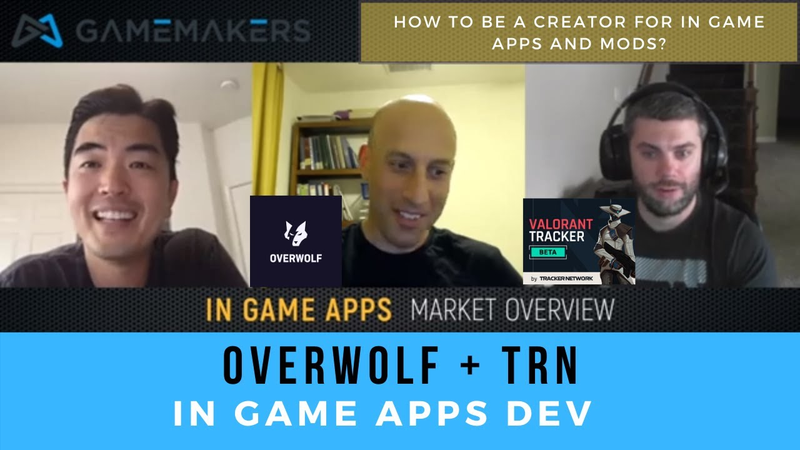
Overwolf + TRN | How to be an In Game Creator?
The modern gaming landscape is increasingly defined by a robust creator economy where third-party developers build essential in-game applications and mods.
- Top in-game creators are now generating annual revenues exceeding $1.2 million by leveraging integrated monetization models like programmatic advertising and subscriptions.
- The ecosystem for third-party in-game applications supports over 5.5 million monthly active users and sees billions of annual mod downloads.
- Developers can build compliant, high-engagement in-game tools using Chromium-based frameworks that support standard web technologies like HTML and JavaScript.

Games Industry M&A Outlook: Who's Getting Acquired Next?
The games industry is currently undergoing a period of intense consolidation driven by the necessity for scale, the rising costs of user acquisition, and the maturation of the mobile gaming sector.
- Industry consolidation is being driven by the need for scale, rising user acquisition costs, and the maturation of the mobile gaming sector.
- Major players are prioritizing the acquisition of established 'forever franchises' to ensure long-term stability as tier-one markets reach saturation.
- Successful acquirers like Zynga and Miniclip are adopting decentralized operating models that emphasize studio autonomy and the retention of existing management teams.
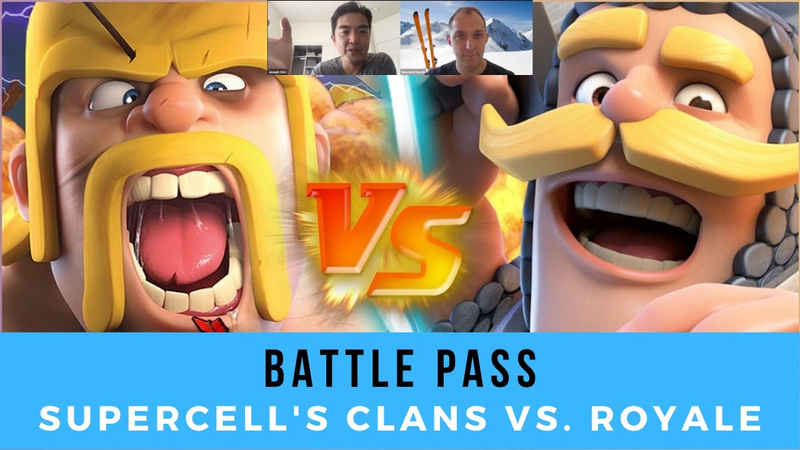
Battle Pass | Supercell's Tale of 2 Cities: Clash of Clans vs. Clash Royale
The implementation of Battle Passes within the mobile gaming sector reveals that monetization success is inextricably linked to the underlying economic architecture of a title.
- A Battle Pass's effectiveness is determined by the game's underlying economic architecture rather than being a universal engagement tool.
- Clash of Clans successfully leverages a deep, scalable economy that requires constant investment across a broad spectrum of units, maintaining high Battle Pass value.
- Clash Royale’s rigid, card-based progression limits players to mastering a single deck, which reduces the perceived value of collecting new items through a Battle Pass.

Death of Performance Marketing: End of a Career in UA?
The landscape of user acquisition is undergoing a fundamental transformation, moving away from manual, tactical media buying toward a more strategic, integrated growth model.
- The traditional manual media buyer role is becoming obsolete as algorithmic automation from platforms like Facebook and Google replaces routine campaign optimization tasks.
- Growth strategy must shift from siloed marketing functions to a unified model that integrates short-term performance metrics with long-term brand health.
- To ensure profitability and relevance, studios must involve growth experts early in the product development lifecycle rather than treating marketing as a reactive, final-stage effort.