1 free read left. Create a free account for unlimited reading + AI research.
Create free account
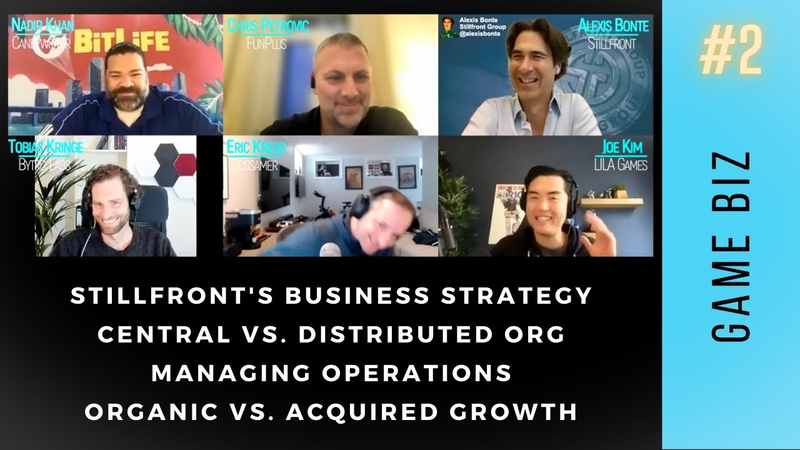
Game Biz #2: Talking Strategy and Synergy with Stillfront Group!
Key insights
6 takeaways- 01The company utilizes a voluntary collaboration model where studios share specialized infrastructure, payment solutions, and expertise in ad monetization and IP licensing.
- 02Operational strategy focuses on pooling data and collective experimentation to mitigate industry-wide disruptions, such as the deprecation of IDFA.
- 03Stillfront Group operates a decentralized network of 19 studios that prioritizes local autonomy and founder-led decision-making over top-down corporate mandates.
- 04The group maintains a lean headquarters while centralizing only essential functions like finance and legal to support studio-level live operations and organic growth.
- 05Acquisition and management processes prioritize long-term cultural fit and stability rather than forced integration of subsidiaries.
- 06Real-time analytics are used at the studio level to optimize user acquisition budgets and resource allocation across the portfolio.
Ask AI about this video
Transcript
provided to you by exola hello everyone and welcome to our second episode of game biz i'm joe kim with co-hosts eric cress and chris petrovick today we're going to be talking about game publishing the strategy behind consolidated studio organizations and the future of the industry in joining us to talk about these issues we have still front's chief operating officer alexis ponte still front as many of you know has been consolidating a number of game studios which now number 19 studios across the globe and in many different game genres some of the most recent acquisitions include moon frog in india just last month and nanobit based in croatia back in september of last year but in addition to still front we also have two folks from still fronts portfolio studios first nader khan ceo of candy writer the makers of games like bitlife and tobias kringa founder and managing director of bitro labs the makers of
games like conflict of nations and call of war this is a huge group we got today i'm so glad you all were able to make it welcome everybody let's get into it let's get into it let's let's let's go just jump right in and so i thought we could first start with you alexis i thought we could talk about still front's strategy from a high level perspective in terms of like the overall approach first of all before we start i do want to commend you guys it seems like you've been very transparent with a lot of information both you know publicly you know in terms of some of the filings as well as the website and from the website there's reference to kind of a product strategy a growth strategy and a marketing strategy so it seems like you guys have kind of defined that so was wondering if you could you know not going too much into the weeds on it but high level give us an idea of how you guys think about the still front strategy yeah i mean thank you i mean if you think about it at the base of our strategy in terms of the product strategy you know what we focus on is you know making sure we have a
diversified portfolio right uh at the beginning if you think about it you know we started with um strategy browsers games you know that's what you know uh bytro uh was one of the early studios uh under the buyers that his co-founders were doing then we expanded into forex strategy games you know with acquisition of my studio republic labs and then once we got some scale you know with the acquisition of good game studios within that you know we then expanded the portfolio into our introduced you know casual uh casual casual also and casual mashups and then rpg and sim so diversified portfolio is at the first part of the of the strategy the second part we really focus on evergreen uh titles you know stable titles if you think about it no we were public company and investors traditionally saw games as a purely it driven business right and for people like us they've been working on free to play for a long time you know games of service we know that these games you know once they reach a certain stage you know they
can be very very stable you can have really predictable growth and predictability there so that's really something that we focus on evergreen games uh another part of it is uh we're big believers in um in what we call you know proven game engines you know there's some mechanics that we know work there's engines that function uh device is a great example of that you know they've developed a grand strategy engine that's you know very unique to their niche and we're reusing that engine you know with another studio uh that's called dorado and they're collaborating with them for doing that so another thing that is important for us is proven game engines and then this and that the last part of that is cross platform right so we started in browser then mobile and then you know we've uh some of our studio started you know doing some games on steam as well and testing that the more more recently we've acquired uh basically the makers of albion online which is a big pc mmo uh that's very popular on steam so big believers of that as well got it and in terms of like the speaking
about the specific synergy so you have a collection of studios and there are there's kind of a couple of schools of thought well i think the prevailing model to date has been the decentralized strategy something you know chris definitely kind of implemented when he was at zynga and and that seems to be like the prevailing model and but then i think in terms of like the kinds of synergies that you you have and the ability to add value to the studios that are acquired whether it's in terms of shared best practices creating some kind of internal peer network user acquisition or access to bigger budgets for production or marketing or as you were saying like sharing technology or engines could you speak to that and maybe even tobias or knotter could you guys speak to like what have you guys been able to get from the bigger group to help you guys scale yeah yeah if you're looking at your device you might you might i'll just kick start it so that you guys can then go into the so i give i'll give the big pictures and you guys can say what you know what you got of it
so i think the important thing here is i mean that's not [ __ ] yeah we all been in companies where there's like 300 400 people working centrally you wonder what half those people do most of the time and probably if half of them went the only thing that would happen is you know the profits would go up and probably every every everything will go faster right there's many companies like that and that's really what we want to uh want to avoid and but decentralized no doesn't mean chaos doesn't mean you're just you know adding up studios and all that we actually prefer internally we actually call it that we've got a distributed approach uh to what we're doing to our operations we believe in leveraging the talents where they are uh we believe that we don't need to have one central marketing team or one central ua team that decides for everything we have this kind of inverted pyramid thing where you know where we really think that the decisions need to be taken as close as
possible to the product so you know the game team should be taking the decisions as much as possible the studio heads are there to remove the obstacles from the game teams and then hq were really there to basically work on the stuff that they don't want to work on at the studio level and remove obstacles provide support and governance so you know but we've grown quite a lot actually our our hq team uh we've grown to the amazing number of 25 people out of one thousand uh but why are we able to do that why are we able to you know provide support and governance to you know 19 studios with such a small team well because if you look at all the studios that we add to the group they're all super experienced people they've been doing this for years they're all our you know running studios that are profitable they've had their failures so they've got the humility to learn from others but more importantly they've got the competence and when there's competence there's trust and when there's trust everything becomes possible
and maybe before we jump into getting the bitro and uh candy writer perspective chris do you do you have any thoughts is that similar to like the types of strategies that you've seen in the past or uh what are some of your thoughts it's it's definitely a variation of the theme right so you know i mean it's you know alexis and i have shared uh uh thoughts on this before um you know and i've always been impressed with the velocity and the cadence of what's been you know what what uh him and maureen and the team have been doing you know i just think you know my only my only real proxy is you know my experience at zynga and before that at kabam where um it was you know the business seemed to have been set up a little bit differently if you look at the history of still front starting i mean this is now 11 years now so it's a pretty illustrious history but it was built on a port portfolio theory model um and not on on a kind of central operation model and then kind of hub and spoke right to fan the
you know kind of build that competency and then kind of allow other people to to connect into that competency right which is more of the zynga models i think a model is hey we have had tremendous success in failure over the last 10 years and let us avail you of all of the learnings of those successes and failures and all the tools and technologies that we've built and you can opt into any some or none of those things and ultimately as alexa said the decision is made at the game level um but my you know my my main the main question that i get when i talk to people in the public markets and i'm sure eric has a better sense of this is is they ask the fundamental questions as they i'm sure they'll ask alexis which is what you know so at some point there has to be some overlap redundancy uh you know inefficiency etc that that can be uh uh optimized um and are you a game company or are you a holding company because holding companies get treated somewhat differently in the public markets at least in certain parts of the world um and then how do you convince those naysayers that you are actually an
operator uh a centralized operator of uh you know as opposed to like an interactive corp right which is it's a holding company we're not decentralized we're not centralized operator centralized operator is the old way of doing things quite honestly and i think it's inefficient we're a distributed operator yeah yeah it's very different yeah and maybe just to give an example from the history of python now if if that is the time now i think really that that we have seen that we have kind of what you are looking for like the central services but we have them in a distributed way um and as stillwater was building first this core of strategy online strategy game companies i think that the climax of course was the acquisition of good game studios which was huge and had had a lot of infrastructure great deals with payment providers great deals with with other service providers and that really allowed us as bytro to ditch some of the things that are redundant and that we shouldn't do in
every studio so for example payment if you want to run a browser game you need a payment solutions in the whole world we had one or two people in the team of 20 to just do that more or less and we we now get the better deals like it's really small but like it adds up like just for the payment we have a few per few percent more from from the cross uh in the profits thanks to to the services goodgame offers us in other cases we don't need that and that's also good but you say also it's important to have this opt-in some really benefit from a big ua team as good game for example offers it but that's something that we for example didn't need and i think we are more efficient if we do it ourselves very close to the products right so tobias just so i understand correctly so you're seeing like this distributed model means certain functions are actually located not centrally but within the distributed studio so like payments might exist at one studio and ua might exist at like
good game and it's it's kind of spread around is that how it works um so you know trying to build on what tobias said and and as well as alexis the importance of synergy inside the still front group you know i kind of wanted to go back to um episode one and uh talk about uh an example that chris made um where you made the example of of a child going to ask mom and dad for help uh do you remember that analogy uh that you made chris um yeah i think it would be helpful to kind of extend that analogy out and add a little bit more color to it um where yes you know if a child needs help the first place they go to is is their parents right i'm a dad myself i have two kids one of them is excels in math the other one excels in piano so when my my daughter comes to me and says hey can
you help me with my math homework i send her to my son and i say you know you said why don't you help your sister out you know he could speak her language he he he just did that level of math he could you know communicate to her way better than i can you know similarly uh when he's practicing piano um and you know maybe it's not you know up to par or or the best it could be uh i would encourage him to talk to my his sister my daughter four pointers on how to to you know kind of level up his game right so i think your your analogy was accurate but i didn't think it it went far enough so wait wait a minute is this before or after he's pulling the heads off the dolls and ripping her pulling her hair you know like oh just just we got we got past that part a couple of years ago luckily for us we're beyond that but definitely had to get through that stage first you'll have to teach me how you did that
by the way but that would be for another thing uh but but you see what i'm saying that um you know each of my children have these unique skill sets where they could leverage the talents of each other now imagine if i had 19 kids right how many different skill sets would be covered not just math and music but also science athletics social studies all of these things and you know having joined the store from family and being a member of the family for a year now i could see across the 19 studios and see where all of those talents exist and i i could go to each studio and leverage that talent to help me grow myself and i'll give you a couple of examples when we um when we joined the skillfront group back back about a year ago now uh we were a much smaller company uh when we joined we took an initiative to grow and we've actually grown our staff by a hundred percent so we're twice as big as we were
when we joined the storefront group and we leveraged the knowledge of kickside to be able to get that done they helped us develop the benefits packages that we need to needed to attract new employees things like that that's a great example of the type of synergy that exists uh within the group um furthermore we're working on uh a localized version of our hit game built life uh right now um instead of going out and trying to figure out all of the nuances related to localization um we're leveraging the expertise of both goodgame and imperia to to kind of shortcut that uh after chrisky made that example of mom and dad uh eric you jumped in and you gave an example of um where would one go to to leverage expertise in in trying to get licensed ip right if i went to my parent in this case alexis i said hey dad uh i need a license on my pee where
should i go is say go talk to your brother terence over at storm a um and that's exactly what we did we went over to storm eight we talked to uh terrance so who has a lot of experience uh with with licensing ip and he kind of laid it out for us not only how to get it done how much it would cost what we could expect in return um we're still making a determination on whether that's the right fit for us but i didn't have to go seek out that knowledge as you were implying eric it was already in-house great example of of the type of synergies that exist within the family now i'm going to have to commend you for your knowledge of episode 1 tobias what about you what what have been like the key advantages or this specific knowledge that you've been able to leverage from joining still fred so we built this html5 uh strategy engine with two games which
were kind of successful the second one call of war successful enough to to give still for the chance to do the minimal ipo they did uh um as we were back then two thirds of the revenues almost off of uh still fund i think but of course the group has grown a lot since so it was a great opportunity to work with uh dorado games who were looking for creating a new game on a on a small budget but had more experience building games and i think the the knowledge in producing a new game they brought in in this shared shared development really helped us to to create the next big thing which is now conflict of nations and develop a game that we couldn't have developed on our ourselves um and for them with the tech stack they couldn't have developed in in the time they needed to do it uh so that i think that is that is a great great example um
yeah and on that on that one really quickly i mean if you if you asked dorado they would tell you that they probably gained two and a half years uh of development time of learning just by being able to collaborate with vitro you know in terms of making that game so uh it's a huge benefit for both studios okay so before handing over to chris or eric to ask the next question one last question in terms of this area which is let's say you have two studios that both think that they're the best at a particular function let's say ua let's say good goodgame says we're the best at ua and then a recent acquisition like moon frog says no we're the best so alexis how do you manage that does does the one studio do ua for everybody or are they just like centers of excellence where people are asking advice from them no so that's that's that's the great part about it usually when you're the best at it you're best at part of it you're not the best at all of it or your best your best at it for your kind of product your kind of vertical your kind of dna yeah that's what you're the best at so in certain cases you're just not the
best because maybe you only have one person or two people and then you know we we just tell you hey why don't you go speak you know with one of the other teams that have a bigger ua a team and let them experiment next to you just let a b test it you know and and decide for yourself what you do and in most of those cases you know those teams you know tend to tend to change and you know and basically move their ua to uh that's happening maybe maybe yes sorry i was about to say maybe ua was a bad example since it's genre specific but all right chris or eric oh well if i could yeah if i could just jump in and add something to that point um you know i think in in some cases especially in these critical areas of our business uh some at least some redundancy is good and uh you know to talk about like uh how maybe two studios think they're really good at something you know i'll give you a real world example um here at candy writer a lot of our income comes through ad monetization we believe that we're very good at that
earlier this year still front added a great studio super free games to the portfolio they're also very good at ad monetization one of the very first things that we did after they joined the family within the first week we got on the phone with super free all the important key role players got together and we started talking about lat waterfalls who's doing what how are we approaching lat waterfalls how are they approaching lat waterfalls even though we thought we were very good at ad monetization which we are we learned that they're a little bit more advanced than us in how to approach lat waterfalls limit ad tracking waterfalls so we were immediately able to kind of gain that knowledge and you know when you're part of a family you're not afraid of having frank conversations about these things you know if i were to talk to somebody in the
industry and you know they're not part of the still front family um we would be a bit more cagey about like our data our specific numbers right we wouldn't want to you know communicate that out externally but now that super free uh is part of the family we're completely comfortable sharing our data with them to show them you know these are this is how our our waterfall is performing how is your water profile performing and again they're equally open to share their data with us not only their their performance but their actual waterfall setup you know so we can mimic it um you know it's a great example of like yeah if two studios believe that they're very good at something that information sharing will illuminate those areas that alexis grew was just talking about where you know they they often say you don't know what you don't know right like i think i could be great at something but until somebody points out to me where i'm
being deficient i won't know that and you know that's kind of where some of this knowledge sharing uh comes into play between studios that that believe that they could do things uh equally well all right let me jump in here real quickly um so before i'm a total jerk and a douche i'm just going to say a couple things one i really respect what you guys have done and accomplished to date right i've had dozen at least a dozen conversations about doing exactly what you guys have done over the last 10 years and frankly i was like i'm too lazy to do this like it's just too much work i don't have i don't know there's too much i mean i'd rather sit here on the sidelines at 30 000 feet and talk [ __ ] about everybody else right it's more fun um and the second thing is that when andrew green said eric what should i do should i go work at still front or should i stay in trees and i said get the [ __ ] out of andresen dude go go do actually do something in this business and build something instead of pontificate and say all these buzzwords
that drive me insane okay so thank you for that thank you that was yes we made him move to stockholm hey do you know the guy's single right so now you know he's got to find some life out there so you guys got to work on that right um now having said all that i i don't get it i i still don't really get how you plan on managing such a complex organization with so many unique developers and personalities i mean everyone seems so nice and chummy chummy and we're part of the family and all that stuff but that you know acquiring companies is easy man ea's acquired a gazillion companies you know how many of those worked out maybe three i think i did the math the other day it's been brutal dude i think they've done like 30 acquisitions and three have probably made out well in which people are still there from the original groups right what was the role of the transition team in in this success cases exactly this is this is my point is that they're getting acquiring things giving people money is easy right that's the easy part
but how do you facilitate the integration of such a complex group particularly because there are like 19 developers and really different locations and all this other stuff and and so like the one point the thing that you guys brought up and you guys can answer that but the other thing that you guys brought up in terms of like uh you know uh talking to each other about best practices and stuff but this is exactly what happened with the call of duty studios right the reason that sledgehammer shut down and that whole group just completely imploded was because the treyarch guys were building the engine with a huge team of 200 people right and spending gazillions of dollars every year and then everyone else was benefited from that work and so then there became this this big like infighting about who's paying for what why i'm spending like 50 million dollars on this engine and you're taking all the advantage then that's not fair right and so like this became thank you eric for c thank you thank you you're making our keys for us it's amazing it's a super no no no so so he feels that he builds
the best engine in the business and they leverage it then who gets paid no no no no everyone we like all these arm lengths they make money from it they make you know everybody makes money you know this is it is internal deals to take i mean if we want to take you know the you the easier example is always ua but there's others right if you want to take the ua example for free you know do you think it's better for ggs to manage this is not the actual numbers but to manage you know 20 or 30 million dollars of marketing budget or to manage 80 million marketing budget and by the way they charge for it the only difference is that you know instead of going to an external agency you know it stays in the group so you gain some money there and and you've got all the advantages of scale so you know ggs is not forced to take someone else's uh you know uh game and market it they they test it just like if they would test any other game and they decide what they want to do it or not bite show is not forced to give its engine to dorado if he doesn't think that they're going to make money from it
or profit from it we never force anything in that respect we're all entrepreneurs here you know we all have built our we've all founders of studios we've built them from scratch you know uh we all had the moments where we had to probably pay you know people's salaries from our credit cards but remember one thing every studio in still front every studio is a profitable studio and the studio stays profitable we are a group that focuses on profitability you know last year with 35 adjusted inlet margin you know we are very disciplined about this sort of [ __ ] we're the opposite of what you just described yeah but again i guess that's the inherent risk right is that how can you guys grow organically if if if you are still focused so solely on profitability right so how is the pipeline going to be managed and and and to grow you know your organic growth versus versus your acquisition growth like it's really easy to grow if you're acquiring gazillion companies and frankly zynga is in the same boat right where they are getting kind of crushed in the market right now for
other more macro reasons but also because they haven't proved they can grow or you know inorganically right because the only game that they've released in the last six years is uh is a stupid uh puzzle game which is doing quite well but i mean that's going to be the proof of your model is ultimately uh organic growth and not inorganic growth yeah so there's so there's two main growth levels we all know this you know one is acquire growth which i think is a better word than inorganic growth you know one is acquired growth and within aguard growth you know you've got you know uh you've got mna you also have you know publishing an ip licensing which could be you know a way to you know acquire some extra growth through publishing and ideal licensing you get that extra another one is you know it's basically organic growth right and for organic growth you've got four main members you know one is live operations and and you know this very well you know when you've got an evergreen game you don't need to do tons of ua to keep growing it when it reaches a mature phase you can operate it very profitable you can do really good live operations to keep it growing and we've become really really good at this and we've got
studios have been operating evergreen games for years i mean david for god's sake from symmetronics as a game that's 30 years old the dates from before the internet and he had his best his best year ever last year i mean this this is how good we are at live operations but yeah it's mature it's growth it's not hyper growth but we don't need upper growth but it's strong growth second thing obviously ua be very easy for us to go crazy on ua you know increase the uh increase you know the the organic growth you know even further but with this we've decided we know we want we're about organic growth in the long term you know we don't care about the short term we're in this for the long term so you we do ua at levels that make sense uh then you've got lots of things you can do in terms of portfolio optimization so for example we have a game that was you know being operated in the us uh under cinematronix they didn't have the source to do a new game uh so they want to move that game we moved that game to another studio uh imperia and that game sees world two
nowadays within period has actually doubled in revenues so that's another way that you can acquire growth just by moving assets doing portfolio optimization um and you and of course new game releases you know we have a pretty strong pipeline and we've recently launched a game that's doing very well but okay according to your documents of your your your the for for calendar 20 you got a 16 organic growth and by sensor towers numbers in the west the market grew 30 percent so you're growing below the market i mean according to your documents does that does that fit like can you maintain or grow faster than than the market going forward do you think with with your current portfolio or are you going to be in that yeah i don't want to answer that question i'm just saying no but eric eric you know i love how you just shut down you know people who do analytics and be private research and then they just decided to quote one we could quote others say that the market grew by 14 others say that i think super data says that you grew by 12 i don't know what the exact number is
what i do know is over the long term uh we have consistent organic growth that is from my information at or above the market uh and and you know we've got a lot of low-hanging food that we can still do to basically continue with that long-term organic growth i talk [ __ ] about nuzu for their long-term forecasts not their actuals right their actuals are always right right because that they're the ones that disprove their [ __ ] forecasts right i mean new zoo is criminal i think in a lot of ways i think and dries in like has a as a direct dial to their analysts or something to do these stupid forecasts on vr and whatever else okay all right i'm gonna stop for now because i'm just i'm feeling very saucy um and i'm going to let joseph take over so i don't get alex to hate me alexa i don't eric i i know i fully understand it and and i know and i know i understand why it's it's hard to understand why this actually works because it's
difficult you know we all work [ __ ] hard to make it work but it works it just works i guess you know what history is always my my guide to things and i think that's part of being older or whatever and i watch all these studios starting to implode like blizzard and um uh because they centralized because they started centralizing no it's speaking no it's because they were they remained independent too long and they lost touch with what what the market was doing right and so i don't know i don't know it doesn't last judge it never judge what other people did but but what i do know is that it's the level of the level of interaction between our studios okay the level of communication is much higher that's the only proxy we have is history right history informs the future right and we've seen all this stuff happen before it's never it's never as new as i think people think it is you know to do i'm an entrepreneur i'm an optimistic the only reason we were able to build this is because you know we were maybe
too naive or too innocent to uh know it wasn't possible and guess what it was possible all right well here's here's what i will say i mean what what what what tobias and india are saying and describing is is absolutely um as it should be right and i think that's a you know that that is an optimal environment where there is kind of horizontal communication happening uh among the different spokes in a wheel right and i would say it's you know as it sounds wonderful and it is wonderful and that's how it should be and so i think you know kudos to that because to eric's point not all game companies have been able to create that but i will say that in today's environment you know what you guys are describing is table stakes for any best practices company that owns a portfolio of studios right regardless of the core thesis of how they are structured you know uh uh so you know whether it's you know what you see in zynga you know what you see at platika what you see at other leading companies that have a broad portfolio they are not only speaking to the parent up and
down but they're speaking to their siblings right that's just you have to right and and and you see that happening in organic way so i don't think that anybody owns the the uh you know the the patent on that process because it needs to be that and i see it at fun plus and i see it you know working very well across time zones and cultures and genres but at the same time you know as i think as eric was trying to allude to you know there are there are existential things that continue to happen in cycles you know in our industry right and i think idfa is probably the most recent one that we're dealing with and companies are closing ranks around that topic and figuring out way how to leverage centralized solutions and centralized technologies and centralized idfvs and publisher accounts and all of these things that allow company or companies to kind of cohese around solving this solution in one in one way or another right uh also the buying power of a centralized you know of a centralized ua system where you can you know get better pricing you can get better pricing on the demand on the supply side by having
a single entity that is representing all of the children in aggregate right and being able to you know get better unit economics so these are kind of some levers right and and some companies have access to those levers more than others and um and so i think that's a lot of also what drives the question from the broader market that eric and i speak to is as they're seeing all of these things happening and how the majority of companies they see are reacting i think perhaps alexis to your point maybe they're just not used to this kind of structure right it's a very novel structure it's unique one there aren't a lot of comps i mean let's not even get started about how embracer is different because i think people tend to lump you guys into the same category um but i think those are the kind of questions that this come up and part of it is part of is just not knowing the details part of it is not being in your shoes but part of it is also just legitimate concern yeah and that's yeah awesome sorry yeah i think idfa is a great example because it shows exactly how still front works it's of course something that that affects us all and i think the solution
can come from uh from the studios there's an there's a of course an initiative to work together on this and of course we are working together on this there is of course also support from from central um but 25 people can do so much um but i think we will what we will end up with is one we have a lot of exchange and have ideas of what could the best practices be at the same time we will try different things and we'll figure out what works best and share in real time uh our approaches and i think there's something enough yeah enough yeah i'm sorry incentive there to to to get studios involved and actually work on this and i think the important thing is we've got all this range of studios all these runs of teams experimenting things sharing real time what's working what's not working and and and so this is where the distributed approach is quite powerful but then when we find something that works then we roll it out then we give it central support and sometimes we roll it out
from a studio distributor approach and sometimes you're right maybe for some tools you know uh we we do need to actually to you know have central resource behind it and we do have central resources to do that and either build the tool or coordinate people on that so that's why we're not what i'm trying to say is we're not limited by just a central approach by having this distributed approach that's but the the outcomes in terms of benefits are the same the approach to get to these outcomes is just distributed it's different and i think it's faster from what i've seen is faster and by the way i used to be in the founding team of another company called lastman.com way back which was the expedia of europe and we did the exact opposite opposite with us we did a lot of m a we acquired 16 companies and two eric's point we managed to [ __ ] up 14 of them uh only two two worked out why did we [ __ ] them up because for the first 14 acquisitions we tried to say well use our technology no you have to use this and then they weren't happy with the technology anymore or whatever so we really tried to centralize as much as we could the two last acquisitions we started by
leaving them alone we started them by doing knowledge exchange then we started to understand what they really needed and and they worked out in the end last minute.com was was was a good was it was a success but oh boy we made a lot of mistakes there right and you know just to build on that i think when you have that highly centralized kind of structure where um you know you have this this this authority that's coming up with these what to do about ibfa how to handle ua how to do this and that and different aspects of the business it you know speaking as an entrepreneur it kind of almost destroys the entrepreneurial nature of the individual well you know what this is not my problem anymore it's the it's the problem of the person above me right this let me wait until they come out with an idea solution it's their job to find an idfa solution for the whole organization right but in still front every organization is looking for that
solution because every we were all empowered and all encouraged to retain our entrepreneurial spirit which is what got us here in the first place right any company that is subject to an m a process didn't get there because you know they they have a a nice looking logo in a pretty game it's because they figured out something that the rest of the market wasn't able to figure out right that's how gandy writer became part of the still friend group we figured out how to do something in gaming that nobody else had figured out still front identified that and said you know what we need to capture this to be part of our family so i think that the structure the distributed nature it encourages that continued entrepreneurial thought that says we're going to figure this out you know idfa deprecation or or opt-in as it were is is definitely scary you know i think
that it's scaring everybody in the industry in in all different segments of it but the way we look at it at candywriter is you know what this is also an opportunity because we've been doing this since 2008 we were among the first 552 apps on the store we've seen these changes come about these disruptions come about many times you know when apple introduced the iap and kind of really destroyed the free paid model that dominated apps for several years right um that's an example of of a change a disruption that we embraced and used to make ourselves even more profitable we're confident that we're going to be able to do it again right just like any other entrepreneurial studios probably has the same level of confidence and i know by talking to other studios in the still front group that they have the same level of confidence as well whatever is going to happen not only are
we going to get through it we're going to make ourselves bigger and better because of it and while our competition is kind of languishing and trying to figure it out we're going to be seizing the opportunity and if you have that heavily centralized kind of approach to business then the the founders of the company leave that lose that impetus to to find the solution themselves like we're heavily vested right now to continue our growth to continue being the biggest and biggest and best company that we can be and i think the distributed nature of storefront encourages that and i i believe the other studio heads would agree with me if they were on this call encourage and attract the right people right right still what is able to attract those studios too okay the fundamental problem here is that i'm talking at two sides of my mouth because i totally believe in keeping it studios independent like i totally believe what you're talking about right but there's certain functions that don't
make a lot of sense for you to have resources against and idfa happens to be one of them right idfa is a broad issue across all genres all all things that needs to be solved centrally to some degree so that you get best practice i think anyway having four guys dedicated in your team four guys dedicated in that team four guys dedicated that team and like all this like things going on does it doesn't make a lot of sense but okay let's let's forget that so so you think we should 49 specialists actually to do that rather than leverage you know guys that have 10 years experience doing this across 11 studios trying different things and exchanging with each other yes much faster i can agree with you eric okay well i i'll disagree with on that on the solution for idfa in particular in terms of dealing with centralized tech stuff but one second with all due respect um i think idfa is a great example of where distributed comes in handy you know apple hasn't even figured that this idea thing opted out completely themselves how are four people sitting in a headquarters gonna figure it out
themselves you know this the reason why we haven't seen 14.5 is not because just the industry is not ready apple's not ready either right so how can four people sitting in a headquarters figure it out for 20 other studios that might be under their umbrella i i this is a great case where you have to kind of distribute that that processing power right that brain power to find the best solution and like alexis said you know out of 20 studios you might have two or three studios that really discover a way anyway let's see if we disagree with everything yeah let's move on yeah let's move on let's let's talk about acquired growth can i grow with oh sorry i really would like to agree with eric uh for one for two points i think there are some things that we really don't want to do on studio level and that is for example yes finances for being a publicly traded company or investor relation or financing or human resources finance and
accounting sorry why should someone in sweden do human resources for me in hamburg okay that that makes sense on on a regional basis but i'm just saying like some of those functions don't need to exist every single place that you guys have right particularly and that's the case eric and that's and you're right and that's the case so for example we have uh we you know we have central finance that does fine for a lot of people we actually have financial hubs so pixar for example this i mean the cfo of kixa is kind of our north american cfo somehow because he does a lot of the finance works for a lot of the other studios uh obviously you know group legal council know handling gdpr support legal frameworks all this sort of stuff that's handled centrally we support the studios with that group communications of course that sound essentially m a of course that's that's handle centrally but we leverage the studio founders a lot because they're the ones who know who the good targets are as well most of the time so yes
a lot of stuff we also have a group cto office that we're building up because yes some of the tools some of the things it does make sense to build central whoa whoa whoa whoa you what a group cto what are you doing you wait a minute you guys have been talking about non-central tech for like the last 30 minutes you're going to have a cto with a team that's going to build [ __ ] it's not is going to build [ __ ] that the studios ask for or is going to help the studios with extra resources to build to build their [ __ ] yeah but he's just saying he just said that they are the capable of building their own stuff they don't need yes yes but sometimes they might they might need some extra resources and then we can provide it to them so it's sitting somewhere why are you getting somewhere i'm trying to say what i'm trying to say is that it's it's always a mix it's never black and white it's a mix of distributed resource and central resource so that i will give to you absolutely thank you very much thank you so much next topic let's let's move on to the next topic so and maybe i'll combine a few things in
the interest of time but alexis just in terms of like the current organizational structure and mix when you think about now moving into the future the kinds of companies you want to like look at for the acquire what you're calling acquired growth right how are you thinking about targeting these new companies that you would potentially ask to join the still friend group how are you like evaluating them what's your criteria for finding these these companies yeah i mean the number one criteria and the number one reason we walk away actually it's not financial it's culture fit that's the number one reason are we really super careful about this because for this to work there needs to be trust there is needs to be humility so we're very careful about that that's the first criteria the second criteria is obviously you know then financial criteria certain size a certain level of revenues sort of the profitability a certain track record you won't see us in usually you know acquire studios that have popped up in the last two two years and have hyper growth because you know we we like to see stability we
like to see a long track record so that's another thing and then it's really about you know completing the puzzle you know we're we're we're really we're we're creating a puzzle here we're making sure that we do things so you know there's and there's a few components of that you know the first component is portfolio diversity you know within evergreen games uh so you know we need there's some pieces of the puzzle that are missing there uh another part of the puzzle is geography uh another i mean one addition to the family that really went completely under the radar and i'm quite happy with bullfrog moon frog labs in india so we very specifically you know went for most people would you know acquire studios in india maybe for cost reasons or because you know or whatever we specifically went looking for a studio that actually had a presence in india and it's one of the top three grossing studios in india why because you know in india uh you know very few people have credit cards and these guys have a reseller network so all of a sudden we've got this whole reseller network in india
biggest market in terms of download for for for google play and that's growing and which we can do a lot of things and plug in so that's an essential part of the puzzle and then the final thing that we look at is obviously platform you know we want to be a cross-platform company we're focusing on free to play and games as a service we came from browser now we're predominantly mobile and we're going to pc and console so we kind of are looking at how we can complete the picture and achieve scale in each of this vertical so that there's you know there's there's there's there's basically you know the right level of knowledge and understanding there okay and so maybe i could ask you one last question then i'll pass it to chris if chris has any questions but maybe the last question i would ask is that so i've been speculating that you know we're running out of m a targets that and so if we are that the industry is going to have to move up or down right so more whether it's public transactions or moving down where you're potentially acquiring studios that are much earlier maybe even pre p pre-product launch in which case
we may see more kind of innovative or unique types of structures i asked sort of similar questions to lars from embracer he's like his feeling is that there's still plenty of targets out there but wanted to get your your thoughts yeah i think i think he's right there's there's a lot of targets out there still um i mean some of them right now have probably really unrealistic um expectations in terms of valuation but i think that's that's that's they're starting to change again so there's there's been a bit of uh of of that of that happening but there's a lot of good targets still out there and you've got to be you know kind of specific about what you're searching um in our case uh we want to continue focusing and we're very happy to be patient uh on what makes sense to us you know we're uh this is not a competition about how many you know how many studios you you add it's about you know making sure that you've got the right family and members that you know that join the group and really bring
uh something that we didn't have before so that's what we're focusing on we are seeing a few of those out there still and uh so uh yeah i'm not worried about that you know it's again if you're playing for the long term you know you focus on that i got one more just one more and then i'll let chris go so the other one that the other thing that kind of strikes me from your from your report was that you guys have 42 games in market 60 products in development 20 games going into soft launch in 2021 which seems like a herculean effort by any measure central or no central terms of management um and i mean so what do you need do you need like a hundred product managers you know do you need who's coordinating all these release timing ua budgets asset creation pr featuring at apple i mean do you have 18 people calling on apple for featuring you know and google right would that be funny yeah what's funny is that like what i'm worried about is my buddy andrew green is gonna look like obama and like in four years he's gonna look like he's aged like 50 years
right because he's gonna be busting his ass trying to manage all this [ __ ] so how in the heck i i worked at ea i i i we had like 30 skus and i was just like everyone was frazzled we had thousands of people working on this nonsense so how do you actually coordinate all this and make sure the priorities are made and ua budgets are allocated or you know how does that all work just quickly i know it's the long question but it's quickly yeah i'll i'll i'll be quick basically it's through um trusting your teams and having a bottom-up approach so for example i don't know what bit life's budget should be next year or what you know buy trust budget should be next year so nadir and his team and device on this team they tell us hey next year this is what we're going to do this is how much we're going to need in terms of ui every quarter it might change by the way and this is the plan i look at it we put it all together we know how it looks overall and then basically we've got real-time tools real-time analytics tool to allow us to have a real-time view across all the group all the studios where it's going and then
if all of a sudden you know nadir is kind of you know you know spending you know 30 percent more in ui than i thought you know i if if i can understand it from the metrics why he's doing that i pick up the phone and i call him and he explains it to me so it's a lot easier than it sounds it's a bit like playing a video game to be honest i love it i want to know who who's 30 gets taken out from the other 18 companies well the fun thing it's about about in the perfect world it doesn't happen all the time as you know chris but when you've got a very varied portfolio it's usually it's not it's normally what happens is one is when one is able to actually you know push more on the x-ray from the ua it means that probably another one can't do it so it kind of tends to balance out more or less of course it's not perfect yeah makes sense all right chris any final thoughts or questions no i think that was that you guys covered it pretty well i mean it's uh you know i i don't know if you've converted crest completely but uh partially there so i think that's a
that's more than what's been accomplished on a lot of other calls well i i got one more [ __ ] question could i do it yes yeah i like your questions actually yeah all right let's say for a moment gaming falls out of favor we're actually kind of seeing that right now a little bit as you know your stock is down what 30 40 percent but um idfa kicks everyone's ass like everyone is [ __ ] on their ass and can't make any money in mobile anymore wall street moves on they're going to blockchain they're going down to road building companies or heaven forbid we see them go to solar and your stock goes down another 50 to 60 percent right so basically pre-2020 levels so i guess the question is can the the acquisitions be will have be challenged right in some ways in terms of acquiring companies but how how does that actually impact your portfolio companies in terms of comp and earn outs and these uh fabulous founders that are willing to stick around when they're in there eric great question so first of all fundamentals always win over the long
term you know that you know the stock it goes up he goes down there's a million reasons why he goes up there's a mere reason why he goes down 100 if you know if you know why then that means you're a billionaire and and that's super for you uh it's about fundamentals so we focus on making good games that have good growth and that are profitable and as long as we continue doing that then the stock will catch up one day or the other in terms of you know up and down or whatever you know i don't comment it's you know it always goes up and down uh in terms of being you know what we what it does it does have a utility right because it's a currency no whatever your stock price is a currency but then what you're seeing is the valuations in mna you know they kind of tend to follow a little bit you know what's happening in terms of the of the stock price so we'll just we'll just continue with our strategy we're in this for the long term and we'll focus on the fundamentals the rest will take care of itself but how like i guess the question really is how much are the founders share founders comp set up in stock versus
versus uh yeah so we can't answer that i'm just saying like it would be a risk of course for if people's compensation went down dramatically for what they expected right yeah i mean if you're a founder and you're not passionate about making games and you're not in this for the long term uh and you're in still front then i [ __ ] up all right so you you don't think pitchford's in it for the money an embracer or is he in it for the uh or both i i can't comment about what other companies do i know that in our case eric's trying to get you in trouble i don't know i don't know chris chris i don't know maybe you want to come i already did on the last show it's fine i'm just waiting for lars to come on but anyway thanks guys i really do hope you guys are successful and i hope uh and i hope you work andrew green to death because he deserves it but i think you guys are on to something you guys seem to have some great teams and some great products i just as an analyst what i'd like to see is a lot more organic growth as opposed to
mma growth so that's that's what i personally will be looking for for the next two years and if you guys can execute against that then you are definitely worth the value that you guys see today so how about that yeah so to close this out actually alexis knotter tobias do you guys have any final words for the audience are you guys looking for anything and then how can people get in touch with you guys yeah i have a final thought of final analogy um you know the most powerful electric cars like uh tesla's or or are new cars coming out for mercedes they have distributed power right they have an electric motor on all four wheels you know tesla's have two electric motors the the basic ones they have one electric motor a centralized motor so when you distribute that power that's really where you see performance and i think that's a great analogy for for still front and gen in general distributing that power for maximum performance um you can find me on linkedin just search uh noddercon candywriter uh
and if you want to talk about anything employment you know if your your talent and looking to move to a a boring and uh small town like miami florida contact me and i'll be be glad glad to talk to you nice yeah we are also um if you want to reach out we're building uh what we are planning to build and i have already built i think the most advanced html5 strategy engine out there and we're looking for people who want to join us doing this you might not even have to move to hamburg germany even though that's a good location to move to um thanks to covet 19 we are even considering remote applications so um reach out to me you you find me on the on the homepage bytro.com okay yeah i mean you know i'm gonna i'm not gonna try and predict what's happening next i'm just gonna say this thing we're so lucky i mean we're so lucky to be working in this to be making games for me it was a child dream of mine when i was 16 years old i
would write business plans about you know the you know the game company i would one day you know work work in and all that and so we're so lucky to be working in in this industry and i want to make eric happy so actually one person that we're looking for centrally he's ahead of analytics so if anyone is interested in you know in uh hallelujah [Laughter] so we're seriously looking for another analytics so if you're interested in you know looking at you know 19 studios over 80 live games uh and you know 60 million mayu and you think you can do you can help us do something with that you know come on board that's he's like andrew green will be your roommate exactly managing that many products i feel like my hair falling out as i think about it all right well thanks everybody and uh please stay tuned for the next episode of gameviz thanks everybody bye thank you bye
[Music] you
Summary
Stillfront Group operates under a distributed operator model that prioritizes studio autonomy while leveraging the collective scale of a 19-studio network. By maintaining a lean headquarters, the organization fosters a peer-to-peer environment where individual studios retain decision-making power over their products and marketing strategies. This decentralized structure is designed to preserve the entrepreneurial spirit of founders, ensuring that innovation remains close to the development process rather than being stifled by rigid, top-down corporate mandates.
The core strategy relies on voluntary collaboration and the sharing of best practices across the portfolio. Studios opt into shared resources, including specialized infrastructure, payment solutions, and expertise in areas such as ad monetization, localization, and IP licensing. This collaborative framework allows the group to navigate industry-wide challenges, such as the deprecation of IDFA, through decentralized experimentation. By pooling data and operational knowledge, the studios can collectively address market disruptions more effectively than they could in isolation, while still focusing on their specific live operations and organic growth targets.
Acquisition and management strategies emphasize cultural fit and long-term stability over forced integration. The organization manages its extensive pipeline of live games through a bottom-up approach, utilizing real-time analytics to optimize user acquisition budgets and resource allocation across its subsidiaries. Despite external skepticism regarding the efficiency of such a decentralized model, the company maintains that its focus on studio-level autonomy and long-term fundamentals provides a distinct competitive advantage. By balancing centralized support for finance and legal functions with operational independence at the studio level, the group aims to drive sustainable performance and portfolio diversity in an increasingly volatile global gaming market.