
DiGRA
The Digital Games Research Association: the international association of academics and professionals who study digital games. Its Digital Library holds the proceedings of the DiGRA conferences since 2002.
Documents
The Effects of a Consumer-Oriented Multimedia Game on the Reading Disorders of Children with ADHD
This study examines whether Dance Dance Revolution (DDR), a consumer entertainment game, can improve reading impairments in sixth-grade students diagnosed with ADHD.
- A test-retest study of 62 sixth-grade students with ADHD and reading impairments, drawn from four West Virginia and neighboring-state middle schools between 2002 and 2004, tested whether Dance Dance Revolution could improve reading skills.
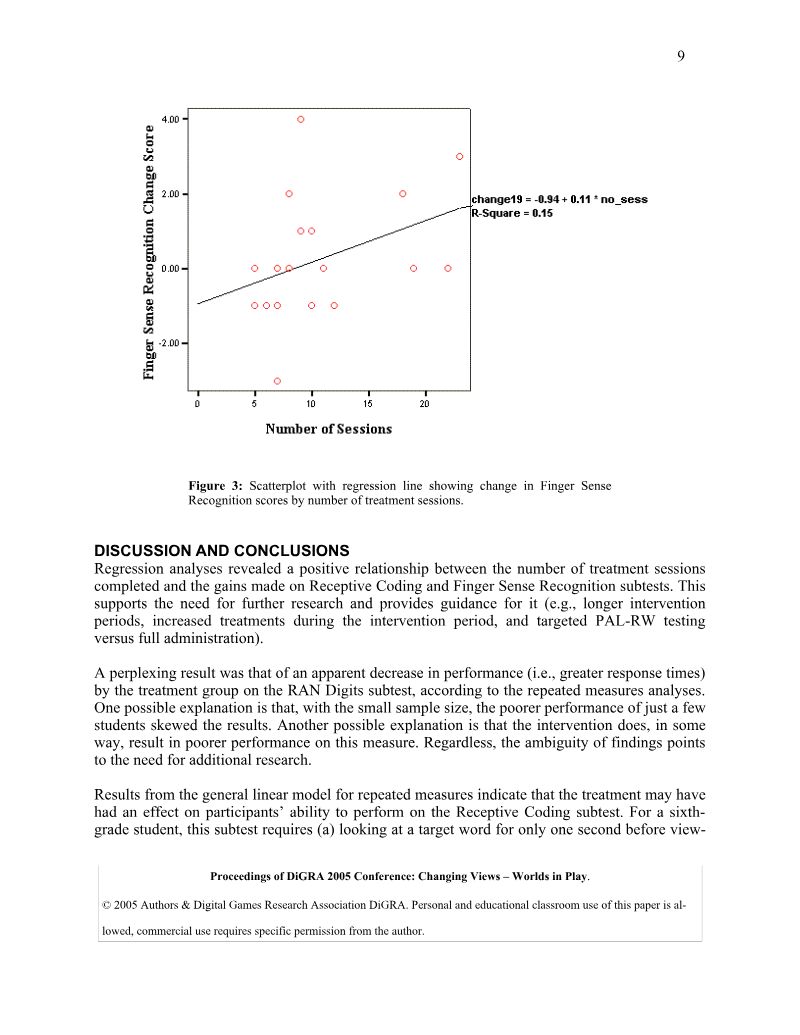
- Results were modest: of 24 PAL-RW subtests, the DDR treatment group showed only slightly larger gains than controls on RAN Digits and Receptive Coding, with small effect sizes.
- The RAN Digits result was ambiguous, with some evidence that treatment participants performed worse on that measure.

The Psychophysiology of Video Gaming: Phasic Emotional Responses to Game Events
A 2005 study by Ravaja and colleagues, presented at DiGRA, investigates the psychophysiology of video gaming by measuring phasic, event-level emotional responses rather than the tonic, averaged physiological states that prior game research relied upon.
- The study shifts from tonic, averaged physiological measures to phasic, event-level responses, arguing that tonic measures cannot separate the varied emotions elicited by specific moments of play.
- Physiological data (facial EMG, skin conductance, and cardiac interbeat intervals) were recorded from 36 participants playing Monkey Bowling 2 and synchronized with video at roughly single-frame accuracy.
- Falling off the lane and knocking down pins both produced positive-valence responses, and falling off the lane also elicited high arousal, suggesting active participation can make even failure emotionally rewarding.
Building and Reconstructing Character: A Case Study of Silent Hill 3
This paper, by Petri Lankoski of the University of Tampere, examines how the player character Heather is constructed in Silent Hill 3, a 2003 survival horror game.
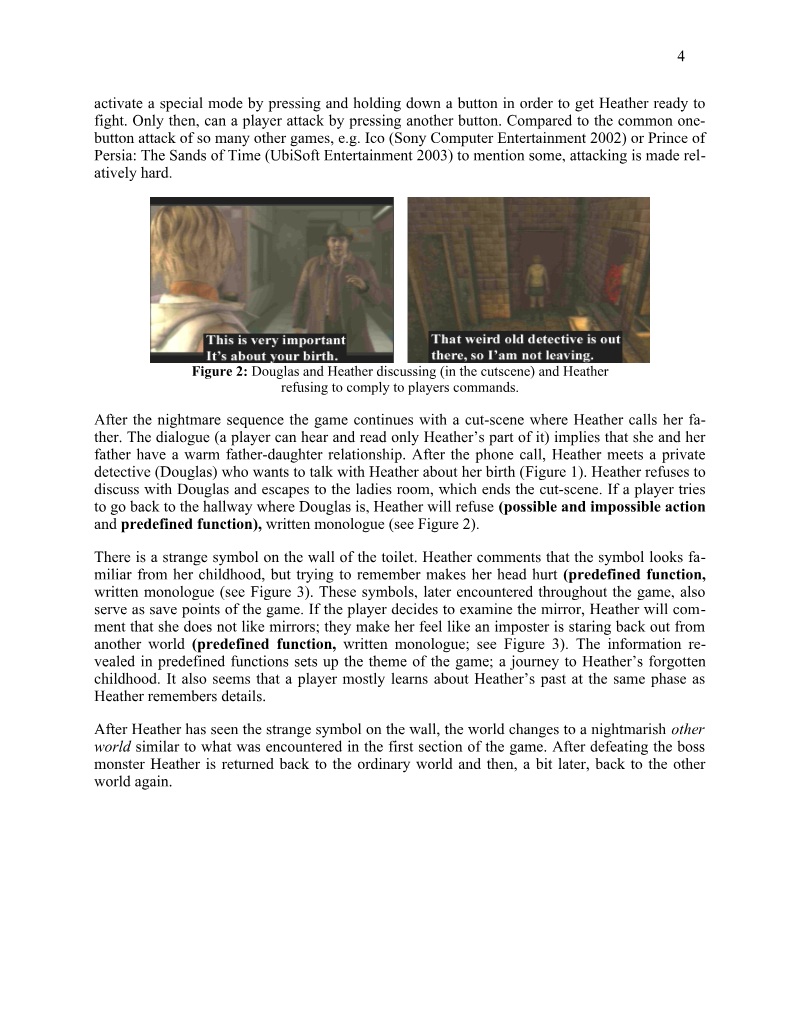
- Predefined functions such as cutscene dialogue and written monologue are the primary means by which Heather's nature is revealed in Silent Hill 3, while goals play only a minor role.
- Possible and impossible actions frequently reinforce the characterization conveyed by predefined functions, operating through the game's control design.
- The opening user guide, the playable nightmare sequence, and the first cutscenes are especially important for setting the player's interpretive expectations of the character.
Playing in the Sandbox: Developing Games for Children with Disabilities
This study, presented at the DiGRA 2005 conference, argues that children with disabilities, particularly those with cerebral palsy, do not primarily need specially designed games; they want to play the same commercial titles as their peers.
- The principal barrier for children with disabilities, especially those with cerebral palsy, is physical rather than a lack of suitable content: console controllers for Xbox and PlayStation require two dexterous hands, and many of these children lack them.
- The author argues these children do not primarily need specially designed games; they want to play the same commercial titles as their peers, so the priority is accessible input hardware for mainstream multiplayer games.
- Informal interviews with cerebral palsy students aged 18 to 21 at a centre attached to a mainstream high school reported that games made them happier, improved self-esteem, and gave a sense of social belonging, with one student believing driving games helped him control a powered wheelchair.
A Short and Simple Definition of What a Videogame Is
This paper, presented at the DiGRA 2005 conference, proposes a short and simple definition of the videogame: a game played through an audiovisual apparatus that can be based on a story.
- The paper proposes a short, reusable academic definition of the videogame as a game played through an audiovisual apparatus that can be based on a story, intended as a foundation for future videogame design methods.
- The author argues that serious videogame studies only began in recent years, even though the videogame industry was already more than thirty years old at the time of writing (2005).
- The definition is grounded in established game theory, drawing on Caillois, Huizinga, Zimmerman, Crawford, Kramer, and Juul's account of automation and rule enforcement.
From Real-World Data to Game World Experience: Social Analysis Methods for Developing Plausible & Engaging Learning Games
The document presents a methodological framework for transforming qualitative interview data into interactive learning games, using HEALTHSIMNET, a prototype designed to improve practice within an HIV health care network in British Columbia, as its central case.
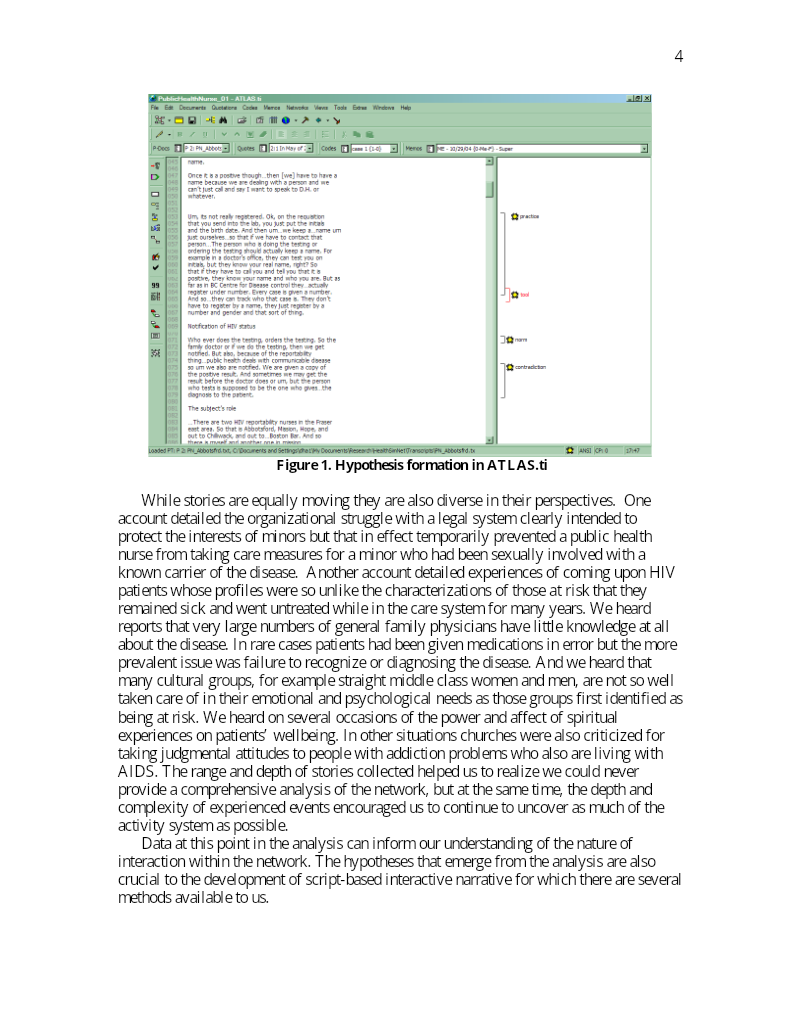
- The report's core method converts qualitative interview data into causally structured game narratives using cultural-historical activity theory, grounded theory coding in ATLAS.ti, action-relevant episodes, and TEAMVIEW representations, so that tensions within activity systems can be resolved in multiple ways to produce varied plot developments.
- The central case is HEALTHSIMNET, a prototype for improving practice within an HIV health care network in British Columbia, built from interviews with network participants.
- Interviews surfaced consequential design issues including legal barriers to public health action, widespread gaps in family physician knowledge about HIV, underserved patient populations, and spiritual and judgmental influences on care.
Framing Virtual Law
"Framing Virtual Law," presented at DiGRA 2005, argues that the conventional real-versus-virtual dichotomy obscures how legal order actually operates in online game worlds.
- The paper replaces the real-versus-virtual dichotomy with a five-layer model (actual, interface, system, instantiation, virtual) and argues that control over virtual worlds is distributed across these layers rather than held by a single authority.
- Actual-world law operates mainly at the outermost layer through courts and sanctions, while end-user license agreements at the interface layer often waive participants' access to courts, leaving owners largely shielded from legal challenge.
- Illustrative cases such as the Korean Lineage "off-line PK" assault and the banishment of Peter Ludlow from The Sims Online show owners excluding participants with little practical recourse.
Game Mediated Communication: Multiplayer Games as the Medium for Computer Based Communication
This study by Mats Wiklund at Stockholm University investigates whether multiplayer games are becoming the natural medium for computer-based communication, a question motivated by the growing prominence of in-game chat and voice interaction.
- Roughly 16.83% of computer chatters spontaneously linked chat with multiplayer games even though the interviewer never raised games, suggesting games are already a natural association for computer-mediated conversation.
- Among students aged roughly 10 to 15 at two Swedish schools, 101 of 131 interviewed reported chat use, and spontaneous game association was nearly identical for younger and older students (17.07% vs. 16.67%).
- Positive associations dominated: 76.47% of game-related answers arose from questions about the benefits of chat.
Build It to Understand It: Ludology Meets Narratology in Game Design Space
Mateas and Stern's paper argues that building experimental games can advance game studies beyond the analysis of existing titles.
- Mateas and Stern argue that building experimental games yields theoretical and design insights that purely analytical study of existing titles cannot reach, because analysis cannot anticipate new regions of design possibility.
- The authors contend that ludologist skepticism about combining player agency with strong narrative partly reflects the absence of successful agency-rich narratives, and they test this claim with their interactive drama Façade.
- Façade recasts story interactions as abstract social games (affinity, hot-button, and therapy games) driven by natural-language discourse acts and coordinated by a layered architecture and drama manager managing multiple narrative fronts.
Player as Author: Conjecturing Online Game Creation Modalities and Infrastructure
This paper argues that the videogame industry has entered a period of creative stagnation, characterized by sequels, familiar genre templates, and tight control over production, and that the producer-consumer dichotomy limits innovation.
- The paper argues the videogame industry has entered creative stagnation, marked by sequels, familiar genre templates, and tight production control, and that the producer-consumer dichotomy limits innovation.
- Its central thesis is that players should be recognized and enabled as authors who create game content, scenarios, mods, and entirely new games, framed as an emancipatory movement.
- Cited examples of player authorship include user-generated machinima, photo-novel stories produced from The Sims, object scripting in Second Life, and modding communities supported by Valve and id Software.
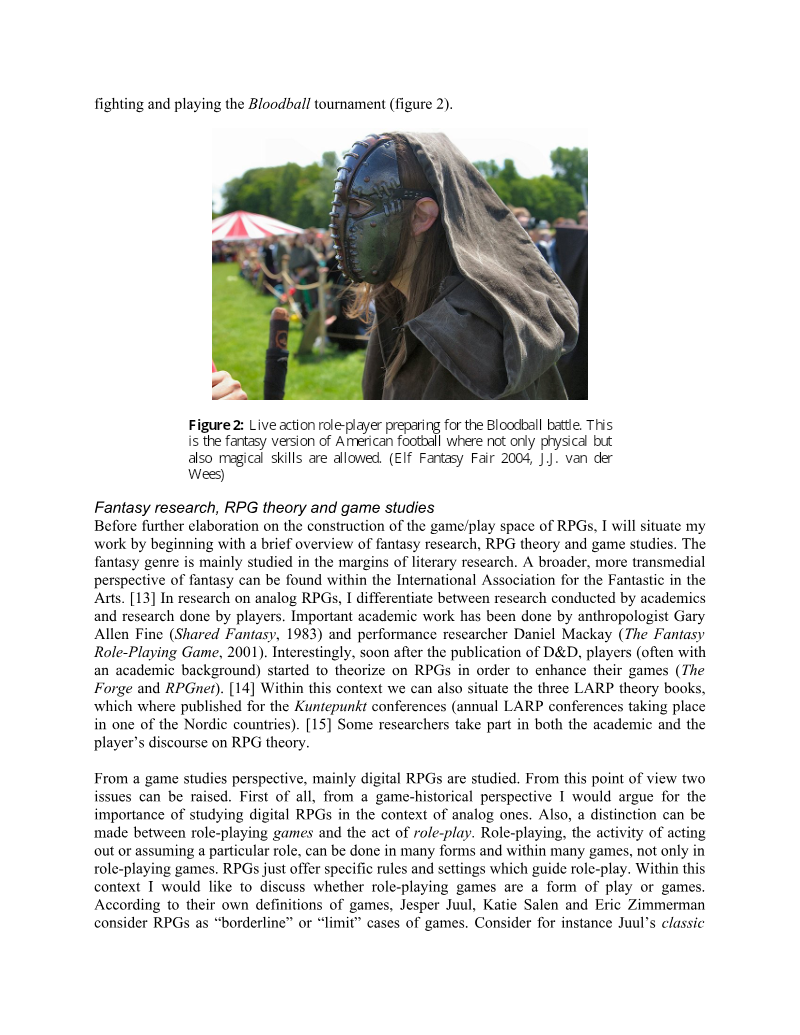
Connecting Worlds: Fantasy Role-Playing Games, Ritual Acts and the Magic Circle
Marinka Copier's paper argues that fantasy role-playing games should not be studied as isolated objects but as part of a broader fantasy subculture, and that the prevailing use of Johan Huizinga's "magic circle" concept in game studies misrepresents his original ideas.
- Marinka Copier argues that fantasy role-playing games should be studied as part of a broader fantasy subculture rather than as isolated objects, and that the prevailing use of Johan Huizinga's "magic circle" concept in game studies misrepresents his original ideas.
- The paper contends that the play space is not a fixed chalk-line boundary, as Salen and Zimmerman's visualization suggests, but is actively constructed through negotiation and ritual acts such as bricolage.
- Role-playing is framed through ritual and performance theory (Turner, van Gennep, Schechner), treating RPGs as collections of performances that connect worlds rather than as activities bounded off from everyday life.
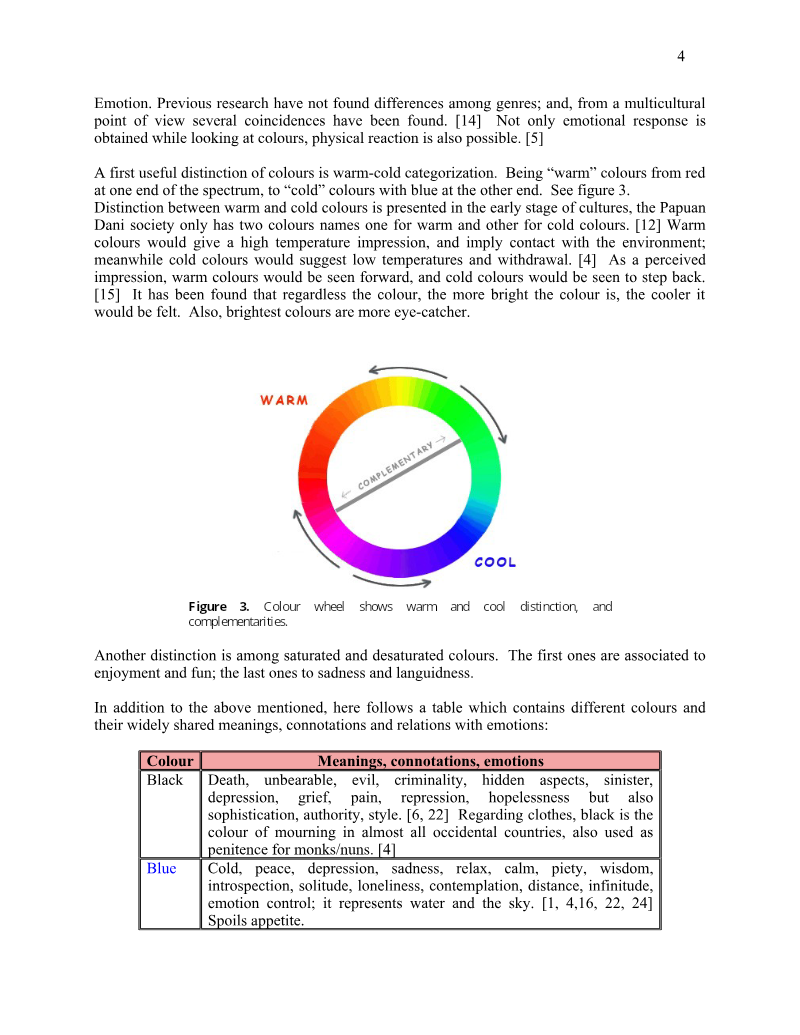
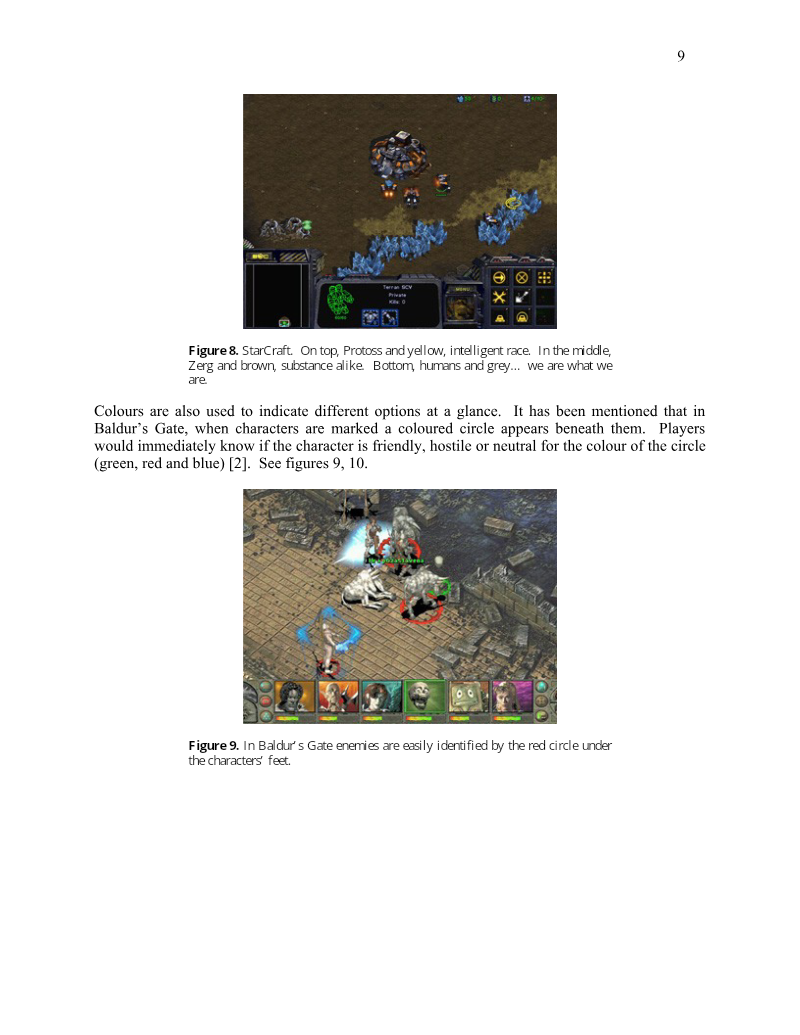
The Expressions of Colours
Zammitto's paper, presented at the DiGRA 2005 conference, examines how colour communicates meaning in digital games and argues that game designers should use colour deliberately rather than intuitively.
- Colour meaning in games rests on three overlapping layers, innate, personal, and cultural, so designers must account for both universal associations and regional differences such as red signifying weddings in China versus white in Western weddings.
- Colour-vision deficiency affects roughly one in twelve men, a significant concern because most players are male, making accessible palette choices important for designers.
- The paper argues that game designers should use colour deliberately rather than intuitively, applying its meanings to character costuming, interface elements, and environmental palettes.