1 free read left. Create a free account for unlimited reading + AI research.
Create free accountWhitepaper DiGRA
1 free read left. Create a free account for unlimited reading + AI research.
Create free accountWhitepaperDiGRA
It argues the producer-consumer split limits innovation.
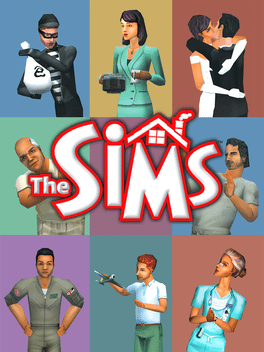
This paper argues that the videogame industry has entered a period of creative stagnation, characterized by sequels, familiar genre templates, and tight control over production, and that the producer-consumer dichotomy limits innovation. Its central thesis is that players should be recognized and enabled as authors who participate in creating game content, scenarios, mods, and even entirely new games. The authors frame this as an emancipatory movement and conjecture several modalities of player authorship, ranging from the emergent construction of experiences in multiplayer settings to the creation of media assets, scripted objects, modifications, and original designs. Examples cited include user-generated machinima, the photo-novel stories produced from The Sims, object scripting in Second Life, and modding communities supported by companies such as Valve and id Software.
The paper proposes a context-engineering model in which the player is the central actor, and it describes three design mindsets that an authoring infrastructure should support: ludological, narrative, and cinematographic. It also emphasizes collaborative development, drawing an analogy to the open-source model and to the World Wide Web's success through simplicity and standardization. The authors argue that simpler design languages and instruments are needed so that people without technical expertise can participate, while still giving experts room for detailed scripting.
The work is primarily conceptual and speculative rather than empirical; it presents no survey data or quantitative sample, and its industry figures rely on secondary sources such as Entertainment Software Association sales data from 2004. The principal design challenges identified include offering progressive layers of accessibility, balancing an abstract data model against computational efficiency, and using interface metaphors to make authoring tools intuitive for novices. The authors conclude by noting that they are developing a collaborative software platform for MMOG content creation and plan to refine the proposed ideas through prototyping and experimentation.
DiGRA · 2022