1 free read left. Create a free account for unlimited reading + AI research.
Create free accountWhitepaper DiGRA
1 free read left. Create a free account for unlimited reading + AI research.
Create free accountWhitepaperDiGRA
The paper argues that the conventional real-versus-virtual dichotomy obscures how legal order actually operates in online game worlds. It replaces it with a five-layer model.
"Framing Virtual Law," presented at DiGRA 2005, argues that the conventional real-versus-virtual dichotomy obscures how legal order actually operates in online game worlds. To replace it, the paper proposes a five-layer analytical model, comprising the actual, interface, system, instantiation, and virtual layers, and applies this model to questions of governance and regulation. Its central thesis is that effective control over virtual worlds is distributed across these layers rather than residing in a single authority, and that the outcomes players experience emerge from their interaction.
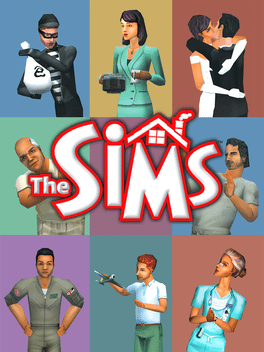
The paper's most significant claims concern power and recourse. It contends that actual-world law operates chiefly at the outermost layer through courts and sanctions, while end-user license agreements at the interface layer define the relationship between owners and participants and frequently shield owners from legal challenge by waiving participants' access to courts. Illustrative cases, including the Korean Lineage "off-line PK" assault and the banishment of Peter Ludlow from The Sims Online, show owners excluding participants with little practical recourse. At the system and instantiation layers, the paper shows that code, rules, referee systems, and intellectual property contracts jointly regulate behavior, and that these elements are interdependent rather than separable. It further argues that virtual worlds are governed by a narrative-based normative order, or nomos, such that regulation must remain consistent with the fiction of the world, and that informal player communities, such as the Sims Shadow Government, can exert substantial influence over developers.
The scope is deliberately broad but shallow. The paper examines a range of commercial titles and their practices, drawing on examples from multiple regions, including Korea, and it acknowledges that its overview is cursory, intended as a framework for situating existing and future research rather than a comprehensive legal analysis. It notes that virtual-world disputes can produce real-world consequences, citing mass account terminations following an in-world protest in World of Warcraft and large Korean protests covered by mainstream media, and it asserts that the framework extends to geography, economics, identity, and literary theory alike.
Each row is a game or company this document names, each column a document, oldest first. A mark means that document names it. Select a row to see those documents.
DiGRA · 2016
DiGRA · 2016
DiGRA · 2016
DiGRA · 2016

DiGRA · 2016

DiGRA · 2016



DiGRA · 2016

DiGRA · 2016

DiGRA · 2016

DiGRA · 2016

DiGRA · 2016

DiGRA · 2016