1 free read left. Create a free account for unlimited reading + AI research.
Create free accountWhitepaper DiGRA
1 free read left. Create a free account for unlimited reading + AI research.
Create free accountWhitepaperDiGRA
The study asks whether multiplayer games are becoming the natural medium for computer-based communication, motivated by growing in-game chat and voice use.
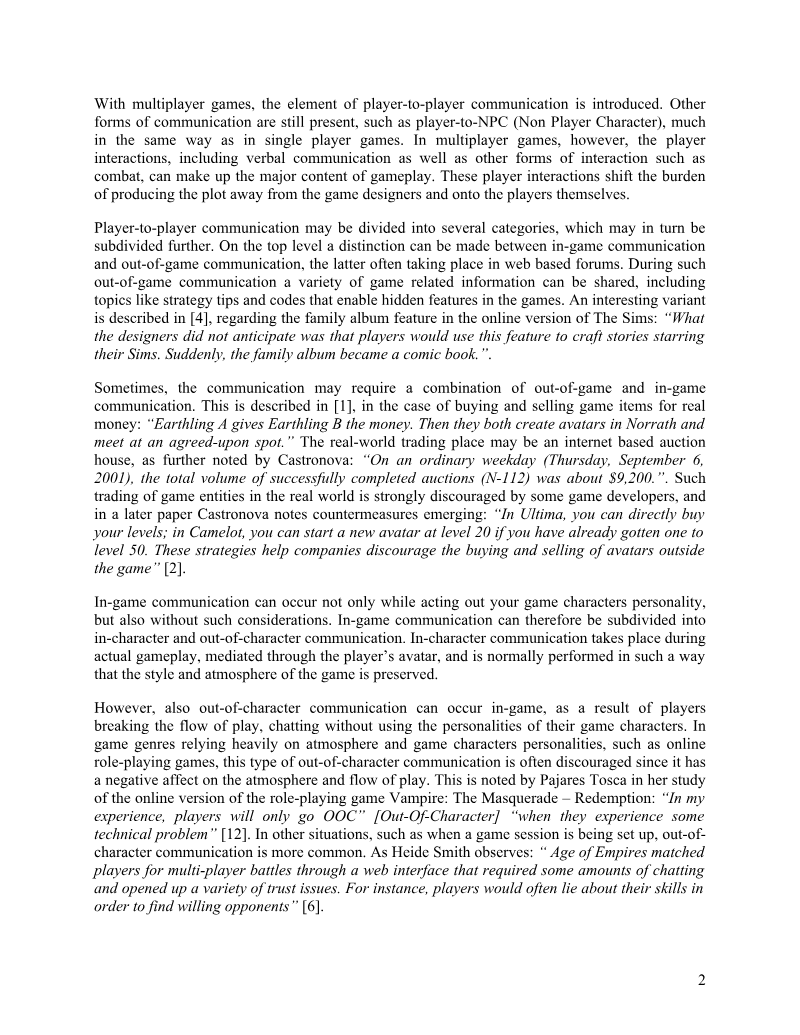
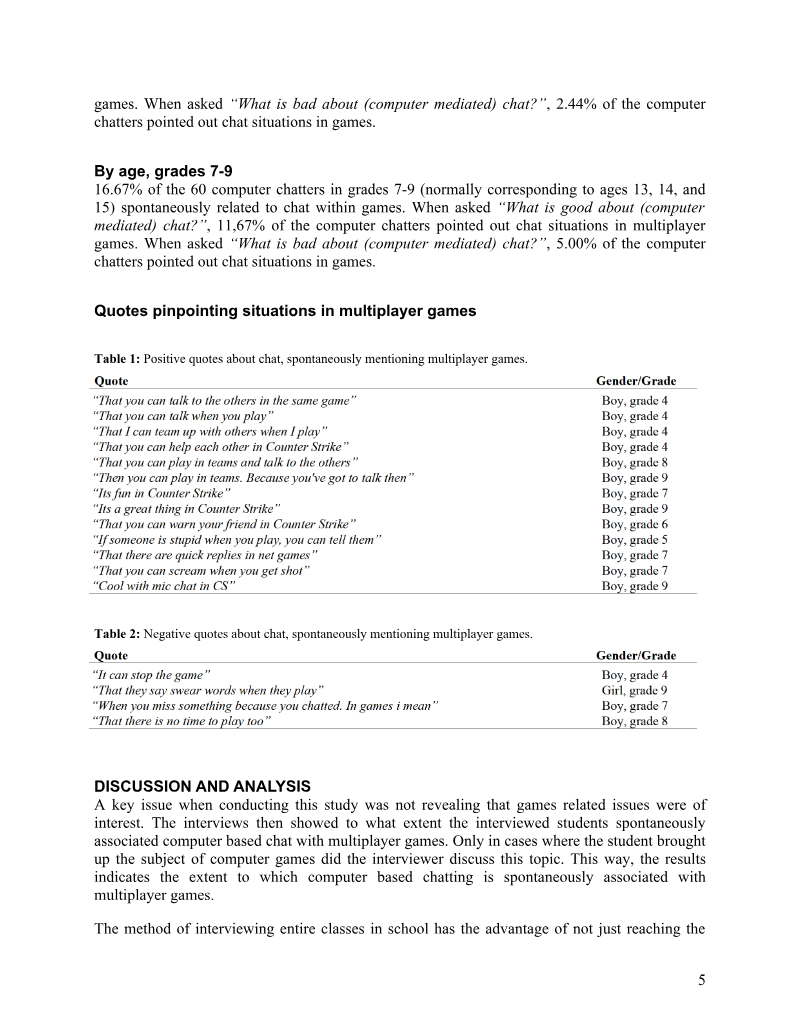
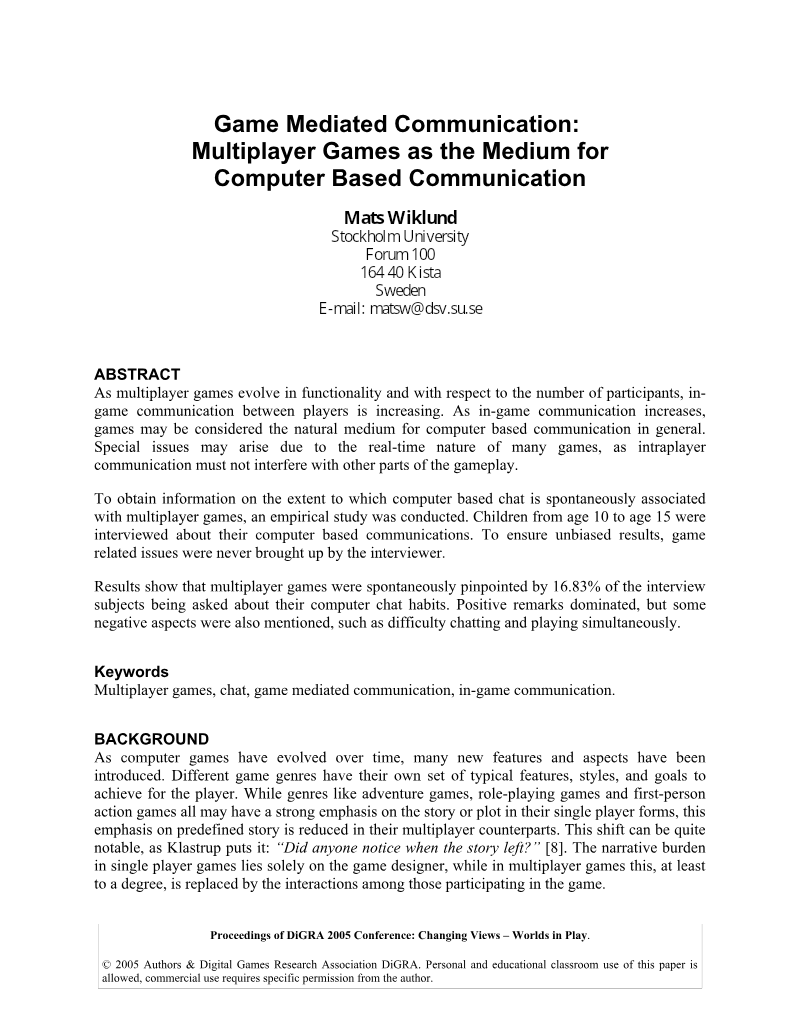
This study by Mats Wiklund at Stockholm University investigates whether multiplayer games are becoming the natural medium for computer-based communication, a question motivated by the growing prominence of in-game chat and voice interaction. The central finding is that 16.83% of computer chatters spontaneously associated chat with multiplayer games when asked about their chat habits, despite the interviewer never mentioning games. Positive associations dominated, with 76.47% of game-related answers arising from questions about the benefits of chat, while negative associations centered on disruption of gameplay flow, such as difficulty chatting and playing simultaneously.
The empirical basis is an interview study conducted at two Swedish schools with students in grades 4 through 9, roughly ages 10 to 15. Whole classes were interviewed individually and anonymously, using a fixed questionnaire, to avoid the self-selection bias of volunteer samples. Of 131 students interviewed, 101 reported chat use, forming the analytical base. Younger and older students showed nearly identical rates of spontaneous game association (17.07% versus 16.67%), though older students were more than twice as likely to mention negative aspects of chat within games.
The study frames its findings against a broader literature on player-to-player communication, which it argues shifts narrative responsibility from designers to players and supports the classification of multiplayer games as networked virtual environments. The author attributes the negative responses to the real-time nature of action games, where simultaneous chatting and play compete for attention without the option to pause or reload.
The author acknowledges that the sample is limited to Swedish children in two schools and that the results cannot definitively answer whether games will supplant web-based chat forums. Still, the study offers evidence that a meaningful share of young users already regard multiplayer games as a natural setting for computer-mediated conversation.
DiGRA · 2016
DiGRA · 2016
DiGRA · 2016
DiGRA · 2016

DiGRA · 2016
DiGRA · 2016
DiGRA · 2016
DiGRA · 2016
DiGRA · 2016
DiGRA · 2016
DiGRA · 2016

DiGRA · 2016







Comments