
DiGRA
The Digital Games Research Association: the international association of academics and professionals who study digital games. Its Digital Library holds the proceedings of the DiGRA conferences since 2002.
Documents
Categorizing Morality Systems Through the Lens of Fallout
This analysis categorizes morality systems within the Fallout CRPG series to inform the development of more sophisticated and immersive player-driven moral frameworks in games.
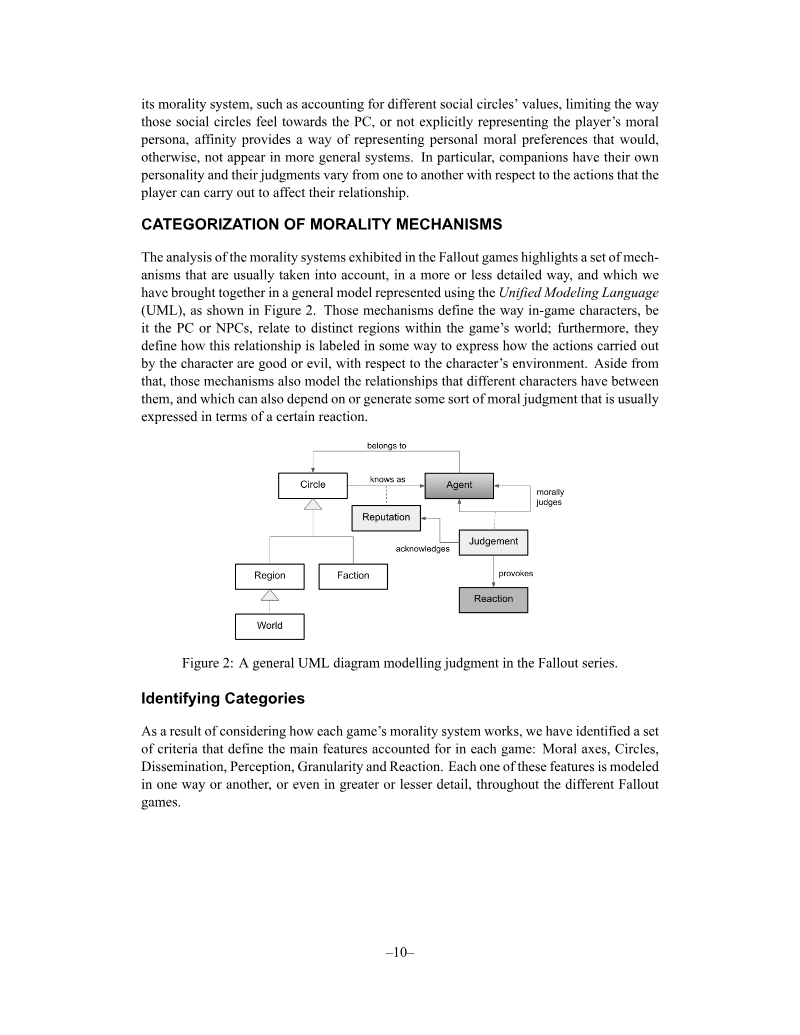
- The paper analyzes how the five canonical Fallout CRPGs (1997, 1998, 2005, 2010, 2015) model moral weight, excluding spin-offs and Fallout 76 because it lacks NPCs, shifting focus from prior player-experience scholarship to the games' own mechanics.
- The authors argue that Fallout: New Vegas has the most comprehensive morality system in the series because it tracks good and evil on separate axes, so deeds do not cancel each other out.
- New Vegas tracks Fame and Infamy per faction and town, reflecting that different social circles hold different values, a design that the authors identify as the most nuanced in the series.
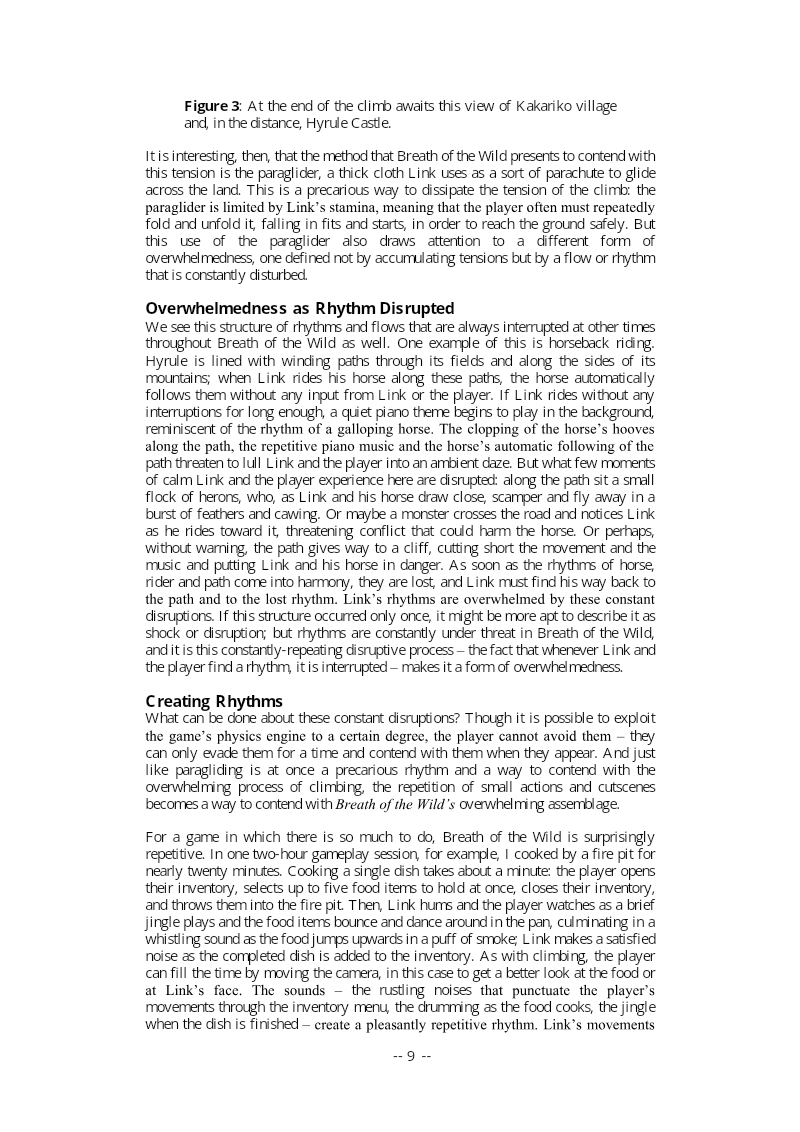
The Path That Lies Ahead: Intimacy Through Overwhelmedness in The Legend of Zelda: Breath of the Wild
The analysis explores "intimacy through overwhelmedness" in The Legend of Zelda: Breath of the Wild, positing that intimacy, in this context, is an affect defined by vulnerability, loss of control, and precarity, rather than interpersonal connection.
- The essay argues that intimacy in The Legend of Zelda: Breath of the Wild is an affect generated through overwhelmedness, meaning vulnerability, loss of control, and precarity, rather than an interpersonal bond.
- Overwhelmedness is distinguished from the Kantian sublime: where the sublime culminates in awe that resolves into reason and self-elevation, the game's overwhelm accumulates from many small encounters and is never fully resolved.
- The author situates these feelings within contemporary neoliberal conditions of uncertainty, drawing on Deleuzian affect theory, Lauren Berlant, and Nasser Yousef.
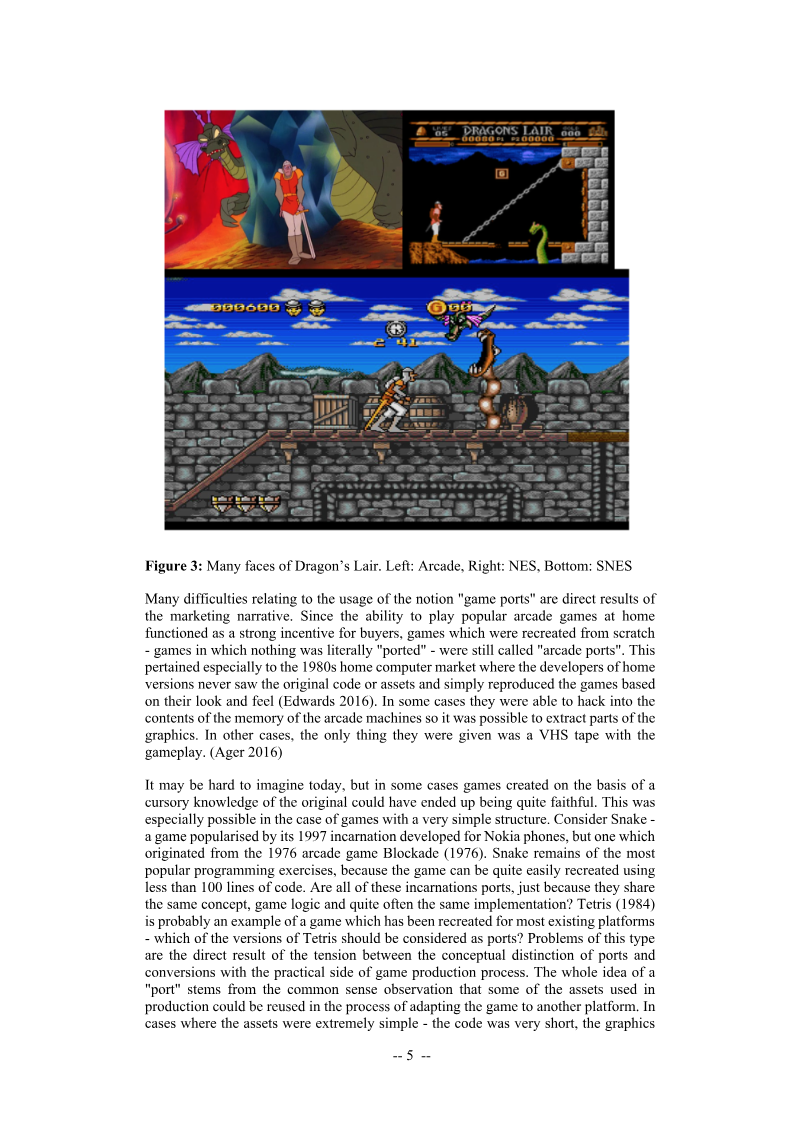
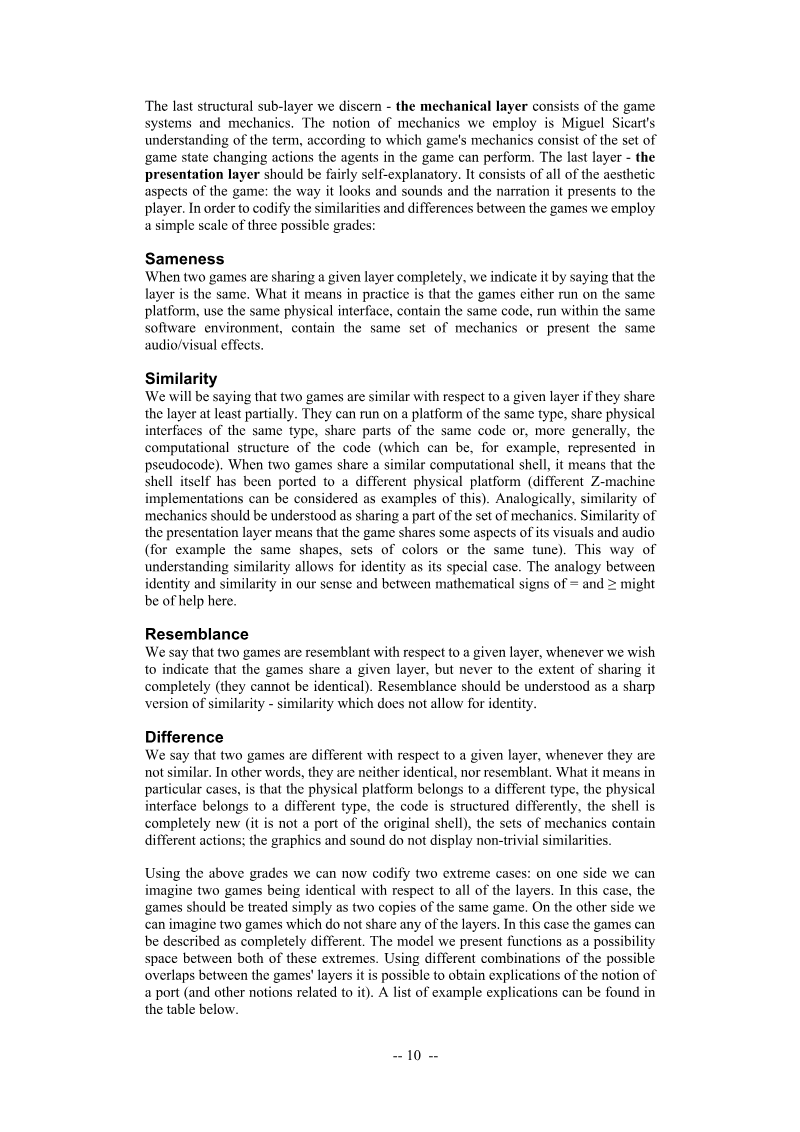
Port or Conversion? An Ontological Framework for Classifying Game Versions
The document proposes a formal ontological framework for classifying different versions of video games, addressing the current ambiguity and inconsistency surrounding terms like "port," "conversion," and "remaster."
- The paper argues that 'game port' is a conceptually vague and historically inconsistent term, yet indispensable for game analysis and preservation, and that existing definitions based on names, platforms, marketing, legality, or literal code transfer fail to yield a stable academic category.
- To fix this, it proposes a Carnapian explication built on a three-layer ontology (physical, structural, and presentation layers) paired with a graded scale of sameness, similarity, resemblance, and difference for classifying game versions by fidelity.
- Case studies such as multiple Pac-Man versions, Thunder Blade's Atari ST and Amiga releases, and Marvel vs. Capcom on PlayStation 1 show the same title can differ dramatically across platforms, with fidelity expectations focused far more on mechanics than on audiovisual presentation.
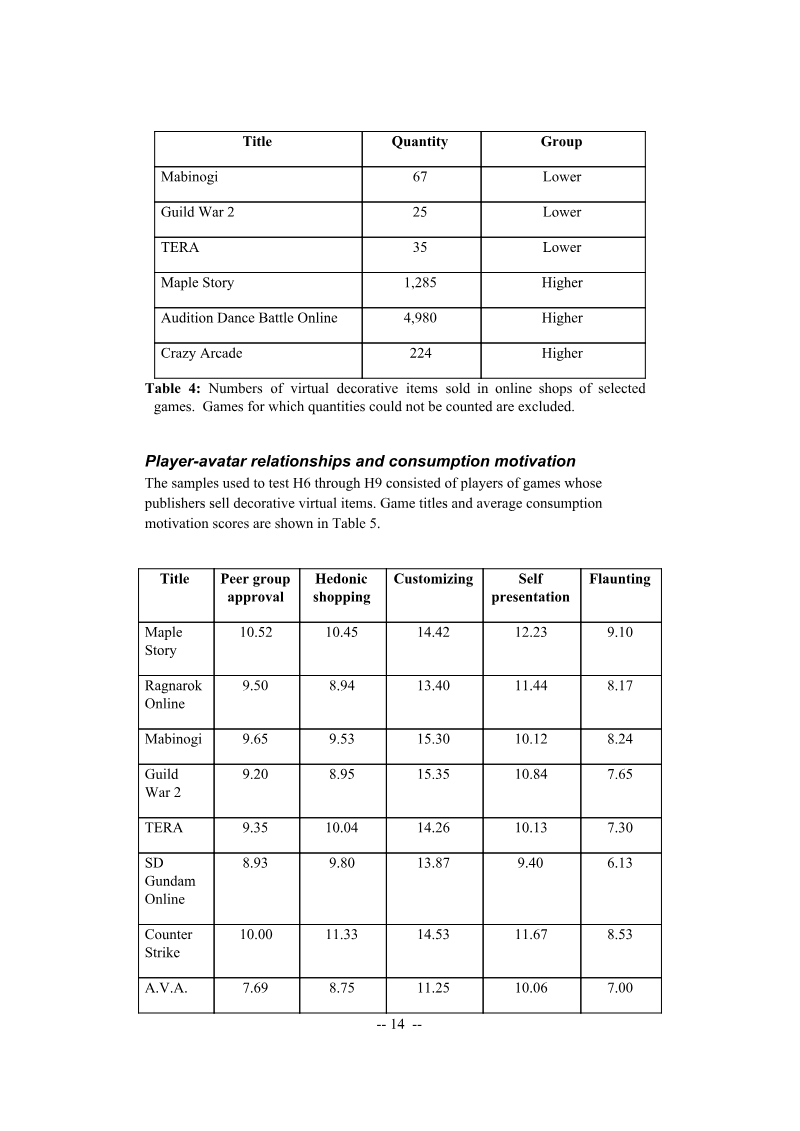
Effects of Game Design Features on Player-Avatar Relationships and Motivation for Buying Decorative Virtual Items
The research explores the intricate relationship between specific game design features, player-avatar relationships, and the motivation behind purchasing decorative virtual items.
- Player-avatar relationship orientation is central to decorative item purchasing: players who see their avatar as a functional tool show stronger motivation to buy decorative items for flaunting and peer approval, while those who see avatars as companions or role-play characters show higher hedonic and customization motivation.
- Design choices shape how players relate to their avatars: more frequent avatar deaths reduced players' sense of shared feelings with their avatar (p = .042), and harsher death penalties increased the perception of the avatar as a tool (p = .012).
- Pet ownership was associated with lower tool perception of the avatar (p = .03), indicating that pet systems may shift players away from treating their avatar as merely functional.
Middle-aged Players' Memorable Experiences with Pokémon GO
The study "Middle-aged Players' Memorable Experiences with Pokémon GO" explores the qualitative play experiences of middle-aged individuals (40-65 years old) with the location-based augmented reality game Pokémon GO.
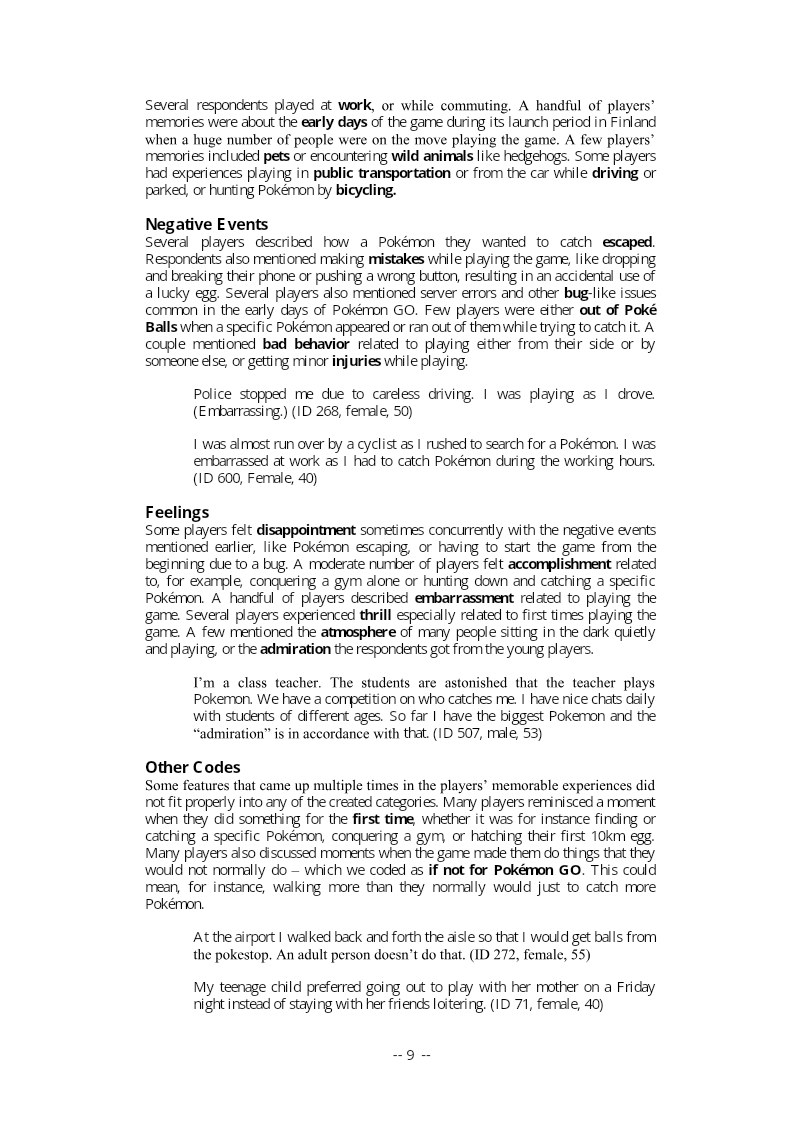
- Middle-aged players' most memorable Pokémon GO experiences centred on social interaction rather than game content, with interactions involving children, strangers, and the wider community dominating the responses.
- Compared with the full survey sample, middle-aged respondents reported considerably more interactions with related children and fewer with friends, while nostalgic references to specific Pokémon were notably less common.
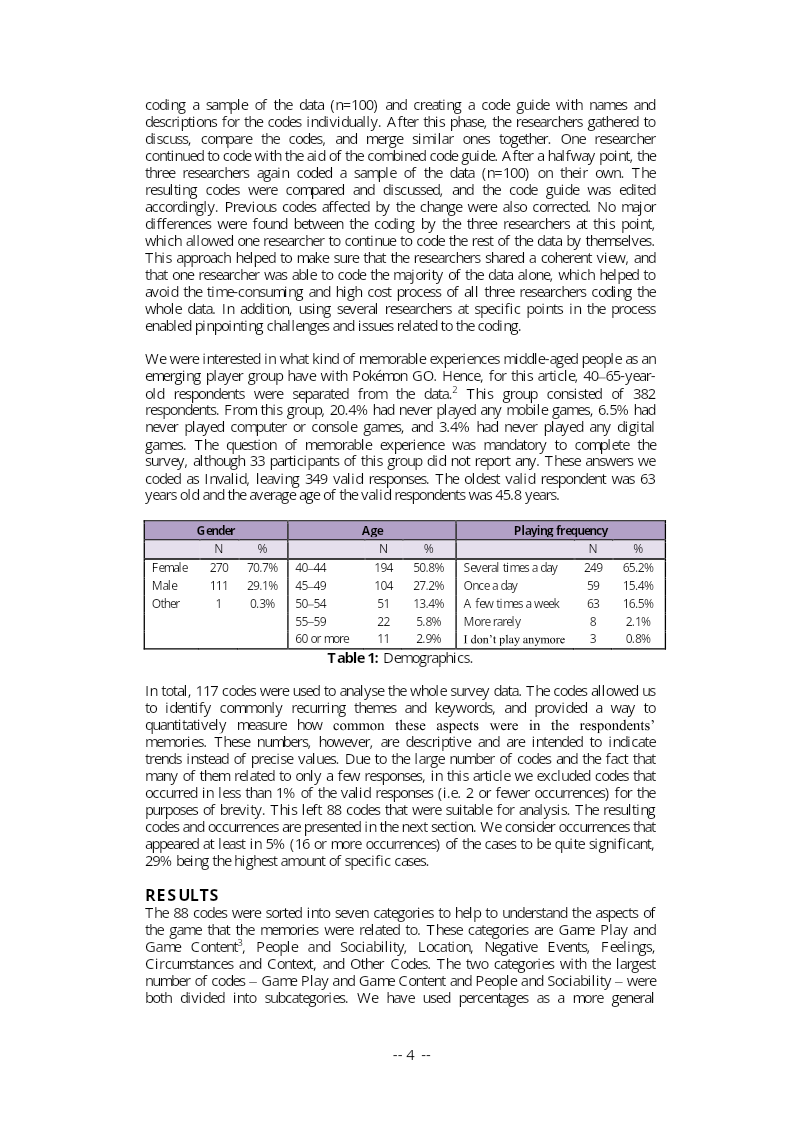
- The study is based on 349 valid open-ended survey responses from Finnish players aged 40 to 65, collected about seven weeks after the game's European launch at the peak of its popularity.
Joy Family: Japanese Board Games in the Post-War Shōwa Period
Postwar Shōwa-era Japanese board games (1945-89) remain poorly documented because they have been conflated with localized American titles, rooted in the traditional e-sugoroku picture-board racing format, and dominated by Japan-specific licensed properties.
- Japanese board game history of the Shōwa era (1945–1989) has been largely overlooked, with Bandai alone releasing more than 400 games in the 1980s, yet this output remains poorly documented due to localization obscuring origins, dominance of licensed properties, and language barriers.
- Bandai's Joy Family series, launched in 1980, became the commercial model for Japanese board games in the 1980s by combining licensed properties, collectible series branding, and e-sugoroku-based play drawn partly from the import of The Game of Life.
- The Haunted House Game (1980) reportedly sold over 800,000 copies, becoming Joy Family's breakout hit.
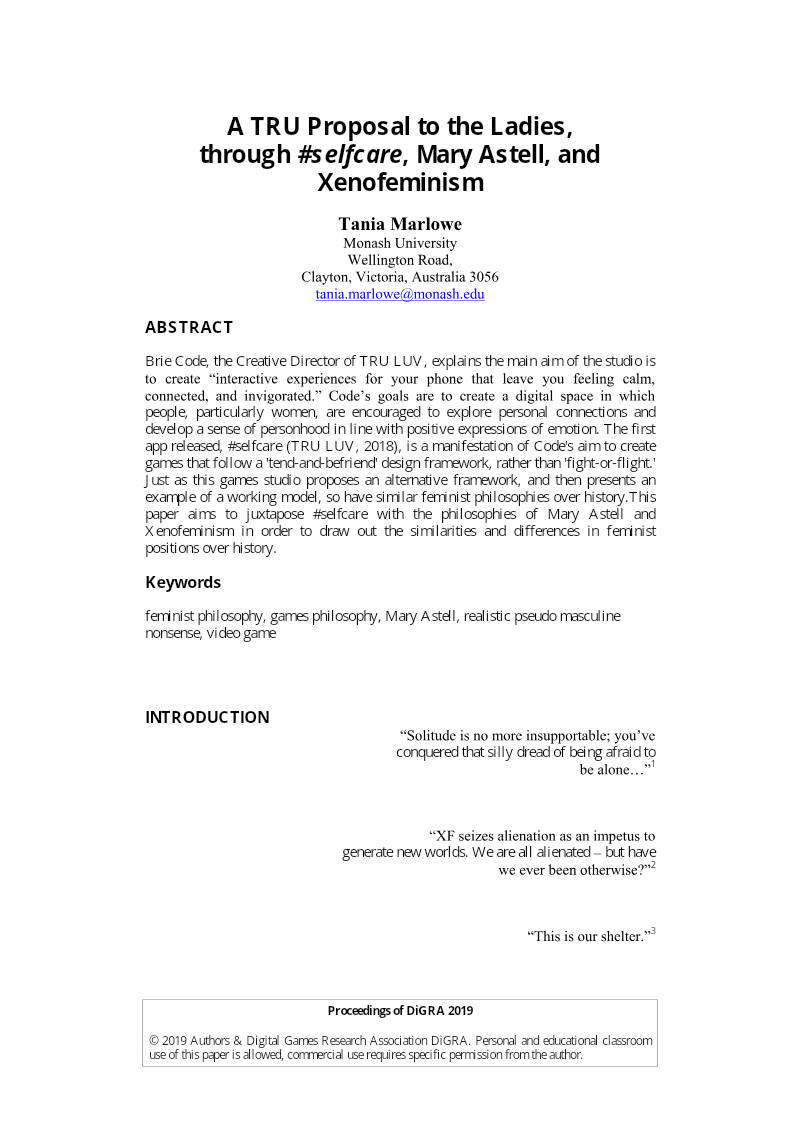
A TRU Proposal to the Ladies, Through #selfcare, Mary Astell, and Xenofeminism
Tania Marlowe's 2019 DiGRA paper argues that TRU LUV's mobile "companion" app #selfcare, created by Brie Code, is best understood alongside two seemingly distant feminist traditions: Mary Astell's seventeenth-century Cartesian feminism and the contemporary Xenofeminism of Laboria Cuboniks and Helen Hester.
- The report compares three frameworks for women's liberation: TRU LUV's #selfcare app, Mary Astell's seventeenth-century Cartesian feminism, and Laboria Cuboniks' Xenofeminist manifesto, arguing all three repurpose existing tools toward feminist ends.
- Xenofeminism orients outward toward political and technological intervention in gender and society, Astell focuses inward on personal virtue and female friendship, and #selfcare occupies a middle ground offering a brief, compassionate personal escape that supports a return to the physical world.
- #selfcare's companion feature is framed as a tool for self-reflection rather than escape or communal political discussion, and its design aims to produce oxytocin rather than adrenaline, following a 'tend-and-befriend' rather than 'fight-or-flight' model.
Dawn of Machinic Cyclicality: Life as We Don’t Know
Alexandre Paquet's essay uses the video game Horizon: Zero Dawn as a theoretical text to challenge linear, apocalyptic conceptions of time and human dominance over nature.
- The essay uses Horizon: Zero Dawn as a theoretical text to challenge linear, apocalyptic views of time and human dominance over nature, drawing on Anthropocene, Capitalocene, and Donna Haraway's Chthulucene discourses.
- Its central argument is that the game's 'post-post-apocalyptic' setting reframes the end of humanity as a recurring process of cyclical renewal, not finality, through the Zero Dawn project in which the AI GAIA reseeds life after a robot-driven ecological collapse.
- The analysis supports this reading with Anna Tsing's concept of resurgence within capitalist ruins and Fernand Braudel's longue durée, presenting time in the game as malleable and shaped by agency.
A Challenge of Developing Serious Games to Raise the Awareness of Cybersecurity Issues
This document outlines a project to address the shortage of cybersecurity professionals in Japan by developing serious games for awareness and education.
- Japan faces a cybersecurity personnel shortage of roughly 80,000 people, which motivated the use of serious games to raise awareness of threats such as targeted email attacks.
- A 2014 Serious Game Jam for Cyber Security produced 42 game concepts from about 60 university students, of which six were prototyped in two days and three were refined into finished games: Mail Stock Farm Story, Security Growth, and The Multi-tasking.
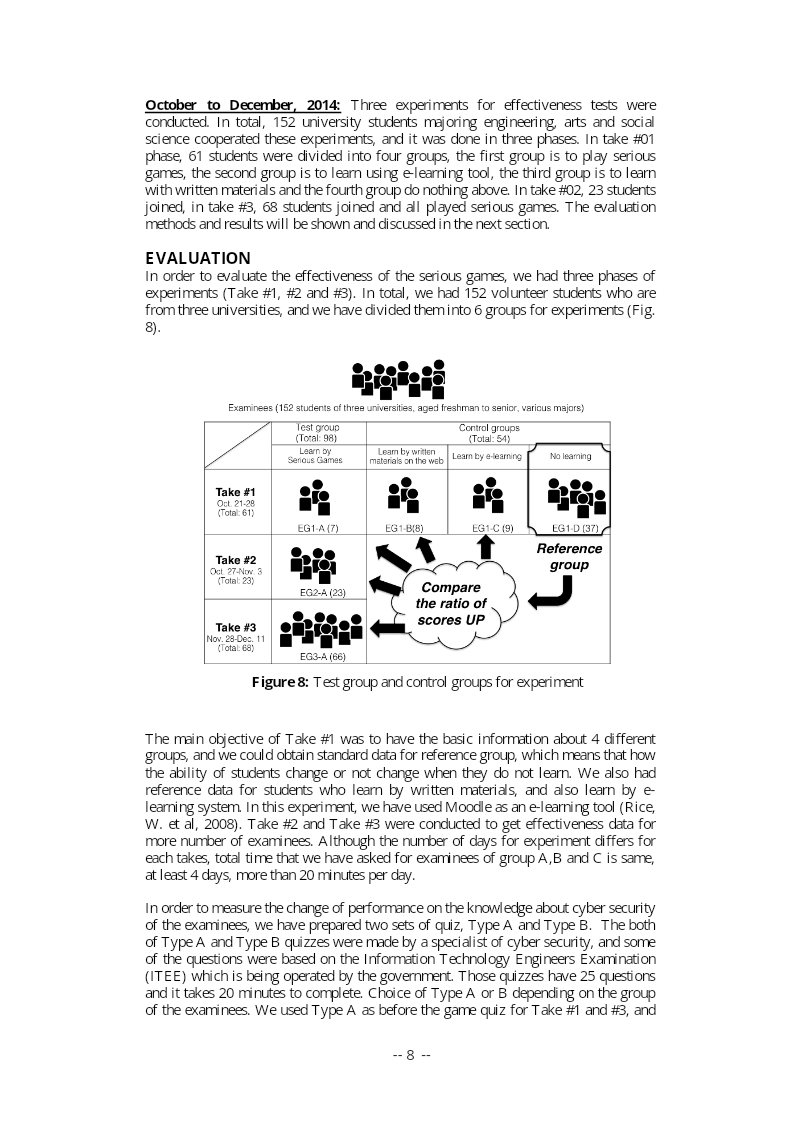
- In three experiments with 152 students at three universities (October to December 2014), about 50% of serious game participants improved their quiz scores, versus 24% in the no-learning control group, 37.5% for written materials, and 44.4% for e-learning (Moodle).

Exploring the Role of Narrative Puzzles in Game Storytelling
The document, "Exploring the Role of Narrative Puzzles in Game Storytelling," posits that narrative puzzles are fundamental to story-driven video games, serving as critical design elements that directly integrate with and advance the game's plot.
- The paper argues narrative puzzles should be analysed as storytelling devices, not only as mechanical features, and aims to build an initial taxonomy of their narrative roles in story-driven games.
- Prior puzzle scholarship has focused on internal puzzle mechanics rather than on how puzzles shape players' experience of the narrative, which the authors identify as a gap they address with a revised working definition.
- The authors identify four core narrative functions of puzzles: preparation and acquisition, advancement and guidance, plot variation through branching outcomes tied to puzzle performance, and pacing and structuring, including nested and metapuzzle arrangements.
Game Streaming Revisited: Some Observations on Marginal Practices and Contexts
This analysis explores game streaming as a multifaceted cross-media entertainment phenomenon, moving beyond a narrow game-centric perspective to understand its broader cultural significance and viewing contexts.
- Game streaming is framed as cross-media entertainment comparable to stage performance, social interaction spaces, and reality or variety programming, rather than merely an extension of gameplay.
- The study identifies four viewer types: play-centered viewers, fan-based viewers, vicarious audience players who experience games through others, and background media users.
- Background multitasking and social companionship are the principal motivations for many viewers, and roughly one quarter of survey respondents said watching live streams had become a habit.
Sami Game Jam: Learning, Exploring, Reflecting and Sharing Indigenous Culture through Game Jamming
The Sami Game Jam 2018, held in a Sámi village in Utsjoki, Finland, served as a significant initiative to revitalize Sámi language and culture through game development.
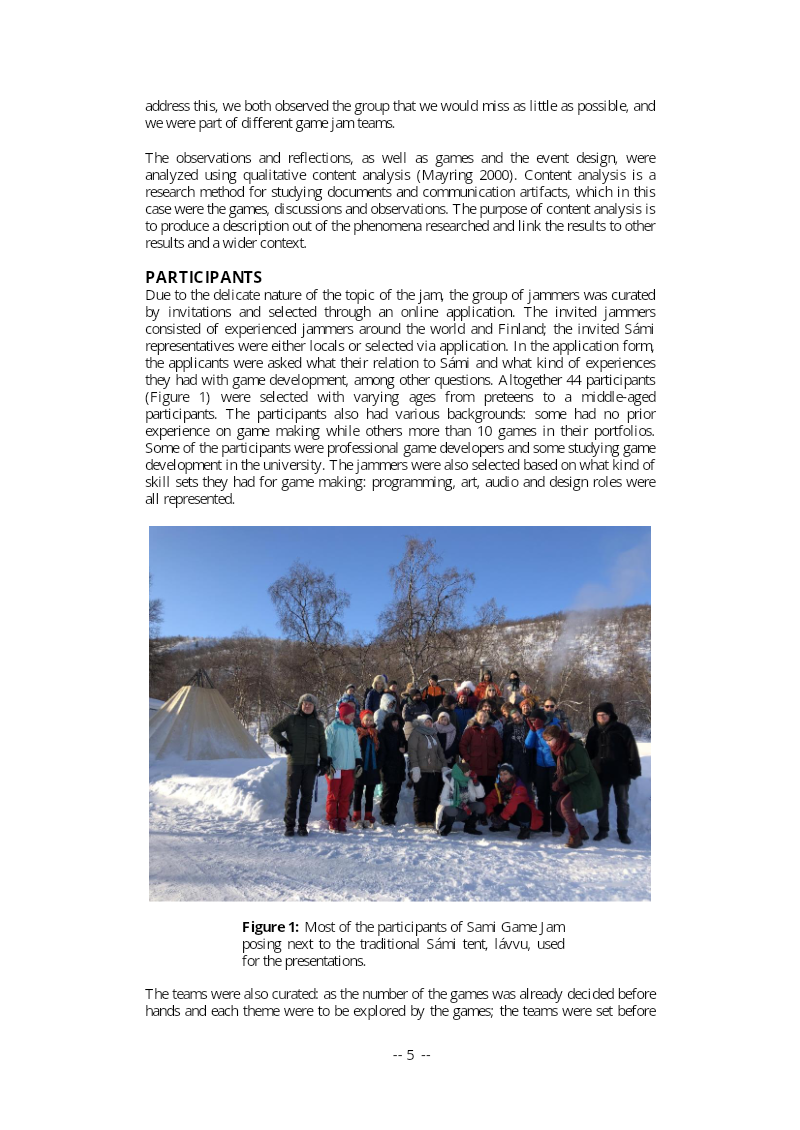
- The Sami Game Jam 2018 in Utsjoki, Finland, ran for five days in February with 44 participants, including Sámi community members, Finnish and international game students, and experienced developers, organized into teams paired with local Sámi experts and working on twelve Sámi-themed prompts such as language loss, border divisions, and ethnostress.
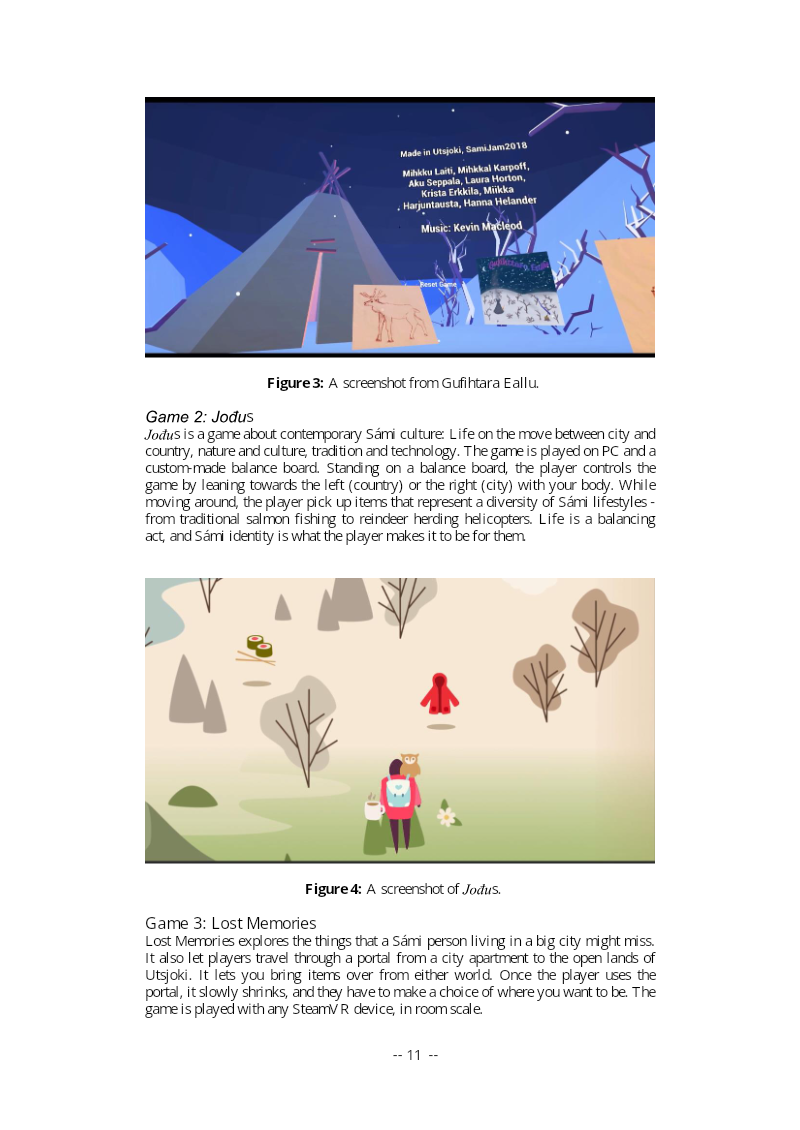
- The jam produced six games across VR, tablet, PC, and custom-controller formats, among the first computer games published on Sámi topics or in Sámi languages, drawing on all three Sámi languages spoken in Finland and largely avoiding common cultural clichés.
- Qualitative ethnographic participant observation and content analysis suggested the event was effective for learning and reflection and aligned well with the goals of Sámi Pedagogy, a culturally grounded educational model responding to the historical assimilation of the Sámi people.
Do you work at DiGRA? Get a free report of how these documents are read and cited here.