Loading the document
1 free read left. Create a free account for unlimited reading + AI research.
Create free accountArticle DiGRA
1 free read left. Create a free account for unlimited reading + AI research.
Create free accountArticleDiGRA
The report compares TRU LUV's #selfcare app, Mary Astell's seventeenth-century Cartesian feminism, and Laboria Cuboniks' Xenofeminist manifesto.
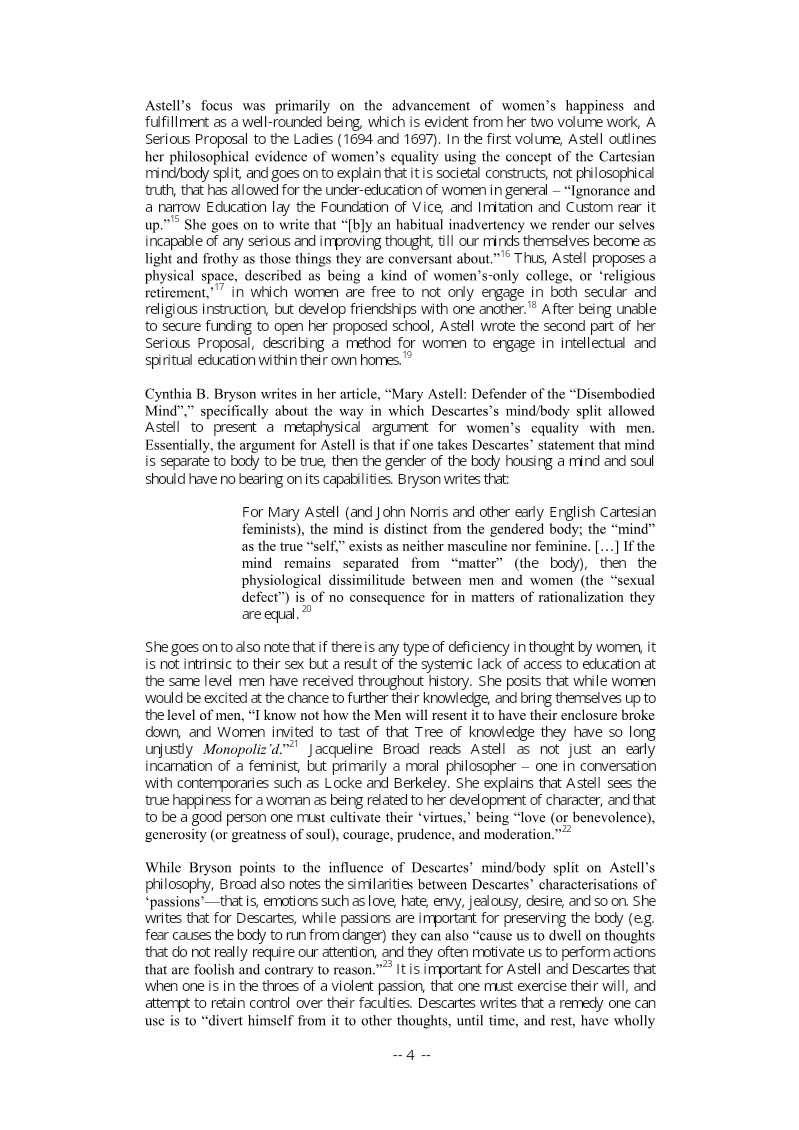
Tania Marlowe's 2019 DiGRA paper argues that TRU LUV's mobile "companion" app #selfcare, created by Brie Code, is best understood alongside two seemingly distant feminist traditions: Mary Astell's seventeenth-century Cartesian feminism and the contemporary Xenofeminism of Laboria Cuboniks and Helen Hester. Rather than a "hermeneutics of suspicion," Marlowe adopts a postcritical "weird reading" that treats these texts as companions in conversation, not as a definitive historical lineage. The scope is interdisciplinary, spanning a 1694 philosophical treatise, a 2010s theoretical manifesto, and a single contemporary game within the independent and experimental design space.
The analysis grounds #selfcare in Code's finding that many non-gamers reject games for lacking depth and for reflecting a narrow maker demographic. The app responds by replacing the "fight-or-flight" model with "tend-and-befriend," positioning itself against mainstream industry conventions. Its brief three-to-five-minute sessions, including a mini-game in which words like "anger" and "worthless" dissolve, ask players to confront rather than suppress their emotions. Marlowe likens this to Astell's counsel that women master their passions through contemplation, a counsel rooted in the claim, drawn from Descartes' mind/body split, that women's perceived intellectual deficits come from lack of education rather than sex.
Xenofeminism supplies a second lens. It is technomaterialist, anti-naturalist, and gender-abolitionist, urging the repurposing of technology for feminist ends, as with the DIY Del-Em device, and criticizing puritanical online callout culture. #selfcare reflects this in its reworked design logic, its "we" companion, and a near-faceless avatar that loosens identity binaries.
The central distinction is orientation: Xenofeminism looks outward to structural and political change, while Astell and #selfcare turn inward toward personal reflection, a stance reinforced by the app's journal feature. Marlowe concludes that all three share a hopeful commitment to "freedom-from" and "freedom-to," and that Astell's valuing of female friendship resonates with the app's befriending ethos.

DiGRA · 2026

DiGRA · 2026



DiGRA · 2026



DiGRA · 2026



DiGRA · 2026



DiGRA · 2026



DiGRA · 2026



DiGRA · 2026



DiGRA · 2026

DiGRA · 2026



DiGRA · 2026



DiGRA · 2026
DiGRA · 2026