1 free read left. Create a free account for unlimited reading + AI research.
Create free accountReport DiGRA
1 free read left. Create a free account for unlimited reading + AI research.
Create free accountReportDiGRA
Kaelan Doyle-Myerscough argues that intimacy in Breath of the Wild is an affect generated through overwhelmedness. Vulnerability, loss of control, and precarity are the intimate sensations at its heart.
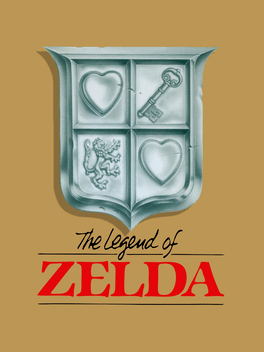
In "The Path That Lies Ahead," Kaelan Doyle-Myerscough argues that intimacy in The Legend of Zelda: Breath of the Wild is best understood as an affect rather than an interpersonal bond, and that the game generates this intimacy through overwhelmedness. Drawing on Deleuzian affect theory alongside Lauren Berlant and Nasser Yousef, the essay contends that vulnerability, loss of control, and precarity are the intimate sensations at the heart of the player's experience. These feelings are situated within contemporary neoliberal conditions of uncertainty, and the game's considerable length, roughly 45.5 hours for the main story, is identified as a practical source of this sustained overwhelm.
The essay distinguishes this overwhelmedness from the Kantian sublime, which culminates in a moment of awe that resolves into reason and self-elevation. In Breath of the Wild, the author argues, the experience accumulates from many small encounters: escalating combat, inventory management, the breakable weapon system, and the frustrations of technological glitches. Using Deleuze and Guattari's notion of the machinic assemblage and Eugenie Shinkle's account of the technological sublime, the analysis illustrates how this overwhelm is never fully resolved and must instead be continually contended with. First-person accounts of a lightning-cave combat sequence and the climbing mechanic, whose tension is released only briefly by the paraglider and the vista, ground the argument in concrete play.
The concluding sections argue that both being overwhelmed and the process of contending with that overwhelm are intimate experiences. Repetitive, rhythmic actions such as cooking, gathering, and camera-angling emerge as strategies of comfort rather than escape, drawing on Berlant, Henri Lefebvre, and Sara Ahmed. The essay ultimately proposes that open-world spaces like Hyrule offer "genres for valuing living" under precarious conditions, rather than inviting players to master the terrain.
Each row is a game or company this document names, each column a document, oldest first. A mark means that document names it. Select a row to see those documents.
DiGRA · 2023
DiGRA · 2023
DiGRA · 2023
DiGRA · 2023
DiGRA · 2023
DiGRA · 2023
DiGRA · 2023
DiGRA · 2023
DiGRA · 2023
DiGRA · 2023
DiGRA · 2023
DiGRA · 2023
DiGRA · 2020