User Acquisition reports and market data
Documents

Pocket Gamer Connects London 2026 unwrapped | Week in Mobile Games podcast
The mobile gaming industry is currently experiencing a notable shift toward cautious optimism, marking a departure from the recent period of widespread workforce reductions.
- Direct-to-consumer web stores are gaining traction, with data indicating that 97% of web shop revenue is generated by repeat buyers, and 84% of customers who make three purchases will proceed to a fourth.
- User acquisition (UA) costs remain a persistent industry challenge, forcing developers to shift focus toward retargeting existing players rather than relying solely on expensive new user acquisition.
- The UK games industry continues to struggle with a lack of government support compared to international hubs like Canada, Vietnam, and Israel, prompting the formation of the UK Video Games Council to lobby for better policy alignment.

TWiG #367: A Certain IPO, 2026's 1st Cozy Launch & When CEOs Get Sued
Corporate governance and strategic pivots define the current landscape of the interactive entertainment industry.
- Shareholders have initiated legal action against former Activision Blizzard CEO Bobby Kotick, alleging that the $69 billion acquisition process prioritized personal financial gain and legal protection over fiduciary duties.
- Adtech firm Liftoff has reached a $4 billion valuation via IPO, signaling a growing industry reliance on AI-driven user acquisition financing to maintain growth despite significant debt burdens.
- Major publishers like Krafton are shifting strategies toward operational efficiency by leveraging AI-integrated development and user-generated content to scale established intellectual property like PUBG.

Google’s Thomas Zybulski & Saejoon Oh on APAC’s New Wave: Data, Fintech & Vietnam’s Rising Talent
The Asia-Pacific (APAC) mobile app and gaming ecosystem is currently defined by a transition toward data-driven decision-making and the diversification of business models.
- APAC developers are increasingly adopting data-driven decision-making and scientific measurement to differentiate their apps in an oversaturated market.
- Non-gaming sectors, particularly fintech and finance companies, are aggressively entering the ad monetization space to better understand user behavior and maximize Lifetime Value (LTV).
- Rising user acquisition costs post-COVID are forcing developers to move beyond traditional models and innovate with new business models, genres, and service offerings.

New genre leader in cozy games by Jakub Remiar
Heartopia has emerged as a significant leader in the cozy, avatar-life simulation genre, demonstrating strong market performance shortly after its January launch.
- Heartopia, a mobile avatar-life simulation game launched in January, currently generates over $200,000 in daily revenue with hundreds of thousands of daily downloads.
- The game’s monetization is driven entirely by cosmetic-only gacha systems for clothing and furniture, avoiding gameplay-affecting mechanics or competitive stats.
- Market success is heavily concentrated in Asia, led by Japan, followed by the United States, Taiwan, South Korea, and Thailand.

Festive Season 2025: App Marketing Trends and Strategies for India
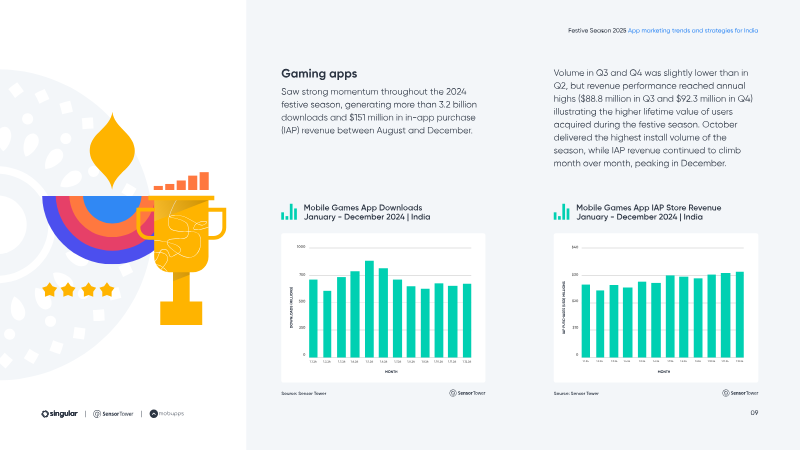
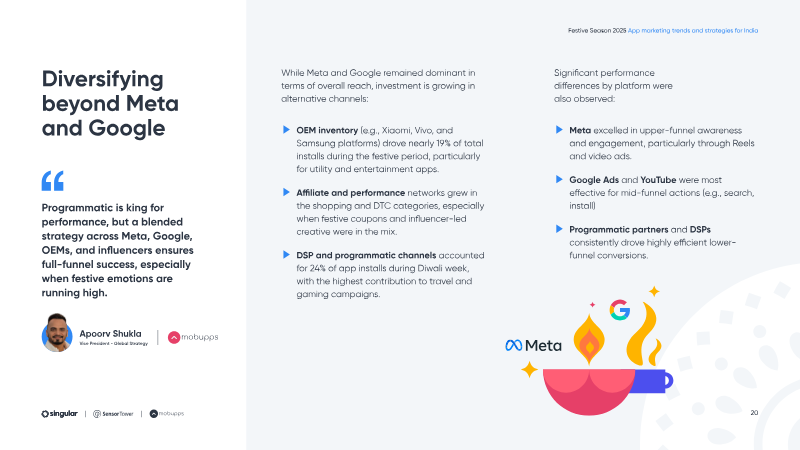
India’s festive season—from Onam in August through Diwali and Christmas in December—drives more than 30% of the country’s annual digital advertising spend, making it a pivotal period for app marketers.
- India's festive season (August–December) accounts for over 30% of annual digital ad spend, driving a 36% increase in installs and a 69% surge in re-engagements during the peak window.
- Mobile gaming remains a primary growth driver, recording 3.2 billion downloads and $151 million in-app purchase revenue in 2024.
- Ad spend efficiency improved during the festive period, with a 53% increase in mobile ad investment accompanied by a 12% reduction in cost-per-install (CPI).

Mobile Gaming Measurement in 2026: What's Actually Working?
The mobile gaming industry is undergoing a significant transition in measurement strategy as privacy regulations and the decline of traditional identifiers render last-click attribution insufficient.
- Ubisoft is shifting from last-click attribution to a holistic measurement framework for 2026 mobile launches, such as Rainbow Six Mobile and The Division Resurgence, to account for brand impact, content creators, and CTV.
- Effective growth measurement now requires integrating performance data with incrementality testing, organic lift, and K-factor analysis to capture the total value of multi-channel campaigns.
- Media Mix Modeling (MMM) is becoming a critical component of the modern growth stack, with AI being deployed specifically to analyze complex datasets and fill gaps in attribution data.
🤯 AI ads evolved from fake gameplay into full world simulations
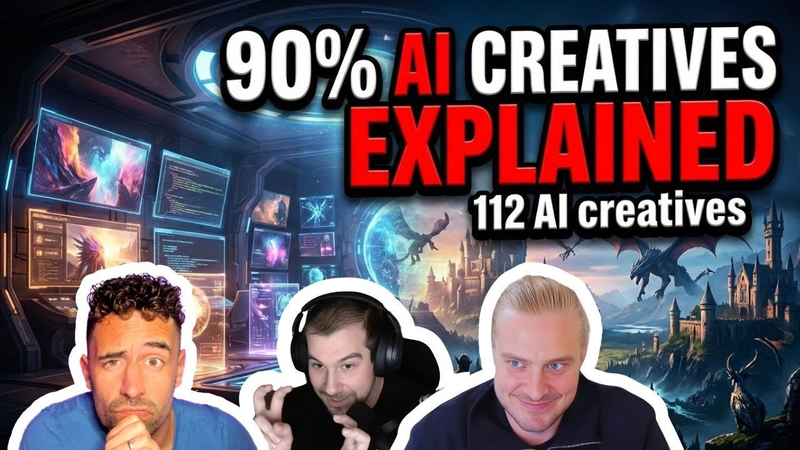
The mobile gaming industry is undergoing a fundamental shift in user acquisition strategy as developers transition from traditional, manually animated advertisements to sophisticated, AI-generated creative assets.
- Mobile game developers are shifting from deceptive 'fake gameplay' ads to AI-generated, high-fidelity world simulations that offer superior engagement and conversion rates.
- Leading titles such as Dark War and Top Heroes now rely on AI for 80% to 90% of their total marketing output.
- Generative tools like Genie 3 allow developers to create interactive, visually consistent environments from single source images, significantly outpacing traditional animation pipelines.

🚨📢 BREAKING NEWS: 2026 State of Gaming Marketing, Turkish studio raises big, Meta shuts studios
The 2026 gaming landscape is defined by rapid consolidation, a surge in creative output, and a strategic shift toward monetization efficiency.
- Global user acquisition spending reached $25 billion in 2026, with Turkey and India now capturing one-third of all UA expenditure outside of China.
- Top advertisers increased creative volume by 30% year-over-year, producing 2,400 to 2,600 variations per quarter to combat a market where ad impressions grew twice as fast as paid installs.
- Meta has shuttered three VR studios—Saru Games, Twisted Pixel Games, and Armatur Studio—as the company pivots its strategic focus from the metaverse toward wearable technology.

Azur Games' Head of Publishing Sergey Marcinkiewicz on Vietnamese Mobile Gaming Ecosystem
Vietnam has emerged as a premier global hub for mobile game development, characterized by an exceptionally rapid pace of production and a unique mastery of the puzzle genre.
- The mobile gaming industry is shifting away from hyper-casual models toward complex, high-quality titles inspired by PC mechanics such as roguelite, tower defense, and survival arena games.
- Vietnam has established itself as a premier global development hub, distinguished by its rapid production speed and expertise in pioneering new puzzle sub-genres.
- Due to rising user acquisition costs, studios now require at least three months of data to effectively optimize return on ad spend (ROAS).
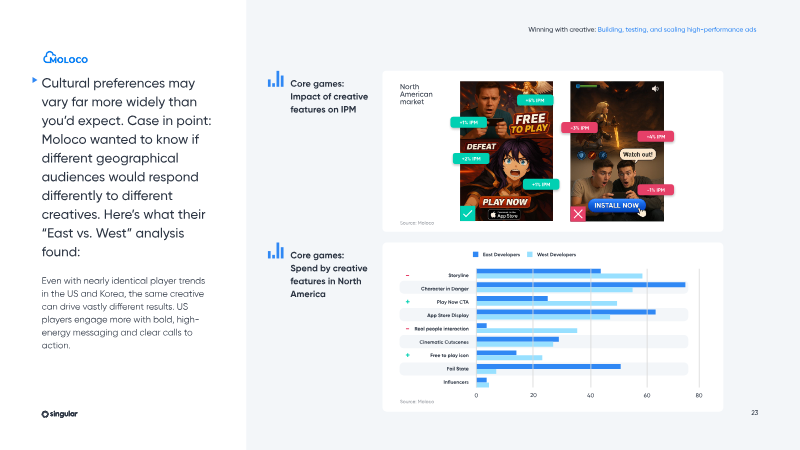

Winning with Creative: Building, Testing, and Scaling High-Performance Ads
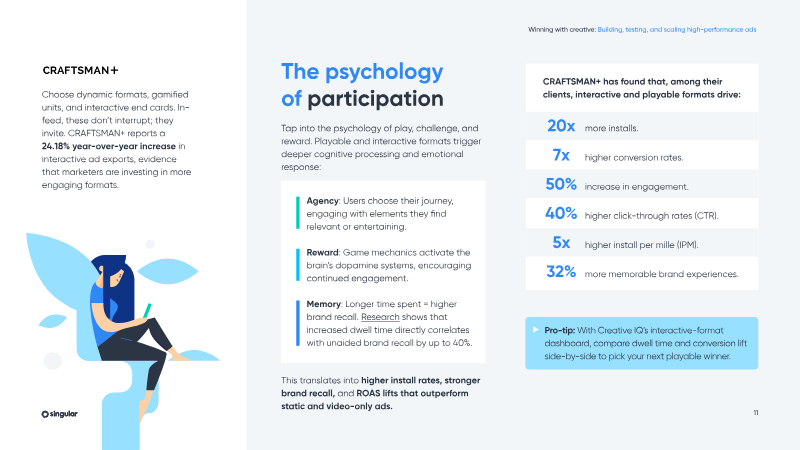
The purpose of the analysis is to demonstrate that creative content remains the decisive lever for growth in an advertising environment increasingly fragmented by privacy constraints and platform diversity.
- High-performance ads achieve a 350% lift in ad spend when winning templates are paired with top-performing assets.
- TikTok-first video structures—comprising a hook, body, and close—can increase purchase intent by up to 77% when using 30-second, sound-on formats.
- AI-driven content creation tools, such as TikTok Symphony, provide a 57% efficiency gain in the production process.

Apps vs Games on Mobile 2026: What’s Growing Faster (And Why)
The mobile ecosystem is undergoing a structural shift as capital flows away from gaming toward non-gaming applications.
- Mobile app acquisitions are increasingly favored over games due to higher profit margins, which frequently range between 55% and 70%.
- App businesses are easier to scale and maintain than games, often requiring small teams of approximately five people to manage six-figure monthly recurring revenue (MRR) businesses.
- Valuations for mobile apps typically command a profit multiple of 2x to 5x, making them attractive assets for acquisition compared to the complex, metric-heavy due diligence required for mobile games.

🤔 What if games paid players back?
The gaming industry is undergoing a fundamental shift toward embedded financial infrastructure, moving away from traditional monetization models that rely exclusively on heavy in-app purchases.
- Integrating embedded financial infrastructure allows developers to transition from traditional in-app purchase models to systems that facilitate real-world payouts.
- Ad revenue sharing models that distribute Bitcoin rewards to players can increase user retention rates by up to 180 percent.
- The shift toward loyalty-based models replaces 'churn-and-burn' acquisition strategies, significantly increasing the long-term lifetime value of users.