Transcript
We were we were showing the limited case studies we had and the biggest thing we were getting was like a cocked eyebrow of like plus 180% retention like I call [ __ ] you know pardon my
and and we were like well no like here's the actual data
it's made of golden ice
we're a gamer the midnight crew talking too Feeling shaku bringing the insight. We're rocking those vibes till the early day life a master eyes on the prize. Tracking data through the cyerspace skies. Felix stacks like a wizard in disguise. Challenge craft reals to the high. Two and a half gamers talking smack. Slow hockey stick got your back. Ads are beautiful. They light the way. Click it fast. Don't delay. Uh-huh. Uh-huh. Aha. Aha.
Uh-huh.
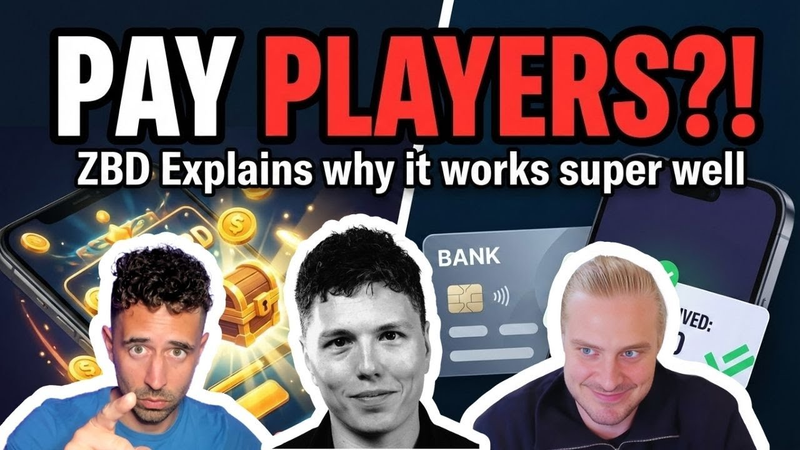
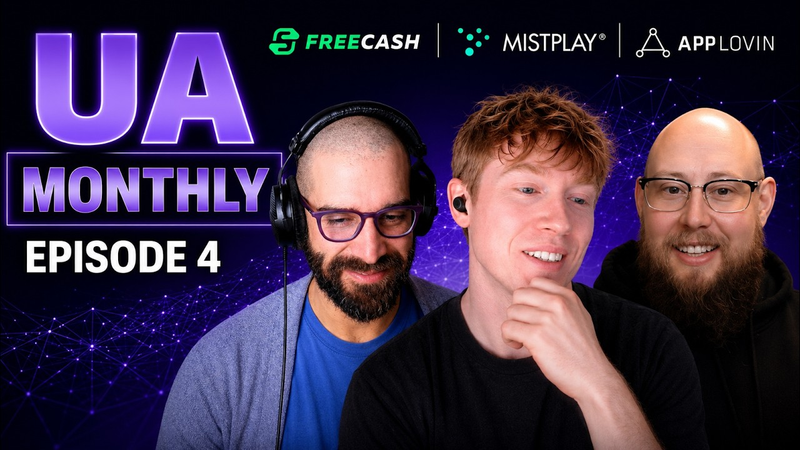
Hello everybody. Welcome. Welcome to our special episode. Uh is it super special or special? It's very special. Okay. Okay. Yeah. we started, you know, doing this because today we have an actual interview about the state of games and we're going to go through the the player psychology, behavioral changes and and all of the different things and we have Ben from ZBD on the recording. So, welcome Ben. Can you introduce yourself
to the audience?
Nice to nice to be here. Thank you, Mate and Felix. Yes, I'm Ben. I'm I'm chief strategy officer at ZBD. I'll try and give my background as swiftly as I can. So I I spent about well I started my career in video games development a very very long time ago. So when I was about 16, I began in QA back when I think Nintendo Wii was the main console in the market at that point in time.
Nice.
My claim to fame is I was a producer when we ported Silent Hill 2 to the
Nintendo Wii. I was working for a studio called Climax down in Portsouth here in the UK. Once I got sort of started out in production, I really enjoyed it. But I I'll be very nakedly transparent and say uh I was quite materialistic as a young man in my 20s. And so I I jumped into investment banking. Boo hiss. And uh I I worked on um mergers and acquisitions and capital raising for the games industry. So uh I worked when SoftBank bought Supercell way back when. I I worked on that deal. And then the sort of last thing I was involved in uh before jumping into venture capital was Epic Games. uh their fund raise when Sony came in. That was I think just off the back of Fortnite's success. So I moved into venture capital. I was I was basically more and more drawn to like the entrepreneur and still within gaming. That was kind of where where I found myself in my happy place and I I joined a team the team at Lakesar. I led in investing for them maybe eight nine investments in games. One of them was ZBD and
okay
I had met I met the ZBD team at a very
very early stage in the business. I think it was like three or four months old. But Simon the CEO came to me and he said uh you know I think gaming has a payments problem and I want to build like a full stack solution for gaming payments uh and I want to do it as a regulated provider. I had been privy to a lot of this thinking in working with Epic as a banker and I was like yeah you're on to something. So, I ended up backing the business basically with a blind take my money check. And they did their first demo where they kind of modded Counter-Strike and they they made it so that you could shoot people and coins dropped out of their body and then when you picked them up, you actually got paid. And I was like, "Holy hell, this is like really really really engaging." At that point, they were raising their series C, series A, sorry, and I I decided to join the business and help them commercialize. I I could kind of see that you had a team full of really solid engineers and the kind of commercial piece of it was was where they needed to establish they needed to build credibility in the games industry. So far fast forward to today and we we kind of concentrated on mobile and
payouts as the experience which is you know rewards and loyalty and I've been in the business five or six years now. I've got more gray hair than I anticipated. I mean
you basically dated yourself and I mean of course like we're not getting any younger though, right? So I can I can understand. Before we go into the the actual podcast, can you talk a little bit more about like what is ZB trying to like solve? And I know like this just a little bit introduction about like the whole company.
The company itself is a fully regulated payment services provider. And in terms of the games industry, that's a one of one. We're the we're the only one like that. So if you look at other payment providers, they tend to concentrate on like web shops. Um, you probably heard the term merchant of record being slung around. Yeah. I mean, that's all very nice, but funnily enough, they can't actually touch money, whereas we can touch money. We can we can move money on behalf of of games developers and on behalf of players. So, we, you know, when we got started, obviously, Bitcoin's got a lot of hair on it. It's
got a lot of, it's got the reputation got. There's nothing we can do about that. Um, and the the FTX Ponzi scheme blew up and crashed.
It didn't help that much.
Yeah. Exactly. Yeah. that made everyone very unhappy. But we had I mean like and to be honest they deserved it. He was a criminal. But what what that did for us as a business we had to actually quite you know you got to pivot and survive. So what we had the capabilities to do was Bitcoin payouts. So while we did that while we were building up the rest of the credibility in the banking industry we focused on paying users Bitcoin playing games. And actually to our surprise and actually to our customers surprise there was a market there and we've managed to scale it into a multi-billion multi-million dollar I wish it was billions multi-million dollar industry and uh and we continue to kind of pick up customers in that segment. I guess that's where we're going to focus. But all I'll tease just for for your listeners is that we're a lot more than a rewards company and over the course of this year now that the dust is settled on the crypto industry being hated by everyone. Yeah. But we're a we're able to launch a lot more
products and those are going to be coming to market this year.
The industry is kind of changing and you said you're kind you're getting more products into the market in 2026. Are you trying to solve any trap challenges with these these products or like what are the top challenges you are seeing or hearing from from the industry and in general because we see a lot of stuff happening.
Yeah, absolutely. I mean
where to start? Where to start? Yeah, there's I mean there's I mean I think it's an open secret that the games industry's faced some pretty strong headwinds like last 18 months. And I don't I'm I'm not a pessimist by nature, but I think we've got a little bit more pain ahead of us just yet. I see there being some really fundamental groundup challenges around distribution that need to be fixed and and we're not here to solve distribution. We're we're you know more monetization focused. But I do
that's that's my job. Distribution is my job.
Excellent. So yeah, that that responsibility can sit with you for the on behalf of the entire games industry.
It's fine. I'm also very very optimistic. I wasn't really that much optimistic about 2025, but now I see
it's kind of changing in in a better direction already.
Yeah. Well, the industry still grew albeit nominally, right, despite these headwinds. But so you've got that challenge, but you know to answer your question directly, you know, you said are you what problem are you solving? And that's the right question to say we ask ourselves the same thing. If you're if you're not solving a problem for the customer, you're not actually delivering anything to the market. So what we've there was the early stage stuff about the business where what we observed is the games industry has a payment problem. That being that like the industry makes entertainment products. Those products monetize through payments and admon. But the the ownership or ability to control the relationship with the player financially is non-existent. It's always through third parties. It's always through different means, you know, different means of engaging. And yet UGC is for you know just to put pull one trend for example is a very very growing trend and as on as with UGC in say YouTube people who create content for your platform actually now expect to be paid you know we've got a cost of
living crisis everyone is skinned people want to be paid for their effort and their and their time and so one one of the main things we can actually solve is UGC payments payments to users play payments between players I can see
wait so so now Are you talking about UGC as a as a creators on YouTube or UGC as a UAN or Roblox kind of kind of
the latter? Yeah. So thinking within games. Yeah. Bring it back. Okay. Yeah. So, you know, that's that's something I'm sort of teasing a product that's going to be launched this year, but you can think you can we we are capable of doing that. We're capable of enabling games developers to have true financial relationship with their players. And this is this is speaking very honestly. This is what motivates me. You know, I I I do come from the games industry, albeit with a roundabout banking route in the middle.
And I I care about the games industry because both my parents also worked in gaming. The the growth of the games industry is is something which it's an industry to be celebrated. And what I
see is an industry that is
disempowered from true monetization because it has always depended on platforms. When it's distributing games, you got to go through consoles and PCs. So, you're beholden to the hardware manufacturers. and you're on mobile, you're beholden to Apple and Google. Like these these things are really they're unavoidable, bluntly. So what can you control? Well, one of the big things that you can control that I feel the industry is not aware of is the financial relationship with the player. They've just never, the industry's just never had a truly vertically integrated payment provider that meets the game developer where they are in the game engine and next to the player and empowers the player to actually interact with the game where it isn't just take your money, it can also be receive money and move money. We speak about the G games have a money life cycle and that money life cycle is is really under under discussed in the industry. There is money in and then there is moving money through the system and then there is money out. Now not all games involve all three pieces. But increasingly the
forever games and the major IP actually truly does. It truly does look at you know you subscribe to your battle pass, you create content and you monetize that content. And that is that's a full money life cycle in a game. So that that's kind of how we feel that's the solution we're providing like full money life cycle management within your gaming environment. But there are different customer profiles for that. Like we're we're going to talk a lot about mobile. Mobile doesn't necessarily have that full life cycle. Although we have introduced the idea of payouts to players and we've made it seamless so that you can actually enga form a different engagement relationship with your player. So it sounds really interesting but it also sounds like we or mobile developers don't own the payment relationship by design right Google and Apple put a stop to that right so they must have a very strong opinion about this
they do which is why I'm careful to say there's different customer profiles you know when I when I say that there's a full money life cycle management I'm
probably talking about HD exclusively when you when we think about mobile what's very nice from our perspective is there's a lot of people competing for payins and web shops. So, that is actually really hitting the Apple wall and the Google wall right where it hurts. And there's you're contingent on a lot of things going right and they are going right. I do believe the the ecosystem is going to open up and the walls are coming down. That's a fantastic thing. But there's really never been any true restrictions on paying out. The the platforms have no issue with players being given rewards and the only thing they ask if you're actually making it a monetary reward is are you licensed to do that? And we are. So
okay
there we're able to and we've got actually quite a lot of documentation to help developers about like what are the app store policies on this do they change when they change what is the response and we we make sure that developers understand you know this is this is what you can do and this is what you can't do um to give you a a point you know like one of the more where things can meet tension with the with the Apple and Googles of this world is
they don't like something called cash for tasks and this comes from like um
yeah,
you know, jump through this hoop for a dollar and they just don't like that. But we don't do cash for tasks. You know, we are an we are an engagement platform where we embed rewards into the game play and they don't necessarily need to be explicitly linked to do this action for money. It can be more like as you play and as you engage with the game, you find yourself at points in time being rewarded and that reward being financial, it being money, but it's it's not necessarily a request of the player to do things. I it yeah it's not a request but isn't it's like almost the same. It's just like in a different color.
It sounds like do it for a dollar jump through this hoop but we won't tell you where the hoop is.
Just you know play and you will see the hoop is right there. You just need to go into that direction and then maybe you will I mean which is clever. I mean,
yeah. Yeah. No, it's uh I'm not going to shy away from it, but I think I'll tell you what I my perspective is here. Like
we immediately went into a game design challenge and that is a game design challenge. Like I hope you agree with me there. We're we're not games designers. We provide the platform, the tools, the means to do it, and we give we provide all the kind of framework and guidance according to the app stores about where your no-go areas are. But if we're playing like I think the game we're most known for is our partner F, who we're like very very close to. They made a game called Bitcoin Miner and and we we partnered up and we actually
shout out to Paul and the rest of the team. We love you guys. You are doing great job and yeah, I I know their partnership with you guys are phenomenal. Like seriously, like it's working really well.
Yeah, we we we're super proud of it. We have a saying in the company which is Paul West knows best and that's because he just tends to. But yeah, the uh the the way um they they did a really cool thing for example where they they just dropped and I say dropped metaphorically like there's there's Bitcoin all around the actual game that you can discover. So say you go I don't know you'reing like the achievements and there's just like a little coin there and you tap it
and that's money you earned it. There's no task there. Do you see what do you see what I'm saying?
Easter eggs within the games that you implement somewhere and it's like oh wait a sec. What is this? If you are playing and paying attention properly, then you can reward yourself.
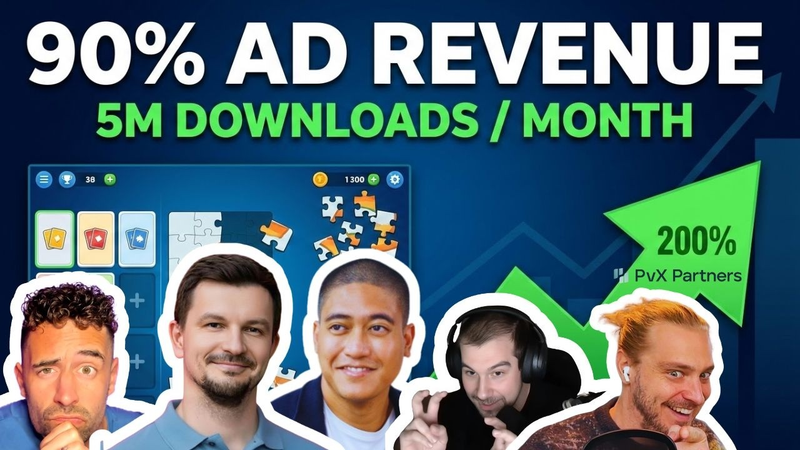
Exactly. Exactly. And it really is an engagement driver. And we've, you know, we started out with a hypothesis that if you shared your unit economics with the player, they would play more. And it was kind of an evolution of what has already happened in rewarded UA, but actually embedding it into the gameplay. And and Paul was we're so eternally grateful for him because he said, "It sounds like it makes sense. Let's give it a go." And it actually worked like crazy. But we've we've subsequently also proven it with almost every customer we've worked with. I mean, most recently we partnered up with Tap Nation and we lifted their ART down. I think it was 44%. And it's it's counterintuitive because when we first speak to developers and you say, "Hey, you know, take a share of your ad revenue and give it to the player and we we tell you LTV goes up." They go like, "How? I'm literally giving my money to
the player." Well, the difference is that they play a game, they discover that it gives them money. And not only does it give them money, it gives them money instantaneously. So you really see, it's not like the, oh, is this a scam where I've got to play it for five years and then I might get $1. It's like, no, you get, you know, two to three cents a day. And we're not in the business of making people rich, nor do we, nor do we advertise as such. It's just like a small reward. Why, you know, I think one of our partners put it really well. They did solitire with Bitcoin, and they said, you've got 120 free-to-play solitire games out on the app store. Why wouldn't you play the free one that pays you? And that's of that's sort of the context to which we look at it. And so then you get these players and you end up going taking hybrid casual games that have like, you know, 14-day retent life cycles for the players and suddenly they're at 180day life cycles because people just keep playing. They make it like a daily habit like check in, get my 5 to 10 cents, and then yeah, look, after a month I've got a few dollars. Great. You know, and it and it's free for the user. How uh it
feels like bots would be a really big issue here, right? Because you know when you drop something out Yeah. You're telling me I can get a thousand bots.
Yeah.
Yeah. So, uh Yeah. So, again, sort of naive startup time about three years ago. We were like, "Isn't this fantastic and everyone's so altruistic?" And then we were like, "This engagement looks crazy." Okay,
wait a second. So, uh, yeah. No, I mean, some something we don't we're careful about putting public information about out about what we do for antib-bot for obvious reasons, but we like the the SDK now contains some really really significant and sophisticated like basically anti- fraud and anti-bot protection. We we're very comfortable now and confident that we've got that down to like a singledigit percentage point level where it's negligible for any business working with you. So there's like a there's a lot of work that's gone into that over the last two years and we're pretty pleased. Some of it we're considering patenting because we've got it into like some really good places.
You mentioned uh when you kind of uh
earn the the ad revenue and then you're giving it back to players and it actually works better. Can you unpack that a little bit like from the the strate strategic point of view for like the gaming studios if they you know if they want to jump on this how why why should they
why make I mean why on paper it makes sense
how and why yeah
how and why yeah how and why
I mean I guess I guess it comes back to some of the challenge we was we started the conversation with like challenges facing the industry and something that I very very closely lived through because I invested in a couple of startups that were in the kind of hyper casual and hybrid casual market is I I watched the kind of I mean for one of a better word the implosion over there right as
as CPIs inflated and everything just kind of it was like oh these businesses aren't economical anymore and I was there kind of you know with a metaphorical chalkboard and like a conspiracy theorist hat on like how do we solve this like what can we do to fix it and the lever we instinctively reached to was well you got to grow the
LTV of the player and we thought like well how do you how do you grow LTV and that was where we landed on well these games are so for one of a better word like they're disposable right we've talked about the games industry talks about like churn and burn dynamics in yeah right so it's there was a lot of that going on I think if we're just transparent about that that sort of end of the market and we thought well what if it isn't churn and burn what if it is actually like you have a hybrid casual or hyper casual game and you have solid retention you're not going to build live ops because the the monetization profile of the players doesn't it doesn't make sense you're not going to go for AP well I guess hybrid casual has kind of changed that a little it. But back, you know, the thinking three, four years ago was along these lines. So, we thought, well, there is a whole rewarded market and that kind of centers around you've got a narrow user base and they're kind of jumping from rewards app to rewards app, but what if you took it out of the rewards app and you embedded the rewards in the game and then actually you didn't need to get a different app to claim these rewards? What if you could just send it to your Revolute and, you know, actually start to just have a relationship with the game that just
pays you? And that that was the genesis of the thinking. And you know, it did start out with a requirement for people to get the ZVD app. And that comes from our Bitcoin DNA where no one's got a Bitcoin wallet. Like, let's be honest.
Yeah. Exactly. Of course. I mean, was too complicated.
Exactly. So, we had to we had to basically make like a FisherPrice Bitcoin wallet that a normal person could understand. And then we we gave them the Bitcoin and then we also as quickly as we gave them the Bitcoin, we gave them the means to sell it because we aren't we're not in the business of like going like hold on to this until you're an old man and like you know and also you've only made two cents. So like what's the point? Okay, here's your Bitcoin and now here's gift cards and here's send to your bank account.
Where we've got to now is we don't even need the app. So we can actually the the player can draw directly from the game to their own financial application, their own neo bank, whatever they're already using. And these these have already got distribution. They've already got massive networks. Um and that is a different kind of relationship with the player. You're not you're no you're not really talking about the
misplays, the Benjamins, the cash kicks of this world anymore. You're just talking about embedded rewards and loyalty within a gameplay experience and that as a monetization tool. So then we then you sort of get into the unit economics of it. And I I I've sort I I know it sounds like simplistic but what I outlined in terms of take you know 10
like this is anything but simple seriously.
Okay. Yeah. Yeah. So I think it I think you're hitting the nail on the head. Easy to say hard to master. So like you know you can you can look at your the sort of conversation if we're if I'm sort of talking from a sales perspective how we how we work with developers and I'm I'm trying to do this without pitching at the same time. So it's like a practical conversation. We'll open the conversation with something along the lines of like, you know, take a percentage of your ad revenue, share it to the player, boost LTV, what I kind of explained just a moment earlier.
Yeah.
What it really gets into then if if the developer is interested is like, well, here's like the nuts and bolts of it. So, we actually come on in a pretty collaborative way. We start, I mean, practically speaking, we get in Slack together because that's the way the world works. But what we're really doing
is we're we're looking at what is your baseline. Where are your users? Because we're US and European centric in terms of where we focus. We try to focus on higher value markets particularly when there's like a heavy admon component and then we'll say okay you know you've got this behavior so far where's your retention drop off let's think about how the rewards are introduced because now they are part of the game it isn't a simple offer wall download the game reach level 50 get some money it's actually like you got to take the player on a journey so you look at like repeatable frameworks for introducing rewards so it's scalable and you look at a a very key on boarding message to introduce the mechanic. Our most successful partners and they where we've published these case studies, all of them engaged with us on like a first-time user experience testing thing. So we we would work on like try saying this game pays you bitcoin like be as blunt as possible or try weaving it into the narrative of the game which is actually what tap nation did. So they said hey you're running a bank this bank screws its customers by printing money
and hoarding bitcoin. And so it made it part of the game when when that is done in our experience that drives the best results because it is something that requires the player to sort of say, "Oh, I get it right." Like it does need an aha moment. But how quickly can we get to that aha moment, that light bulb? And usually it is I think even Paul talks about this. Introduce the mechanic quickly and then reward very quickly but in a very nominal amount. So like here's the here is how it works. Oh, and look, there's a there's some money over there. Why don't you just tap it? and it's like, "Okay, now you've got it. Here's how you withdraw." As soon as the player does withdraw the money and actually sees that it lands in their account, that they truly did get paid by this game and it's not some kind of too good to
It's not a scam. Yeah.
Yeah. Exactly. Then the loyalty from that player just skyrockets. And we've seen that now very very consistently. I mean, we I remember two years ago at Pocket Gamer, given that that's coming up, we were we were showing the limited case studies we had, and the biggest thing we were getting was like a cocked
eyebrow of like plus 180% retention, like I call [ __ ] you know, pardon my
and we were like, well, no, like here's the actual data, like here it really is. But we did get a lot of skepticism. I mean, we, you know, I I fully embrace that we are swimming in a controversial area of the market. It's Bitcoin.
We love controversy. Come on, man. But we're saying it works,
Ben.
That's what I would say.
It's a great idea, but I need to ask, how do you deal with the arbitration issue, right? Networks, if you're giving ad revenue up, they usually pay out on net 30 or net 60, right? And if you're having an instant reward, right? You're already giving up. If you're paying even two, three cents, that's in Europe, that's six to seven rewarded like views. Uh at least 10 interstitials, right? How do you deal with the arbitration issue?
Yeah, it's it's a good question. I'm not going to give you be able to give you a super detailed answer myself, but what I will say is like so far what we've seen is developers have like the reward is
small enough because we can go I'm trying to ask screw it. I'll go I'll go a bit more complicated on Bitcoin. I try to avoid doing this, but
No, no, no, no. Go for it. Yeah. Go, go, go, go, go.
Bitcoin is there's no such thing as one Bitcoin. Bitcoin is actually made up of a 100red million units called Satoshi's. Trust the nerds, right? But think of them as Bitcoin pennies. One one Satoshi is 1 1,000th of a cent. So it's a it's a tiny amount of money.
So we tell we encourage developers to start with trivial money. Like give the player one Satoshi. One Satoshi is next to nothing. It's a rounding error, right? It's so then you're not really hitting your unit economics. At that stage, you've introduced the mechanic and by the time you're getting to D14, D30, you can have really strong assurances that you've monetized the player and at that point, you can scale the rewards. So, it's it's not a direct answer to you because I'm I'm afraid I'm I'm not in the weeds enough to understand how our more recent developers are thinking about it. But, I I get the gist of what you're saying where like you don't have asurances of
payment from the ad provider. What if you've given out all of those economics already and like how do you assure that that's being paid? Well, the the answer is you don't give everything out all at once. You need to you need to know that the player is truly committed and we do work on like a rewarded you know like a journey to take the player on. So the more the user plays the more you can also afford to give them because their LTD has gone up so much.
Yeah.
I hope I'm sorry.
No no no that's that's great because like look Phelis like you just you know breadcrumbs and then eventually you'll give the the whole piece of the bread afterwards. From what you you mentioned during the recording, it makes sense uh that it works more on uh the monetization because it's also like smaller increments of revenue rather than just like 5 10 $50 of heavy IIP, right? So like
we have had we h in conversations and again this is sort of hearsay and anecdotal but just from like where we've done outreach to devs we have spoken to devs who've got like it is 90% IEP 10% admon and they've sort of said well what
if I just gave all of the admon to the player and relied on the IP revenue.
Well if my answer is like if your game I'm game because that like the rewards would be that much higher I think the players would actually really engage. But no one has no one has has taken the risk of trying it yet. Yeah, look, Ben, I I'm I'm with you on this. That's why I'm actually, you know, building my own apps because nobody's crazy enough to try my ideas. So, I need to I need to build my own so I can try them. Yeah, we did do some internal apps like we we I mean way back because we we can't we it's not worth our time now, but at the very beginning we did actually launch a few Unity games like ourselves to this was mainly about validating app store stuff but also to look at see see what we could see in user behavior just on our own UA efforts and we now know fortunately because we've got enough proof points we now no longer need to do that but I yeah I mean maybe maybe I do encourage our R&D lab to start to to build an IP game and give away all the admon I don't No, we had Bogdan from Holy Water on on
our podcast recently and he also said like look we have one one app which is purely experimentational and we just test things there and it makes a lot of sense. But coming back to to my my questions instead of the ad monetization versus does it work better in terms of the the forever games that you mentioned or new titles or does like size of the game matter as well?
We're scaling up the size of the game we integrate with at present. So we're now reaching games where like they have meaningful user bases. You talking tens of millions of of MAU. They are they're still seeing the same performance uplift and they're seeing it consistently. So that we're getting that hence our growing confidence that this is actually a truly scalable solution. We haven't yet gone for a forever game and I'll be very like our strategy is not to introduce rewards and loyalty to the forever games. We're coming with something quite a bit more full money life cycle. that sort of piece I was speaking to earlier.
Yeah. Yeah. Yeah. New games like I I would say I know like the legacy titles and like forever games are built like
centuries ago and it's not really ready for for tech stack in 2026. I I can imagine.
Yeah. Yeah. We'll find I mean is that a lot of like
a lot of money movement is actually a cloud-based operation. So your game is on your PC and now we're sort of speaking to forever games and and and AAA like your game your game's on your PC but is talking to a server all the time. So a lot of the tech integration is actually not as hard as we initially thought when we when we got going. Most of it can be server side and when it's server side you can provide very strong security guarantees. So we'll I mean sort of stay tuned on that front. I don't mean to constantly like tease. I'm just I I don't like to just BS. I'd rather we prove the products out. You're gonna see some more serious products that look at that kind of end of the market by Q3. You know,
tell you what, Ben, I'll send you a Satoshi if you tell us one of the products right now.
Yeah,
fractional one for our listeners.
I'm a little bit more expensive than
that to to
Mi can send you one too.
What I will say is, and I don't know if this will resonate with the games industry, is because this is very much fintech speak, but we are an embedded finance provider. So, the rewards are embedded in the game. We can embed a lot more than just rewards into games. We can embed payments into games. So, go back to I mentioned the first thing the company did was it modded Counter-Strike where players dropped coins and when you picked up the coins, you got sent real money to your bank account. These these experiences can now be scaled and embedded in games. So, like there can be money truly in games and money movement through games.
Okay. In terms of the the tech you mentioned, is it really easy to implement like anything from from your side into the games? because I mean a tech I guess b you need to kind of think about like how to implement the rewards from the game design perspective because you mentioned I mean obviously you don't want to screw up the economy of the game right so like how does like companies think about this
we would you know selfishly as a business we would love to make everything plugandplay and be like hey you know yeah hook it hook it up and it
just makes you money but that's that's not reality yeah and particularly particularly not when you're embedding into a game so there is there is always a necessary component of a game design discussion, but we we defer to the studio. What we provide is like consultation on what is and isn't possible. So maybe a studio does, you know, a very common one is like I'll reward the player for completing every level. Like each level they make more and more money. Well, that immediately hits the cash for tasks thing we spoke about. So we kind of say, oh, hold up, you know, walk away from that. But there are other elements like everything is we have made efforts to make it easier to integrate over the last three years. So it is now all wrapped up in a Unity SDK and I think the SDK is only like 2 megabytes or something. It's not very heavy. And from there, we control all of the like payout experience to make sure that that is as smooth as as possible. What the developer has to call is they they effectively have a couple of uh a like sort of calls to the API which is send reward and get gamer tag. Gamer tag is the user's name and how we send them that. So it is relatively simple and I
know every provider says this. We the record we've had for an an integration is a couple of days but realistically when we work with devs we you know we care that it's successful. The whole objective is to improve the monetization. We are much more collaborative and I would I would say expect sort of like a two to three week on boarding then maybe like a month of of actually integrating and testing and then maybe a month of actually live in market testing where your AB you're looking at different regions etc.
Yeah. Okay. I mean obviously you can implement but then there's a lot of other stuff that you need to you need to test thing. It's just never as easy. We're also increasingly encouraging and providing guidance around like UA creative. We're seeing some early we're seeing some early evidence that like if you signal that the game pays you as part of the user acquisition that that actually drives a better cohort. I think it's early days so I don't actually have the data to hand to share but we're starting to see signals of that and we're working with devs on those strategies because we're we're noticing some cohorts perform better than others on different kinds of creative
I mean creative
Wi-Fi earn money ads.
Yeah. Yeah. Yeah. Yeah. Yeah. Yeah. No Wi-Fi or money, no ads. Okay. No, I mean it makes sense because the messaging then sets the expectation for the players. It's different kind of audience and then you get basically the audience that want to play, wants to play and earn obviously. But it's actually quite like a gray zone and slippery slope because as soon as you start showing some kind of payment or rewards in terms of the cash, it be it's becoming more toward skewed towards like real money gaming and social casino. Then it's like, oh, leg regulatory issues. So, it's a lot of other funds. Yeah.
Yeah. You took the words out of my mouth. Like, it's I was going to say that exact point. So, from a just so you know, like from a regulatory perspective, because we're fully licensed both in the EU and the US. If it is a social casino game, that's actually not a problem for us. It's more like, do you want to do that?
Yeah. But the best performing titles managed to walk that fine line of these rewards are worth real money, but this isn't a
real money game. And one of the things uh we actually launched in Q4 last year is brand new. So there's limited examples in market was the game currency can carry real value. So it no longer has to be Bitcoin. You can reward users in gems or bananas or whatever it is. And when the user goes to withdraw, they find out it's worth real money and it goes to their bank account. And that kind of that came from developer feedback. They wanted to do that to basically make their in-game currency carry a real reward value. And our licensing lets us do it. But what we also see is it makes the differentiation from real money gaming be clearer because it's just like collect points, cash out your points, and that sort of resonates with a different kind of user than your real money user.
So you're regulated, right? That sounds great. What's the negatives about being regulated? It's expensive.
Nice. Yeah.
Yeah. That like every we, you know, we don't show this to the game developers. We focus on making it easy, but every single withdrawal costs us money because
we're running an AML KYC background check. We're making sure like we're not accidentally sending money to a sanctioned country. There's a there's actually a ton like an actual ton of stuff that goes on in the background. We have a large like so basically you have to build a compliant like practically speaking you want to get regulated you've got to build a compliance team you've got to have risk procedures internally it's all very administrative like from a games industry perspective it's all very administrative and it's work that people don't want to do it's work that we say we will willingly do to provide you with these services that that's kind of what it means but it ultimately and what it why it's off-putting for people and why the other like web store and payment providers don't do this is it's extremely expensive
okay I mean it's It's called business for a reason, right? I mean,
I think it was I mean, we've we've raised 50 million to date and
I would probably think that somewhere in the realm of like 18 to 20 million of that has been has gone into like setting up regulated infrastructure.
Yeah. No, but now you know the infra infrastructure is there ready for scaling. Oh, that's there. Like what's then what's the qu like what's what's next for ZBD that you can share for like 2026? I know your products are coming out. You teased a little bit, but
in in
Give us a little bit more. Give us a little bit more.
I'm I'm going to be I'm going to be opaque on Q3, Q4. I'm willing to be transparent on the on the next sort of six months.
Perfect.
You know, we've got we've got Pocket Gamer coming up. The biggest thing we're rolling out is payout to bank account. So you no longer need a like I was alluding to, you can link your Revolute, you can link your Chase account in the US, you can link your Venmo, you can link your bank account to the game and then you can be paid directly to your bank.
That that is the benefit of being regulated. We're allowed to do that. We can connect banks up to games and we can move that money on behalf of the developer. So that that's the that's the near-term feature coming. So you'll see we'll effectively see us evolve the earn product loyalty and rewards into a straightup payouts product if you want it to be. So, if you're a studio and I
I'm not in conversation with them, so I'm just calling them out because I'd like them to hit me up. But if you're like hype hype in Finland and you're doing all this UGC stuff where you can monetize blah blah, you need to pay the players. This is a payout solution, right? So, you can actually now do that. But we we anticipate the main use case will actually be the continued growth of this embedded reward product we have where we're giving developers more optionality. You don't have to make Bitcoin games anymore. You can make games with points that are worth euros and you can send to European bank accounts or you can do the same in dollars. We're really basically expanding the optionality because what we're seeing is that the more we make it easy to communicate with the to the player that hey this you already have Revolute so why don't you just paid to it. You know that's that's a very very simple thing to explain to a player and we're happy to enable it because we think it will drive good results. Um, in Q2, you'll probably see us take that payout mechanic into, well, what if you could instantly buy a coffee in the real world? Like, what if you're I'm in the UK, right? What if you're playing a game in the queue at PR and then you can pay
for your prep using the money you just made in the game.
Yeah.
So, that this is sort of linking the making it really real for the person who's playing the game that this you're getting money and this money actually is coming out of a digital world and it's working in the real world. There's a the the way back slogan for ZBD is is powering real economies in virtual worlds. And that's that's how we if we go like giga vision and Simon comes out in his lab coat and explains what he sees. It's like it is to blur the line between game economies and the real
Okay. I mean that was powerful. I I need I need to correct you on on one thing. The most important thing at PGC is that the Game of Thrones party we have together.
Yes. Yeah. I'm I'm really looking forward to that. So yeah, I mean we were oh my god am I looking forward to it. So we were stunned last year by how well attended it was. Like we didn't realize that everyone in the games industry actually is an amateur singer and
it was actually so busy. So I'm not to plug myself but I'm in a band with some
friends. I fancy myself as a singer and
very good. I threw my name in the ring to get up there and do a Tears for Fears song. And it was so popular I I didn't get to do it or I may have been too inebriated to get up there and do it. I can't remember which one it was. But yeah, this this year I'm aiming to do a heartfelt rendition of Houdini by Julia Lia.
Wow. Oh wow. Yeah, we're definitely looking forward, man. So, but back to the the podcast and I mean everybody from the from the audience and from industry is actually invited. So, please join us on Tuesday night. what like who should kind of get in touch with with you guys and uh with you after like listening to this episode like is it small developers? Is it I don't know like which genre or like we will just put your your contact information in the show notes and then can just reach out whoever wants to.
I mean we we work with all scales of developers.
Okay. I'm not going to pretend we're like a big fuzzy pink love bomb, but
like, you know, all all developers are welcome. Larger developers will obviously receive more attention given the amount of money at play.
Yeah.
Just to be honest,
completely honest.
But we, you know, we're at a scale where we've now seen games scale and we've worked with publishers to see scaled games on the platform and we can see that, okay, it's holding up and the performance is consistent. So, what I would say is if you are a developer and you're looking at the monetization of your player base, if it's on an old game and you feel you can get more life out of it, then this is an excellent new thing to introduce as a as a way of re-engaging players and making new cohorts more interesting. If you're just getting started out, it can give you an edge. And that's where we've actually seen startups in particular the happiest working with us because we we also provide pretty powerful incentives around scale. you know they basic we offer a partner incentive program where as you scale we scale and therefore we're willing to help you scale and those incentives can get pretty chunky to be honest like you know they're conversations I'm going to be having at PGC but it it is a way of making the
rorowass more effective you know on on whatever UA you're spending and that's on top of the effect of the rewards but
you know the main message I'm keen to get across is that like we were quite rightly welcomed with a lot of skepticism when we came to market with a Bitcoin rewards product in the middle of the web 3 junk. If you ever get to know me, you'll know that I have a very negative opinion on crypto. Bitcoin is different. But when I would say that now we're a six-year-old company, we've had the product in market for three and a half years. At this point, we our case studies are starting to speak for themselves. Like this is this is actually working. And in a difficult environment where CPIs are high and driving LTV is a challenge, like this is a solution that should be taken seriously. And we are very very happy to help like we partner with our with developers we work with and we truly partner we continue the relationship through the life cycle of the game through the launch vital we continue to evaluate is it working if it has like if performance is lagging do we know why
that is can we dive into it with you we share the data we see you can see you know you can share the data with us and we really make it a collaborative thing because we we have a very good view on where the money is moving what kind of behavior is is driving that movement and then obviously the game designer you see your gameplay and so you can you can often figure out some very clever ways to extend that player life cycle you know really into the kind of one retention
and I think that's pretty unheard of in gaming but we're seeing it and we've seen it now for several years
that's amazing because I mean obviously skepticism is everywhere and if you have a new product which is also very controversial everybody's going to be like h whatever but we I mean
yeah I mean yeah obviously but we as we talk. I mean, it's small world. We see also the case studies from the the like Paul and Tub Nation and and other gaming studios and it's insane, honestly. It's it's really good. So, yeah, I think yeah, great job, guys.
Thank you. Thank you. Hopefully, we're
we're continuing to help the industry. I mean, I I I care about seeing growth and I I mainly care about seeing the games industry empowered to actually own more of its levers for growth. And I feel one of the biggest ones that we can offer the games industry is is financial relationships with the players. That is something that the games industry hasn't had since the coinop machine where you paid money in. So like now we you know we can we can actually give the industry a means of growing without having to depend on another platform.
And with that in mind, thank you very much Ben for for coming sharing all the knowledge and and basically the guiding us through the the ZBD earn and everything that you've done. Dear listeners, thank you very much also for listening. Hopefully we see you at PGC. If you have any questions, please ask in the comments or reach out to Ben directly. And see you next time. Thank you very much.
Thanks.
Cheers. Bye.
Auto-generated captions from YouTube — names and numbers may be misheard.














Comments