Streaming reports and market data
Documents

Emerging Macro Trends in Games and Game Streaming from a VC Investor’s Perspective
The global games industry has evolved into a massive, pervasive ecosystem, currently valued at approximately $200 billion to $350 billion when accounting for integrated advertising and streaming.
- The global games industry is valued at $200 billion to $350 billion, supported by a base of 3 billion gamers that grows by 10 million new users every month.
- Technological advancements in gaming, including mobile, 5G, and cloud infrastructure, have historically expanded the total addressable market rather than substituting existing platforms.
- A significant capital gap exists in the UK and Europe, where a lack of Series A and B funding often forces studios to be acquired by US or Chinese entities despite the region producing nearly 50% of top global titles.
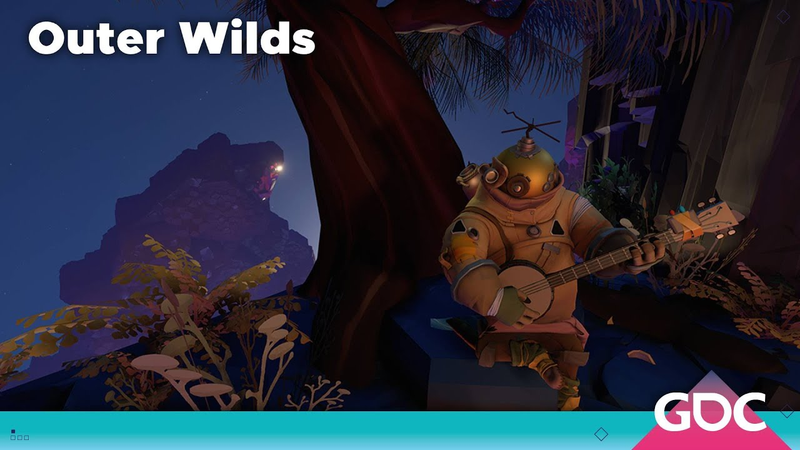
GDC Plays GDCA Nominee Outer Wilds with Loan Verneau and Wesley Martin
Outer Wilds centers on a design philosophy that prioritizes curiosity-driven exploration over conventional gaming tropes such as combat, character progression, or traditional collectibles.
- The developers intentionally removed traditional game rewards like upgrades and collectibles, ensuring that knowledge is the only currency players gain through exploration.
- The game's core design relies on a full-scale physics simulation where all celestial bodies and objects are constantly in motion, requiring the team to build custom internal tools to overcome limitations in standard 3D modeling software.
- The project originated as a student project in 2013 and gained early recognition by winning an award at the 2015 Independent Games Festival before being fully developed by Mobius Digital.
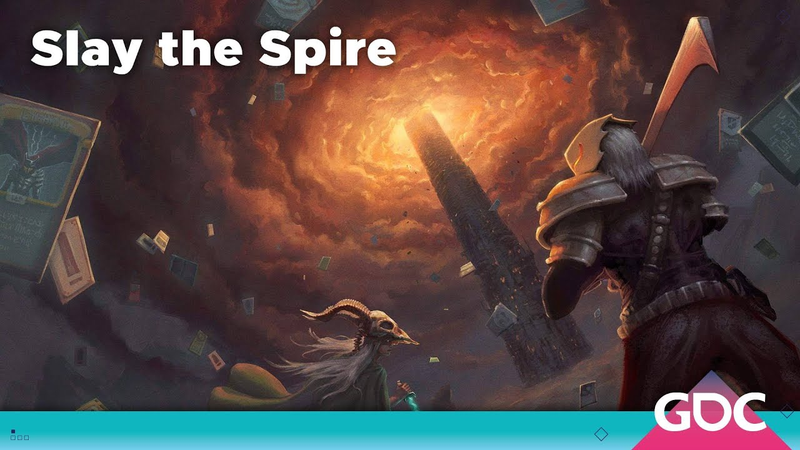
GDC Plays IGF Nominee Slay the Spire with Casey Yano
The success of Slay the Spire stems from a community-driven development philosophy that prioritizes player experience over rigid mathematical balance.
- Slay the Spire utilized Steam Early Access to gauge market interest, releasing with two of three planned characters to determine if the project warranted completion or should be scaled back.
- The developers leveraged gameplay data uploaded by the community to inform balance changes and identify which card mechanics were underperforming or confusing for players.
- The game's map system was inspired by FTL: Faster Than Light, shifting from a blind sequence of encounters to a visible, branching path that allows for strategic, long-term risk-reward decision-making.



2020 Year in Review: Digital Games and Interactive Media
The global digital games and interactive media industry experienced significant growth in 2020, with total revenue rising 12% year-over-year to $126.6 billion.
- The global digital games and interactive media industry grew 12% year-over-year in 2020, reaching $126.6 billion in total revenue.
- Free-to-play titles dominated the market, accounting for 78% of total digital revenue, primarily driven by mobile gaming in Asian markets.
- Premium game sales experienced the fastest growth at 28%, bolstered by high-profile releases such as Animal Crossing: New Horizons and Call of Duty: Modern Warfare.

I Won't Stop Streaming Till I Beat my Game on Impossible
The development of the platformer Will You Snail? serves as a case study for the challenges and strategic decisions inherent in modern indie game production.
- Indie developers can balance high-difficulty 'rage' mechanics with broad accessibility by implementing transparent, adaptive difficulty settings rather than relying on machine learning.
- Self-publishing is identified as a primary strategy for maintaining creative control, while utilizing volunteer-based models for localization helps reduce overhead costs for global releases.
- Marketing success for indie titles is best achieved by prioritizing long-term discoverability on platforms like YouTube and leveraging content creators rather than relying on post-launch content updates.
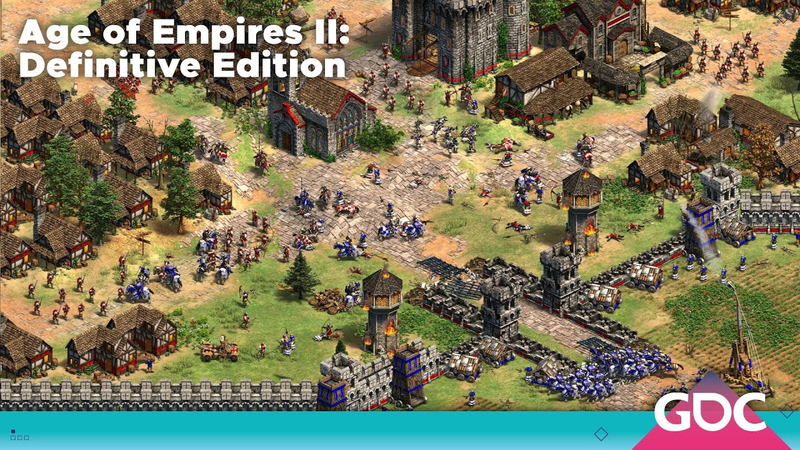
GDC Plays Age of Empires II: Definitive Edition with lead developer Bert Beeckman
Forgotten Empires evolved from a grassroots community modding collective into a professional studio through a strategic partnership with Microsoft, culminating in the comprehensive reconstruction of Age of Empires II.
- Forgotten Empires scaled the Age of Empires II: Definitive Edition data size down from a peak of 120GB during pre-beta testing to approximately 30GB for the final release to ensure accessibility across a wider range of hardware.
- The development team transitioned from the HD Edition's approach of simply scaling up original sprites to creating entirely new, high-quality assets for every element in the game.
- The project reached over 1 million lifetime downloads, a milestone that exceeded the developers' initial expectations and solidified the partnership between Forgotten Empires and Microsoft.
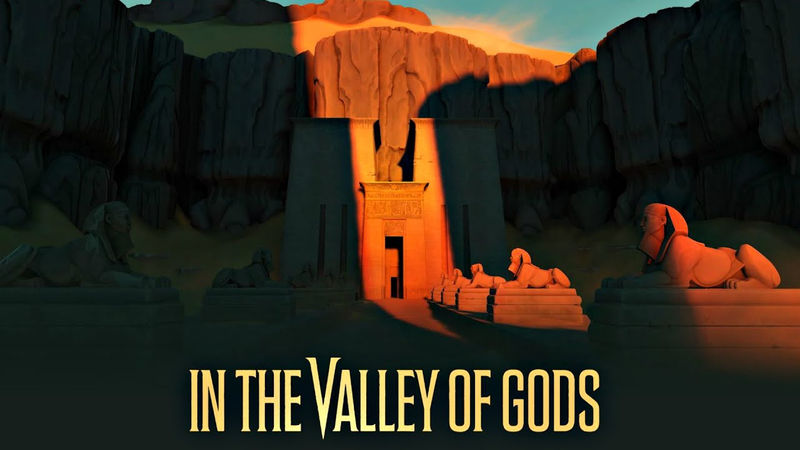
In the Valley of Gods Canceled?! | Games ReCAP
The development of In the Valley of Gods, the highly anticipated project from the former Campo Santo team, has been officially placed on indefinite hold following the studio's acquisition by Valve.
- The development of Campo Santo’s 'In the Valley of Gods' has been placed on indefinite hold following the studio's acquisition by Valve.
- Former Campo Santo staff have been reassigned to internal Valve projects, including 'Half-Life: Alyx', 'Dota Underlords', and Steam platform development.
- The project's original creative momentum has been dismantled due to the departure of key personnel, including contract writers who held significant institutional knowledge.

GDC Plays Superliminal with Pillow Castle Games' Albert Shih
Superliminal centers on a unique perspective-based mechanic where the scale of objects is determined by the player’s forced perspective.
- Superliminal’s core mechanic uses raycasting and depth-aware projection to manipulate object scale based on forced perspective, challenging traditional spatial reasoning.
- The game’s design philosophy prioritizes 'epiphany-driven' gameplay, focusing on sudden player realizations rather than requiring high-level mechanical skill.
- The six-year development cycle necessitated rigorous playtesting to manage player expectations and mitigate frustration caused by the game's unconventional mechanics.

Amazon Making its Own Stadia | Games ReCAP
The gaming industry is currently undergoing a significant shift toward cloud-based streaming services, mirroring the fragmentation seen in the television and film sectors.
- Amazon is preparing to launch a cloud-based gaming service by 2020, aiming to leverage its Twitch platform and internal development studios to compete in the streaming market.
- The entry of Silicon Valley firms into gaming is driven by the proven profitability of subscription-based models and the potential for long-term user engagement and integrated advertising.
- Amazon faces significant hurdles in the gaming sector due to a history of cancelled projects like Breakaway and development struggles with titles such as New World and Crucible.

Google Stadia Fail? | Games ReCAP
The launch of Google Stadia represents a significant failure in product execution, characterized by a lack of essential features, logistical mismanagement, and a disconnect from the gaming market.
- Google Stadia failed due to a lack of core features at launch, including missing achievement systems, status tracking, and family game sharing.
- The platform failed to deliver on its primary technical performance promise of consistent 4K resolution at 60 frames per second.
- Logistical mismanagement during the pre-order phase damaged consumer confidence by prioritizing late buyers over early adopters.
Streaming Wars, Loot Boxes, Indie Dev Future | GduX.me
The gaming industry currently faces a period of significant structural transition, characterized by the rise of subscription-based models, evolving distribution strategies, and persistent labor challenges.
- Subscription services like Xbox Game Pass currently struggle to replicate the success of passive media platforms due to technical latency and a lack of original content.
- Indie developers should treat streaming platforms as supplementary marketing channels rather than primary revenue sources to avoid marginalization by blockbuster-focused algorithms.
- The industry is unlikely to adopt effective self-regulation regarding loot boxes, as regulatory intervention remains inconsistent due to a lack of technical literacy among policymakers.
GduX.me 2019 Part Deux | Day 1
The modern independent game development landscape demands a shift from purely artistic expression toward the creation of commercially viable, high-quality products.
- Commercial success in the current independent market depends on prioritizing high-quality, 'buzz-worthy' product design over external marketing efforts to drive organic interest.
- Developers must target younger, budget-conscious consumers who prioritize games that offer long-term community engagement and sustained value.
- Strategic growth can be accelerated through intellectual property partnerships, provided studios utilize professional CRM tools, concise pitch decks, and rigorous contractual definitions for deliverables and timelines.