1 free read left. Create a free account for unlimited reading + AI research.
Create free account
Emerging Macro Trends in Games and Game Streaming from a VC Investor’s Perspective
Key insights
6 takeaways- 01Investment value is increasingly tied to original intellectual property ownership, which enables long-term monetization through licensing, merchandising, and global distribution control.
- 02The global games industry is valued at $200 billion to $350 billion, supported by a base of 3 billion gamers that grows by 10 million new users every month.
- 03Consumer behavior is shifting toward interactive media, evidenced by 60% of millennials preferring to watch eSports over traditional sports.
- 04Technological advancements in gaming, including mobile, 5G, and cloud infrastructure, have historically expanded the total addressable market rather than substituting existing platforms.
- 05High barriers to entry favor studios that successfully integrate advanced technology, machine learning, and cross-platform scalability into their development pipelines.
- 06A significant capital gap exists in the UK and Europe, where a lack of Series A and B funding often forces studios to be acquired by US or Chinese entities despite the region producing nearly 50% of top global titles.
Ask AI about this video
Transcript
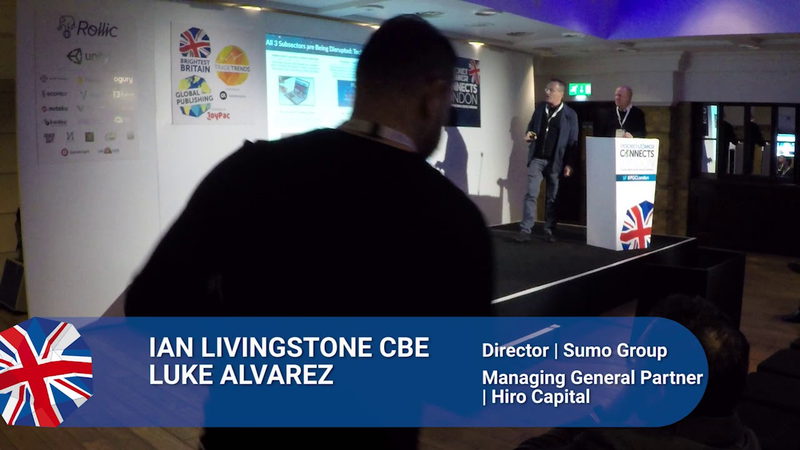
[Music] good morning it's great to see you all here I'm going to talk very very briefly about why going to the games industry and why is it's an amazing opportunity and a little bit about the the do's and don'ts and the pitfalls along the way whilst we always think we have heard most amazing ideas to pitch to the investment community we're not always investor ready I know a lot of games developers are very wary of investment companies and they don't all see - I - I - I but there should be a perfect match between these two entities and I was trying to explain why very quickly then I'm going to hand over to Luke who's the
managing partner and co-founder of a new VC fund called hero capital of which I am a partner - so very briefly I've been in the games industry before any of you were born back in the 70s start a company called Gaia's Workshop and then got into fight a fancy game books launched tomb raider with idose was an investor in several independent studios like play dammit with golf clash was the most successful UK developed mobile games more recently I'm also chairman of sumo group plc there's Ben Sheffield so this was me back in 1970s when we launched Dungeons & Dragons in the UK we'd ordered six copies on the back of that or do we got an exclusive 3-year distribution agreement for the whole of Europe it seemed a lot easy about those in those days to get to get started and we opened our first shop in 1978 in Hammersmith if anywhere you were in that queue probably not please come forward I'm trying to do it an Apple reunion shot one day pretty unlikely but today
everyone knows workshop as a PLC it's now worth two billion pounds on the London Stock Exchange an extraordinary performance and why is that mainly but it's all about original IP which the company owns the whole of workshop was built on its own IP and I always say to development Studios if you can hang on to your IP do so if you can go further up the value chain in IP ownership that's where the real value lies not only you get the publishing revenue from their own IP you control your own destiny you also get incremental revenues from licensing and Merchandising so you can see now the how it work shops branding all its stores as Warhammer shops and of course the models have been very successful in terms of the gross margin in those models people on the IP theme when Steve Jackson I wrote are fighting fights at game books in this again in in the eighties we ain't retained ownership
of that IP and is still ours today so we still control our own destiny and that has value the video games industry in the mid eighties wrote the launch product for for DOMA which metamorphosed into higher dose and we lost AI dos in 96 again the eyepiece story what started as a simple step sketch of Lara Croft became a multi-billion dollar franchise again the licensing and the merchandising revenues lucozade rebranded as Lara's aid and a movies made all these helped build the brand yet I don't still retain ownership of that brand so today's pervasive nature of video games as you can see everywhere people are playing video games on their mobile devices and every device known to mankind we're at a stage now this is an incredible opportunity there's never been a better time for content creators to monetize the whole globe through the
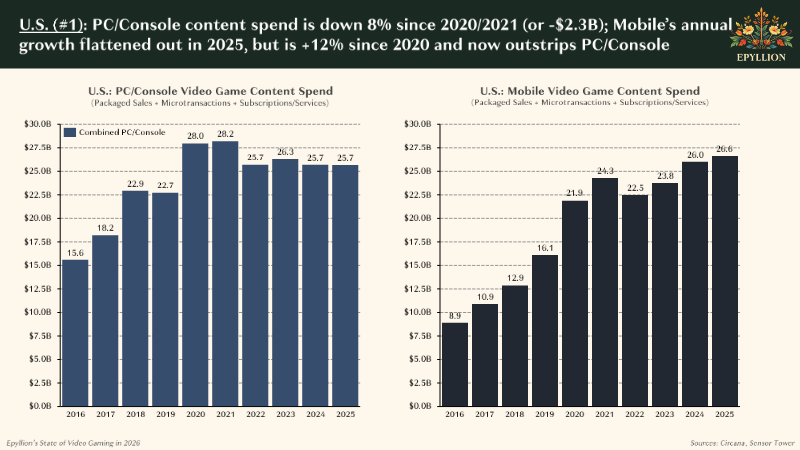
internet so no surprise we have 3 billion gamers worldwide 10 million new gamers every month estimated be 200 billion dollar market by 2026 and as we just stated early this morning the mobile games content of that will be worth a hundred billion dollars in a couple years time so it is possible to be successful I said golf clash played a mysticum night so they invested it right at the start generates a game which was generating well over north well over north under million dollars per annum there's an established ecosystem in the UK couple of thousand game studios of which five are listed entities including in sumo so we're amazingly good at making games yet only two percent of UK games companies attract VC investment hence the need I would say for the follow-on
capital is great what UK games funder doing seed investors he is schemes SE is games these are great to get games going but if you really want to scale your business to a global audience and be successful at scale you're going to need working capital in that business so I'm gonna hand over now to Luc co-founder of hero who's going to tell you a little bit about the need for venture capital and how hero is going to help you with that fulfill that need thank you Thank You Ian and Ian and I are two of the three co-founders of hero Capital which is a team of 10 based in London and Luxembourg we are we are a hundred million euro fund investing in the game sector across the UK and Europe and with co-invest that gives us potentially up to one hundred and fifty million a capital to deploy in this sector we are active and alive of investing and we've
already announced three investments and have a few more in the pipe so it's great to be here today and talking to you all we invest in these three sectors that we think are all deeply interrelated the game sector and that means both games Studios not typically single games but game studios making multiple games or planning to make multiple games ideally doing something really different with a true innovation perhaps a tech innovation underpinning what they're doing we also invest in game picks and shovels the technology the infrastructure associated with games we invest in eSports and the wider game streaming ecosystem we don't invest in franchises or teams but we invest in tech and products and platforms around eSports and we also adjacently and in the digitization of real-world sports and we think all these sectors are converging in interesting ways and basically games are eating the world it used to be software's eating the world
now everything is being gamified and there are reasons for that we'll come on to so broadly it's a two hundred billion dollar sector if you put all those three together interestingly if you take on ball what Paul said 20 minutes ago about the size of game related advertising which we strongly believe but didn't know numbers for it's actually more like a three hundred and fifty billion dollar sector which makes us almost twice as big as the global television market that's how big games is now it wasn't always this way if you go back to the mid-90s but beyond the left of this chart there are a hundred million gamers worldwide mostly in the US Western Europe and Japan high GDP per capita countries mostly young males even tennis years ago there are only 200 million again still mostly on consoles few on PC at that point but still relatively a minority and almost nobody on mobile when I started my company which we ended up in in the early 2000s
listing on NASDAQ we were doing mobile gaming on Nokia's and WAP and it was crap background was crap and then I and then the iPhone came along and here we are 10 year 10 12 years later suddenly this 3 billion gamers worldwide two-thirds of whom wouldn't call themselves gamers your mother-in-law paying candy crush your five-year-old daughter or son on roblox on minecraft but they are gamers they're in our ecosystem it's half the human population is now playing games so our core thesis in this fund is games are becoming the core media consumption behavior for the next wave of Technology and the next generation of players and that's what we're investing in so let's look at some of those younger players I mean the stats are pretty astounding if you survey Millennials 60% of them prefer watching eSports to real sports you just tell that to anybody over 40 they find it very very difficult to believe they often ask you what the hell people are
doing but it's true we've now got 600 million eSports and game stream fans we all know the stats on on some of the kids making huge amounts of money and obviously beyond the professional athletes making hundreds of thousands or a few million you've got the celebrity streamers are the ninjas and so I'm making tens of millions this generation Zed's core consumption behavior is they want their media to be interactive they want to do things to the screen and see what's happening on the screen change whether it's a streamer reacting or a game environment changing they want to be social in a chat room with their headphones on talking to their friends while they play and they expect it to be on demand on instance and so on very very different from watching television if you put that consumer change together with what's happening in tech what why are games easy why are games easy in the world the thing about games is when you make a move in a game the environment has to
react and that's largely true whether it's a simple game or a complicated game that is computationally intensive in terms of the graphics you need a lot to change on the screen and it's obviously network intensive if you're doing it over a network and basically until very recently computers were weak and networks were crap and all of a sudden we're now moving into this world with 5g and cloud and smartphones in our pocket that are more powerful than the last generation of consoles where computers are becoming really powerful and networks are really good and suddenly games is accelerating and getting a much wider universe so the things we back tend to exploit in different ways either creatively or through technology these kind of big macro tech changes that are happening so cross-platform games mobile devices and a lot device delivery neutrality Paul was telling us figures about how big mobile games is becoming but really what we're seeing is huge amounts of cross-platform stuff and certainly as
investors we look for people who are making games that can in slightly different form and gameplay factors work across all platforms across all devices all of that clearly are being underpin by the cloud and 5g when we set up a games company 20 years ago we had to build around data centers databases literally kind of wire up tin in data centers to get stuff launched payment gateways into all the different mobile operators none of that applies anymore it's all out there and turnkey so you can scale up and go global incredibly quickly what does that mean what can you do with that new markets coming on stream and we've got this huge global market but there's no India there's no very there's lots of India but it's not much smartphone penetration there yet so a lot of growth there likewise Africa a lot more to come and then machine learning wearables and the Internet of Things you know what a new gameplay metaphors new ways of human-computer interaction in a game environment just as the we gave us 20
years ago as the the iPhones given us more recently the next generation of wearables the next superlight AR goggles and so on these are all themes we like and are investing in and we see a lot of interesting stuff the interesting thing and to the point I made about games being intrinsically computationally difficult and therefore you know enhanced by new technology these are two charts were a really great article because it came out last week from a very insightful US media analyst this is the impact of new technologies on the music industry so this is 8-track vinyl cassettes CDs mp3 downloads and then finally streaming and you see basically all that new tech is substitutional indeed by the time Napster and peer-to-peer and file sharing theft came along actually cannibalistic and started to take off a bit recently with streaming and will go eventually it will grow the total market because we'll have instead of a few hundred million rich Westerners only listening to music will
have three or four billion people listening to streaming services and that market will grow again but broadly flat over 40 years since the early since the 60s in the games industry it's a very different story there's arcades ticking along during ok the console market from 1970 or so to now the PC games market coming on stream 10-15 years ago and mobile exploding over the last decades every new technology has grown our market and we see the same trend happening with cross-platform streaming and finally AR and VR games are easy in the world and here are some of the indications of that that's happened this year Apple obviously I mean stats I so recently may be consistent with summer stuff we saw earlier 20% a game down 20 set up store downloads of games 80% of App Store income on Apple is games now launched
obviously arcade google launches stadia Microsoft both Azure and streaming and the new console the huge eSports news last night last year really kind of breaking into public consciousness mid 2018 with the fortnight ninja Drake stream and suddenly the newspapers talking about it all the time and again and again again through last year culminating in the big fortnight mega Prue prizes towards the end of the year and then on the sports side and the wearable side Google buying Fitbit and Apple launching me the watch v is being all about fitness and improvement if you look at our geography as ian was saying we know the UK is really good at this ecosystem and actually so is Europe as a whole with different patches of strength this is some stats that we did on publicly available data in 2018 almost half of all about 40% of all PC and
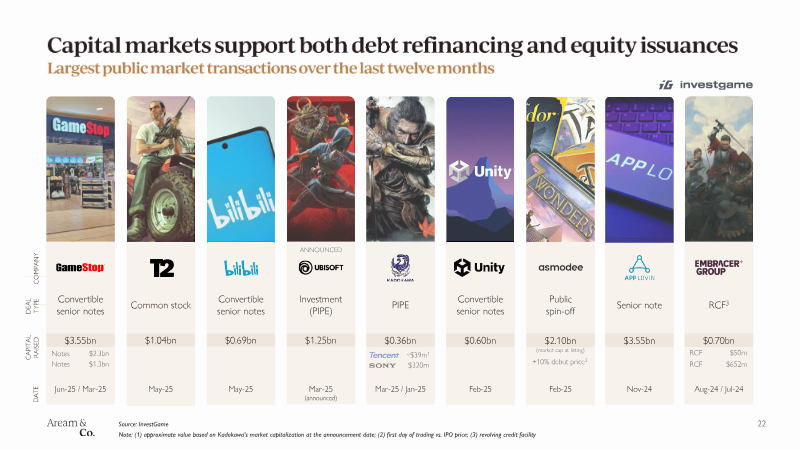
console titles developed worldwide came out of the UK or Europe UK and over half of all the top mobile games came out of the UK and Europe but in terms of venture funding not for the game sector as a whole but specific but in general Europe and the UK have one fifth the capital available that the US has and even only a quarter of what China does so we're incredibly good at these sectors but there's very little money generally available and that's a problem and that's clearly creates a capital gap you know all that many of those star titles that are developed in Sweden or the UK or Poland or the Nordics or so on and so forth many many titles on here both in tech and in content but of course if you look at most of those titles they're not now owned by European UK shareholders
they're typically owned by or have theirs their major investors major us or chinese super majors and that's because when it comes to the level that we invest that which is Series A and Series B post the seed level where the UK fund is investing and the other seed funds when you really got traction you've got a good product a good piece of technology a great piece of content you've got great kpi's you suddenly need a few million to scale and go global perhaps build out a second or a third sub studio really market and push your products and internationalize it's there's very few people to go to and in general the generalist funds are now either too big to invest in games or no longer sufficiently focused an expert so that's where we're coming in to plug that gap one example of a deal we announced back in November is a is a company that Ian introduced to the fund
and we worked on together great comedy called flavour works based over in Shoreditch has many of the characters and things we like they've invented a new category or a new innovation in a category which is branching narrative games in full motion video they had a contract and then subsequently launched their first game with Sony and they've now got some very exciting contracts with some very big global companies to make interest really great series of games across multiple sub studios for some of the biggest companies in the world and alongside our Skai ventures invested in that deal and also came in and invested in the fund really exciting company great team certainly at that series a stage we put three million pounds in between ourselves and Sky live not a uk-based company actually a Prague based company but the CTO is a Brit on the British theme and their great international team they are a
streaming platform for mixed reality so fusing the game stream of a VR headset together with real motion video of your body moving inside the game really cool platform 1213 people based in Prague who've now powered over three billion views if you've ever watched a beat Sabre video on Twitch with a person moving around with the lightsabers it's almost certainly powered by live and now I think got about 350 game developers using their tech and hundreds of thousands of streamers now great company so we are live we are investing we love this industry we think this industry is becoming more than it's ever been it's becoming bigger in terms of population and player base it's becoming more integrated and global it's being profoundly accelerating lis evolved by new technologies and ultimately it's becoming an ecosystem where the next
generation of consumers coming through they're going to be spending a big chunk of their time so thanks very much I don't got any time for questions Chris but so do you have one question for Hiro capital there's a lady at the front here Mike's coming to you thank you thank you so much very interesting insights a quick question to you regarding Sirius a because it's quite a tricky definition how you guys define Series A okay so we define a series a investment for us we'll invest a tickets of typically one to three million euros at a valuation typically of five to fifteen million and a Series B is typically four to ten million euros an evaluation of kind of 15 to 50 so
it's series a you should have a product that we can do diligence that is live or is about to go live some early KPIs you know and doing something different and interesting we looked at 350 companies in 2018 we made 3 investments half of those were game studios and we made one studio investment so obviously we don't invest in a lot a lot of what we look at is just a bit too early so we keep it in watch but we're looking for somebody do something really interesting and different that we think can go global that's the we'd also look at early if we had you know that team had previous elsewhere experience and success and they're just doing it again so that wouldn't count against them as being a start-up yeah yeah and absolutely a super team super team even doing something earlier would work cool thank you very much indeed thank you thanks for coming along [Applause]
you [Music]
Summary
The global games industry has evolved into a massive, pervasive ecosystem, currently valued at approximately $200 billion to $350 billion when accounting for integrated advertising and streaming. With an estimated 3 billion gamers worldwide and 10 million new users joining monthly, the sector has transitioned from a niche hobbyist market into the primary medium for next-generation media consumption. This growth is driven by the convergence of mobile accessibility, high-speed 5G networks, and cloud infrastructure, which allow for seamless, cross-platform experiences. Unlike other entertainment sectors where new technology has often been substitutional, every technological advancement in gaming—from arcades and consoles to mobile and streaming—has historically expanded the total addressable market.
The industry is increasingly defined by the "gamification" of broader media, where younger demographics, particularly Generation Z, prioritize interactive and social experiences over passive consumption. Data indicates that 60% of millennials prefer watching eSports to traditional sports, fueling a robust ecosystem of streamers and digital content creators. Furthermore, the industry is shifting toward a model where games are inherently computationally intensive, creating a high barrier to entry that rewards studios capable of leveraging advanced technology, machine learning, and innovative gameplay mechanics.
Despite the UK and Europe producing nearly half of the world’s top PC, console, and mobile titles, the region faces a significant capital gap. While seed-stage funding is relatively accessible, there is a scarcity of venture capital for Series A and B scaling. European studios often lack the necessary funding to internationalize, leading to ownership by US or Chinese entities. To address this, specialized investment funds are targeting studios that own their original intellectual property, as IP ownership provides long-term value through licensing, merchandising, and control over global distribution. Successful investment candidates typically demonstrate strong early KPIs, unique technological innovations, and the ability to scale content across multiple platforms.




















Comments