Simulation reports and market data
Documents

Mastering Crunch Time! - (for Game Developers.)
Sustainable game development during high-pressure crunch periods requires a strategic approach that prioritizes cognitive focus and physical well-being over destructive, long-hour work habits.
- Productivity during crunch is driven by physiological management—specifically maintaining steady blood sugar through fiber-rich nutrition, hydration, and oxygenation—rather than increasing total work hours.
- High-concentration tasks like coding and game design should be scheduled in two-to-three-hour blocks, followed by mandatory 30-to-60-minute breaks to prevent energy crashes.
- Breaks must involve physical movement, such as walking or exercise, to effectively clear the mind and restore cognitive focus for subsequent work intervals.
Exploring SimCity: A Conscious Process of Discovery
The development of SimCity centers on the philosophy that sandbox games thrive when built upon simple, modular systems that encourage emergent gameplay.
- Sandbox game development should follow a breadth-first approach, layering core mechanics, feedback, and player tools incrementally to justify development effort through actual gameplay experience rather than theoretical design.
- Avoid the 'complexity rabbit hole' by keeping individual simulation components simple; early prototypes for SimCity (2013) showed that over-engineering systems like power plants created unmanageable UI and performance requirements.
- Performance in sandbox simulations requires avoiding global loops; instead, use bucketed systems and round-robin scheduling to propagate navigation and agent information across frames.
Slime Rancher: A Preemptive Postmortem
The success of Slime Rancher stems from a development philosophy that prioritizes a highly polished, satisfying core gameplay loop over speculative features or complex systems.
- Treat Early Access as a live service product rather than a development phase, focusing on major, feature-based content updates that generate hype rather than minor patch notes.
- Design games to be 'YouTube-friendly' by prioritizing emergent, unpredictable character behaviors and satisfying core gameplay loops that are visually engaging for spectators.
- Leverage organic growth on YouTube by distributing keys to smaller creators first, allowing the game to naturally climb the 'food chain' to larger influencers like Markiplier and Jacksepticeye without direct outreach.

Gameplay Day - Let's Keep Improving!
The development process for this strategy game prototype focuses on refining core mechanics to balance player engagement, performance, and difficulty scaling.
- A proximity-based growth system for creature eggs was implemented to cap population size, forcing strategic spatial planning while preventing engine performance bottlenecks.
- Visual feedback mechanisms were introduced to slow egg hatching rates when placed in close proximity, effectively managing creature density and game difficulty.
- Initial enemy difficulty was reduced by introducing tiered enemy types with distinct health and speed profiles to create a smoother, more accessible difficulty curve.
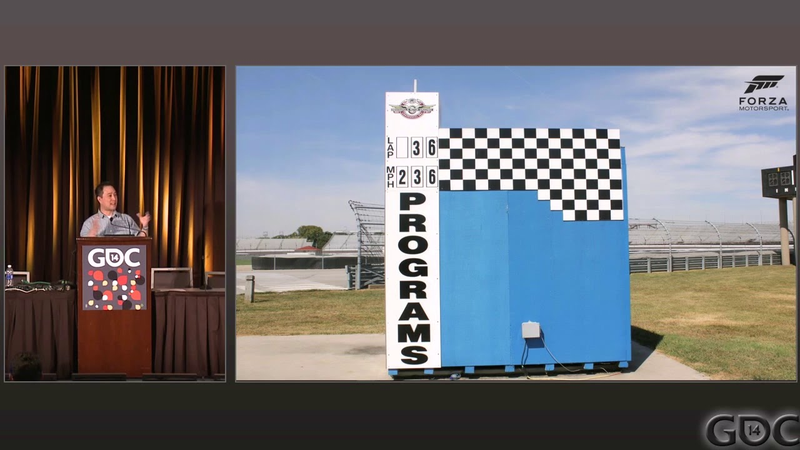
Capturing Reality: Gathering Reference for Forza Motorsport 5
The development of Forza Motorsport 5 necessitated a fundamental shift in asset production, moving away from labor-intensive, disorganized manual data collection toward a highly technical, standardized pipeline.
- Integrating laser scanning and point cloud data directly into 3ds Max via Autodesk’s custom plugin allowed artists to vertex-snap models to real-world dimensions, significantly reducing design iterations and post-production quality bugs.
- Transitioning from disorganized photo folders to spherical panorama cameras (such as the Ladybug) and GPS-tracked site surveys eliminated the 'puzzle-solving' phase where artists previously struggled to contextualize reference images.
- Standardizing color and white balance during reference gathering using calibration charts and Adobe Bridge ensures that source material is compatible with physically-based rendering systems, maintaining consistency across assets.

Modeling Individual Personalities in The Sims 3
The Sims 3 centers on the objective of fostering emergent narrative through a dynamic, autonomous simulation of life.
- To optimize performance, The Sims 3 replaced the inefficient iteration of all object interactions with a memory-efficient map that links specific 'Commodity' desires directly to the interactions capable of satisfying them.
- Instead of choosing the single highest-scoring action, which results in robotic behavior, the game utilizes a Boltzmann distribution to select actions, ensuring a natural variety of choices while still prioritizing high-utility tasks.
- The engine employs a data-driven architecture that allows developers to define complex interconnections between personality traits and social interactions without modifying the core codebase, ensuring long-term maintainability.
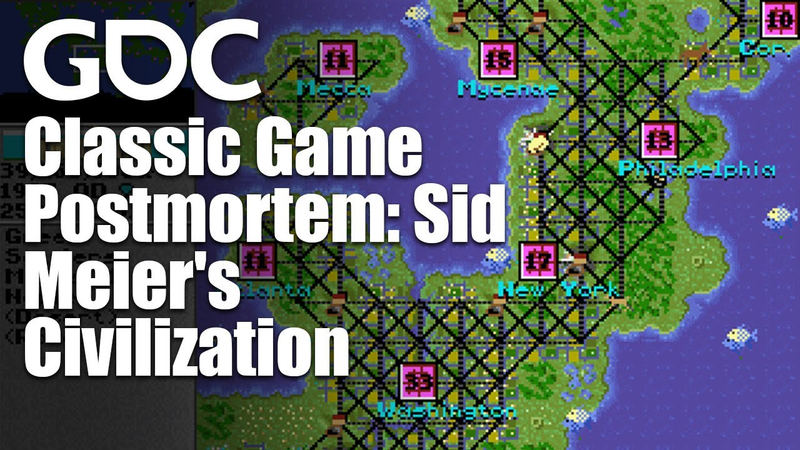
Classic Game Postmortem: Sid Meier's Civilization
The development of Civilization represents a pivotal shift in strategy gaming, moving away from rigid historical simulation toward a sandbox experience that prioritizes player agency and long-term strategic planning.
- Sid Meier and Bruce Shelley developed the original Civilization in under one year, beginning in early 1990 and shipping the title in 1991.
- The game's design was heavily influenced by existing titles like Empire, SimCity, and Railroad Tycoon, as well as Francis Tresham’s board game, Civilization.
- The 'tech tree' mechanic was a core innovation that provided players with a sense of progression and long-term strategic goals, such as unlocking railroads to improve unit mobility.
A Thousand Tiny Tales: Emergent Storytelling in Slime Rancher
Emergent storytelling functions as a core design philosophy in Slime Rancher, prioritizing the creation of unpredictable, player-driven narratives over rigid, scripted sequences.
- Emergent storytelling is generated by creating simple, robust AI behaviors that interact with game systems, rather than scripting long-form narratives.
- Designers should limit the number of 'needs' (e.g., hunger, health) to keep systems manageable, while providing a wide variety of 'wants' to drive unpredictable player interactions.
- Emergent behavior often arises from happy accidents in physics simulations, such as Slime Rancher's stacking mechanic, which players interpreted as intelligent escape attempts.

FTUE: Disney Magic Kingdoms
Disney Magic Kingdoms, a free-to-play mobile theme park simulation developed by Gameloft, utilizes a highly guided first-time user experience (FTUE) designed to accommodate a younger audience while maintaining strict brand standards.
- Disney Magic Kingdoms utilizes a highly guided, low-complexity FTUE to ensure accessibility for a younger demographic while maintaining strict Disney brand standards.
- The game’s core loop centers on narrative-driven progression, using character-specific tasks like welcoming Goofy to teach players about token collection and resource management.
- Gameloft prioritizes brand integrity over aggressive monetization, intentionally avoiding intrusive sales tactics during the initial user experience to comply with child-focused regulatory requirements.

Games You Might Not Have Tried: Winter 2015 - Find New Games - Extra Credits
This selection of video games highlights titles from late 2015 that offer unique design concepts, innovative mechanics, or compelling narratives that may have been overlooked by mainstream audiences.
- Undertale (2015) is highlighted for its innovative subversion of JRPG tropes, specifically through a combat system that allows for a pacifist playstyle.
- The Beginner’s Guide offers a unique narrative focus on the creative process, exploring themes of self-doubt and the psychological struggle for validation.
- The Black Watchmen demonstrates the effective integration of alternate reality game (ARG) mechanics to create an immersive, non-traditional gameplay experience.
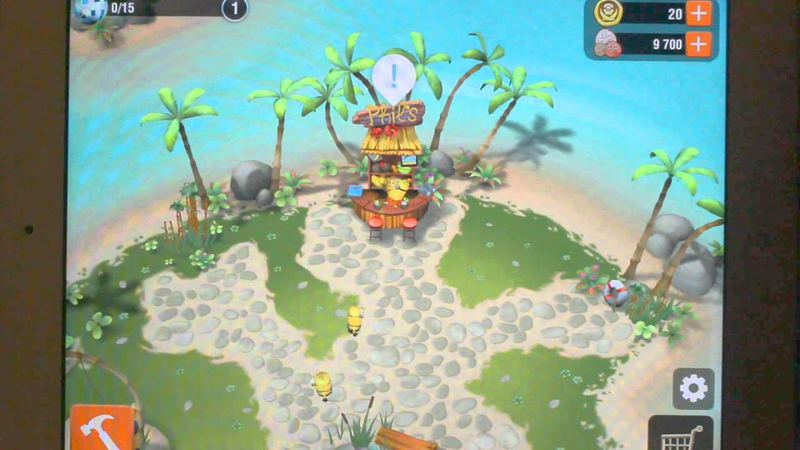
FTUE: Minions Paradise
Minions Paradise, a mobile resource-management game developed by EA, utilizes a highly guided onboarding process designed to immerse players in its narrative and mechanics within the first ten minutes of gameplay.
- Minions Paradise utilizes a highly guided, restrictive onboarding process that prioritizes narrative immersion over player agency during the first ten minutes of gameplay.
- The game employs an unskippable cinematic trailer to establish the premise before transitioning into a structured tutorial that spoon-feeds core mechanics like building placement and resource collection.
- The economy is built on three distinct resources: party points, sand dollars, and a premium hard currency designed to bypass time-based progression gates.

Analysing the monetization of Fallout Shelter
This analysis examines the monetization strategy and technical performance of Bethesda’s Fallout Shelter, contrasting its economic model with industry standards set by titles like Marvel: Contest of Champions and Boom Beach.
- Fallout Shelter achieves commercial success by prioritizing brand engagement and gameplay loops over the high-frequency, high-spend monetization models typical of mobile industry leaders like Marvel: Contest of Champions and Boom Beach.
- The game’s monetization strategy is notably conservative, capping its maximum in-app purchase at $20 and maintaining an average purchase price under $10, diverging from the industry-standard $100 price ceiling.
- Monetization relies on the sale of 'lunch boxes' rather than direct hard currency, creating a unique economic loop that lacks traditional reciprocity metrics found in competing titles.