Simulation reports and market data
Documents
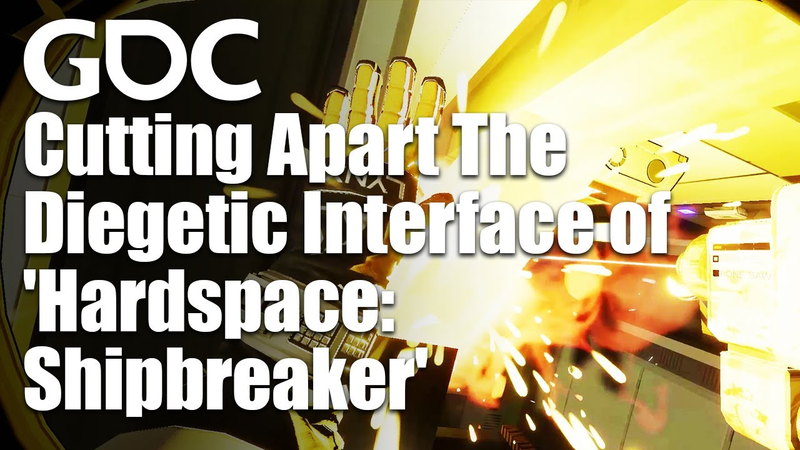
Cutting Apart The Diegetic Interface of 'Hardspace: Shipbreaker'
The design of Hardspace: Shipbreaker demonstrates how diegetic interfaces can serve as a primary vehicle for both narrative depth and functional user experience.
- Blackbird Interactive utilized a diegetic UI design approach in 'Hardspace: Shipbreaker' to embed narrative and game presence directly into the player's interface, effectively turning UI elements into world-building tools.
- The redesign process was driven by four pillars of information architecture, focusing on clear hierarchy, reduced screen clutter, and contextual responsiveness to gameplay events.
- To overcome limited development resources and short release cycles of one to three months, the team integrated UX, game design, and narrative disciplines from the start to create inexpensive, immersive solutions.

Will Wright's 2006 Keynote: What's Next in Game Design?
Game design functions as an iterative process of discovery that prioritizes generative systems over static, pre-scripted content.
- Will Wright emphasizes that game design innovation is best achieved by assembling a small, highly specialized team of experts to solve specific technical risks rather than relying on a large, generalist workforce.
- To improve user-generated content quality, developers should focus on creating intuitive, accessible in-game editors that guide players toward higher-quality output, as most raw user content tends to be low-quality.
- Research for game concepts should be driven by deep dives into books and expert interviews, using these sources to spark iterative ideas rather than treating them as rigid blueprints.
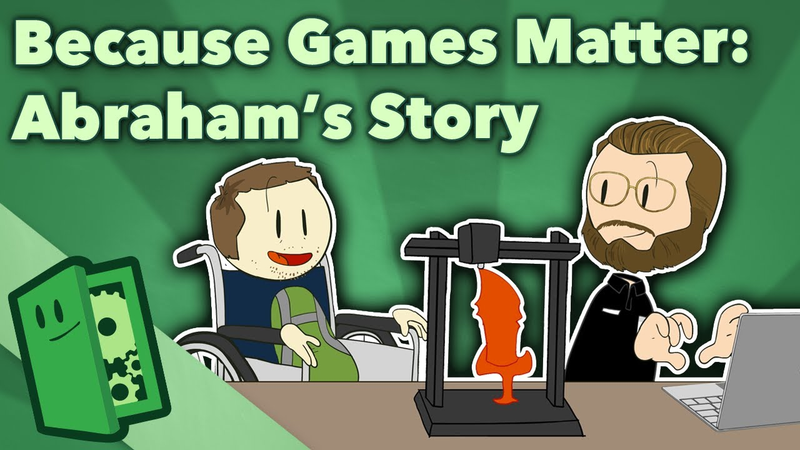
Because Games Matter - Abraham's Story - Extra Credits
The integration of gaming technology into clinical environments serves as a powerful therapeutic tool, capable of augmenting medical treatments and improving the quality of life for hospitalized patients.
- Gaming technology is being integrated into clinical environments as a therapeutic tool to provide distraction, pain management, and emotional support for hospitalized patients.
- The Child's Play charity currently supports this integration by providing funding and equipment to approximately 180 hospitals worldwide.
- Specialized roles, such as the Gaming Technology Specialist at Children's Hospital Colorado, utilize diverse platforms including VR, AR, 3D printing, and robotics to improve patient quality of life.

Depiction of War in Games: Can You Do Better?
Video games frequently reduce the experience of war to a cycle of hyper-violent, high-intensity combat that fails to capture the intricate reality of military operations.
- Military training simulators like Bohemia Interactive’s VBS series demonstrate that war involves hundreds of non-kinetic tasks—such as using turn signals in convoys—that are essential to operations but rarely represented in commercial first-person shooters.
- Game developers can move beyond narrow, combat-focused narratives by adopting a 'pyramid of conflict' structure, where global, local, and personal feuds overlap to create complex, shifting alliances similar to those found in 'Game of Thrones' or 'The Witcher 3'.
- Modern warfare often involves 'unlawful combatants' who blend into civilian populations, creating scenarios where soldiers must make split-second, high-stakes moral decisions under the rules of engagement rather than simply identifying and shooting enemies.
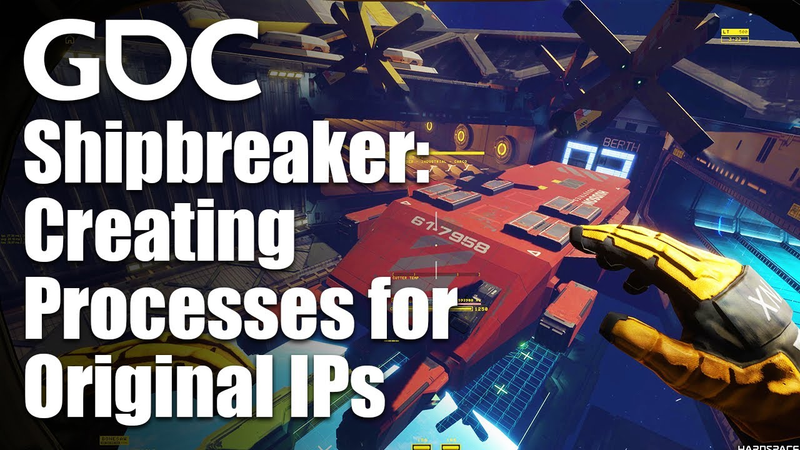
Forging Hardspace: Shipbreaker: Creating Processes for Original IPs
The development of Hardspace: Shipbreaker demonstrates the strategic necessity of balancing creative experimentation with rigorous production discipline when building original intellectual property.
- Blackbird Interactive maintained a small, stable core team of 10 to 15 members during the early development of Hardspace: Shipbreaker to ensure the game's core mechanics were fully validated before scaling production.
- The studio utilized a 'breadcrumb' iterative process, where successful mechanics from failed prototypes—such as the grapple gun and cutting tool—were retained and repurposed across multiple project pivots between 2016 and 2020.
- To avoid the 'clearance rate' trap where teams avoid difficult but necessary design changes to protect their metrics, the studio prioritized systemic design over handcrafted content, allowing the game to generate unique experiences procedurally.
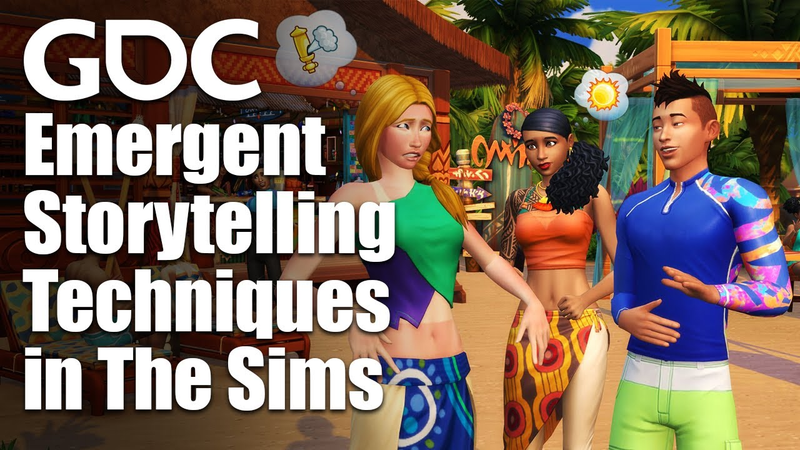
Emergent Storytelling Techniques in The Sims
The Sims functions as a sophisticated storytelling engine that prioritizes player agency and projection over traditional scripted narratives.
- The Sims utilizes a 'story tree' architecture that tracks thousands of potential narrative nodes in the background to surface context-aware character desires based on personality, history, and temporal decay.
- Player agency is maintained through a 'Yes, and' improvisational framework where autonomous feedback loops and relationship-based behaviors respond to player-directed actions.
- The game employs the 'snowflake con'—the perception that common gameplay outcomes are unique—and uses ambiguous Simlish dialogue to prevent explicit text from contradicting the player's internal narrative.

Vehicle Feel Masterclass: Balancing Arcade Accessibility with Simulation Depth
Effective vehicle design relies on a physicality-first philosophy that bridges the gap between arcade accessibility and simulation depth.
- To balance arcade accessibility with simulation depth, developers should build on a foundation of physical simulation and then apply input assists that emphasize desired behaviors while counteracting forces that hinder player enjoyment.
- Vehicle-led cameras are preferred over camera-led systems for high-precision gameplay, as they provide more direct control and better feedback on the vehicle's physical state, despite making it harder for players to look behind them.
- When emulating complex real-world mechanics like drifting, developers should re-center steering inputs so that zero input maintains a drift angle rather than straightening the wheels, allowing players to achieve professional-level control on analog pads.
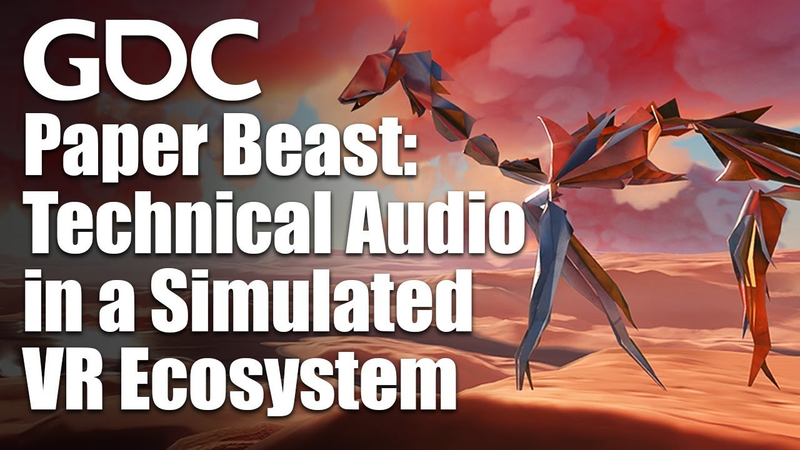
Game VR/AR: Paper Beast: Technical Audio in a Simulated VR Ecosystem
The development of the VR adventure game Paper Beast required a sophisticated audio strategy to support a world defined by procedural physics, fluid simulations, and dynamic ecosystems.
- The Paper Beast audio system utilizes a modular architecture in Unity and Wwise to translate real-time physics data—such as velocity, acceleration, and collision—into discrete sound events for procedural creature locomotion.
- To prevent audio clutter from unpredictable physics, the team implemented specialized sound sources on creature limbs that use hysteresis and temporal thresholds to filter noisy data streams.
- The developers pioneered a bidirectional workflow where offline audio analysis generates movement curves, creating an intuitive synchronization between creature vocalizations and physical behavior.

Career Options Beyond “Traditional” Game Development with John Podlasek | GduX.me
Game development expertise is increasingly transcending the boundaries of traditional consumer entertainment, finding critical applications in sectors such as architectural visualization, military modeling, medical simulation, and corporate training.
- Game development skills in programming, UI/UX design, and 3D modeling are increasingly being applied to high-stakes sectors including architectural visualization, military modeling, medical simulation, and corporate training.
- The maturation of engines like Unity and Unreal has enabled developers to solve complex, real-world problems that require high-fidelity technical sophistication outside of traditional consumer entertainment.
- Developers are transitioning to simulation fields to escape the high-risk, hit-driven nature of the AAA gaming industry, which is often characterized by market saturation and restrictive intellectual property policies.

Job Simulator to Vacation Simulator: Advanced Interactions for Room-Scale VR
The evolution of virtual reality interaction design from Job Simulator to Vacation Simulator centers on expanding the scale of room-scale experiences while maintaining player comfort and intuitive agency.
- Developers transitioned from static, single-room layouts to a zone-based teleportation system to expand the scale of room-scale VR while maintaining player comfort.
- Navigation is grounded through sensory feedback, including sound-based teleportation cues and gesture-driven NPC communication, to avoid disorienting artificial locomotion.
- A physics-based framework governs object behavior, such as a sandwich-assembly system that tracks individual components through states like slicing, cooking, and consumption.

How to Randomly Generate Levels (and Islands)
Procedural level generation offers a scalable method for creating infinite game content, but successful implementation requires a structured, iterative approach.
- Prioritize handcrafted design during the prototyping phase to establish quality benchmarks and define core gameplay loops before automating content generation.
- Implement a hybrid generation approach by using predefined, handcrafted assets as building blocks rather than calculating individual geometric vertices.
- Utilize trial-and-error placement algorithms where objects are dropped into random positions and validated against specific constraints, discarding invalid placements until a suitable location is found.
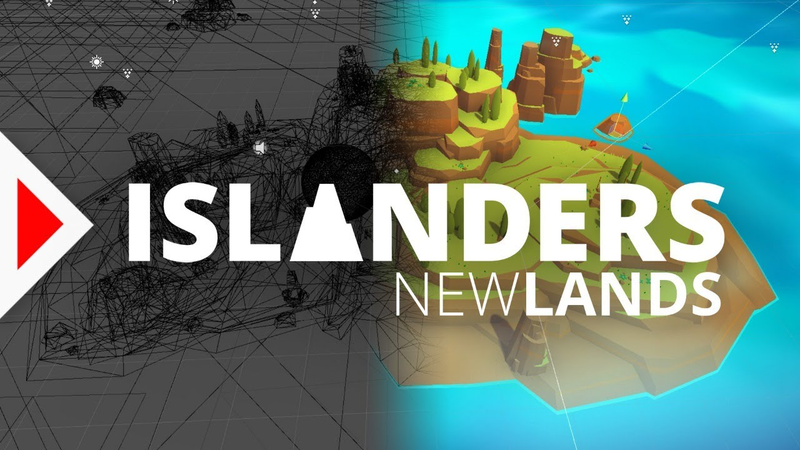
ISLANDERS - Making New Islands (Live)
The development of the strategy game Islanders centers on a sophisticated procedural generation system designed to produce infinite, aesthetically consistent island layouts.
- A three-person development team utilized a modular, step-by-step procedural generation system to create infinite, aesthetically consistent island layouts.
- The system employs specialized generators and heat maps to automate the placement of terrain, resources, and decorative elements while maintaining structural balance.
- Development focused on managing complex Unity engine variables, including mesh filtering, pivot points, and object clipping, to ensure visual coherence.