Retention reports and market data
Documents
Humane Design - Games Must Be Good to Their Players - Extra Credits
Game design carries a profound responsibility to treat players as human beings rather than mere revenue-generating engines.
- Game design should prioritize intrinsic player enjoyment over exploitative, habit-forming mechanics like Skinner boxes that treat users as revenue-generating engines.
- Successful titles such as Minecraft and Dota 2 demonstrate that long-term profitability and player loyalty are better achieved through genuine engagement rather than addictive loops.
- Designers should intentionally incorporate exit points and avoid punishing players for attending to real-world responsibilities to foster a healthier relationship with the audience.

Challenge, engage, and analyse your players, says Plarium's Oren Todoros
Plarium’s mobile PR specialist, Oren Todoros, outlines five strategic trends currently shaping the mobile gaming industry, emphasizing the need for developers to actively challenge and engage their player base to maintain retention.
- Developers should experiment with genre mashups, such as combining RPG mechanics with card-collecting elements or blending hardcore and casual gameplay, to increase player engagement.
- Retention can be improved by implementing periodic, time-sensitive special events and tournaments, which prevent player churn by providing consistent challenges and rewards.
- Push notifications should be treated as a data-driven marketing channel; developers should utilize A/B testing and analytics to track open rates and click-throughs rather than relying on generic messaging.

DropForge Games' David Bluhm on smart branding and why mobile will always win
The mobile gaming industry represents the primary and most significant platform for modern developers, characterized by its massive global footprint and continuous growth.
- Mobile gaming is the dominant platform for modern developers, necessitating a long-term commitment to live-service operations to maintain player engagement.
- The 'DDAM' framework—Design, Device, Audience, and Monetization—is essential for success, requiring monetization to be integrated from the first day of development rather than added later.
- Independent studios must adopt the free-to-play model as the primary viable path to achieving scale and profitability within a marketplace containing over 150,000 games.

PechaKucha meets the Mobile Games Industry
The mobile gaming industry has undergone a profound transformation, evolving from fragmented early experiments into a mature ecosystem dominated by the App Store and the free-to-play business model.
- Opt-in, reward-based advertising can generate up to 50% of a mobile game's total revenue when integrated as a non-intrusive, context-aware experience.
- Long-term player retention is best achieved by replacing simplistic tutorials with gameplay that fosters mystery and player agency, allowing users to project their own narratives onto the game.
- Sustainable financial models in the current mobile ecosystem require a strategic balance between traditional in-app purchases and diversified revenue streams like rewarded ads.

Boomlagoon's Tuomas Erikoinen talks character driven games and user retention
Character-driven game design serves as a strategic framework for enhancing user retention and brand development in the mobile gaming industry.
- Prioritizing character-driven design over purely functional mechanics fosters deeper emotional connections, which serves as a strategic framework for increasing long-term user retention.
- Limiting the primary cast to a maximum of five characters ensures player recognition and allows for the development of distinct, memorable traits.
- Establishing a consistent art style early in the production cycle is critical to avoiding technical debt and maintaining product quality throughout development.
Candy Crush's Success - Why People Can't Get Enough Candy Crush - Extra Credits
Candy Crush Saga’s immense commercial success, characterized by its status as a top-grossing mobile application and a leader in total player engagement, stems from sophisticated game design that transcends the standard match-three genre.
- Candy Crush Saga achieves high engagement by modulating the player's interest curve through hand-crafted, non-rectangular level designs and varied, non-repetitive objectives.
- The game utilizes controlled randomness in its starting boards to ensure every level attempt is a unique challenge, which encourages persistence after failure by preventing the perception of a static logic problem.
- Monetization is driven by shifting the player's focus from abstract score-chasing to tangible, visually obvious goals like clearing specific grid squares or moving items to the bottom of the screen.

CEO of DeNA West Clive Downie talks about why it's focused on fun not money
DeNA West prioritizes user engagement and the creation of high-quality content over immediate monetization strategies within the mobile gaming sector.
- DeNA West prioritizes user engagement and long-term retention over immediate monetization, operating on the premise that high-quality content naturally drives sustainable revenue.
- The company manages the Mobage platform, which hosts a portfolio of over 100 first- and third-party mobile game titles.
- DeNA West maintains a workforce of over 300 employees, focusing on internal culture and developer satisfaction to ensure the production of high-quality, engaging gaming experiences.
Energy Systems - How Casual Games Suck You In - Extra Credits
Energy systems in modern gaming serve as psychological tools designed to regulate player behavior through three primary mechanisms: monetization, content restriction, and habituation.
- Energy systems function as psychological tools designed to regulate player behavior through monetization, content restriction, and habituation.
- Developers use artificial scarcity and limited play sessions to integrate games into a user's daily routine, prioritizing long-term retention over one-time engagement.
- Early implementations like World of Warcraft’s 'rested experience' system leveraged the psychological drive for efficiency to encourage regular play without causing user frustration.
Microtransactions - What Does Good Monetization Look Like? - Extra Credits
Microtransactions represent a significant shift in the gaming industry, offering a sustainable alternative to traditional retail models if implemented with ethical, player-centric design.
- Monetization must focus on convenience and cosmetic items rather than selling power, as selling competitive advantages undermines game balance and alienates the player base.
- Non-paying players are essential to the ecosystem because they provide the necessary population density to sustain multiplayer game functionality.
- Developers should allow all players to earn premium currency through gameplay to build trust and lower the psychological barrier to making initial purchases.
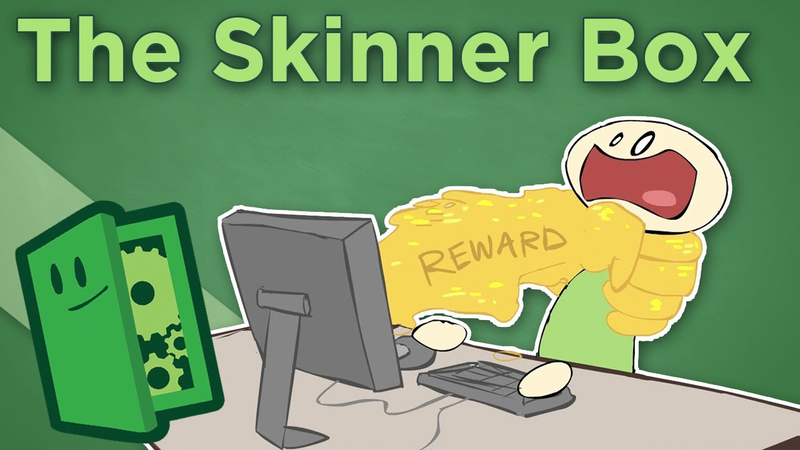
The Skinner Box - How Games Condition People to Play More - Extra Credits
The application of B.F. Skinner’s operant conditioning within game design serves as a mechanism to artificially extend player engagement, often at the expense of genuine quality.
- Game developers use variable reward schedules—unpredictable intervals of points, loot, or social validation—to condition players into repetitive, compulsive behavior that mimics gambling.
- These operant conditioning techniques are frequently used as a design crutch to artificially extend engagement and mask uninspired or hollow gameplay.
- Secondary reinforcers like digital points do not trigger biological satiation, allowing developers to sustain player activity long after the novelty of the game has faded.
Gaming's Cheating Crisis: The Impact on Players and Profit
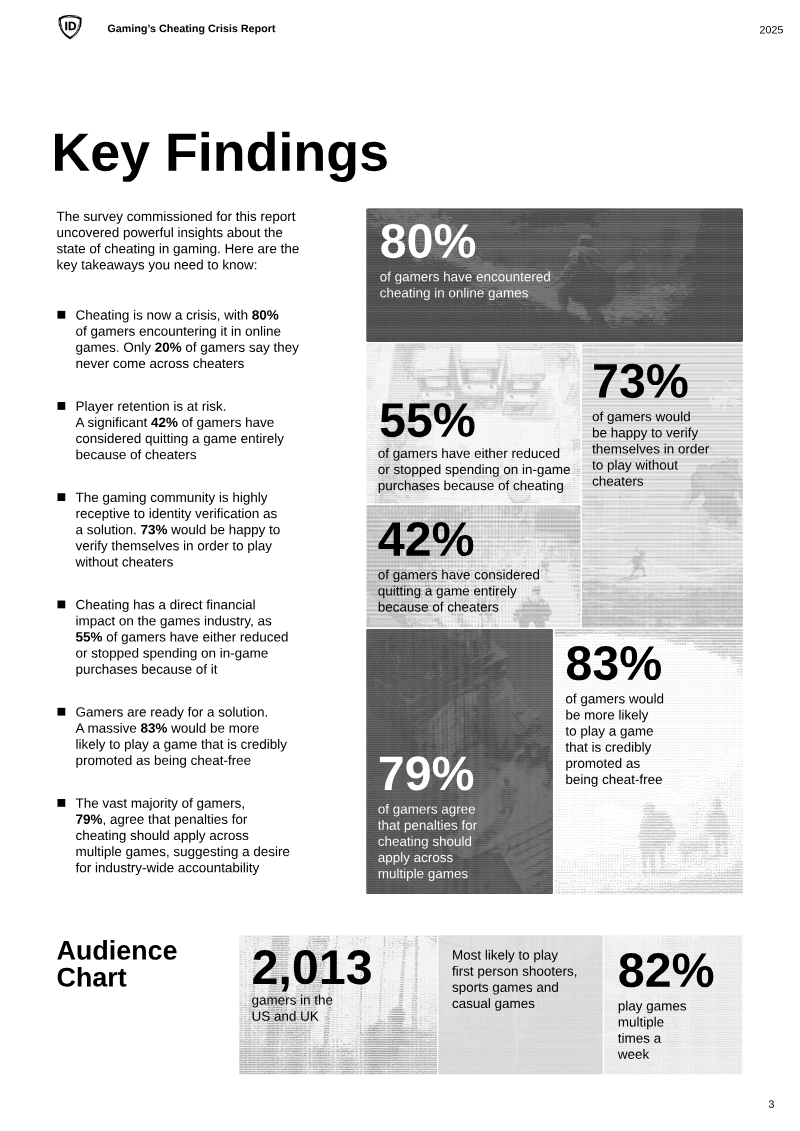
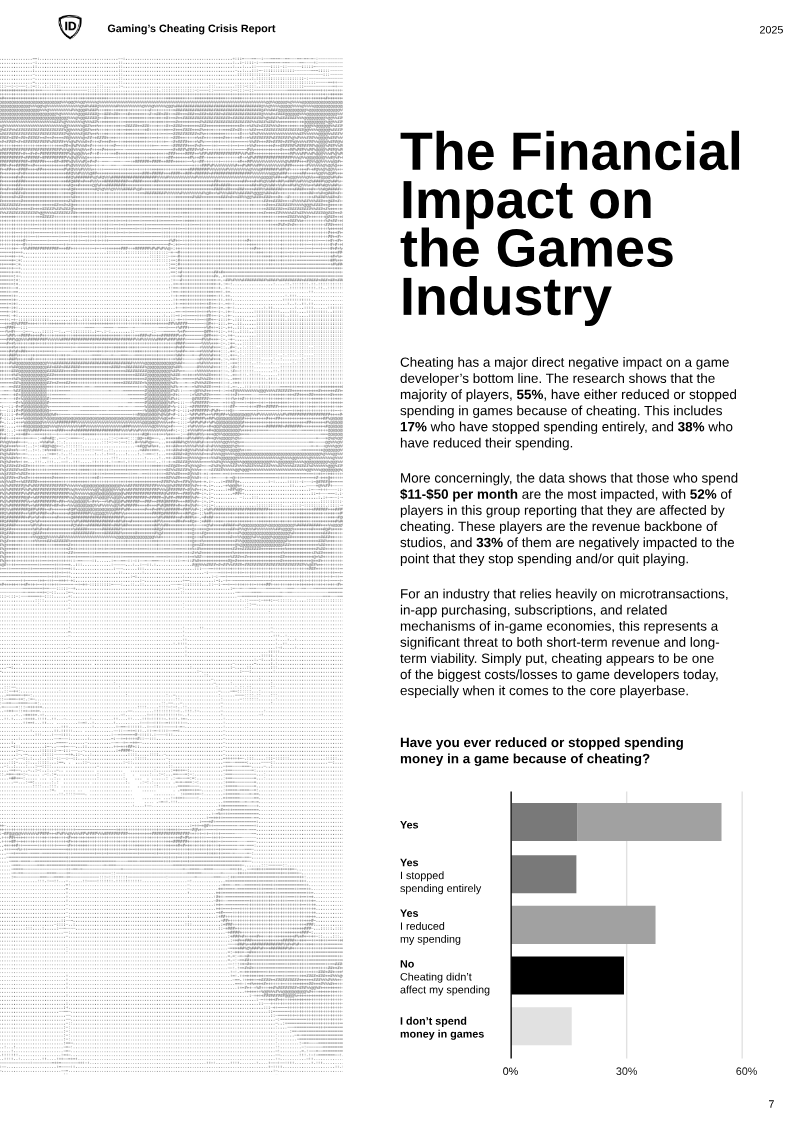
The gaming industry is currently facing a widespread crisis regarding cheating in online titles, which significantly undermines player retention and threatens long-term revenue.
- Cheating directly impacts revenue, with 55% of gamers reducing or stopping in-game spending due to unfair play.
- 80% of gamers have encountered cheating, and over 50% experience it at least monthly, driving players away from titles.
- There is strong consumer demand for systemic solutions, as 83% of players are more likely to engage with games marketed as cheat-free.

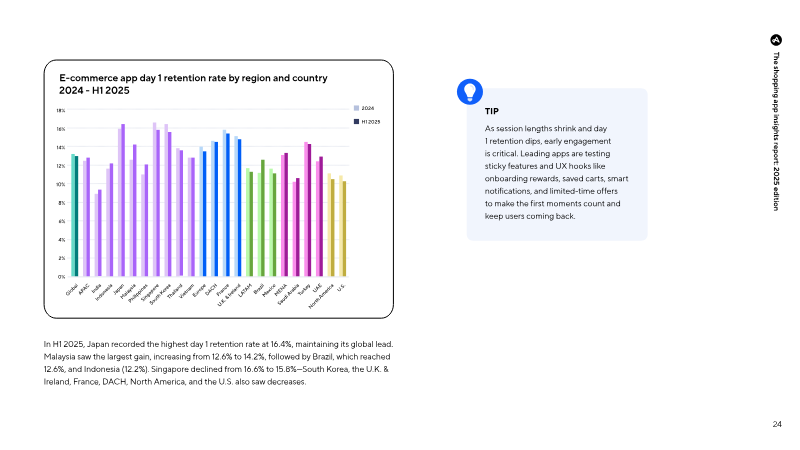

The Shopping App Insights Report: 2025 Edition
The global e-commerce landscape, currently valued at $6.42 trillion, is undergoing a significant transformation as marketers navigate economic volatility and evolving consumer expectations.
- Global e-commerce app installs declined 14% year-over-year in H1 2025, though sessions grew by 2%, indicating a shift toward re-engaging existing users over new acquisition.
- Global reattribution share for e-commerce apps rose to 0.18 in H1 2025, up from 0.14 in 2023, with the UAE (0.40) and U.K. & Ireland (0.36) leading in win-back activity.
- Global e-commerce app install per mille (IPM) reached nearly 3.0 in Q1 2025, with North America maintaining the highest regional performance at 5.21.