Retention reports and market data
Documents

FTUE: Eternal Arena
The first-time user experience of the mobile card-action RPG Eternal Arena reveals significant friction points in the initial onboarding process, primarily centered on technical implementation.
- The 168MB secondary download requirement at launch creates a significant barrier to entry, risking user abandonment before the tutorial begins.
- Implementing background asset downloading during tutorial gameplay is recommended to replace the current forced wait time and improve initial retention.
- The game utilizes a hybrid model combining action-RPG combat with card-based collection mechanics to drive long-term engagement and monetization.

The 6 game UX roles
The primary purpose of this analysis is to clarify the multifaceted nature of user experience (UX) roles within the game development industry.
- Effective UX requires evidence-based iteration through active user testing; without this, design remains purely aesthetic rather than functional.
- Studios should distinguish between six specific UX disciplines—User Researcher, Information Architect, UX Designer, Interaction Designer, UX Developer, and UI Artist—to avoid the common mistake of conflating UX with UI design.
- The six specialized UX roles can be consolidated into three core functions for most studios: research to understand the player, design to structure the experience, and visual artistry to execute the interface.

FTUE: Colopl Rune Story
The first-time user experience (FTUE) of the mobile JRPG Colopl Rune Story serves as a case study in balancing accessibility for casual players with the depth required by core gaming audiences.
- Colopl Rune Story prioritizes early engagement by ensuring players achieve combat victories within the critical first ten minutes of the initial session.
- The onboarding process utilizes a phased disclosure strategy, restricting access to complex menu systems and meta-game mechanics to maintain a low-pressure environment for new users.
- To minimize player friction, the game employs a guided tutorial structure featuring visual cues like directional arrows to teach fundamental movement, combat, and resource management.

FTUE: X-Mercs
X-Mercs, a turn-based squad shooter developed by Game Insight, demonstrates a complex onboarding process characterized by significant technical and instructional hurdles.
- The X-Mercs onboarding process is hindered by a 2GB initial download requirement and prolonged loading times that delay active gameplay for several minutes.
- The game employs a premature engagement strategy by requesting push notification permissions immediately upon launch, risking early user alienation.
- The tutorial phase is intensive and slow-paced, requiring players to navigate extensive dialogue and guided combat sequences to learn mechanics like action point management and orbital cannons.

FTUE: Sniper X with Jason Statham
Sniper X with Jason Statham, a free-to-play mobile title developed by Glu Mobile, utilizes a celebrity-driven strategy to engage players within the static shooter genre.
- Glu Mobile utilizes a celebrity-driven strategy in 'Sniper X with Jason Statham' to differentiate its static shooter from previous celebrity-focused titles.
- The onboarding process prioritizes immediate core gameplay, delaying intrusive requests like push notifications until players establish baseline engagement.
- The first ten minutes focus exclusively on core mechanics, such as target acquisition and environmental interaction, before introducing complex metagame systems.
Fallout Shelter - How a Casual Game Won Over Hardcore Players - Extra Credits
Fallout Shelter achieved unexpected commercial success, briefly surpassing top-grossing titles like Candy Crush, despite utilizing free-to-play mechanics typically rejected by the hardcore gaming demographic.
- Fallout Shelter achieved commercial success by briefly surpassing top-grossing mobile titles like Candy Crush, demonstrating that hardcore players will engage with free-to-play mechanics if implemented correctly.
- The primary driver of the game's success was the removal of player-versus-player (PvP) competition, which eliminated the pressure to compete and the fear of falling behind other players.
- Hardcore players' traditional resistance to free-to-play elements like timers and gashapon-style monetization is rooted in competitive friction rather than the mechanics themselves.

PechaKucha: Mark Sorrell on LTV BS
Lifetime Value (LTV) and Lifetime Revenue (LTR) are frequently misused in the mobile gaming industry as definitive data points rather than the predictive assumptions they actually represent.
- Lifetime Value (LTV) and Lifetime Revenue (LTR) are predictive assumptions rather than definitive data points, and relying on them as facts can lead to misleading assessments of game health.
- Prioritizing speculative LTV models often incentivizes short-term revenue extraction and aggressive sales tactics that inflate premium currency supplies without regard for actual player utility.
- The true health of a virtual economy should be measured by the velocity of in-game transactions, specifically the rate at which players spend premium currency rather than how quickly they acquire it.
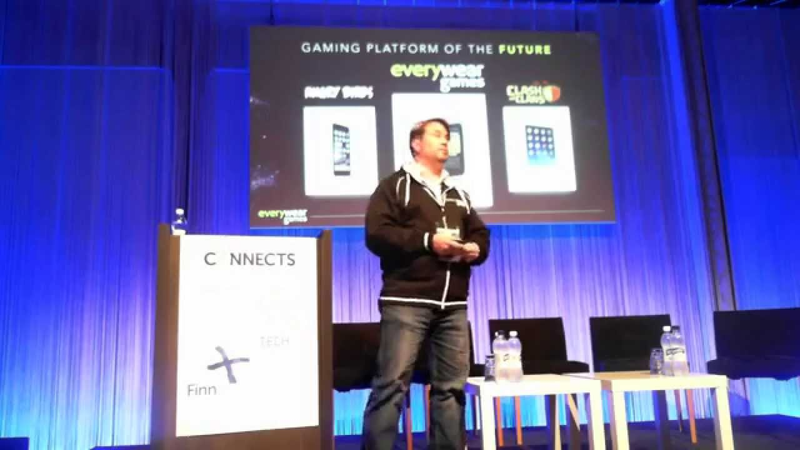
Apple Watch is the most accessible games platform ever created
The Apple Watch represents a paradigm shift in gaming accessibility, characterized by its constant availability and seamless integration into the user's daily life.
- The Apple Watch's constant availability enables high-frequency engagement, with some users accessing games as often as every six minutes.
- Everywear Games successfully utilized a television-series model for their title Runeblade, delivering episodic content to drive long-term player retention.
- Runeblade's development strategy resulted in significant market reach, including multiple Apple features and coverage from over 1,000 media outlets.
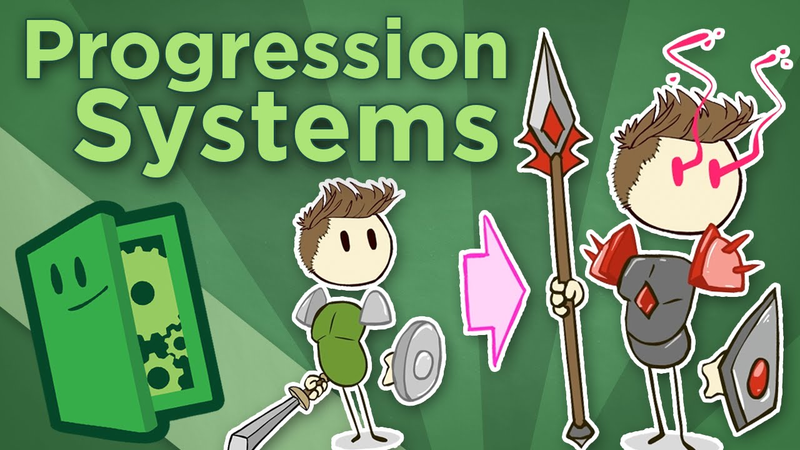
Progression Systems - How Good Games Avoid Skinner Boxes - Extra Credits
Progression systems in video games are frequently criticized for functioning as Skinner boxes—psychological traps designed to induce habit-forming behavior through repetitive, unrewarding grinds.
- Effective progression systems should function as core gameplay components that enhance strategic depth and narrative immersion rather than serving as manipulative Skinner boxes designed to artificially extend playtime.
- Developers should prioritize player agency by allowing for character customization and build flexibility, including mechanisms for re-specing to prevent player frustration.
- Progression systems act as a framework for managing learning curves by introducing mechanics incrementally, which allows players to master skills at their own pace.

Biz Daily: Fallout Shelter's slow top grossing decline
Fallout Shelter’s performance on the App Store during its initial two-week launch period demonstrates a unique trajectory characterized by a surprisingly gradual decline in top-grossing rankings.
- Fallout Shelter’s launch performance defied mobile trends by maintaining a resilient top-30 grossing position across major Western markets, including the UK, Australia, Canada, France, Germany, and Russia, following its E3 debut.
- The game’s success demonstrates that strong brand equity can compensate for the absence of standard free-to-play retention drivers, such as multiplayer, social integration, and frequent content updates.
- Bethesda successfully leveraged the Fallout brand to attract core console and PC gamers who typically avoid mobile free-to-play titles, establishing a level of consumer trust that drove initial monetization.

Intermediate Social Curve Design - Introducing Cooperation Rewards - Extra Credits
Effective social game design requires a structured progression that transitions players from solitary mechanical mastery to collaborative social engagement.
- Effective social design requires a structured progression that transitions players from solitary mechanical mastery to collaborative engagement without mandating group play.
- Designers should implement low-friction social challenges that offer tangible rewards, such as improved loot drops, faster leveling, or increased success rates, to incentivize cooperation.
- Early-stage social interactions should be designed for short durations with minimal communication requirements to lower the barrier to entry for players.

Exit Points - Putting Down the Game - Extra Credits
Exit points represent a critical design concept in game development, defined as the natural junctures where a player chooses to stop playing, either for a single session or permanently.
- Designers must balance the inclusion of humane, intentional exit points with the minimization of unintended exit points that cause premature player abandonment.
- Unintended exit points are frequently caused by friction-heavy design choices, such as excessive loading times after failure or poorly placed save points.
- Rapid-fire respawn mechanics, exemplified by Super Meat Boy, effectively reduce frustration and prevent players from quitting during difficult gameplay segments.