PC reports and market data
Documents
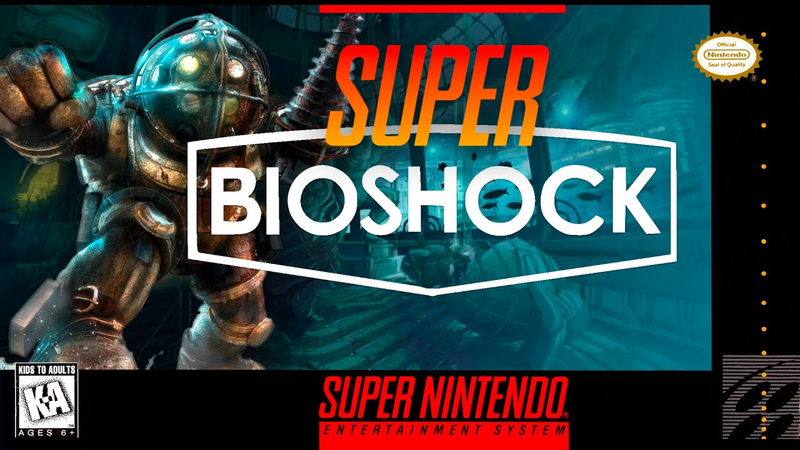
I made BioShock... BUT IT'S 2D
Recreating the iconic introduction of the 1995-era aesthetic for BioShock within the Unity engine serves as a practical exploration of game design, art direction, and the technical challenges inherent in translating 3D environments into 2D.
- Recreating a small fraction of the BioShock environment in 2D required eight hours of dedicated illustration and design, highlighting the significant labor investment behind seemingly simple art styles.
- The project successfully translated Rapture’s complex Art Deco architecture into 2D by utilizing layering, parallax effects, and strategic lighting instead of high-fidelity 3D models.
- Technical implementation in the Unity engine relied on 2D lighting systems, particle kits for environmental effects, and custom code to manage background movement.
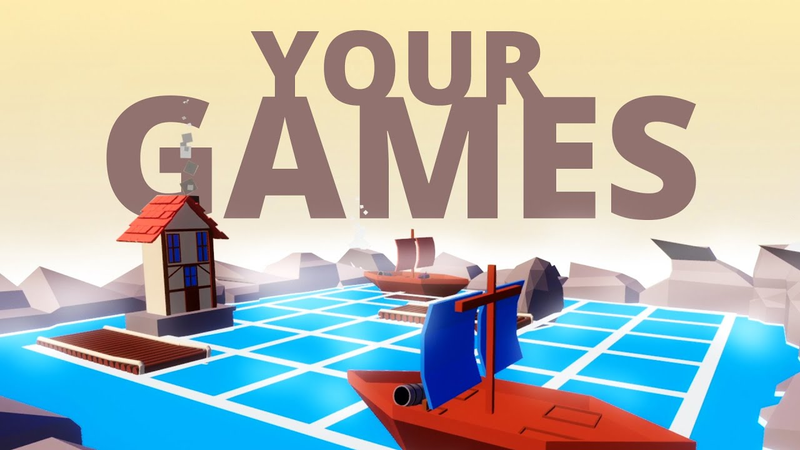
I PLAYED YOUR GAMES! | Game Design Feedback.
Effective game design relies on the seamless integration of intuitive user interfaces, clear player feedback, and natural onboarding processes.
- Indie developers must prioritize intuitive UI, clear visual feedback, and natural onboarding to prevent complex mechanics from becoming obscured by poor design.
- Tutorials should be embedded directly into gameplay rather than relegated to external documentation to improve player engagement and retention rates.
- Technical innovation in hybrid genres is often undermined by user experience friction, such as steep initial difficulty curves or intrusive monetization strategies.
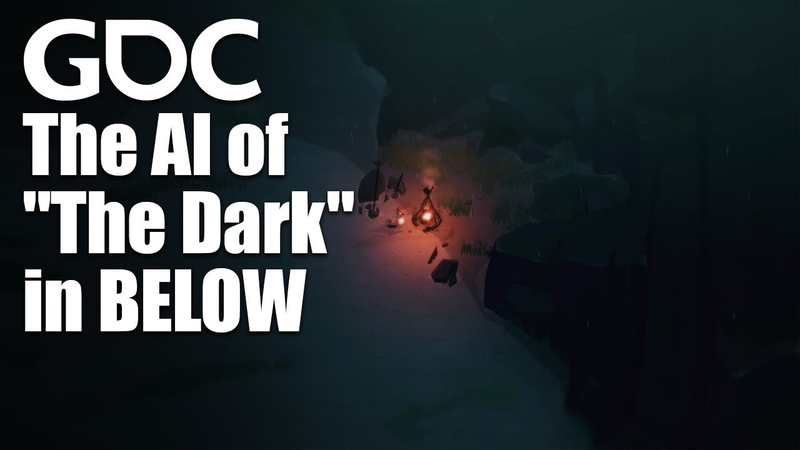
A Dark Mind: The AI of ""The Dark"" in BELOW
The development of the tentacle-based entity known as The Dark in the game BELOW centers on achieving a balance between fluid, animalistic movement and structured, readable combat mechanics.
- Capy Games developed 'The Dark' for the game BELOW using a 30-bone mesh tentacle system that combines bespoke squirmy idle animations with a kinematic chain controlled by an inverse kinematic (IK) tip target.
- To solve issues with poor animation blending caused by complex kinematic states, the team implemented a shape-casting system that rotates around a target to find unobstructed goal positions for the tentacle tips.
- The team transitioned from a rigid, order-of-execution rule system to a flat scoring-based architecture, allowing for configurable weights that make it easier to balance competing behaviors like avoiding the player versus hiding the tentacle base.
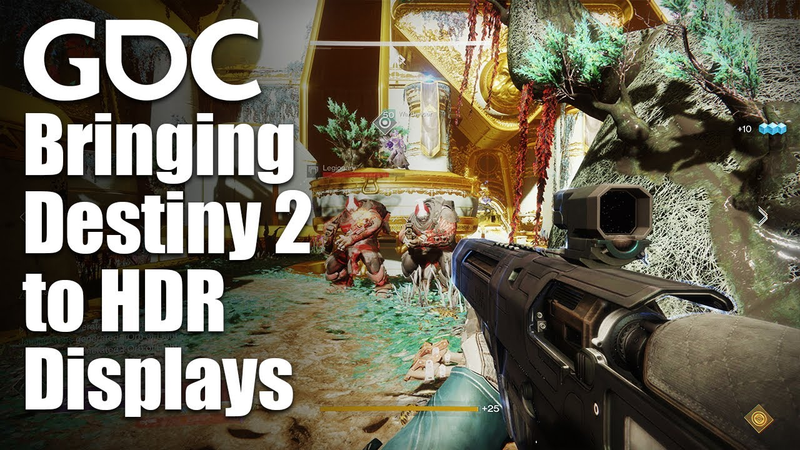
Not-So-Little Light: Bringing Destiny 2 to HDR Displays
The integration of High Dynamic Range (HDR) into Destiny 2 represents a strategic effort to modernize a legacy rendering pipeline without requiring a complete overhaul of existing art assets.
- Bungie successfully retrofitted Destiny 2’s legacy SDR rendering pipeline for HDR by implementing custom tone-mapping curves that extrapolate existing assets into 10-bit and 16-bit color spaces.
- To maintain UI legibility, the team utilized a reversible tone-mapping process that converts the back buffer to SDR for interface rendering before inverse tone-mapping it back to HDR.
- The implementation of FP16 back buffers and deferred tone mapping effectively mitigated color banding and hue shifts across diverse hardware configurations.
Superstar Session: The Future is Cross Platform
The gaming industry is undergoing a significant shift as player demand for seamless, cross-platform multiplayer experiences intensifies.
- 96% of surveyed developers in 2021 identified scalable cross-platform solutions as a critical factor for the success of multiplayer games.
- The industry is transitioning toward a 'build once, deploy everywhere' model, allowing developers to manage mobile, PC, and console releases from a single codebase.
- Successes like Among Us and Genshin Impact have validated cross-play as a viable and highly demanded feature driven by player desire for social connectivity across hardware.

Tech Infrastructure for Multiplayer PVP - How To Reduce Latency for Competitive Games?
Competitive multiplayer gaming hinges on the mitigation of latency and packet loss, as these technical inefficiencies directly correlate with a three-fold increase in player churn.
- Technical inefficiencies like latency and packet loss are directly linked to a three-fold increase in player churn for competitive multiplayer games.
- Developers should prioritize a server-authoritative networking architecture to effectively mitigate security threats such as DDoS attacks and cheating.
- A common cost-performance strategy is the hybrid model, which utilizes cloud platforms for backend services while hosting game servers on bare metal to avoid high egress bandwidth fees.

Making A 3D Game Was A HUGE MISTAKE
Transitioning from 2D to 3D game development presents significant technical hurdles, particularly regarding character modeling, rigging, and physics implementation.
- Transitioning from 2D to 3D development introduces significant technical complexity in character modeling, specifically regarding mesh topology, UV unwrapping, and skeletal rigging.
- Implementing 3D character systems, such as head-tracking, requires precise adjustments to axis clamping and coordinate constraints to avoid animation glitches and erratic movement.
- Integrating ragdoll physics into 3D environments creates dynamic, unpredictable gameplay that can enhance the player experience despite inherent technical instability.
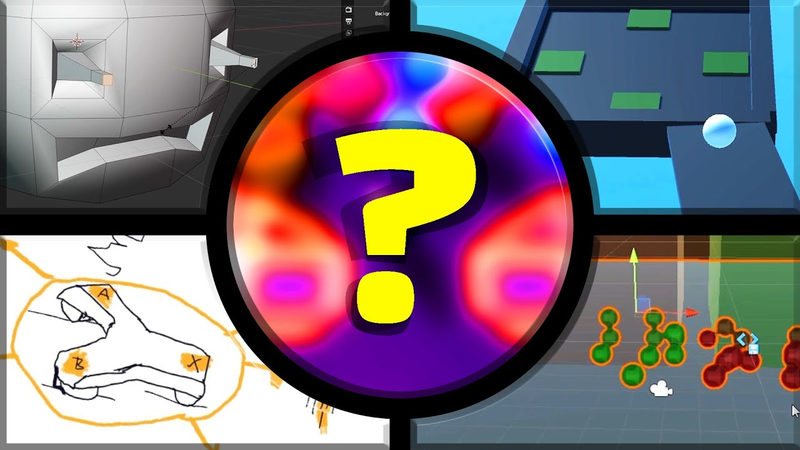
Can We Combine 4 Games Into One? | Game Dev Challenge
This analysis examines a collaborative game development challenge where a four-person team attempted to merge four disparate, independently developed prototypes into a single cohesive game within a 48-hour timeframe.
- Forcing the integration of four disparate prototypes into a single project within a 48-hour timeframe led to significant over-scoping and technical instability.
- The requirement to incorporate every initial asset—including a ball-rolling controller, 3D Halloween assets, physics-based sticking, and a music engine—created complex, difficult-to-debug code.
- Ignoring early warnings regarding control difficulty and physics stability resulted in a final product prone to soft-locking and navigation failures.
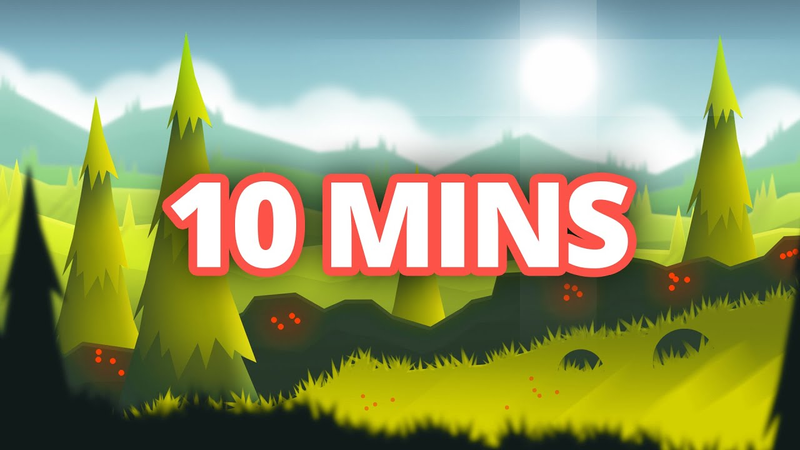
2D Game Art Tutorial (Stylized Landscape in 10 Minutes!)
This guide outlines a streamlined workflow for creating stylized, ambient 2D game environments, specifically focusing on an alpine landscape.
- Establish visual hierarchy and depth by layering background mountains, mid-ground hills, and foreground elements to simulate a three-dimensional environment within a 2D plane.
- Maintain consistent lighting logic by simulating a single light source, such as the top-left, to ground the artwork and create depth through shadows and motion-blurred gradients.
- Use the polygon lasso tool to define distinct terrain layers and apply brush settings like angle and size jitter to introduce organic variation to assets such as grass and trees.
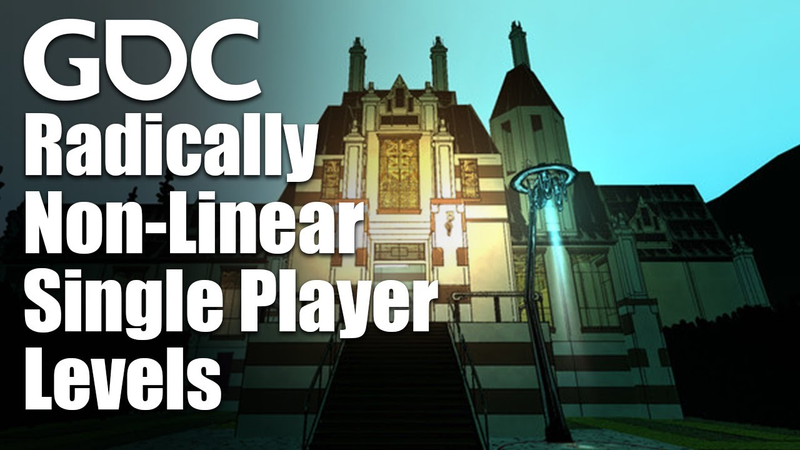
Designing Radically Non-Linear Single Player Levels
Radically non-linear level design prioritizes player agency, exploration, and systemic interaction over scripted narrative sequences.
- Radically non-linear level design shifts the focus from building paths to defining open, movable space and strategically placing walls to block or guide player movement.
- Unlike open-world games, these levels prioritize gameplay systems over story, allowing mechanics like stealth, long-range vehicle combat, and enemy movement control to function without artificial funneling.
- Effective layout structures include 'Symmetric' designs (using a low-tension center line to break tempo) and 'Concentric' designs (rewarding players for scouting outer areas before committing to a high-risk center).
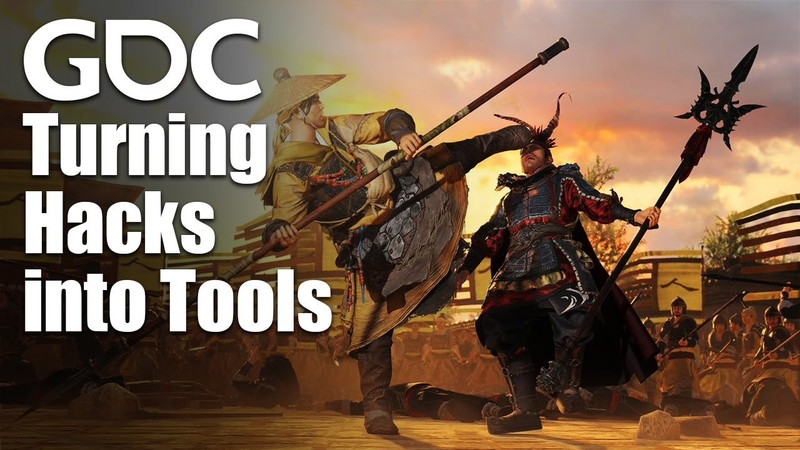
Cementing Your Duct Tape: Turning Hacks into Tools
Technical art teams often face the challenge of balancing legacy engine constraints with the demand for modern, scalable production pipelines.
- Duct tape solutions prioritize immediate function over form with the explicit intent of being discarded, whereas hacks are often poorly implemented solutions that persist indefinitely and accumulate technical debt.
- Refactoring data structures can be more effective than building new tools; for example, removing a single column from a database table in Total War: Arena enabled on-demand asset loading, significantly improving startup times.
- When developing internal tools, use 'duct tape' implementations during prototyping to gain practical insights that inform the final, more robust architecture, as these insights are often impossible to foresee during initial planning.
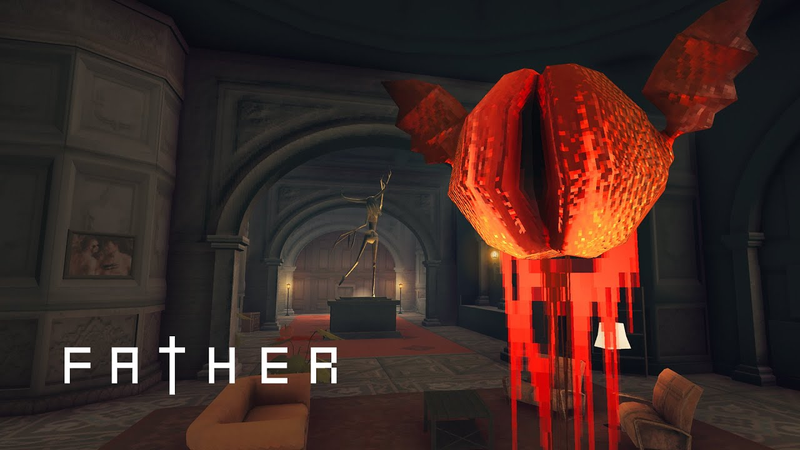
How I Made A Flying Enemy In Unity FAST - Devlog
This development log outlines the iterative process of creating a unique, low-poly flying enemy for an indie horror game.
- Prioritize rapid iteration and creative execution over technical perfection to maintain a fast production cycle in solo indie development.
- Utilize unconventional techniques, such as 'faking' complex tasks and repurposing existing assets, to overcome technical limitations and accelerate the workflow.
- Implement randomization in audio pitch and volume to ensure enemy behavior feels organic and avoids repetitive patterns.