PC reports and market data
Documents
How NOT To Make Indie Games
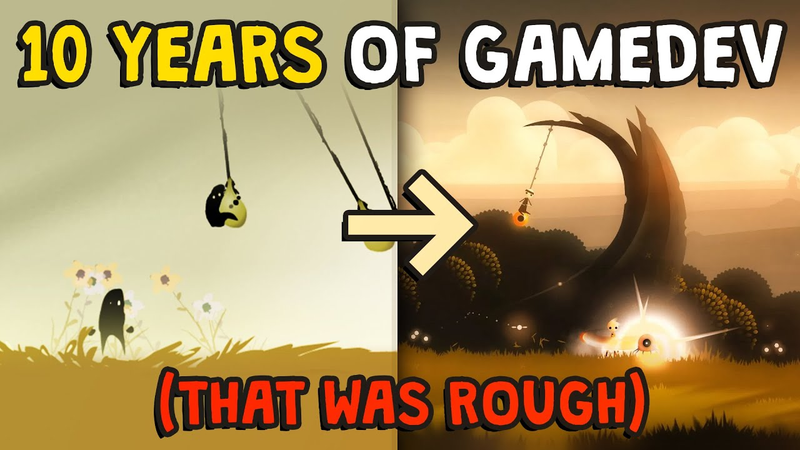
The primary thesis of this analysis is that personal psychological traits, while often perceived as obstacles, can be managed and integrated into a sustainable indie game development career.
- Developers should avoid the 'restrictive developer identity' trap, where projects are driven by external validation and feature bloat rather than genuine creative interest.
- Indie teams must avoid the trap of recreating the scale of classic titles, as attempting to match the complexity of nostalgic influences is rarely financially or logistically feasible.
- To mitigate the impact of attention-related struggles like ADHD, developers should formalize project management structures and utilize professional partnerships to enforce strict deadlines.
Make A Level With Just A Few Textures (Blender + Unity Tutorial)
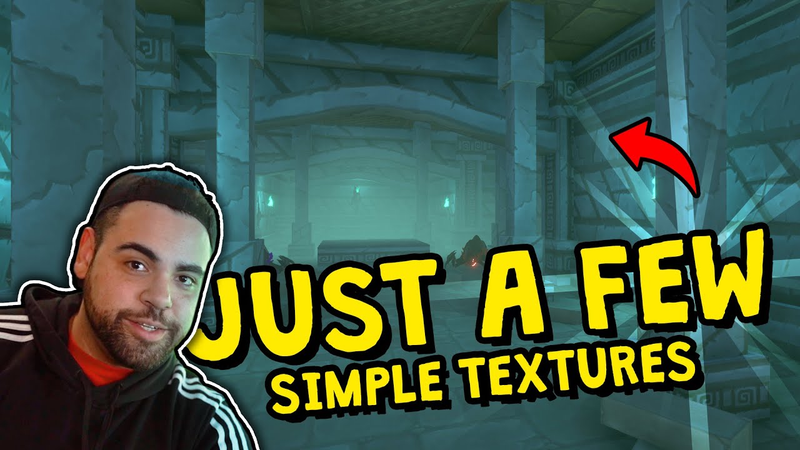
This tutorial outlines a workflow for creating modular 3D dungeon environments using minimal texture assets and basic modeling techniques in Blender, followed by assembly in the Unity game engine.
- High-quality, stylized environments can be achieved by using a single master texture mapped across modular geometry rather than relying on large libraries of unique assets.
- Modular design relies on 'Lego-style' construction, where developers create diverse architectural elements like walls, floors, and arches from repeating mesh patterns.
- Mathematical precision is essential for seamless connectivity, requiring vertices to be snapped to consistent grid sizes, such as 3x3 or 5-meter increments.
In-game Ads for Console and PC Games - Opportunity or Threat?
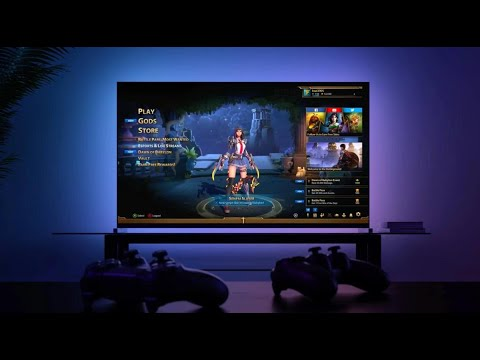
The gaming industry is undergoing a strategic shift toward integrating in-game advertising within console and PC titles, mirroring the successful ad-supported tiers popularized by streaming services.
- Console and PC developers are shifting toward dynamic, rewarded video ads to create a sustainable monetization alternative to aggressive microtransactions and reliance on high-spending users.
- The strategy targets the 16–34 demographic, a cohort that has largely abandoned linear television, making the massive daily-active audiences of gaming titles a primary target for advertisers.
- Unlike mobile gaming's focus on app-install metrics, console and PC advertising prioritizes high-quality, brand-led video content integrated during natural downtime like menu navigation.
A subscriber sent me their game for a MAKEOVER
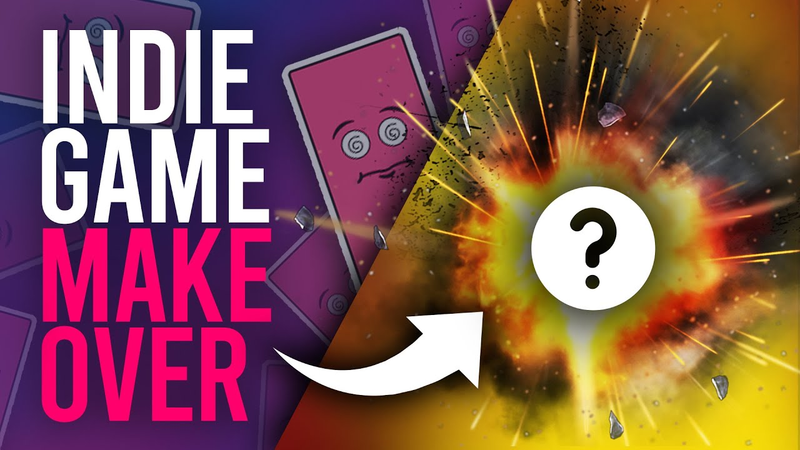
The primary objective of this game development analysis is to demonstrate how to elevate a mechanically simple mobile game through thematic integration, intentional art direction, and atmospheric design.
- Simple mechanics can achieve market differentiation by applying cohesive thematic integration, intentional art direction, and atmospheric design.
- Adding narrative context, such as a clear objective like a bird searching for lost eggs, creates an emotional hook that improves player retention.
- Visual identity should be established through deliberate, non-traditional color palettes and textures rather than generic aesthetic choices.
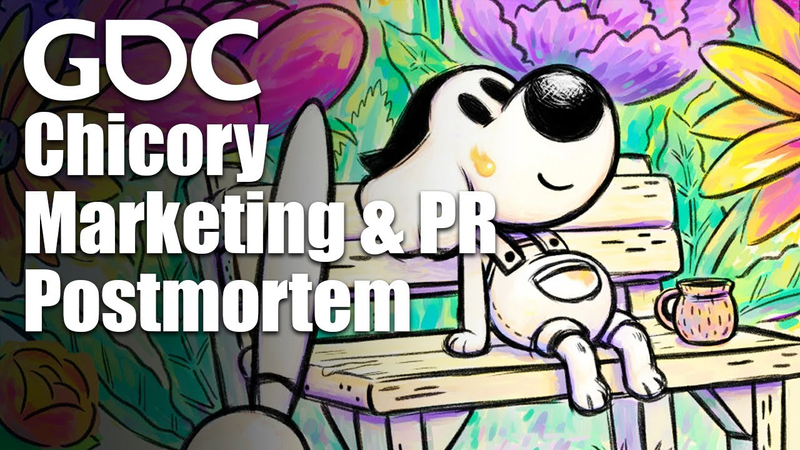
'Chicory' Marketing and PR Postmortem
The marketing strategy for Chicory: A Colorful Tale demonstrates that indie developers can achieve significant reach through proactive planning and community-centric engagement, even with a lean budget of approximately $20,000.
- Marketing strategy should be treated as a 'stair-step' process where every asset, event, and community interaction builds upon previous efforts rather than acting as isolated, disposable tasks.
- Leverage 'mavens'—early adopters and evangelists—to build long-term momentum, as these individuals are instrumental in driving organic interest and community growth.
- Online event participation, such as Steam Demo Fests or LudoNarraCon, should be treated as a 'minimum viable product' where content is scheduled strategically to target specific time zones and demographics rather than running 24/7.
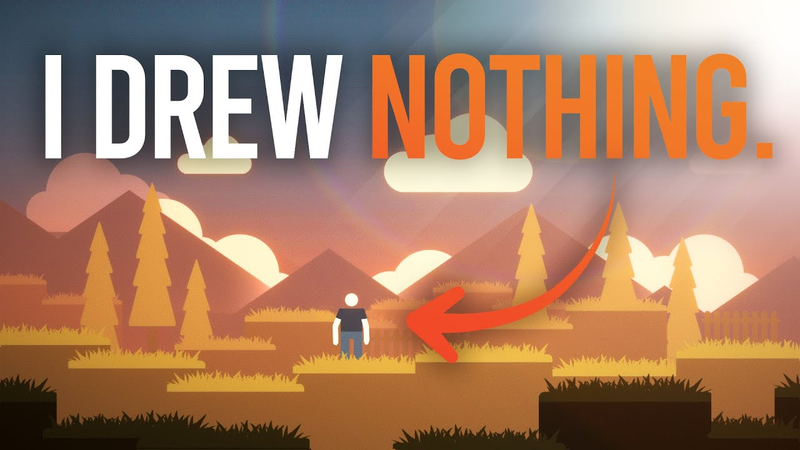
Make A Beautiful 2D Game Without DRAWING A THING (PS + Unity Tutorial)
This guide outlines a workflow for creating aesthetically pleasing 2D game environments in Unity without requiring traditional illustration or drawing skills.
- Professional-quality 2D environments can be created without manual illustration by using simple vector silhouettes sourced from repositories like Noun Project.
- Unity’s PSD Importer allows for the seamless integration of layered PSB files, enabling developers to arrange basic shapes as sprites within the engine.
- Environmental depth is achieved by arranging sprites along the Z-axis and applying a custom sprite shader, as standard Unity sprite shaders do not natively support atmospheric fog.
You're Overthinking Your Indie Game...
Successful indie game development relies on balancing proven, reliable mechanics with a unique, marketable gimmick.
- Indie developers should anchor their games in proven, reliable mechanics while differentiating the product through a single, unique gimmick or distinct visual style.
- Games must be immediately understandable through short-form media like GIFs to ensure marketability, while maintaining enough depth to sustain long-term player engagement.
- Indie studios should prioritize a 'hot tamale' approach, focusing on a concentrated, high-quality experience rather than attempting to build a sprawling or generic title.
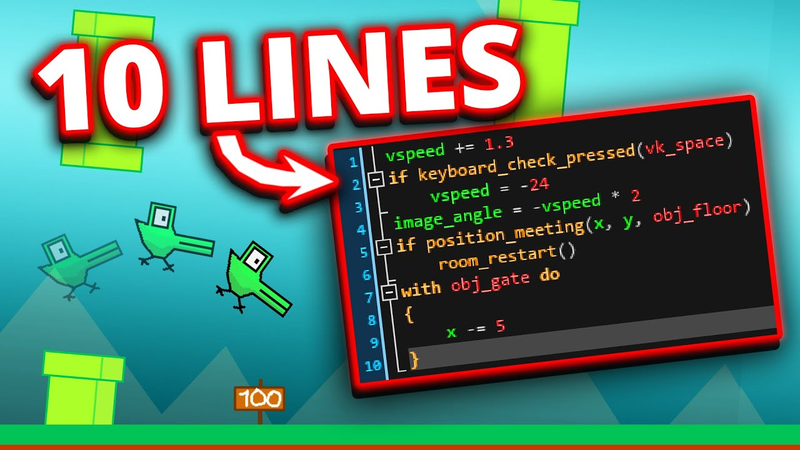
Making a Game With 10 Lines of Code Only (Challenge)
This challenge explores the creative potential of game development under strict constraints, specifically limiting the codebase to ten lines per project.
- Strict code constraints, such as a 10-line limit, force developers to prioritize mathematical tuning and iterative design over raw code volume to achieve gameplay depth.
- Functional game mechanics—including physics, collision detection, and AI—can be effectively implemented by leveraging built-in engine features like sprite editors and effect layers rather than custom-coded systems.
- The experiment demonstrated that complex systems, such as cellular automata for procedural building or vehicle drift physics, are achievable through efficient logic and nested functions.

How To Raise $30,000 For Your Indie Game On Kickstarter
Successful Kickstarter campaigns for indie games require a strategic approach to audience engagement, reward management, and scope control.
- Use Kickstarter primarily to validate market interest before committing to full-scale development rather than relying on it as a sole funding source.
- Avoid promising specific platform ports or exclusivity in initial campaigns to prevent operational strain and keep options open for future partnerships with storefronts like Apple Arcade or Epic Games.
- Build a viable audience through channels like YouTube before launching a campaign to ensure a baseline of support.

The Hollow Knight Look IN 15 MINS (EASY 2D UNITY TUTORIAL)
The provided content outlines a technical workflow for replicating the visual aesthetic of the game Hollow Knight within the Unity game engine.
- Use grayscale sprites imported via Unity’s 2D PSD Importer to enable dynamic color manipulation and lighting adjustments directly within the engine.
- Implement a dual-camera system with separate culling masks to apply depth-of-field post-processing to background layers while keeping foreground elements sharp.
- Utilize a custom 'diffuse with fog' shader to ensure 2D sprites interact realistically with global fog settings for atmospheric depth.
Starting A Full Time Indie Game Studio At 20 YEARS OLD
Establishing a successful indie game studio requires a strategic balance between creative ambition and the pragmatic humility to seek mentorship.
- Commercial viability in a saturated market is best achieved by pairing proven gameplay mechanics with a distinct visual style to target niche audiences rather than competing directly with AAA studios.
- Achieving significant sales benchmarks, such as surpassing 100,000 units, requires persistent iteration, high review scores, and a long-term commitment to project scalability rather than relying on an initial launch spike.
- Crowdfunding campaigns should avoid the common pitfalls of over-promising on stretch goals or platform-specific ports, as these commitments often lead to technical debt and compromised product quality.
TWIG #180 Why Ubisoft became a target of a hostile takeover
Ubisoft has emerged as a potential target for private equity firms, including Blackstone and KKR, as the company faces significant operational challenges and declining market performance.
- Ubisoft is a target for private equity firms like Blackstone and KKR due to significant operational inefficiencies and declining market performance.
- A major inefficiency is the revenue-to-headcount ratio: Ubisoft generates 2.3 billion dollars in annual revenue with 22,000 employees, compared to Electronic Arts, which generates 7.5 billion dollars with only 11,000 employees.
- Private equity firms view the company as mismanaged, citing a lack of focus on core franchises and an unsustainable organizational structure.